Presbyopia Treatment Eye Drops: How It Works, Results and What to Expect

Presbyopia is an age-related loss of near focusing ability caused mainly by stiffening of the natural lens. Some prescription eye drops improve near vision temporarily by making the pupil smaller and increasing depth of focus.
Key Takeaways
- Presbyopia is an age-related loss of near focusing ability caused mainly by stiffening of the natural lens.
- Some prescription eye drops improve near vision temporarily by making the pupil smaller and increasing depth of focus.
- Results vary, and many people still need reading glasses for small print, prolonged close work, or dim lighting.
- Potential side effects include headache, eye redness, temporary dim vision, and difficulty seeing in low light.
- A comprehensive eye examination is needed before using presbyopia eye drops, especially for people with glaucoma, retinal conditions, or night-driving needs.
Presbyopia treatment eye drops may provide temporary improvement in near vision for selected adults with age-related difficulty focusing on close objects. They do not reverse the aging changes in the eye’s natural lens, and an eye assessment is important to determine whether drops, reading glasses, contact lenses, or another option is most appropriate.
Overview: what are presbyopia treatment eye drops?
Presbyopia treatment eye drops are prescription drops designed to temporarily improve near vision in some adults with presbyopia. Presbyopia is the common, gradual loss of the ability to focus on nearby text and objects that usually becomes noticeable from the 40s onward. The drops may reduce reliance on reading glasses for certain everyday tasks, but they do not permanently restore the lens’s natural flexibility.
Most currently available drops work by gently narrowing the pupil. A smaller pupil can increase depth of focus, much like using a smaller aperture in a camera, so near objects may appear clearer. The benefit is temporary and depends on the product, the person’s eye health, lighting conditions, prescription, and visual demands.
Presbyopia is different from refractive errors such as nearsightedness, farsightedness, and astigmatism, although these conditions can occur together. An ophthalmologist can help distinguish among these causes of blurred vision and discuss options ranging from glasses to presbyopia treatment options.
How do presbyopia eye drops work?
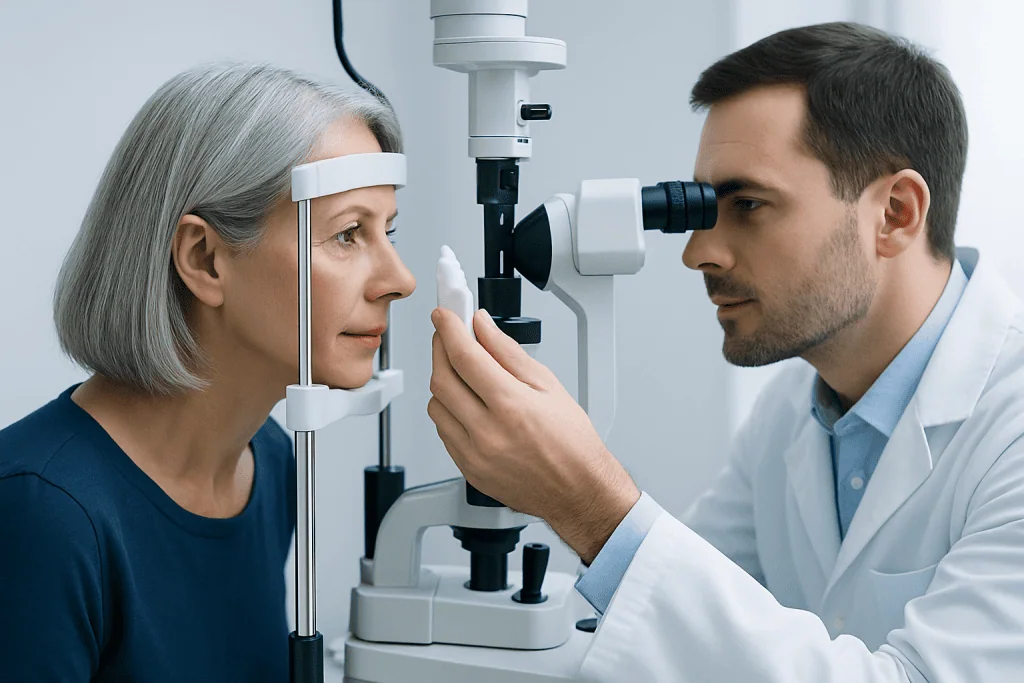
The natural lens inside the eye changes throughout adulthood. Over time, it becomes less flexible and cannot change shape as easily to focus at close range. This is why many people begin holding books, menus, and phone screens farther away. Eye drops do not make the lens young again; instead, they aim to improve the optical conditions for near vision.
Pupil-narrowing drops act on muscles in the iris, the colored part of the eye. By decreasing pupil size, they can increase the range over which objects remain reasonably in focus. This approach may be especially helpful for functional close tasks, such as reading a message, checking a label, or viewing a computer screen at an appropriate distance.
The effect generally begins after the drops have had time to work and wears off later the same day. Duration is variable. Some formulations may use additional ingredients intended to improve comfort or limit certain side effects, but each product has its own approved instructions and safety information.
Because a smaller pupil admits less light, vision in dim environments may be affected. An individual should not assume that a drop is suitable for evening driving, operating machinery, or work requiring reliable low-light vision until they know how it affects them and have discussed this with their eye specialist.
Do presbyopia eye drops work?
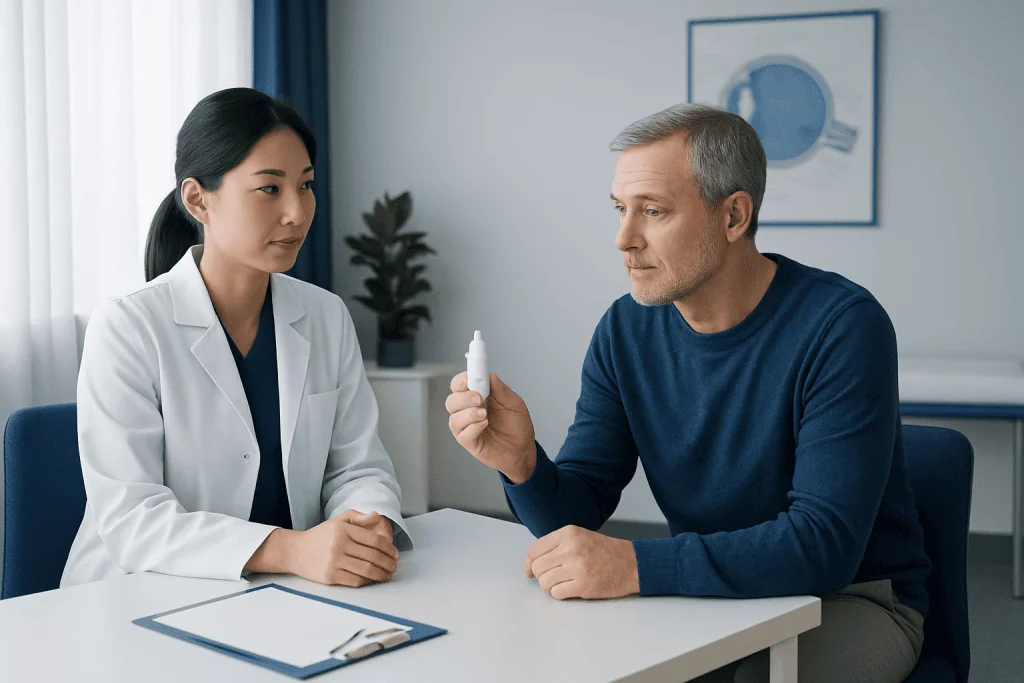
Presbyopia eye drops can work for some people by providing a temporary improvement in near vision, particularly in good lighting and for everyday short-duration tasks. Clinical studies of approved products have shown that some users can read more lines of near text after treatment without a major loss of distance vision. However, the response is not identical for everyone.
They are not a universal replacement for reading glasses. Small print, long periods of close work, low-light settings, strong refractive errors, dry eye symptoms, and eye disease may limit the practical benefit. People who need highly precise close vision, such as for detailed crafts or certain occupations, may still prefer glasses or another correction method.
Expectations are important. A person may find that drops reduce how often they reach for readers rather than eliminate the need for them completely. An eye care professional can assess the near-vision problem, check ocular health, and explain whether a monitored trial is reasonable.
Candidacy and the eye examination
Suitable candidates are adults with presbyopia who want temporary assistance with near vision and have healthy eyes on examination. The clinician will ask about visual goals, work and driving requirements, current glasses or contact lens use, medications, previous eye procedures, allergies, headaches, and symptoms such as flashes, floaters, pain, or sudden vision change.
A comprehensive evaluation commonly includes distance and near visual acuity testing, refraction, pupil assessment, eye-pressure measurement when indicated, and examination of the cornea, lens, retina, and optic nerve. These checks help identify other causes of blurred vision, including cataract, dry eye, glaucoma, macular disease, or diabetic eye disease.
Presbyopia drops may not be appropriate for everyone. Caution or avoidance may be needed in people with certain retinal disorders, a history of retinal tears or detachment, significant inflammation inside the eye, narrow drainage angles, or conditions that could be affected by pupil changes. Pregnancy, breastfeeding, and medication interactions should also be reviewed with a doctor.
People with combined visual concerns may benefit from a broader discussion of refractive errors and available correction strategies. The best choice is individualized rather than based only on age or the strength of reading glasses.
Using the drops: what to expect step by step
When an ophthalmologist prescribes presbyopia drops, the first step is to follow the product-specific instructions exactly. Hands should be washed before use. The bottle tip should not touch the eye, eyelid, fingers, or other surfaces, because this can contaminate the medication.
Typically, the person tilts the head back, gently pulls down the lower eyelid to form a small pocket, and places the prescribed number of drops into the eye. Closing the eye gently afterward and applying light pressure near the inner corner of the eye for a short time may help reduce drainage into the nose and throat. Contact lenses should only be worn according to the clinician’s and product’s guidance.
It is sensible to try the drops for the first time when there is no immediate need to drive, travel, or perform visually demanding work. The person can then notice whether near vision improves, how long the effect lasts, and whether headache, stinging, brow ache, dimming, or distance-vision changes occur.
Follow-up is useful if benefits are limited, side effects occur, or vision needs change. The drops should not be shared with another person, used more often than prescribed, or substituted for a prompt assessment of new visual symptoms.
Benefits, risks and recovery timeline
The main potential benefit is convenience: some people experience clearer near vision for part of the day without immediately putting on reading glasses. There is no surgical recovery period, and daily activities can usually continue once vision is comfortable and stable. However, the effect is temporary, so it is better understood as symptom management than a cure.
Common short-term effects can include eye redness, stinging, tearing, headache, brow ache, nausea, or temporary blurred distance vision. Pupil narrowing can make low-light vision less comfortable. Anyone who notices visual effects should avoid night driving and hazardous tasks until the effects have resolved and a clinician has advised that it is safe.
Rare but more serious eye symptoms need urgent assessment. These include sudden loss of vision, new flashes of light, a sudden shower of floaters, a curtain-like shadow, severe eye pain, marked redness, or persistent headache with visual symptoms. Such symptoms may be unrelated to the drops but should never be ignored.
For people seeking longer-lasting correction, an ophthalmologist may discuss options such as laser eye surgery where clinically suitable, lens-based procedures, or contact lens approaches. Each option has different benefits, limitations, and eligibility requirements.
Can presbyopia be fully corrected?
Presbyopia can usually be corrected or managed effectively for daily life, but the age-related stiffening of the natural lens cannot currently be fully reversed with eye drops. Reading glasses, multifocal or progressive lenses, contact lenses, drops, and selected procedures can improve functional near vision. The most appropriate option depends on the person’s prescription, eye anatomy, lifestyle, and expectations.
Some procedures can reduce dependence on glasses, but no approach is ideal for every person or guarantees freedom from visual correction in every setting. For example, a person may value crisp near vision but still need help with nighttime vision, detailed reading, or changing visual demands over time.
Presbyopia itself continues to evolve gradually, so correction may need updating. Regular eye examinations remain important, not only for prescription changes but also for early detection of conditions such as cataract, glaucoma, and retinal disease.
At what age does presbyopia stop getting worse?
Presbyopia commonly becomes noticeable between ages 40 and 45 and tends to progress over the following years. Many people find that their near-vision needs stabilize somewhat in their 60s, when the natural lens has become much less able to change focus. The timing and degree of change vary from person to person.
Stabilization does not mean all visual changes stop. Cataracts, dry eye, changes in general health, medication effects, and other eye conditions can still affect clarity and comfort later in life. New or rapidly changing blur should therefore be evaluated rather than assumed to be routine presbyopia.
Periodic eye examinations help keep glasses, contact lens, or drop-based treatment plans appropriate as vision changes. They also provide an opportunity to discuss activities that matter most, including reading, screen use, driving, hobbies, and workplace tasks.
What will worsen presbyopia and when to seek medical care
Presbyopia naturally progresses as the lens becomes stiffer with age. It may feel more troublesome in dim light, during fatigue, with prolonged screen use, or when dry eye causes fluctuating clarity. Certain medications and health conditions can also affect focusing ability or vision, although they do not necessarily accelerate the lens aging process itself.
Good lighting, screen breaks, management of dry eye when present, and an up-to-date visual prescription can make close tasks more comfortable. Balanced nutrition, avoiding smoking, controlling diabetes and blood pressure, and protecting the eyes from ultraviolet light support general eye health, although they do not prevent presbyopia completely.
Medical care should be sought promptly for sudden vision loss, new flashes or floaters, a dark curtain or shadow in vision, severe pain, significant redness, double vision, or a rapid unexplained change in sight. A routine appointment is appropriate for gradually worsening reading vision, frequent headaches with close work, or questions about whether prescription drops are safe.
Acibadem International’s multidisciplinary eye specialists at JCI-accredited hospitals can assess presbyopia and related visual concerns for international patients, helping them understand medically appropriate treatment choices.
Frequently asked questions
How long do presbyopia treatment eye drops last?
The duration depends on the specific prescription product and the individual response. Effects are generally temporary and may last for several hours, rather than permanently changing near vision. A clinician can explain what to expect from the formulation prescribed.
Can I use presbyopia eye drops instead of reading glasses?
Some people can use the drops to reduce their need for reading glasses during selected activities. Many still use readers for very small print, prolonged close work, dim environments, or tasks requiring especially sharp near vision. The best approach depends on visual needs and eye health.
Are presbyopia eye drops safe for night driving?
These drops can make the pupil smaller, which may reduce comfort or clarity in low-light conditions for some people. A person should not drive at night or operate machinery until they know how the drops affect their vision. Individual advice from the prescribing eye specialist is important.
Do presbyopia drops cure age-related farsightedness?
No. Presbyopia drops manage the symptom of reduced near focusing for a limited period; they do not restore the natural lens’s flexibility or cure presbyopia. Other optical and procedural options may also be considered depending on the individual.
Can presbyopia eye drops cause headaches?
Headache or brow ache can occur with pupil-narrowing eye drops in some users. This should be discussed with the prescribing clinician, especially if symptoms are persistent, severe, or accompanied by notable visual changes. Severe eye pain or sudden visual symptoms require prompt medical evaluation.
Who should avoid presbyopia treatment eye drops?
Suitability depends on the specific medication and a person’s eye and medical history. People with certain retinal problems, glaucoma-related concerns, eye inflammation, or significant low-light visual demands may need a different approach. A comprehensive eye examination is the safest way to determine candidacy.
References
- American Academy of Ophthalmology
- National Eye Institute
- U.S. Food and Drug Administration
- Mayo Clinic
- Royal College of Ophthalmologists
This article is for general information only and is not a substitute for professional medical advice. Please consult a qualified doctor about your individual situation.
Presbyopia Treatment in Turkey — costs, top hospitals & a free quote
JCI-accredited · board-certified surgeons · reply within 24h
Add us as a Preferred Source to see more of our trusted health content across Google Search, AI Overviews and Discover.