Psoriasis on the Buttocks: Symptoms and Care
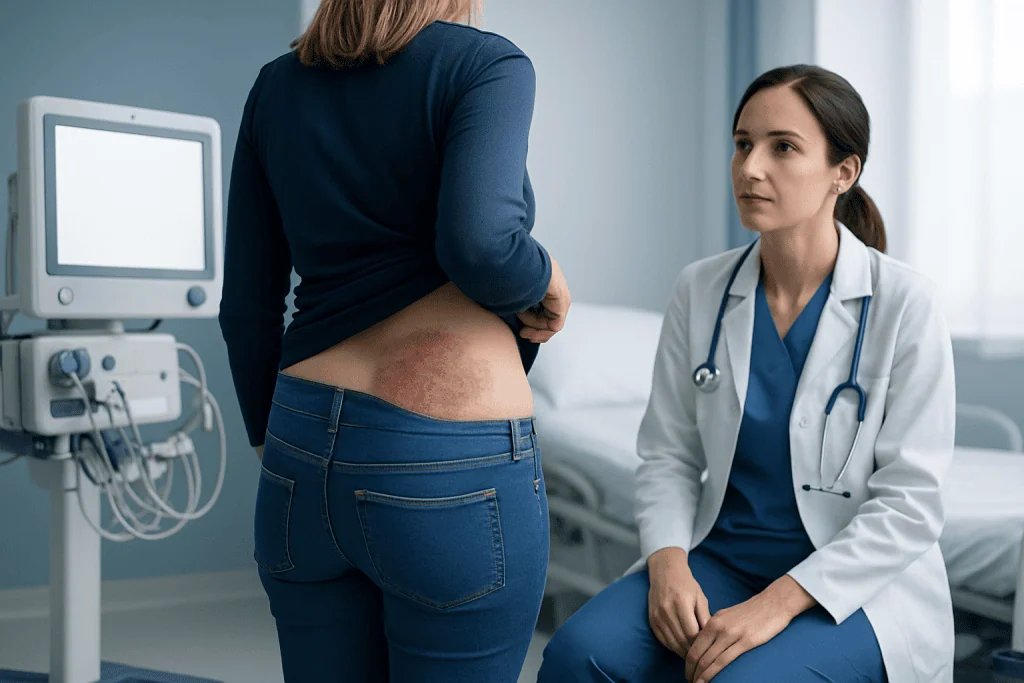
Psoriasis on the butt can affect the outer buttocks, the crease between them, or nearby genital skin. Plaque psoriasis often has scale, while psoriasis in skin folds may look smooth, shiny, and red or darker than surrounding skin.
Key Takeaways
- Psoriasis on the butt can affect the outer buttocks, the crease between them, or nearby genital skin.
- Plaque psoriasis often has scale, while psoriasis in skin folds may look smooth, shiny, and red or darker than surrounding skin.
- Sweat, friction, tight clothing, stress, infections, and some medicines can contribute to flares.
- Diagnosis is usually based on a skin examination, but testing may be needed to rule out fungal infection or dermatitis.
- Treatment may include gentle skin care, prescription topical medicines, light therapy, or systemic medicines for more extensive disease.
Psoriasis on the buttocks may appear as itchy, sore, scaly patches or as smoother inflamed skin in the buttock crease. It is not contagious, and a clinician can help distinguish it from common look-alike conditions and recommend treatment suited to this sensitive, high-friction area.
Overview: What Does Psoriasis on the Butt Look Like?
Psoriasis on butt refers to psoriasis affecting the outer buttocks, the crease between the buttocks, or the skin close to the anus and genitals. It is an immune-mediated skin condition that speeds up skin-cell turnover, leading to areas of inflammation. The appearance can vary with skin tone: patches may be pink or red on lighter skin and violet, grayish, dark brown, or deeper than the surrounding skin on darker skin.
On the outer buttocks, psoriasis may form well-defined raised patches with dry, silvery-white scale. In the buttock crease, where skin is warm and moist, scale may be minimal or absent. This pattern is often called inverse psoriasis and can look smooth, shiny, tender, or cracked. The condition is not caused by poor hygiene and cannot be passed from one person to another.
Because the location is private and may be uncomfortable, some people delay discussing symptoms. However, psoriasis in this area is common enough for dermatology teams to assess routinely. Recognizing the pattern matters because several other skin conditions can produce similar itching, redness, or irritation.
Symptoms and Day-to-Day Effects
Symptoms of buttock psoriasis range from mild itching to soreness that makes sitting, walking, exercising, or using the toilet uncomfortable. During a flare, skin may feel dry, tight, burning, or tender. Scratching can damage the skin barrier and may lead to bleeding or painful fissures, particularly in the crease.
The features depend partly on where psoriasis occurs. Outer-buttock plaques often have clearer borders and visible scaling. In skin folds, rubbing and moisture can soften scales, so the affected area may instead be smooth and inflamed. Symptoms can come and go, with periods of improvement followed by flares.
- Itching, burning, or tenderness
- Clearly bordered patches that are red, pink, purple, gray, brown, or darker than nearby skin
- Dry scale on the outer buttocks
- Smooth, shiny inflamed skin in the buttock crease
- Cracks, soreness, or minor bleeding after friction or scratching
Psoriasis may also be present on the scalp, elbows, knees, nails, or other body areas. Some people develop joint pain, stiffness, or swelling associated with psoriatic arthritis, which should be discussed with a doctor.
Why It Happens and What Can Trigger a Flare
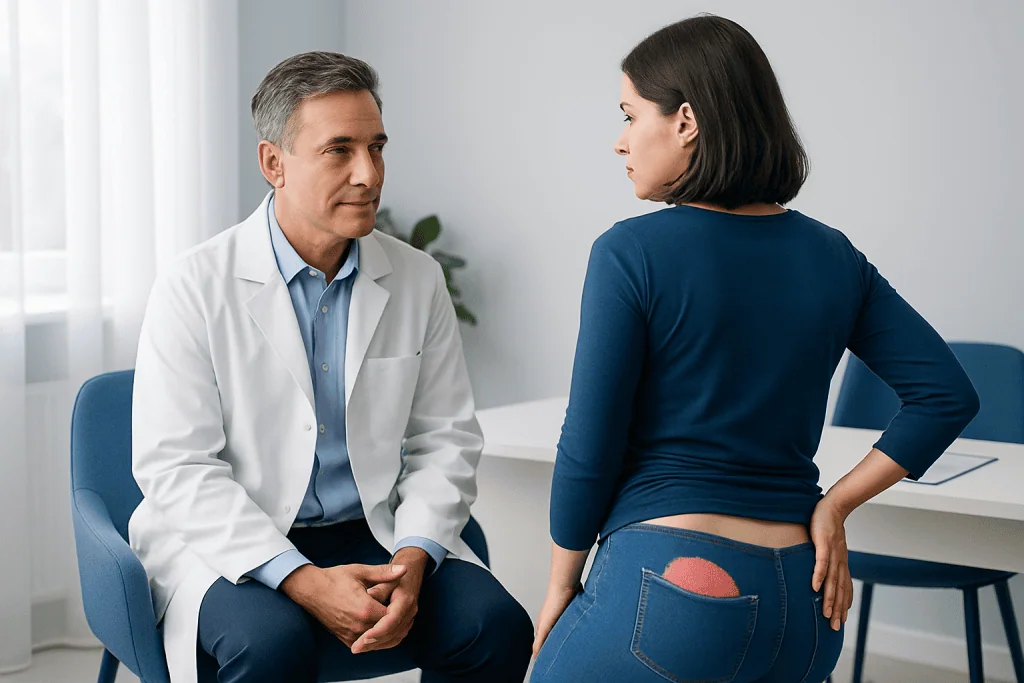
Psoriasis develops through a combination of immune-system activity, genetic tendency, and environmental influences. It is not an infection, is not sexually transmitted, and does not result from being unclean. Having close relatives with psoriasis can increase a person’s likelihood of developing it, although not everyone with a family history will be affected.
The buttock area can be particularly prone to irritation because it is exposed to heat, sweat, pressure, and skin-to-skin friction. Tight underwear, non-breathable fabrics, prolonged sitting, vigorous exercise, and frequent wiping may aggravate symptoms. This does not mean these factors cause psoriasis; rather, they can make existing inflammation more noticeable or trigger a flare in susceptible skin.
Other possible triggers include emotional stress, smoking, heavy alcohol use, a recent infection such as strep throat, skin injury, and certain medicines. A person should not stop prescribed medication on their own, but should tell their clinician about all medicines and supplements if psoriasis begins or worsens. Keeping a simple symptom diary can sometimes reveal individual patterns.
Conditions That Can Resemble Buttock Psoriasis
Not every itchy or red buttock rash is psoriasis. A fungal infection, including tinea or candidal intertrigo, can affect warm, moist areas and may need antifungal treatment. Contact dermatitis can result from fragranced wipes, soaps, laundry products, pads, or topical products. Eczema, seborrheic dermatitis, lichen sclerosus, and bacterial skin infections are other possible explanations depending on the location and appearance.
Psoriasis and fungal infection may occasionally occur together. Using a steroid cream without an accurate diagnosis can sometimes mask or worsen certain infections, especially in skin folds. For this reason, persistent, spreading, or recurrent rashes deserve professional assessment rather than repeated self-treatment.
A dermatologist or qualified clinician will consider the distribution of the rash, its borders, scale, associated symptoms, personal history, and family history. The broader condition is described in more detail in psoriasis information.
How Psoriasis on the Butt Is Diagnosed
Diagnosis is commonly made through a clinical examination of the skin. A clinician may ask when the rash started, whether it itches or hurts, what treatments have been tried, whether there are rashes elsewhere, and whether joint symptoms are present. Sharing clear information about creams, soaps, wipes, and medicines can help identify potential irritants or triggers.
If the appearance is not typical, the clinician may take a gentle skin scraping or swab to look for fungal or bacterial infection. Patch testing may be considered when allergic contact dermatitis is suspected. In selected cases, a small skin biopsy can help clarify the diagnosis, although it is not routinely needed.
Photos taken during flares can be helpful when the rash is intermittent, provided they are stored securely and shown only to a healthcare professional. A correct diagnosis is important because treatment choices differ between psoriasis, fungal conditions, eczema, and other causes of irritation.
Treatment Options for a Sensitive Skin Area
Treatment is individualized according to the diagnosis, severity, exact location, symptoms, other areas of psoriasis, and a person’s medical history. For limited psoriasis, clinicians often use prescription topical treatment. Low-potency topical corticosteroids may be used for short periods in skin folds because this skin is thinner and more likely to experience side effects from stronger or prolonged steroid use. The exact product and duration should be guided by a clinician.
Non-steroid topical medicines, such as calcineurin inhibitors, may be considered for sensitive areas in appropriate patients. Vitamin D-based products, other topical agents, and moisturizers may also have a role, although some products can sting or irritate folded skin. Over-the-counter products should not be applied to the genital or perianal region without advice if the diagnosis is uncertain.
When psoriasis is widespread, difficult to control, or significantly affects quality of life, a dermatologist may discuss phototherapy or medicines that act throughout the body, including oral treatments or biologic therapies. These options require assessment and follow-up to balance expected benefits and potential risks. Psoriasis treatment options can be planned around the individual’s disease pattern and overall health.
Acibadem International’s multidisciplinary specialists and JCI-accredited hospitals assess and treat psoriasis for international patients, with care tailored to the diagnosis and clinical needs.
Skin Care and Practical Self-Care
Gentle routines can reduce additional irritation, although self-care does not replace prescribed treatment. Washing with lukewarm water and a mild, fragrance-free cleanser is usually preferable to harsh soaps, scrubs, or scented intimate products. Patting the area dry rather than rubbing it can help protect inflamed skin.
Loose, breathable underwear and clothing may reduce heat and friction. Changing out of damp exercise clothing promptly and avoiding fragranced wipes, deodorants, or unnecessary products in the area can also be useful. A bland, fragrance-free moisturizer may support the skin barrier when applied as directed by a clinician, especially after bathing.
People may find it helpful to avoid scratching by keeping nails short, using a cool compress over clothing, and following their treatment plan consistently. Stress management, adequate sleep, not smoking, and moderating alcohol can support general health and may reduce flares for some individuals. A person should seek medical advice before trying herbal, exfoliating, or “natural” remedies, as these can irritate sensitive skin.
When to Seek Medical Care
A doctor or dermatologist should assess a new, persistent, or recurring rash on the buttocks, especially when the cause is uncertain. Medical advice is also appropriate if itching, pain, cracking, or bleeding interferes with daily activities, sleep, exercise, bowel movements, or sexual wellbeing. Early assessment can help avoid treatments that are unsuitable for a fungal infection or another look-alike condition.
Prompt medical attention is needed if there is rapidly spreading redness, marked warmth or swelling, pus, fever, severe pain, or open sores, as these can indicate infection or another condition requiring timely care. People with diabetes, a weakened immune system, or a history of serious skin reactions should be especially cautious about new or worsening rashes.
Anyone with persistent joint pain, morning stiffness, swollen fingers or toes, or heel pain should mention these symptoms to a clinician, as psoriasis can be associated with inflammatory joint disease. With an accurate diagnosis and appropriate care plan, buttock psoriasis can often be managed more comfortably.
Frequently asked questions
Can psoriasis occur in the butt crack?
Yes. Psoriasis can affect the crease between the buttocks, where it may appear smoother and less scaly than psoriasis on the outer skin. This is often described as inverse psoriasis because it occurs in a skin fold.
Is psoriasis on the butt contagious?
No. Psoriasis is an immune-mediated inflammatory condition and is not contagious through skin contact, shared toilets, towels, or sexual contact. However, other rashes, including some infections, can look similar, so a new rash should be assessed if there is uncertainty.
How can a person tell psoriasis from a fungal rash?
It can be difficult to tell without an examination. Psoriasis often has sharply defined patches and may occur elsewhere on the body, while fungal rashes can have a more active edge or satellite spots, especially in moist folds. A clinician may examine the skin or perform a simple test to confirm the cause.
Can steroid cream be used for psoriasis on the buttocks?
A clinician may prescribe a low-potency topical steroid for a limited time, especially in folds or near sensitive skin. Stronger products or long-term unsupervised use can cause skin thinning and may worsen an undiagnosed fungal infection. The product, location, and treatment duration should be individually advised.
What makes buttock psoriasis flare up?
Friction, sweat, tight clothing, skin irritation, stress, infections, smoking, and some medicines may contribute to flares. Triggers vary from person to person, and avoiding a trigger does not replace medical treatment. A symptom diary may help identify patterns.
Should a person see a doctor for mild psoriasis on the butt?
It is sensible to seek assessment for a first-time, persistent, or recurrent rash because several conditions can resemble psoriasis in this area. A clinician can confirm the diagnosis and recommend safe treatment for sensitive skin. Care is particularly important if there is pain, cracking, bleeding, discharge, or signs of infection.
This article is for general information only and is not a substitute for professional medical advice. Please consult a qualified doctor about your individual situation.
Explore treatments in Turkey — costs, top hospitals & a free quote
JCI-accredited · board-certified surgeons · reply within 24h
Add us as a Preferred Source to see more of our trusted health content across Google Search, AI Overviews and Discover.

More from the Health Library

Bifidobacterium Infantis — Explained by Medical Evidence, Not Myths

Deltoid: A Complete Medical Overview

Why am i so gassy in the morning? A Doctor-Reviewed Answer

Gaviscon: What Patients Need to Know

Brca Testing: A Complete Medical Overview