Recovery Position — Explained by Medical Evidence, Not Myths
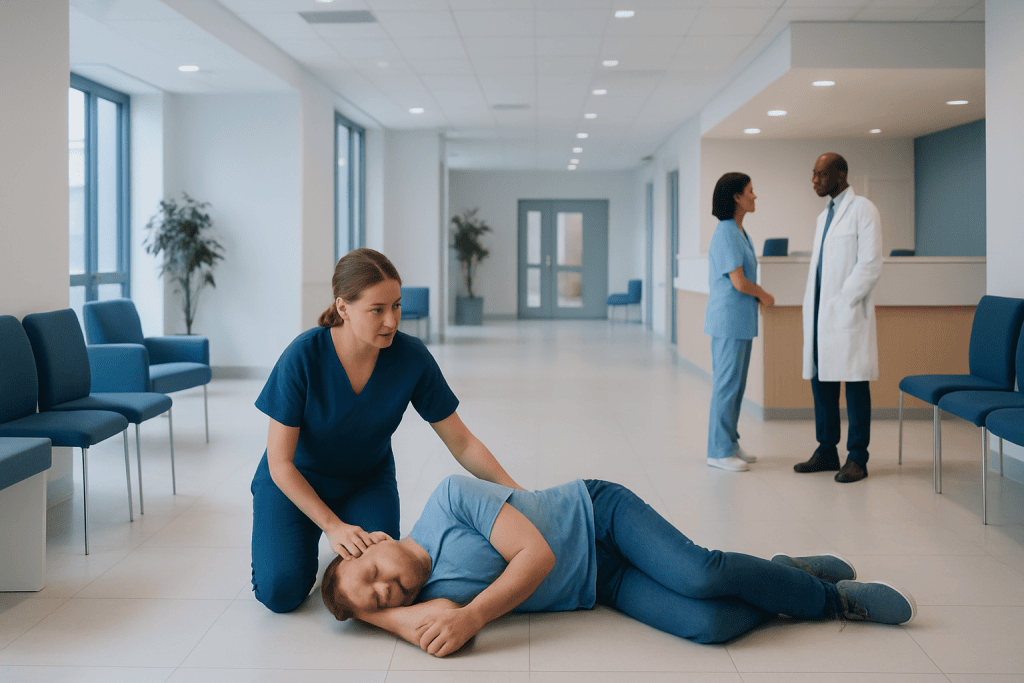
Use the recovery position only for someone who is unresponsive and breathing normally. Its main purpose is to protect the airway and reduce the risk of choking.
Key Takeaways
- Use the recovery position only for someone who is unresponsive and breathing normally.
- Its main purpose is to protect the airway and reduce the risk of choking.
- If the person is not breathing normally, start CPR and call emergency services.
- Suspected spinal injury, major trauma, or late pregnancy may require special handling.
- Continue to monitor breathing until trained medical help arrives.
The recovery position is a first-aid side-lying position for a person who is unresponsive but breathing normally. It helps keep the airway open and lowers the chance of choking on vomit or fluids while emergency help is on the way.
What the recovery position is and why it matters
The recovery position is a simple first-aid technique used when a person is unconscious or unresponsive but still breathing normally. In practical terms, it means gently turning the person onto their side, with the head positioned so the airway stays as open as possible. This can help saliva, vomit, or other fluids drain out of the mouth instead of pooling at the back of the throat.
The goal is not to treat the underlying medical problem. Rather, it is to reduce immediate risks while waiting for emergency care. In an unresponsive person, the muscles of the jaw and tongue relax, and this can partly block the airway. Lying flat on the back may also increase the chance of choking if vomiting occurs.
Medical evidence supports the side-lying position as a practical way to support airway protection in many first-aid situations. It is commonly taught in basic life support because it is easy to remember and can be done by bystanders. At the same time, it is important to understand its limits: it does not replace CPR, emergency assessment, or professional medical treatment.
Because the recovery position is often discussed online with oversimplified advice, it helps to focus on the core rule: use it for a person who does not respond and is breathing normally, after calling for help or arranging emergency assistance. If breathing is absent or abnormal, the priority changes to resuscitation rather than side positioning.
When to use the recovery position
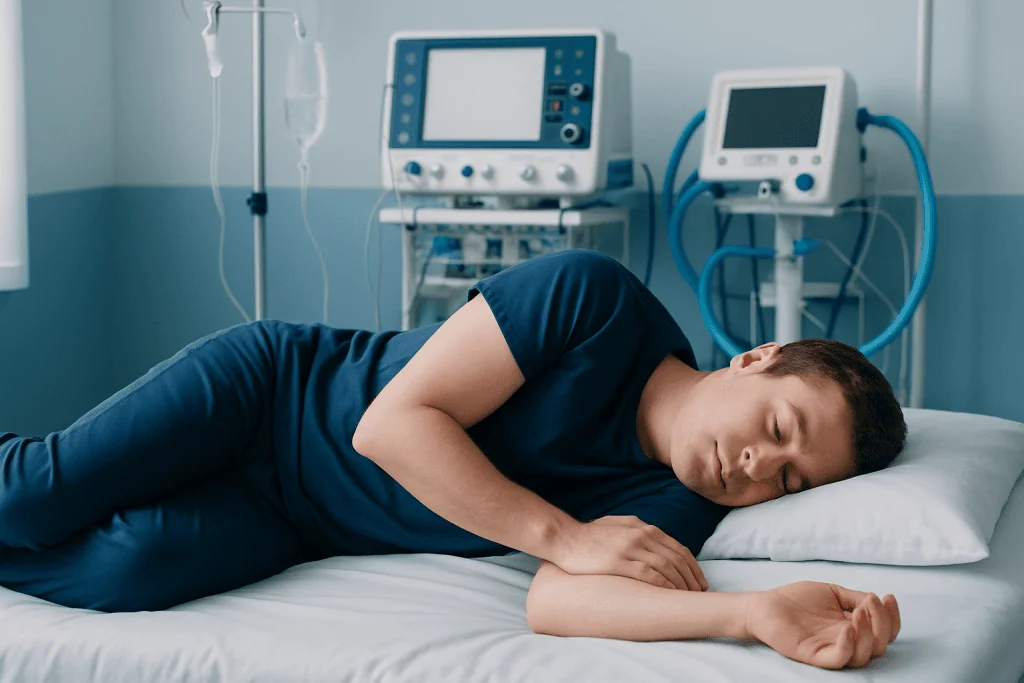
The recovery position is appropriate when a person is unresponsive and breathing in a normal way. Examples include someone who has fainted and not yet fully awakened, a person recovering after a seizure once convulsions have stopped and breathing is regular, or someone who is deeply drowsy from alcohol, medication, or illness but still has normal breathing.
It may also be used after an episode of choking if the person becomes unresponsive but continues to breathe, or while waiting for emergency care in some medical events that affect alertness. The position is meant to buy time safely by lowering the risk of airway blockage and aspiration.
Normal breathing should look regular and effective, with the chest rising and falling in a steady pattern. Occasional gasps, very slow breathing, or noisy struggling breaths are not reassuring signs. In those situations, emergency care is needed immediately, and CPR may be required.
It is also sensible to keep in mind that unresponsiveness always has a cause. That cause may range from a brief faint to a more serious problem such as low blood sugar, poisoning, a severe infection, stroke, or another neurological emergency. The recovery position supports the airway, but it should always be combined with urgent assessment and monitoring.
How to place someone in the recovery position
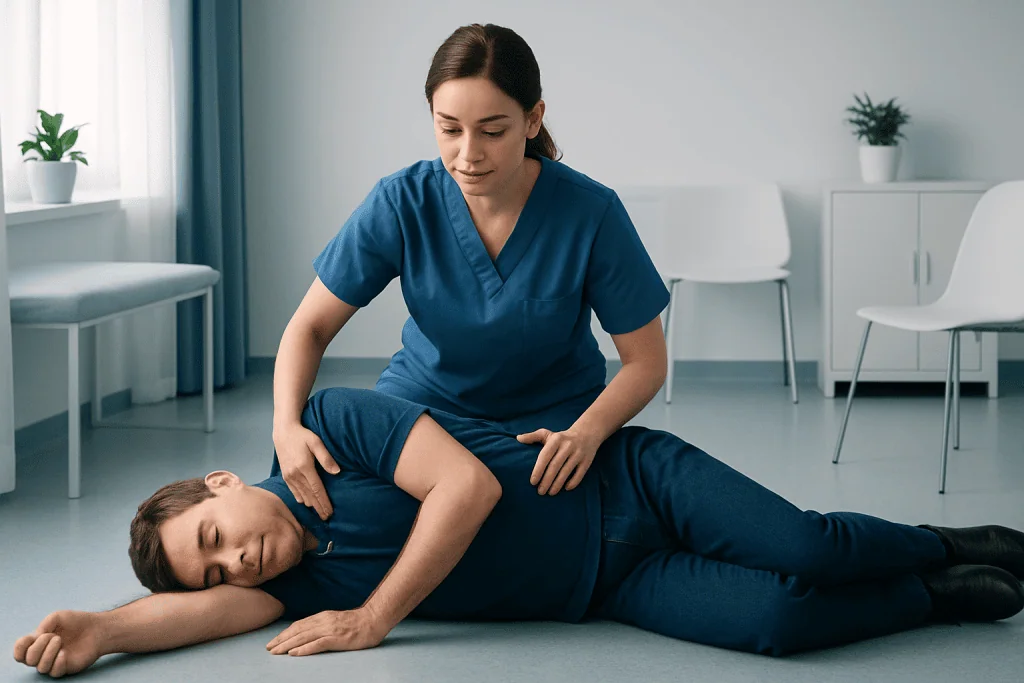
Before moving the person, check that the area is safe for both the rescuer and the patient. Try to get a response by speaking loudly and gently tapping the shoulders. If there is no response, call emergency services or ask someone nearby to call. Then check whether the person is breathing normally by looking for chest movement and feeling or listening for breaths.
If normal breathing is present, kneel beside the person. Straighten the legs if possible. Place the arm nearest to you at a right angle to the body. Bring the far arm across the chest and place the back of that hand against the cheek nearest to you. With your other hand, bend the far knee up, then gently roll the person toward you onto their side.
Once the person is on their side, adjust the upper leg so the hip and knee are bent to help stabilize the body. Tilt the head back slightly to help keep the airway open, and position the hand under the cheek so the head stays supported. Open the mouth slightly downward so fluids can drain out rather than back into the throat.
Stay with the person and keep checking breathing until help arrives. If breathing stops or becomes abnormal, turn the person onto their back if needed and begin CPR. Many people benefit from learning these steps in a formal first-aid or CPR course, where they can practice safe positioning and airway checks.
When the recovery position may not be the best choice
Although the recovery position is useful, it is not correct in every emergency. The most important exception is when the person is not breathing normally. In that situation, CPR and emergency response come first. Placing a non-breathing person on their side can delay life-saving treatment.
Another caution is possible spinal injury or major trauma, such as after a road traffic collision, a fall from height, or a sports injury. If a neck or back injury is suspected, unnecessary movement should be avoided. Even so, if the person is vomiting or the airway is at immediate risk, carefully rolling the body as a unit may be necessary because airway protection remains a priority.
Pregnancy can also affect positioning. In late pregnancy, lying on the left side is often preferred because it may reduce pressure from the uterus on major blood vessels. If the person is pregnant and unresponsive but breathing, placing them on the left side when practical is a reasonable adjustment.
People with repeated vomiting, seizure activity, severe breathing difficulty, or signs of overdose need urgent medical care even if they are already in the recovery position. The position can support the airway, but it does not treat the cause. Some underlying conditions may require evaluation with neurological rehabilitation or other specialty care after the emergency phase, depending on the diagnosis.
Common situations and common myths
A frequent myth is that the recovery position should be used for anyone who faints, no matter what. In reality, many people who faint briefly recover quickly when lying flat, and they may not need to be rolled onto their side if they are alert and breathing well. The side position becomes more relevant when the person remains unresponsive or when vomiting is likely.
Another myth is that any side-lying position counts as a recovery position. It is more than simply turning someone onto their side. The head, neck, and limbs should be arranged to help maintain an open airway and keep the body stable. A poorly supported position may allow the person to roll onto their face or back again.
Some people also believe the recovery position is enough after a seizure. It is helpful after the shaking has stopped and breathing has returned to normal, but it is not used during active convulsions. During a seizure, the priority is to protect the person from injury, avoid restraining them, and seek help if the event is prolonged, repeated, or unusual.
Finally, the recovery position should not create false reassurance. Alcohol intoxication, poisoning, severe infection, brain injury, or brain tumor-related events can all reduce responsiveness. A person who cannot be awakened should always be assessed urgently, even if their breathing appears normal at first.
When to seek medical care
Emergency medical care is needed right away if a person is unresponsive, has abnormal or absent breathing, turns blue or gray, has a seizure lasting several minutes, has repeated seizures, or may have a serious injury. Immediate help is also important for possible poisoning, overdose, severe allergic reaction, chest pain, sudden weakness, facial drooping, or trouble speaking.
Even when the person starts to wake up, medical assessment is often appropriate if the episode was unexplained, happened for the first time, or followed a head injury. Continued confusion, repeated vomiting, fever, severe headache, weakness, or persistent drowsiness are all reasons to seek prompt evaluation.
Children, older adults, and people with known heart, lung, neurological, or metabolic disease may need urgent review sooner because serious illness can present with reduced responsiveness. If there is any doubt about the person’s breathing or level of consciousness, it is safest to call emergency services.
After emergency stabilization, doctors may recommend targeted testing or treatment depending on the cause, such as imaging, blood tests, or specialist review. In complex cases, centers such as Acibadem International, with multidisciplinary specialists and JCI-accredited hospitals, evaluate and treat international patients with neurological and emergency conditions. If symptoms suggest a brain event, doctors may consider advanced care including stroke rehabilitation after the acute phase.
Prevention, self-care, and learning first aid
The best way to use the recovery position well is to learn it before an emergency happens. A structured first-aid course teaches how to recognize unresponsiveness, check breathing, call for help, and decide when CPR is needed instead. Practicing these steps improves confidence and can reduce delays in real situations.
Prevention also matters. Reducing heavy alcohol use, taking medicines only as directed, managing chronic conditions such as diabetes or epilepsy, and seeking help for repeated fainting or blackouts can all lower the chance of emergencies that may require airway support. Families of people at higher risk may benefit from first-aid training.
At home, workplaces, and sports settings, it helps to have a clear emergency plan. This includes knowing local emergency numbers, having a charged phone available, and making sure other people know where first-aid equipment is kept. In some settings, access to an automated external defibrillator can be life-saving when collapse is due to cardiac arrest rather than simple unresponsiveness.
The recovery position is most useful when it is understood as one part of a broader response: check safety, check responsiveness, call for help, assess breathing, position the person if appropriate, and keep monitoring. Used in the right context, it is a practical, evidence-based step that can protect the airway until professional care takes over.
Frequently asked questions
What is the recovery position used for?
The recovery position is used for a person who is unresponsive but breathing normally. It helps keep the airway open and lowers the risk of choking on vomit, saliva, or other fluids while waiting for medical help.
Should the recovery position be used if someone is not breathing?
No. If the person is not breathing normally, the priority is to call emergency services and start CPR if appropriate. The recovery position is not a substitute for resuscitation.
Can someone be left alone once they are in the recovery position?
No, they should continue to be observed closely. Breathing can change, and the person may vomit, have a seizure, or stop breathing, so regular monitoring is important until help arrives.
Is the recovery position safe after a seizure?
It can be helpful after the seizure has ended and the person is breathing normally. During active convulsions, the focus should be on preventing injury and not restraining the person.
What if a spinal injury is suspected?
Movement should be minimized if there may be a neck or back injury. However, if the airway is threatened by vomiting or poor positioning, careful turning may still be necessary because breathing and airway protection come first.
Which side should a person be placed on?
Either side can work if the airway is supported and the body is stable. In late pregnancy, the left side is often preferred because it may reduce pressure on major blood vessels.
This article is for general information only and is not a substitute for professional medical advice. Please consult a qualified doctor about your individual situation.
Explore treatments in Turkey — costs, top hospitals & a free quote
JCI-accredited · board-certified surgeons · reply within 24h
Add us as a Preferred Source to see more of our trusted health content across Google Search, AI Overviews and Discover.

More from the Health Library
Hip Abduction: A Complete Medical Overview
Low Impact Cardio: What Patients Need to Know

Chia Water: An Evidence-Based Guide for Patients
Leaky Butt: A Complete Medical Overview
Leg Bones Broken — Explained by Medical Evidence, Not Myths