Recovery Time for Fractured Shoulder Recovery: A Week-by-Week Timeline

Most fractured shoulders need about 6 to 12 weeks for initial bone healing. A sling is often used early in recovery, but the exact duration is decided individually by the treating clinician.
Key Takeaways
- Most fractured shoulders need about 6 to 12 weeks for initial bone healing.
- A sling is often used early in recovery, but the exact duration is decided individually by the treating clinician.
- Gentle exercises usually begin before full healing to help limit stiffness, but only when advised by the care team.
- Surgery may be considered when fracture pieces are significantly displaced, the joint is unstable, or blood supply may be affected.
- Increasing pain, numbness, fever, color changes in the hand, or new weakness should be assessed promptly.
Recovery time for a fractured shoulder is commonly around 6 to 12 weeks for the bone to heal, although restoring comfortable movement, strength, and confidence in the arm may take several additional months. Recovery depends on the fracture location and severity, treatment method, age, bone health, and commitment to a clinician-guided rehabilitation plan.
Overview: What Affects Recovery Time for Fractured Shoulder?
A fractured shoulder means a break in one of the bones that form the shoulder region. Most often, this is the upper arm bone near the shoulder joint, called a proximal humerus fracture. Less commonly, the collarbone or shoulder blade may be fractured. Recovery time for fractured shoulder injuries is usually about 6 to 12 weeks for the bone to unite, but a return to normal motion and strength can take 3 to 6 months or longer.
The timeline is not identical for everyone. A simple, stable fracture treated without surgery may heal more predictably than a displaced or complex fracture. Age, osteoporosis, smoking, diabetes, nutrition, other injuries, and whether the dominant arm is affected can also influence recovery. Regular follow-up helps the clinical team confirm that healing is progressing safely.
Although pain and restricted movement can be frustrating, many shoulder fractures improve with appropriate protection, pain management, and rehabilitation. The main goals are to allow the bone to heal in a good position while gradually restoring shoulder mobility and arm function.
How a Shoulder Fracture Is Assessed and Treated
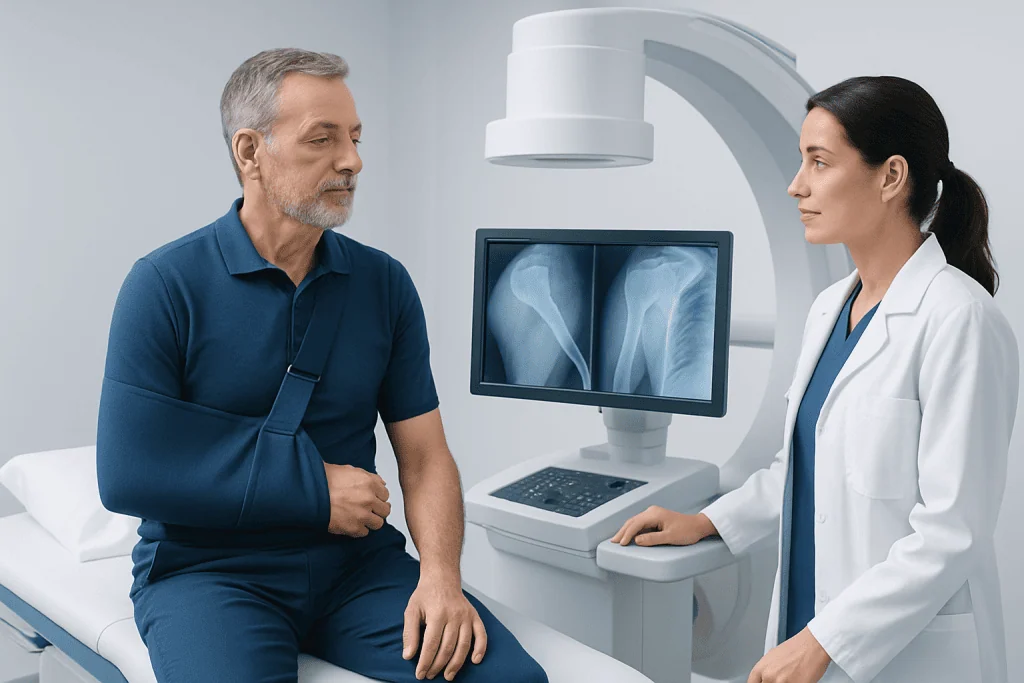
After an injury, a clinician will ask how it happened and examine the shoulder, arm, hand, and nerves. X-rays are typically used to identify the location and pattern of the fracture. A CT scan may be recommended when more detailed views are needed, especially if surgery is being considered or the fracture involves the joint surface.
Non-surgical treatment is often suitable for fractures in which the bone pieces remain well aligned. It commonly includes a sling for comfort and protection, pain-relief measures, and planned follow-up imaging. The treating clinician will advise when safe movement exercises can begin.
Surgery may be appropriate when the fragments are substantially displaced, the shoulder joint is unstable, the fracture is open, or the injury is unlikely to heal well with a sling alone. Procedures can involve plates and screws, rods, or, in selected complex cases, shoulder replacement. The choice depends on the fracture pattern, bone quality, general health, and functional needs of the individual.
In a surgical repair, the orthopedic team aligns the bone fragments and stabilizes them so healing can occur. Rehabilitation remains an important part of treatment after either non-surgical care or surgery, but the timing and limits of exercises differ according to the repair and the clinician’s instructions.
Fractured Shoulder Recovery Timeline: Week by Week

Weeks 0 to 2: Pain, swelling, bruising, and difficulty moving the arm are common. The arm is generally supported in a sling, and the person is advised to protect the shoulder from lifting, pushing, pulling, or weight-bearing. Gentle hand, wrist, and elbow movements may be encouraged to reduce stiffness, provided they do not move the injured shoulder.
Weeks 2 to 6: Pain often begins to settle, although sleep and everyday activities may still be uncomfortable. Follow-up X-rays may be used to check alignment and early healing. Depending on the fracture and treatment plan, a clinician or physiotherapist may introduce carefully controlled pendulum or assisted range-of-motion exercises. The shoulder should not be forced through pain.
Weeks 6 to 12: Many fractures show substantial healing during this period. The sling may be reduced or discontinued if imaging and examination support this. Rehabilitation usually progresses toward active shoulder movement, posture work, and light functional use of the arm. Heavy lifting, sports, and sudden movements are generally still restricted until the clinician confirms adequate healing.
Months 3 to 6 and beyond: Strengthening and more demanding daily activities are introduced gradually. Some stiffness, weakness, or aching with activity may remain, particularly after a complex fracture or surgery. Regaining the highest possible level of movement may take several months, and some people may have a lasting reduction in shoulder motion despite good fracture healing.
How Long Does It Take for a Fractured Shoulder to Stop Hurting?
Severe pain from a fractured shoulder commonly improves most during the first 1 to 3 weeks, but tenderness and aching can continue for several weeks as the bone heals. Pain may be more noticeable at night, when changing position, or during rehabilitation exercises. The pattern should generally be one of gradual improvement rather than steadily worsening pain.
Comfort measures may include the prescribed or recommended pain medicines, cold packs wrapped in a cloth for short periods, supported sleeping positions, and avoiding activities that strain the shoulder. A clinician can advise which medicines are appropriate, especially for people with kidney disease, stomach ulcers, heart conditions, blood-thinning medication, or other health concerns.
New or increasing pain after initial improvement may indicate overuse, a problem with fracture alignment, stiffness, infection after surgery, or another complication. It is important not to ignore a change in symptoms and to contact the treating team for advice.
How Long Should I Wear a Sling with a Fractured Shoulder?
A sling is commonly worn for roughly 2 to 6 weeks, but the correct duration depends on the exact bone injured, fracture stability, treatment approach, and healing seen on follow-up. Some stable fractures need a sling mainly for comfort, while more complex injuries may require longer protection. Only the treating clinician should determine when it is safe to stop using it.
Wearing a sling continuously for longer than advised can contribute to shoulder, elbow, wrist, and hand stiffness. For this reason, patients are often given specific instructions on taking the sling off for hygiene and permitted exercises. They should not begin unsupported shoulder movements or remove the sling for activities such as driving, lifting, or household work unless their clinician has approved this.
Good sling fit matters. The elbow should be supported, the hand should not hang below the elbow for long periods, and straps should not cause neck pain or pressure sores. Tingling, increasing swelling, coldness, or color changes in the hand should be assessed promptly.
Can You Still Move Your Arm with a Fractured Shoulder?
Some people can move the arm a little after a shoulder fracture, particularly if the fracture is stable. However, movement is often painful and limited, and being able to move the arm does not rule out a fracture. Trying to test the shoulder repeatedly or forcefully can worsen pain and may disturb the fracture.
Immediately after a fall, collision, or direct blow, the arm should be supported and the shoulder assessed by a healthcare professional. Until a fracture has been evaluated, it is safest to avoid lifting, reaching, pushing, pulling, or attempting to put the shoulder back into place.
During recovery, movement is reintroduced in stages. Early exercises may focus on the fingers, wrist, elbow, and gentle shoulder motion. Later, active movement and strengthening are added under professional guidance. This gradual approach helps balance protection of the healing bone with prevention of excessive stiffness.
What Is the Fastest Way to Heal a Fractured Shoulder?
The fastest safe way to heal a fractured shoulder is to follow the individual treatment plan consistently. This includes wearing the sling as instructed, attending imaging and follow-up appointments, completing approved rehabilitation exercises, and avoiding lifting or impact activities before the bone is ready. Attempting to return to normal activity too soon can delay recovery or affect alignment.
General health supports bone healing. A balanced diet with sufficient protein, calcium, vitamin D, and other nutrients is helpful, while smoking and nicotine products can impair bone healing and should be avoided. People who drink alcohol should ask their clinician about safe limits during recovery, particularly if they are using pain medicines.
Physiotherapy can help recover movement, coordination, and strength at an appropriate pace. Recovery should not be judged only by pain levels: a shoulder may feel better before the fracture is strong enough for heavier work or sport. The care team can provide an individualized return-to-activity plan.
Acibadem International’s multidisciplinary orthopedic, radiology, rehabilitation, and pain-management teams support diagnosis and treatment for international patients in JCI-accredited hospitals when specialist care is needed.
When to Seek Medical Care
Urgent medical assessment is needed after a shoulder injury when there is severe pain, visible deformity, inability to use the arm, marked swelling, or bruising. Emergency care is particularly important if the hand or arm becomes numb, weak, pale, blue, cold, or increasingly swollen, as these symptoms can suggest nerve or blood-vessel involvement.
People already diagnosed with a shoulder fracture should contact their treating clinician if pain becomes substantially worse, fever develops, the wound becomes red or drains after surgery, the sling causes pressure injury, or there is a sudden loss of movement. A fall or new injury during recovery also warrants medical advice.
Follow-up is important even when symptoms are improving. Clinicians use examination and, when needed, imaging to assess fracture healing and guide safe progression from protection to rehabilitation and normal daily activities.
Frequently asked questions
What is the usual recovery time for fractured shoulder injuries?
Most shoulder fractures take approximately 6 to 12 weeks for initial bone healing. Full recovery of movement, strength, and comfort may take 3 to 6 months, and sometimes longer for complex fractures or after surgery. The treating clinician can provide the most accurate timeline based on X-rays and progress at follow-up visits.
When can I drive after a fractured shoulder?
A person should not drive while wearing a sling, taking sedating pain medicine, or unable to control the steering wheel and perform an emergency maneuver safely. Clearance timing varies and should be discussed with the treating clinician. Insurance and local legal requirements may also apply.
Do all fractured shoulders need surgery?
No. Many shoulder fractures can heal without surgery when the fracture pieces are stable and well aligned. Surgery is more likely when there is major displacement, instability, joint involvement, an open injury, or a high risk of poor healing without fixation.
Why is my shoulder stiff after the fracture?
Stiffness is common because the shoulder is painful and protected in a sling during early healing. The shoulder joint can lose movement quickly when it is not used. Clinician-guided exercises and physiotherapy are important for restoring motion without placing excessive stress on the healing bone.
Can I sleep on my side with a fractured shoulder?
Sleeping directly on the injured side is usually uncomfortable and is generally avoided early in recovery. Many people find it easier to sleep partly upright or on the uninjured side with pillows supporting the injured arm. The clinician can offer individualized positioning advice after surgery or for specific fracture types.
Can a fractured shoulder heal incorrectly?
A fracture can sometimes heal in a less-than-ideal position, known as malunion, particularly if it is displaced or unstable. This may affect shoulder movement or strength, although the impact varies. Follow-up examinations and imaging help clinicians monitor alignment and decide whether treatment needs to be adjusted.
References
- American Academy of Orthopaedic Surgeons
- National Institute of Arthritis and Musculoskeletal and Skin Diseases
- NHS
- Mayo Clinic
This article is for general information only and is not a substitute for professional medical advice. Please consult a qualified doctor about your individual situation.
Joint and spine care in Turkey — expert assessment & treatment
JCI-accredited · board-certified surgeons · reply within 24h
Add us as a Preferred Source to see more of our trusted health content across Google Search, AI Overviews and Discover.