Red Dot in Eye: A Complete Medical Overview

The most common cause of a red dot in eye is a subconjunctival hemorrhage, which is usually harmless. A bright red patch without pain or vision loss often resolves gradually over days to weeks.
Key Takeaways
- The most common cause of a red dot in eye is a subconjunctival hemorrhage, which is usually harmless.
- A bright red patch without pain or vision loss often resolves gradually over days to weeks.
- High blood pressure, blood thinners, eye rubbing, coughing, and minor trauma can raise the risk.
- Pain, light sensitivity, discharge, repeated episodes, or blurred vision may point to a different eye problem.
- Medical assessment is important after eye injury or if the redness does not improve as expected.
A red dot in eye is commonly caused by a small broken blood vessel on the white of the eye, called a subconjunctival hemorrhage. It often looks dramatic but usually clears on its own; however, pain, injury, discharge, or changes in vision should be checked by a doctor.
What a Red Dot in Eye Usually Means
A red dot in eye most often means that a tiny blood vessel has broken just under the clear surface covering the white of the eye. This is called a subconjunctival hemorrhage. Although it can look striking in the mirror, it is often painless and usually does not affect vision.
The conjunctiva is a thin, transparent membrane that contains very small blood vessels. When one of these vessels leaks, blood becomes trapped beneath the surface, creating a bright red spot or patch. Because the blood is visible against the white of the eye, even a small amount can appear larger than it is.
This finding is different from general eye redness caused by irritation, allergy, or infection. A red dot in eye is often sharply defined, while diffuse redness may involve larger areas and come with itching, burning, tearing, or discharge. Understanding that difference can help a person know when simple observation may be enough and when further evaluation is needed.
Common Symptoms and What They Can Suggest
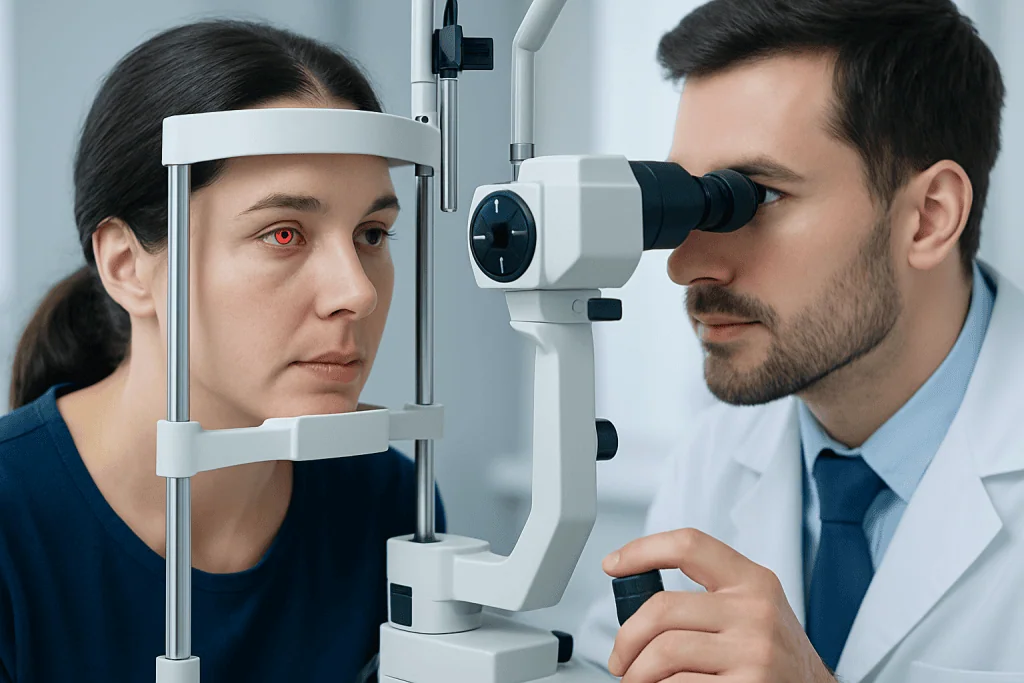
Many people with a red dot in eye notice it suddenly, often without any other symptoms. It may be found after waking up, after looking in a mirror, or when someone else points it out. In a typical subconjunctival hemorrhage, there is little or no pain, no change in vision, and no discharge.
As the eye heals, the red area may slowly change color, becoming darker or slightly yellow at the edges before disappearing. This process is similar to how a skin bruise fades. The eye may feel mildly full or irritated, but significant discomfort is not expected.
Other symptoms can suggest a different cause of eye redness and should not be ignored. These include:
- Blurred or reduced vision
- Moderate to severe eye pain
- Sensitivity to light
- Thick discharge or crusting
- Swelling around the eye
- Headache with nausea
- A feeling that something is stuck in the eye
When these symptoms are present, the red dot may not be a simple broken vessel. Conditions such as infection, inflammation, corneal injury, or elevated eye pressure may need prompt assessment by an eye specialist.
Causes and Risk Factors

A red dot in eye can happen after a very minor event. Coughing, sneezing, vomiting, straining during bowel movements, heavy lifting, or vigorous exercise can briefly raise pressure in the small blood vessels of the eye and cause one to break. Rubbing the eyes firmly or wearing contact lenses improperly may also contribute.
Minor trauma is another common cause. This may include being poked in the eye, getting hit by a ball, or accidentally scratching the eye surface. Even if the red area itself is a subconjunctival hemorrhage, any eye injury deserves attention because deeper structures can also be affected.
Some medical factors can make these small bleeds more likely. High blood pressure, diabetes, bleeding disorders, and use of blood-thinning medicines can increase the chance of a subconjunctival hemorrhage. In older adults, blood vessels may also become more fragile with age.
Less commonly, what appears to be a red dot may reflect another eye condition rather than a simple surface bleed. Examples include glaucoma, conjunctivitis, uveitis, or a corneal problem. These conditions usually come with additional symptoms, such as pain, eye pressure, discharge, or vision changes, which help distinguish them from a harmless broken vessel.
How Doctors Diagnose the Cause
Diagnosis begins with a careful history. A doctor usually asks when the red spot first appeared, whether there was coughing, strain, eye rubbing, trauma, contact lens use, or new medicines such as anticoagulants. They also ask about pain, discharge, previous episodes, and any change in sight.
On examination, the doctor looks at the appearance and location of the redness. A simple subconjunctival hemorrhage usually appears as a flat, sharply bordered red patch on the white of the eye. If vision is normal and there are no concerning symptoms, additional tests may not be needed.
When the situation is less straightforward, an eye exam may include visual acuity testing, measurement of eye pressure, and close inspection with a slit lamp. This helps identify injuries to the cornea, inflammation inside the eye, or signs of pressure-related disease. If trauma is involved, the clinician may advise further eye examination or imaging depending on the findings.
In people who have repeated episodes, the doctor may also consider checking blood pressure or reviewing medications and general health conditions. Occasionally, blood tests are advised if there is concern about abnormal clotting or unexplained bleeding elsewhere in the body.
Treatment Options and What Recovery Looks Like
For a straightforward subconjunctival hemorrhage, treatment is usually simple observation. The trapped blood is slowly reabsorbed by the body, and the red patch often clears over one to two weeks, though larger areas can take longer. Vision typically remains normal throughout recovery.
Lubricating eye drops, sometimes called artificial tears, may help if the eye feels mildly irritated or dry. It is generally best to avoid rubbing the eye. Contact lens wearers may be advised to pause lens use for a short time if there is irritation, especially until the eye feels comfortable and a clinician has ruled out a surface injury.
If another condition is found, treatment depends on the cause. Eye infections, inflammation, surface scratches, and pressure-related problems need targeted care. In some cases, this may involve specialist-led ophthalmology care to protect vision and relieve symptoms.
People who develop a red dot after trauma, surgery, or recurrent episodes may need closer follow-up. When treatment is required, it is aimed not at the blood spot itself, but at the underlying problem that caused it.
Self-care, Prevention, and Everyday Habits
Most cases cannot be completely prevented, but several practical steps may reduce the chance of another episode. Gentle eye care is important. Avoid rubbing the eyes, remove makeup carefully, and follow safe contact lens hygiene if lenses are worn.
Managing general health also matters. Keeping blood pressure within a healthy range, taking medicines exactly as prescribed, and attending routine checkups can help reduce strain on fragile blood vessels. Anyone taking blood thinners should not stop them without medical advice, but should mention repeated eye bleeding to their doctor.
Simple self-care measures include:
- Using lubricating drops if the eye feels dry or mildly irritated
- Resting the eyes after prolonged screen use
- Wearing protective eyewear during sports or home projects
- Seeking guidance if coughing, constipation, or frequent straining is ongoing
People who already have known eye conditions may benefit from regular specialist review. When redness happens alongside symptoms such as worsening vision or eye pressure concerns, further evaluation in services such as advanced eye treatment may be discussed if clinically appropriate.
When to Seek Medical Care
A red dot in eye should be medically assessed if it follows any eye injury, even when symptoms seem mild. Immediate evaluation is also important if there is reduced vision, significant pain, severe light sensitivity, nausea, or a headache with eye redness. These features are not typical of a simple broken blood vessel.
Medical advice is also recommended if the redness keeps coming back, involves both eyes frequently, or happens along with easy bruising or bleeding from other areas. This can help identify blood pressure issues, medication effects, or less common bleeding problems. If the spot does not begin to improve within a reasonable time, or if new symptoms develop, follow-up is sensible.
For international patients who need specialist evaluation, Acibadem International’s multidisciplinary specialists and JCI-accredited hospitals diagnose and treat a wide range of eye conditions. Prompt assessment can help distinguish a harmless subconjunctival hemorrhage from disorders that require targeted treatment.
Frequently asked questions
Is a red dot in eye usually serious?
Often, no. A red dot in eye is commonly a subconjunctival hemorrhage, which is a small broken blood vessel on the eye surface and usually clears on its own. It becomes more concerning if there is pain, injury, discharge, or any change in vision.
How long does a red dot in eye take to go away?
Many cases improve within one to two weeks, although larger spots can take a little longer. The color may change as the blood is reabsorbed, which is a normal part of healing. If it is not improving or if symptoms worsen, a doctor should review it.
Can high blood pressure cause a red dot in eye?
Yes, high blood pressure can make small blood vessels more likely to break. However, not every red dot in eye means blood pressure is elevated. Recurrent episodes are a good reason to discuss blood pressure and overall health with a doctor.
Should contact lenses be worn with a red dot in eye?
If the eye is irritated, painful, or there is any uncertainty about the cause, it is best to avoid contact lenses until the eye has been assessed or feels fully comfortable. Lenses can worsen irritation if there is a surface scratch or infection. A clinician can advise when it is safe to restart lens use.
Can coughing or sneezing cause a red dot in eye?
Yes. A forceful cough, sneeze, vomiting episode, or straining can briefly increase pressure in the tiny eye vessels and cause one to leak. This is a common and usually harmless trigger when no other symptoms are present.
What is the difference between a red dot in eye and pink eye?
A red dot in eye is often a localized patch of blood under the conjunctiva, while pink eye usually causes more diffuse redness with irritation, tearing, or discharge. Pink eye may also spread from one eye to the other, depending on the cause. Because symptoms can overlap, medical advice is helpful if the diagnosis is unclear.
References
- American Academy of Ophthalmology
- National Eye Institute
- Mayo Clinic
- Merck Manual Professional Edition
This article is for general information only and is not a substitute for professional medical advice. Please consult a qualified doctor about your individual situation.
Explore treatments in Turkey — costs, top hospitals & a free quote
JCI-accredited · board-certified surgeons · reply within 24h
Add us as a Preferred Source to see more of our trusted health content across Google Search, AI Overviews and Discover.
Check your numbers in seconds
BMI, calories, due date, blood pressure and 30+ more clinical calculators — free, instant, doctor-reviewed ranges.

More from the Health Library



Related Specialists

Dr. Gül Yüksel
Anesthesiology
Dr. Ali Şahin
General Surgery
Prof. Dr. M. Faruk Köse
Gynecology & Obstetrics
Hanife Durak
Physical Medicine & Rehabilitation