REM Sleep Behavior Disorder: Acting Out Dreams and Neurology Evaluation

REM Sleep Behavior Disorder involves dream-enacting behaviors during REM sleep, often with vivid or action-filled dreams. Diagnosis usually requires an overnight sleep study that records brain activity, breathing, muscle tone, and movements.
Key Takeaways
- REM Sleep Behavior Disorder involves dream-enacting behaviors during REM sleep, often with vivid or action-filled dreams.
- Diagnosis usually requires an overnight sleep study that records brain activity, breathing, muscle tone, and movements.
- Bedroom safety measures are an essential first step to reduce the risk of injury to the person and bed partner.
- Some medications, sleep disorders, and neurological conditions can be associated with RBD, so a full medical review is important.
- Treatment may include adjusting contributing medicines, managing other sleep problems, and using selected medicines under medical supervision.
REM Sleep Behavior Disorder is a sleep condition in which the normal muscle paralysis of dreaming sleep is reduced, allowing a person to move, shout, kick, or act out vivid dreams. A careful sleep and neurology evaluation can confirm the diagnosis, improve nighttime safety, and look for related neurological conditions when appropriate.
Overview
REM Sleep Behavior Disorder, often shortened to RBD, is a type of parasomnia in which a person physically acts out dreams during rapid eye movement sleep. REM sleep is the stage of sleep when dreaming is most vivid. In most people, the brain temporarily reduces muscle activity during REM sleep, so dreams are not physically acted out. In RBD, this protective muscle quieting is incomplete or absent.
Behaviors can range from mild hand movements, talking, or laughing to more forceful actions such as punching, kicking, jumping from bed, or running into furniture. The person may remember a vivid dream that matches the movement, such as being chased or defending themselves. Episodes often occur in the second half of the night, when REM sleep is more frequent.
RBD is a medical condition, not a sign of poor behavior or a psychological weakness. It deserves careful evaluation because it can affect safety and sleep quality, and because in some adults it may be associated with neurological changes. A structured assessment through neurological sleep medicine helps distinguish RBD from other nighttime events and guides the next steps.
Symptoms and Nighttime Behaviors
The main symptom of REM Sleep Behavior Disorder is dream enactment. A bed partner may notice the person speaking, shouting, swearing, laughing, grabbing, punching, kicking, or making sudden protective movements during sleep. Some people sit up, fall out of bed, or leave the bed without being fully awake. The person often awakens quickly and may be alert, with a clear memory of a vivid dream.
Dreams linked to RBD are commonly intense, active, or threatening, but the content varies. A person may describe defending themselves, escaping danger, playing sports, or interacting with people or animals. Unlike typical sleepwalking, which usually occurs in deep non-REM sleep and may involve confusion on awakening, RBD episodes often occur later in the night and the person may be easier to awaken.
Common clues that suggest RBD include:
- Repeated movements that appear to match dream content
- Vocalizations such as talking, shouting, or crying out during sleep
- Injuries, bruises, or falling from bed during episodes
- A bed partner moving to another room because of nighttime movements
- Episodes that are more noticeable during stressful periods, illness, or after medication changes
Not every movement during sleep is RBD. Periodic limb movements, obstructive sleep apnea, nocturnal seizures, panic episodes, and sleepwalking can look similar. This is why diagnosis should be based on a medical history and, when suspected, a monitored overnight sleep study rather than symptoms alone.
Causes and Risk Factors

RBD develops when the normal pathways that reduce muscle activity during REM sleep do not function fully. The reason can differ from person to person. In some cases, RBD appears after starting or changing certain medicines, especially some antidepressants. It may also be seen with narcolepsy, alcohol withdrawal, or other sleep and neurological conditions.
In adults, especially later in life, RBD can sometimes be associated with neurodegenerative conditions that affect movement and autonomic functions, such as Parkinson’s disease, dementia with Lewy bodies, or multiple system atrophy. This association does not mean that every person with RBD will develop one of these conditions. It does mean that the clinician may ask about movement, balance, smell, constipation, blood pressure symptoms, memory, and mood over time.
Risk factors include older age, male sex, a history of neurological disease, narcolepsy, and use of certain medications that influence REM sleep. However, RBD can occur in women and younger adults as well. In younger people, clinicians often look carefully for narcolepsy, medication effects, and other sleep disorders.
A thoughtful medical review can help identify treatable contributors. For example, untreated sleep apnea can fragment sleep and sometimes worsen complex nighttime behaviors. Managing coexisting sleep problems may reduce episodes and improve overall rest, even when RBD is also present.
Diagnosis and Neurology Evaluation
Diagnosis begins with a detailed history from the patient and, when possible, a bed partner or family member who has observed the events. The clinician asks when episodes occur, what the movements look like, whether there have been injuries, how often events happen, and whether the person remembers dreams. A review of medications, alcohol use, sleep schedule, mood symptoms, and other medical conditions is also important.
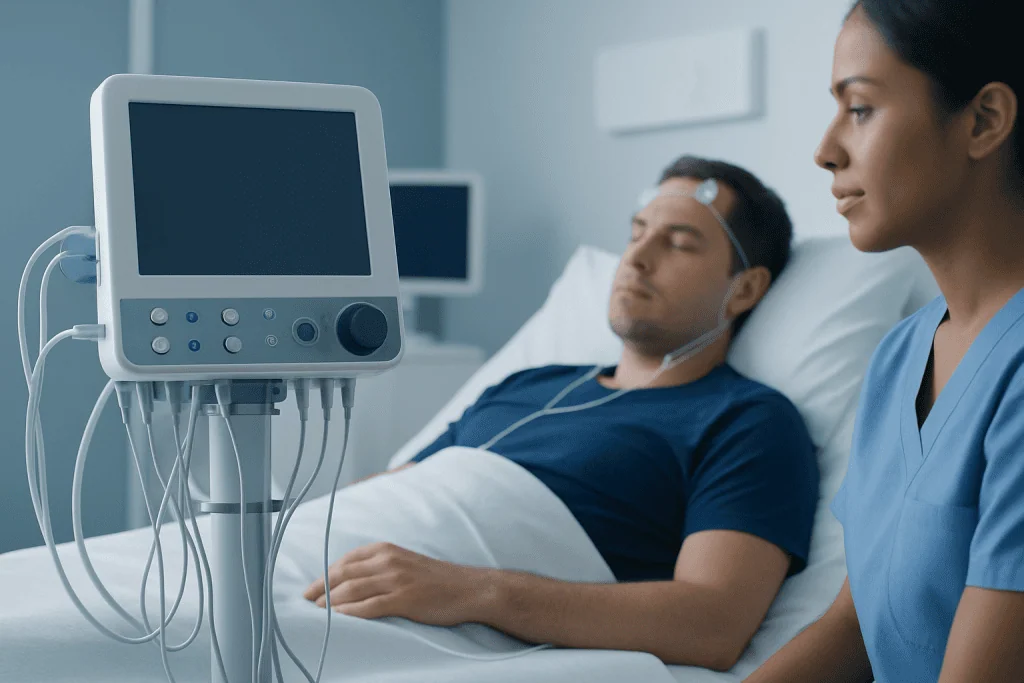
The key test for confirming RBD is an overnight polysomnography, also called a sleep study, with video recording and muscle activity monitoring. This study can show REM sleep without the usual muscle relaxation, called REM sleep without atonia, and can capture behaviors if they occur during the night. It also helps detect other conditions, such as sleep apnea, periodic limb movements, or seizures, that may mimic or worsen symptoms. Testing may be coordinated through neurophysiology services when specialized sleep and nervous system monitoring is needed.
A neurology evaluation may include a full neurological examination to assess movement, reflexes, coordination, walking, sense of smell, cognition, and autonomic symptoms such as dizziness on standing. This does not mean a serious disease is expected; rather, it provides a baseline and helps determine whether follow-up is needed.
In selected cases, additional tests may be considered based on the person’s history and examination. These may include brain imaging, cognitive testing, or evaluation for narcolepsy or seizures. The most appropriate work-up is individualized, because RBD is a clinical and sleep-study diagnosis rather than a condition diagnosed by a single blood test.
Treatment Options
Treatment has two main goals: preventing injury and reducing disruptive episodes. The first step is usually to make the sleeping environment safer. This may include moving sharp or breakable objects away from the bed, placing padding near the floor, lowering the bed, securing windows, and using separate blankets. In more severe cases, sleeping in separate beds or rooms may be recommended until episodes are controlled.
If a medication may be contributing, the prescribing doctor may consider adjusting it or changing to another option. Patients should not stop antidepressants, sleep medicines, or neurological medicines suddenly without medical advice, because withdrawal or symptom return can be harmful. Managing other sleep disorders, especially obstructive sleep apnea, is also important because fragmented sleep can make parasomnias more likely.
Medicines may be used when safety measures and treatment of contributing factors are not enough. Commonly used options include melatonin and clonazepam, chosen according to the person’s age, medical history, fall risk, breathing during sleep, and other medications. These medicines should be prescribed and monitored by a qualified clinician, because benefits and side effects vary.
When RBD occurs alongside tremor, stiffness, balance changes, or other movement symptoms, care may involve specialists in movement disorders or neurodegenerative diseases. The aim is to address the whole person, not only the nighttime behaviors, and to provide appropriate monitoring over time.
Prevention and Self-Care
RBD cannot always be prevented, but many people can reduce risk and improve sleep stability through practical measures. A consistent sleep schedule, adequate sleep time, and limiting alcohol can help reduce sleep fragmentation. Stress management, regular physical activity suited to the person’s health, and treatment of other medical conditions may also support better sleep.
Bedroom safety is the most important self-care step. Patients and families can remove bedside tables with sharp corners, place lamps and glass objects out of reach, and consider a mattress on a lower frame if falls have occurred. If a person has left the bed during episodes, door alarms or other safety measures may be discussed with a clinician or sleep specialist.
It is helpful to keep a sleep diary or ask a bed partner to record brief notes about episodes, including timing, behaviors, injuries, alcohol intake, medication changes, and stress or illness. Short video recordings may help the doctor understand the event, provided they are obtained safely and respectfully. These records can guide treatment decisions and show whether therapy is helping.
Acibadem International’s multidisciplinary specialists and JCI-accredited hospitals evaluate and treat neurological sleep disorders for international patients, including those who need coordinated sleep testing and neurology follow-up. Patients should seek care from qualified clinicians wherever they are treated, especially if episodes are frequent, forceful, or associated with injury.
When to See a Doctor
A medical evaluation is recommended when a person repeatedly acts out dreams, injures themselves or a bed partner, falls from bed, or has behaviors that feel unusual or frightening to the household. Even if episodes are mild, recurrent dream enactment should be discussed with a doctor because diagnosis can improve safety and identify treatable causes.
Prompt assessment is especially important if symptoms begin after a medication change, occur with excessive daytime sleepiness, or are accompanied by snoring, pauses in breathing, or choking during sleep. These clues may point to medication effects, narcolepsy, sleep apnea, or another sleep disorder that needs specific care.
People should also seek neurological evaluation if RBD symptoms occur together with tremor, slowed movement, stiffness, balance problems, fainting, constipation, loss of smell, memory changes, or visual hallucinations. These symptoms do not confirm a neurological disease on their own, but they help the clinician decide whether ongoing monitoring or additional testing is appropriate.
Emergency care is needed for serious injuries, head trauma, severe confusion, or events that may represent seizures. For most patients, however, RBD can be evaluated in a planned outpatient setting with a sleep specialist or neurologist, allowing time for a thorough history, sleep study, and personalized treatment plan.
Frequently asked questions
What is REM Sleep Behavior Disorder?
REM Sleep Behavior Disorder is a parasomnia in which a person acts out dreams during REM sleep. The usual muscle relaxation of dreaming sleep is reduced, allowing movements such as talking, shouting, kicking, or punching. It is a medical sleep disorder and can usually be evaluated with a sleep study and neurological assessment.
Is acting out dreams always REM Sleep Behavior Disorder?
No. Other conditions can look similar, including sleepwalking, obstructive sleep apnea, periodic limb movements, panic episodes, and nocturnal seizures. A doctor considers the timing, behavior pattern, dream recall, medical history, and sleep study findings before confirming RBD.
Does RBD mean someone will develop Parkinson's disease?
Not everyone with RBD develops Parkinson's disease or another neurological condition. However, in some adults RBD can be associated with disorders that affect movement and the autonomic nervous system. This is why neurologists may recommend baseline evaluation and periodic follow-up, while keeping the discussion balanced and individualized.
How is REM Sleep Behavior Disorder diagnosed?
Diagnosis is based on symptoms, witness reports, and an overnight sleep study called polysomnography. The study records sleep stages, breathing, muscle tone, and movements, and video monitoring may show dream-enacting behaviors. It also helps identify sleep apnea or other disorders that may mimic RBD.
What can be done at home to reduce injury risk?
The sleep area should be made as safe as possible by removing sharp or breakable objects, padding nearby surfaces, lowering the bed, and moving furniture away from the bedside. A bed partner may need separate bedding or a temporary separate sleeping space if episodes are forceful. These steps are important even when medication is being considered.
What treatments are used for RBD?
Treatment may include bedroom safety changes, addressing sleep apnea or other contributing conditions, reviewing medications, and using selected medicines when needed. Melatonin and clonazepam are commonly considered, but the best choice depends on age, breathing during sleep, fall risk, and other health factors. Patients should use these treatments only under medical supervision.
References
- American Academy of Sleep Medicine
- National Institute of Neurological Disorders and Stroke
- Mayo Clinic
- Sleep Foundation
- International Parkinson and Movement Disorder Society
This article is for general information only and is not a substitute for professional medical advice. Please consult a qualified doctor about your individual situation.
Explore treatments in Turkey — costs, top hospitals & a free quote
JCI-accredited · board-certified surgeons · reply within 24h
Check your numbers in seconds
BMI, calories, due date, blood pressure and 30+ more clinical calculators — free, instant, doctor-reviewed ranges.