Retinal Migraine: Temporary Vision Loss and Headache Explained

Retinal migraine usually causes temporary visual changes in only one eye. Episodes may include flashing lights, blind spots, dimming, or short-term vision loss.
Key Takeaways
- Retinal migraine usually causes temporary visual changes in only one eye.
- Episodes may include flashing lights, blind spots, dimming, or short-term vision loss.
- It is considered uncommon and should be diagnosed only after other serious causes are ruled out.
- Treatment focuses on identifying triggers, managing migraine, and preventing future attacks when needed.
- Sudden, new, or prolonged vision loss needs urgent medical attention.
Retinal migraine is a rare condition that causes brief, repeated visual symptoms in one eye, sometimes followed by headache. Because temporary vision loss can also signal other eye or blood vessel problems, proper medical evaluation is important.
Overview
Retinal migraine is a rare type of migraine that affects vision in one eye. During an episode, a person may notice shimmering, flashing, a blind spot, dimming, or even temporary loss of sight in that eye. These visual symptoms often last a short time and may happen before, during, or after a headache.
This condition is different from the more common visual aura seen in typical migraine. In migraine aura, visual symptoms usually come from the brain’s visual pathways and tend to affect both eyes, even if it feels like only one side of vision is involved. In retinal migraine, the disturbance is truly monocular, meaning it affects only one eye.
Because temporary vision loss can also happen with circulation problems, retinal disease, inflammation, or other neurologic conditions, doctors approach this diagnosis carefully. Retinal migraine is usually considered only after other possible causes have been excluded. That is why medical evaluation is an important part of care.
Symptoms
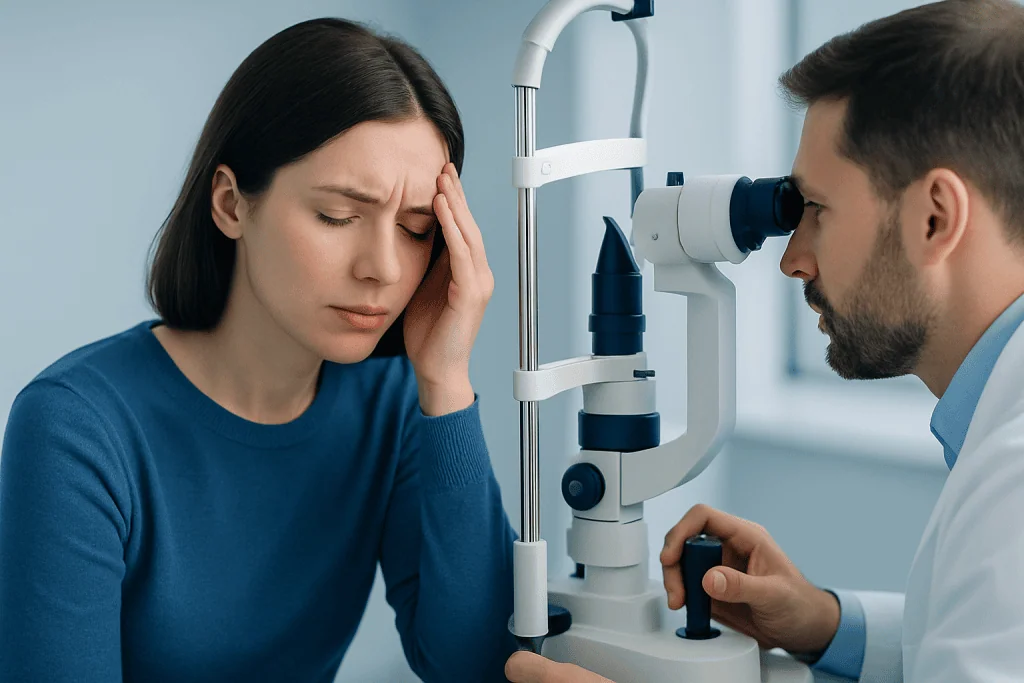
The main feature of retinal migraine is repeated episodes of visual disturbance in one eye. Symptoms may build gradually over a few minutes and then resolve completely. Some people develop a headache afterward, while others may have the visual symptoms with little or no head pain.
Visual symptoms can vary from person to person. Common descriptions include a gray or dark patch, flickering or flashing lights, narrowing of vision, blurred vision, or complete temporary blindness in one eye. The episode typically lasts from a few minutes up to about an hour, although the exact pattern can differ.
Symptoms that may occur along with the visual changes include:
- Throbbing headache, often on one side of the head
- Nausea or stomach discomfort
- Sensitivity to light or sound
- Difficulty carrying out usual activities during the attack
It can be difficult for someone to tell whether symptoms are in one eye or in part of the visual field of both eyes. Covering one eye at a time during an episode may help clarify this, but it should not replace medical assessment, especially if the symptom is new.
Causes and Risk Factors

The exact cause of retinal migraine is not fully understood. Experts believe it may involve temporary narrowing of blood vessels or changes in nerve signaling that reduce blood flow to the retina or the structures supplying the eye. These changes are usually brief, which is why vision often returns to normal after the episode.
Retinal migraine is more likely in people who have a personal or family history of migraine. It may also occur alongside common migraine triggers. These can include emotional stress, poor sleep, skipped meals, dehydration, hormonal changes, bright light, intense exercise, or certain foods and drinks in susceptible individuals.
Possible risk factors and triggers include:
- Previous migraine or migraine aura
- Smoking or nicotine exposure
- High blood pressure or vascular risk factors
- Hormonal fluctuations, including menstruation
- Dehydration, fatigue, or fasting
- Some medications that affect blood vessels
Although retinal migraine itself is generally temporary, doctors are careful because other conditions can mimic it. These include retinal tears, optic nerve disorders, mini-strokes, and eye circulation problems. In some cases, an evaluation may also look for conditions related to migraine more broadly, especially when symptoms overlap with other migraine patterns.
How It Is Diagnosed
There is no single test that proves retinal migraine. Diagnosis is mainly based on the pattern of symptoms, the medical history, and an eye and neurologic evaluation. A doctor will ask whether the visual change affected one eye or both, how long it lasted, whether there was headache, and whether the person has had similar episodes before.
Because temporary monocular vision loss may have more serious causes, the first goal is to rule out other conditions. Depending on the symptoms, a person may be assessed by an ophthalmologist, neurologist, or both. The examination may include visual acuity testing, retinal examination, blood pressure measurement, and review of vascular risk factors.
Additional tests are sometimes needed, particularly when symptoms are new, atypical, prolonged, or accompanied by other neurologic signs. These may include imaging or circulation studies such as MRI scanning or tests related to the eye and blood vessels. If doctors are considering other causes of temporary vision loss, they may also evaluate for stroke or transient ischemic attack depending on the clinical picture.
A retinal migraine diagnosis is more likely when episodes are brief, reversible, recurrent, and consistent with migraine, and when no other cause is found. Keeping a symptom diary can help document timing, triggers, and associated headache symptoms for the medical team.
Treatment Options
Treatment depends on how often attacks occur, how severe they are, and whether another condition is contributing to the symptoms. The first priority is making sure the diagnosis is correct. Once other causes are excluded, treatment usually focuses on migraine management and prevention.
For infrequent episodes, doctors may recommend avoiding known triggers and using general migraine self-care measures. If headaches are frequent or disabling, preventive migraine medicines may be considered. The choice of medicine is individualized and depends on age, overall health, pregnancy plans, blood pressure, and other medical conditions.
During a treatment discussion, doctors may review whether certain medicines are suitable or should be avoided, especially those that affect blood vessels. Some people also benefit from coordinated care that includes neurology evaluation and, when visual symptoms are prominent, detailed eye examination.
If symptoms are severe, changing, or not clearly due to migraine, additional work-up may continue before a long-term treatment plan is made. The goal is both to reduce attacks and to protect eye and neurologic health by not overlooking another diagnosis.
Prevention and Self-care
Prevention often begins with identifying triggers. A diary that records sleep, meals, hydration, stress, menstrual cycle, exercise, screen exposure, and foods around the time of attacks can reveal patterns. Avoiding personal triggers may reduce the frequency of episodes.
Healthy daily habits are an important part of migraine prevention. Regular sleep, good hydration, balanced meals, and stress management can help stabilize the body’s normal rhythms. Limiting smoking and discussing hormone-related triggers with a doctor may also be useful.
Helpful self-care steps may include:
- Keeping a regular sleep schedule
- Not skipping meals
- Drinking enough fluids
- Managing stress with relaxation techniques
- Limiting nicotine exposure
- Following the treatment plan recommended by a doctor
People should not assume every future episode is harmless just because they have had retinal migraine before. If the pattern changes, symptoms last longer than usual, or vision does not fully return, urgent reassessment is needed.
When to See a Doctor
Any first episode of sudden vision loss in one eye should be assessed promptly. Even if the vision returns, temporary monocular vision loss can sometimes point to an eye emergency or a circulation problem rather than migraine. It is safest to treat new symptoms seriously until a clinician says otherwise.
Urgent medical attention is especially important if vision loss lasts longer than usual, does not fully recover, or happens with weakness, numbness, trouble speaking, severe dizziness, chest pain, or a sudden severe headache. These features may suggest a condition other than retinal migraine and should not be ignored.
People who already have a diagnosis should still speak with their doctor if attacks become more frequent, more intense, or different in pattern. Ongoing follow-up can help refine treatment and confirm that no new condition has developed.
Near the end of the care journey, some patients may seek multidisciplinary review, especially when symptoms overlap between eye and neurologic conditions. Acibadem International’s multidisciplinary specialists in JCI-accredited hospitals evaluate and treat patients with headache and visual symptoms, particularly when coordinated ophthalmology and neurology care is needed.
Frequently asked questions
Is retinal migraine the same as migraine aura?
No. Retinal migraine affects vision in only one eye, while typical migraine aura usually comes from the brain’s visual pathways and often affects both eyes. This difference is important because true one-eye vision loss needs medical evaluation.
How long does a retinal migraine last?
Episodes are usually temporary and often last from a few minutes up to about an hour. Vision commonly returns to normal afterward. If vision loss is prolonged or does not fully improve, urgent medical care is needed.
Can retinal migraine cause permanent vision loss?
Most episodes are reversible, and vision returns after the attack. However, because rare complications and other more serious conditions can cause similar symptoms, repeated or unusual episodes should be assessed by a doctor.
What triggers retinal migraine?
Possible triggers include stress, lack of sleep, dehydration, skipped meals, hormonal changes, bright light, and nicotine exposure. Triggers vary by person, so keeping a symptom diary can be helpful. Identifying patterns often supports prevention.
When should someone go to the emergency room for vision loss?
Emergency care is appropriate for a first episode of sudden one-eye vision loss, symptoms that last longer than usual, or vision that does not fully return. It is also urgent if the episode happens with weakness, speech trouble, severe headache, or other neurologic symptoms.
How is retinal migraine treated?
Treatment starts with confirming the diagnosis and excluding other causes. Management may include trigger avoidance, lifestyle measures, and preventive migraine treatment when attacks are frequent or disruptive. The treatment plan should be individualized by a qualified clinician.
References
- American Migraine Foundation
- National Eye Institute
- National Institute of Neurological Disorders and Stroke
- American Academy of Ophthalmology
- International Headache Society
This article is for general information only and is not a substitute for professional medical advice. Please consult a qualified doctor about your individual situation.
Migraine in Turkey — costs, top hospitals & a free quote
JCI-accredited · board-certified surgeons · reply within 24h
Add us as a Preferred Source to see more of our trusted health content across Google Search, AI Overviews and Discover.
Check your numbers in seconds
BMI, calories, due date, blood pressure and 30+ more clinical calculators — free, instant, doctor-reviewed ranges.