Retinitis Pigmentosa: Diagnosis, Outlook, and Modern Treatment Approaches
Retinitis pigmentosa usually progresses slowly and often begins with difficulty seeing in dim light. It is caused by inherited gene changes that affect the retina’s rod and cone cells.
Key Takeaways
- Retinitis pigmentosa usually progresses slowly and often begins with difficulty seeing in dim light.
- It is caused by inherited gene changes that affect the retina’s rod and cone cells.
- Diagnosis relies on a detailed eye exam, retinal imaging, visual field testing, and often genetic testing.
- Treatment focuses on preserving vision, treating complications, and using low-vision aids and rehabilitation.
- People with new night vision problems, shrinking peripheral vision, or a strong family history should see an eye specialist.
Retinitis pigmentosa is a group of inherited retinal disorders that gradually damage the light-sensing cells of the eye, often causing night blindness and loss of side vision first. While there is not yet a universal cure, modern diagnosis, monitoring, low-vision support, and selected advanced treatments can help protect function and improve daily life.
Overview: what retinitis pigmentosa means
Retinitis pigmentosa is a group of inherited eye disorders that affect the retina, the thin layer of light-sensitive tissue at the back of the eye. In most forms, the cells responsible for seeing in dim light and side vision are affected first, so people often notice trouble at night or in dark rooms before any other symptom. Over time, central vision can also become involved.
The condition is not a single disease with one cause. Instead, it includes many genetic forms that can vary in age of onset, speed of progression, and severity. Some people develop symptoms in childhood, while others are not diagnosed until adulthood. Vision changes are often gradual, which can make early signs easy to overlook.
Although retinitis pigmentosa cannot always be reversed, modern care has advanced in important ways. Better imaging, genetic testing, low-vision services, and selected targeted therapies can help people understand their condition, plan ahead, and make the most of their remaining vision.
How vision changes over time
A distinctive feature of retinitis pigmentosa is the way vision changes tend to unfold. Rod photoreceptors, which help the eye function in low light and support peripheral vision, are often affected first. This can lead to night blindness, slower adjustment when moving from bright to dim places, and increasing difficulty seeing steps, curbs, or objects at the edge of vision.
As the condition progresses, many people develop tunnel vision, meaning their side vision narrows while central sight remains relatively stronger for a time. Later, cone photoreceptors may also be affected, causing problems with reading, facial recognition, color discrimination, glare sensitivity, and fine-detail tasks. The pace of change can differ significantly even among members of the same family.
Some people with inherited retinal conditions may have related diagnoses rather than classic retinitis pigmentosa alone. In specialist care, doctors may distinguish it from or connect it with other retinal disorders affecting central vision depending on the pattern of retinal involvement and test results.
Symptoms, causes, and risk factors
The most common symptoms of retinitis pigmentosa include poor night vision, bumping into objects at the side, difficulty driving at night, and gradually narrowing peripheral vision. In later stages, central vision may become blurred. Some people also notice sensitivity to bright light, reduced contrast, or trouble adapting between different lighting conditions.
The underlying cause is a change in one of many genes involved in retinal structure or function. These gene changes may be inherited in an autosomal dominant, autosomal recessive, or X-linked pattern, and in some people the condition appears without a previously known family history. Because of this genetic diversity, two people with the same diagnosis may have very different experiences.
Retinitis pigmentosa can occur on its own or as part of a broader syndrome that affects hearing, balance, or other organs. A careful review of personal and family history is therefore important. Risk is higher in people with relatives who have inherited retinal disease, unexplained vision loss, or early-onset night blindness.
- Common early symptom: difficulty seeing in low light
- Typical progression: side vision loss before central vision loss
- Main cause: inherited gene variants affecting retinal cells
- Important risk factor: family history of retinal disease
How retinitis pigmentosa is diagnosed
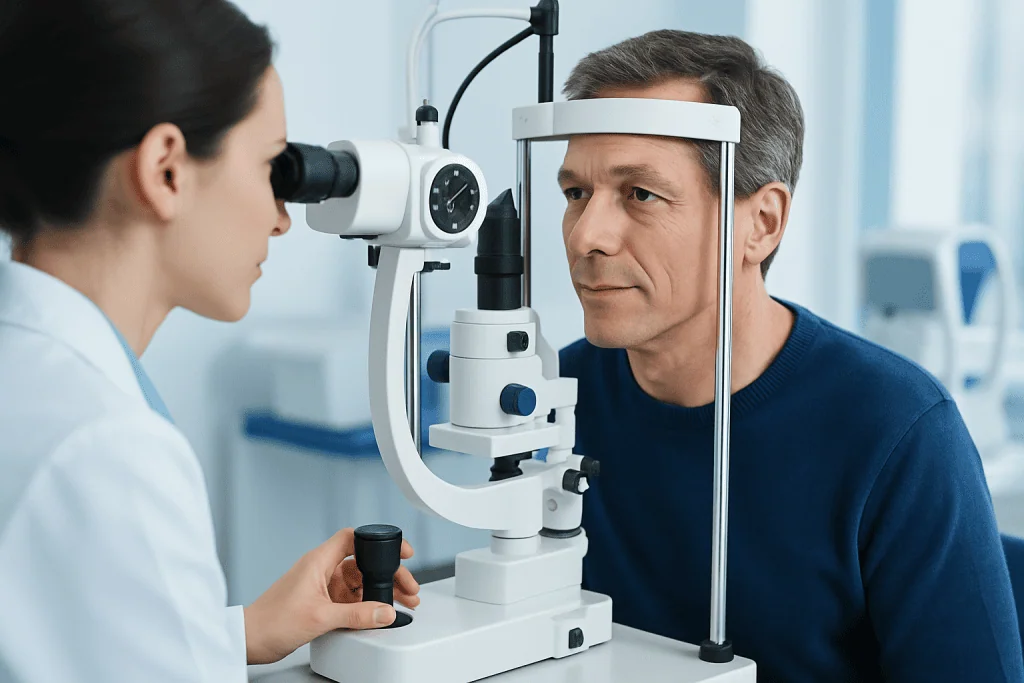
Diagnosis begins with a detailed discussion of symptoms, age at onset, and family history, followed by a comprehensive eye examination. An ophthalmologist may look for characteristic retinal pigment changes, narrowing of retinal blood vessels, and signs of optic nerve pallor. However, the appearance can vary, especially in early disease, so additional tests are usually needed.
Modern retinal imaging helps clarify the diagnosis and track changes over time. Optical coherence tomography can show thinning or structural changes in the retina, while fundus photography and autofluorescence can reveal patterns of retinal damage. Visual field testing measures peripheral vision loss, and electroretinography evaluates how well rod and cone cells respond to light.
Genetic testing is increasingly valuable because it can confirm the specific inherited form, help estimate outlook, guide family counseling, and identify whether someone may be eligible for emerging therapies or clinical trials. In some centers, diagnosis and follow-up are coordinated through advanced eye examination services and specialized retinal assessment. If surgery is needed for a complication such as a cataract, a specialist may also discuss options such as cataract surgery when appropriate.
Modern treatment approaches and supportive care
For most people, treatment is centered on preserving useful vision, addressing complications, and supporting daily function. There is no single treatment that works for every genetic type of retinitis pigmentosa, but care has become more individualized. Regular follow-up helps detect treatable problems such as cataracts or cystoid macular edema, which can worsen vision beyond the underlying retinal disease.
Low-vision rehabilitation is a major part of modern management. This may include magnifiers, contrast-enhancing tools, orientation and mobility training, glare control, screen readers, and digital accessibility features. These practical measures often make a meaningful difference in reading, work, education, and safer movement indoors and outdoors.
Selected patients may be candidates for targeted therapies based on the exact genetic cause or clinical situation. Depending on findings, an ophthalmologist may discuss advanced retinal disease treatment strategies, participation in clinical research, or management of associated retinal complications. When central retinal swelling is present, doctors may also consider treatments tailored to that problem, and in some cases care overlaps with approaches used for other retinal diseases.
Because vision loss can affect emotional well-being and independence, treatment plans often involve more than medical therapy alone. Counseling, occupational therapy, school or workplace accommodations, and genetic counseling can all be important parts of long-term care.
Outlook, daily living, and self-care
The outlook for retinitis pigmentosa depends largely on the underlying gene, the pattern of inheritance, and how much of the retina remains healthy. In many people, progression is slow and unfolds over years or decades. This means that early diagnosis, regular monitoring, and timely support can have a significant impact on quality of life even when the condition cannot be cured.
Daily self-care focuses on protecting remaining function and adapting the environment. Good lighting, reduced fall hazards, large-print or digital reading tools, and use of contrast can make everyday tasks easier. People should discuss driving safety with their eye specialist, especially if night vision or peripheral vision is reduced.
It is also sensible to manage general eye health and overall health. Routine eye care, control of conditions such as diabetes if present, and prompt reporting of sudden changes are important. Near the end of the care journey, some international patients may choose evaluation at centers such as Acibadem International, where multidisciplinary specialists in JCI-accredited hospitals diagnose and treat inherited retinal conditions.
When to seek medical care
A person should arrange an eye examination if they notice worsening night vision, repeated difficulty seeing in dim environments, increasing problems with side vision, or a strong family history of inherited eye disease. Early assessment can help clarify the cause and identify manageable complications before they affect daily activities more severely.
Urgent medical attention is important if there is a sudden change in vision, flashes of light, many new floaters, eye pain, or a rapid drop in central sight. These symptoms are not typical of the usual slow course of retinitis pigmentosa and may point to another eye problem that needs prompt treatment.
People already diagnosed with retinitis pigmentosa should keep regular follow-up appointments and ask about referral to a retina specialist, genetic counseling, or low-vision services if these have not yet been discussed. A qualified doctor can tailor advice to the specific type of disease and the person’s stage of vision change.
Frequently asked questions
Is retinitis pigmentosa a form of blindness?
Retinitis pigmentosa is not the same as immediate blindness. It is a group of inherited retinal disorders that usually causes gradual vision loss over time, often beginning with night vision and peripheral vision changes. The amount of vision loss varies widely from person to person.
What are the first signs of retinitis pigmentosa?
Early signs often include trouble seeing in dim light, slower adaptation in dark environments, and bumping into objects at the side. Some people notice these changes in childhood, while others develop symptoms later in life. Because the changes may be gradual, diagnosis can be delayed.
Can retinitis pigmentosa be cured?
There is no universal cure for all types of retinitis pigmentosa at this time. However, many people benefit from regular monitoring, treatment of complications, low-vision rehabilitation, and in selected cases targeted therapies based on genetic findings. Research in inherited retinal disease is continuing to develop.
How is retinitis pigmentosa confirmed?
Doctors usually confirm the diagnosis with a combination of eye examination, retinal imaging, visual field testing, and sometimes electroretinography. Genetic testing is often recommended because it can identify the exact inherited form. This can help with prognosis, family planning, and treatment eligibility.
Does retinitis pigmentosa always run in families?
Many cases are inherited, but not everyone knows of a family history at the time of diagnosis. Some relatives may have had very mild symptoms, may never have been tested, or may have been given a different diagnosis. Genetic counseling can help clarify inheritance patterns.
Can someone with retinitis pigmentosa still live independently?
Yes, many people with retinitis pigmentosa continue to live independently for many years. Low-vision aids, home and workplace adjustments, mobility training, and digital accessibility tools can make daily life much easier. The right support often improves confidence and safety.
References
- National Eye Institute
- American Academy of Ophthalmology
- MedlinePlus
- National Organization for Rare Disorders
- Orphanet
This article is for general information only and is not a substitute for professional medical advice. Please consult a qualified doctor about your individual situation.
Explore treatments in Turkey — costs, top hospitals & a free quote
JCI-accredited · board-certified surgeons · reply within 24h
Add us as a Preferred Source to see more of our trusted health content across Google Search, AI Overviews and Discover.