Rhabdomyoma: Diagnosis, Outlook, and Modern Treatment Approaches

Rhabdomyoma is benign, meaning it is not cancer, but it can still cause symptoms depending on its size and location. The main types are cardiac rhabdomyoma, usually seen in infants and children, and extracardiac rhabdomyoma, more often found in adults.
Key Takeaways
- Rhabdomyoma is benign, meaning it is not cancer, but it can still cause symptoms depending on its size and location.
- The main types are cardiac rhabdomyoma, usually seen in infants and children, and extracardiac rhabdomyoma, more often found in adults.
- Imaging tests such as echocardiography, ultrasound, CT, or MRI help define the tumor and guide next steps.
- Some rhabdomyomas only need monitoring, while others are treated with surgery or specialist care if they cause symptoms or complications.
- Because cardiac rhabdomyoma may be linked with tuberous sclerosis complex, doctors may recommend broader evaluation when appropriate.
Rhabdomyoma is a rare benign tumor made of striated muscle cells. Outlook is often favorable, but diagnosis and treatment depend on where the tumor develops, especially whether it affects the heart or the head and neck region.
Overview: what rhabdomyoma means
Rhabdomyoma is a rare benign tumor that develops from striated muscle tissue. In practical terms, this means it is a noncancerous growth arising from the type of muscle found in the heart or skeletal muscles. Although it is benign, its location matters greatly because a mass in the heart, airway, mouth, or neck can still interfere with normal function.
Doctors usually divide rhabdomyoma into two broad groups: cardiac rhabdomyoma and extracardiac rhabdomyoma. Cardiac rhabdomyoma forms in the heart and is most often identified before birth, in newborns, or in young children. Extracardiac rhabdomyoma occurs outside the heart, most commonly in the head and neck of adults, and behaves differently from the cardiac form.
The outlook for rhabdomyoma is often good. Many cardiac rhabdomyomas shrink on their own over time, while extracardiac rhabdomyomas can often be managed effectively with surgery when needed. The main goal is to identify the exact type, assess whether it is causing symptoms, and decide whether careful follow-up or active treatment is the safest approach.
Types and where it can occur
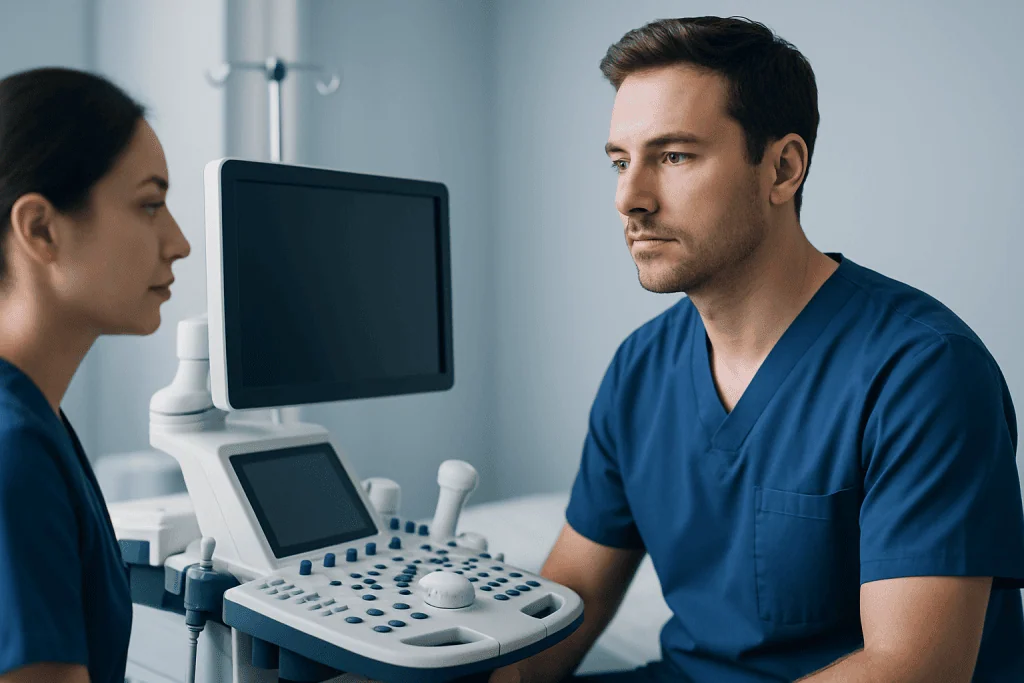
Cardiac rhabdomyoma is the most common heart tumor in infants and children. It often appears as one or more masses within the heart muscle. Some children have no symptoms, and the tumors are found during prenatal ultrasound or an echocardiogram performed for another reason. In other cases, the tumor can affect blood flow or the heart’s electrical system.
Extracardiac rhabdomyoma is less common and is usually diagnosed in adults. The adult type most often appears in the head and neck, such as the mouth, throat, larynx, or soft tissues of the neck. A fetal type and a genital type also exist, but these are much rarer. Because these forms can resemble other soft tissue masses, specialist evaluation is important.
It is also important not to confuse rhabdomyoma with rhabdomyosarcoma. Rhabdomyosarcoma is a malignant tumor, while rhabdomyoma is benign. Imaging and tissue examination help doctors make this distinction clearly and plan the most appropriate care.
Symptoms and possible complications

Symptoms depend more on location than on the tumor itself. Cardiac rhabdomyoma may cause no symptoms at all, especially when the masses are small. When symptoms do occur, they can include irregular heartbeat, a heart murmur, poor feeding, bluish skin color, breathing difficulty, fainting, or signs of reduced blood flow if the tumor obstructs part of the heart.
In adults with extracardiac rhabdomyoma, symptoms are often related to a slowly growing lump. A person may notice a painless mass in the mouth or neck, hoarseness, difficulty swallowing, a sensation of fullness in the throat, snoring, or breathing changes if the airway is narrowed. Some tumors are found incidentally during dental, ENT, or imaging evaluations.
Potential complications are uncommon but can be clinically significant. Cardiac tumors may interfere with heart rhythm or block blood flow. Head and neck tumors may affect speech, swallowing, or breathing when they grow in confined spaces. Even though rhabdomyoma is benign, any concerning symptoms should be assessed by a qualified doctor rather than watched indefinitely at home.
Causes, risk factors, and related conditions
The exact cause of rhabdomyoma is not always known. For cardiac rhabdomyoma, one of the most important associations is tuberous sclerosis complex, a genetic condition that can affect the brain, skin, kidneys, heart, and other organs. Not every child with a cardiac rhabdomyoma has tuberous sclerosis complex, but the connection is strong enough that doctors often consider additional evaluation when a heart tumor is found.
Extracardiac rhabdomyoma does not have a single clear cause in most cases. It is usually sporadic, meaning it develops without a known inherited pattern. The adult type is seen more often in middle-aged and older adults and tends to occur in the head and neck region, but why it appears there is still not fully understood.
Because these tumors are rare, risk factors are less well defined than for more common conditions. What matters most for patients is not trying to identify a cause on their own, but obtaining an accurate diagnosis and understanding whether the tumor is isolated or part of a broader syndrome that may need follow-up across several specialties.
How rhabdomyoma is diagnosed
Diagnosis starts with a careful history, physical examination, and imaging tailored to the tumor’s location. Cardiac rhabdomyoma is often first seen on prenatal ultrasound or after birth on echocardiography, which shows the size, number, and position of the masses inside the heart. Doctors may also use electrocardiography to check the heart rhythm and additional imaging to better understand any effect on blood flow.
For extracardiac rhabdomyoma, ultrasound, CT, or MRI may be used to define the mass and its relationship to nearby tissues. Imaging alone cannot always confirm the diagnosis, because other benign and malignant tumors can look similar. In many adult cases, biopsy or surgical removal followed by pathological examination is needed to identify the tumor with confidence.
When cardiac rhabdomyoma is diagnosed, doctors may also recommend evaluation for related conditions, including features of tuberous sclerosis complex. This can involve assessment by pediatric cardiology, neurology, dermatology, genetics, or other specialists. A structured workup helps clarify both the immediate heart-related issue and the longer-term outlook.
Modern treatment approaches and follow-up
Treatment is individualized because rhabdomyoma behaves differently depending on its type. Many cardiac rhabdomyomas are managed with observation alone, especially if the child has no symptoms and the tumor is not obstructing blood flow or causing rhythm problems. These tumors often regress over time, so close follow-up with pediatric cardiology and repeat echocardiograms may be the safest plan.
Active treatment is considered when the tumor causes arrhythmia, obstruction, heart failure symptoms, or other clinically important problems. Management may include medications to control heart rhythm or support heart function. In select situations, procedures or cardiac surgery may be discussed, particularly if there is severe blockage or symptoms that cannot be controlled conservatively.
Extracardiac rhabdomyoma is commonly treated with surgery when it causes symptoms, grows, or when diagnosis remains uncertain before removal. The aim is to remove the mass while preserving nearby structures such as nerves, muscles, and the airway. Depending on where the tumor sits, care may involve ENT evaluation and surgery or support from a head and neck team. Follow-up remains important because recurrence can happen, especially if a lesion is not fully removed.
For international patients who need coordinated assessment, Acibadem International’s multidisciplinary specialists and JCI-accredited hospitals diagnose and treat rhabdomyoma with input from cardiology, pediatrics, radiology, pathology, and surgical teams when appropriate.
Outlook, self-care, and living with rhabdomyoma
The overall outlook for rhabdomyoma is generally favorable because it is a benign tumor. In children with cardiac rhabdomyoma, prognosis depends on whether the tumor affects heart function and whether there is an associated condition such as tuberous sclerosis complex. Many children do well with careful monitoring, and some tumors become smaller over time without surgery.
Adults with extracardiac rhabdomyoma also often have a good outcome after treatment, especially when the mass can be completely removed. Even so, ongoing observation may be recommended to monitor for recurrence or to check symptoms related to swallowing, voice, or breathing if the tumor was located in the head and neck.
Self-care focuses on attending follow-up visits, reporting any new symptoms promptly, and following the care plan set by the specialist team. Parents of children with cardiac rhabdomyoma may be advised to watch for feeding difficulty, rapid breathing, fainting, poor growth, or unusual episodes that could suggest an arrhythmia. Adults should seek review if a neck or oral mass changes, returns, or starts interfering with speech, swallowing, or sleep.
When to seek medical care
Medical evaluation is important for any new or unexplained lump in the mouth, throat, or neck, especially if it persists, enlarges, or affects swallowing or breathing. A doctor should also assess persistent hoarseness, repeated choking, or a feeling of blockage in the throat.
Urgent care is needed if a baby or child with known or suspected cardiac rhabdomyoma develops breathing difficulty, bluish skin color, poor feeding, fainting, or signs of an abnormal heartbeat. Adults should seek prompt attention for chest pain, palpitations, shortness of breath, or sudden airway symptoms, even though these symptoms can have many causes other than rhabdomyoma.
Because rhabdomyoma is rare, specialist assessment helps avoid confusion with other conditions and supports the right treatment plan. Early evaluation is especially valuable when symptoms involve the heart, the airway, or important functions such as swallowing and speech.
Frequently asked questions
Is rhabdomyoma cancer?
No. Rhabdomyoma is a benign tumor, which means it is not cancerous. However, it can still cause medical problems if it develops in a sensitive location such as the heart or airway.
What is the difference between cardiac and adult rhabdomyoma?
Cardiac rhabdomyoma develops in the heart and is most often seen in fetuses, infants, and children. Adult rhabdomyoma usually occurs outside the heart, especially in the head and neck, and is more often managed with surgery when symptomatic.
Can rhabdomyoma go away on its own?
Cardiac rhabdomyomas often shrink over time, especially in infants and young children, so doctors may recommend observation when the child is stable. Extracardiac rhabdomyomas are less likely to disappear spontaneously and may need removal if they cause symptoms or continue to grow.
How is rhabdomyoma confirmed?
Doctors usually begin with imaging such as echocardiography, ultrasound, CT, or MRI, depending on where the tumor is located. In many extracardiac cases, pathology from a biopsy or surgical specimen is needed to confirm the diagnosis and rule out other tumors.
Is rhabdomyoma linked to a genetic condition?
Yes, cardiac rhabdomyoma is strongly associated with tuberous sclerosis complex. Because of this, doctors may recommend additional evaluation if a cardiac rhabdomyoma is found, particularly in a fetus, infant, or child.
Does every rhabdomyoma need surgery?
No. Treatment depends on symptoms, location, and whether the tumor is interfering with organ function. Some cardiac rhabdomyomas are safely monitored, while symptomatic extracardiac tumors are more often treated surgically.
References
- World Health Organization
- National Cancer Institute
- American Heart Association
- National Organization for Rare Disorders
- MedlinePlus
This article is for general information only and is not a substitute for professional medical advice. Please consult a qualified doctor about your individual situation.
Heart care in Turkey — expert evaluation and treatment
JCI-accredited · board-certified surgeons · reply within 24h
Add us as a Preferred Source to see more of our trusted health content across Google Search, AI Overviews and Discover.

More from the Health Library



Related Specialists
Fzt. Sabit Kılıç
Physical Medicine & Rehabilitation
Dr. Emine Çiğdem Kırçiçeği Çiçekdağ
Anesthesiology
Dr. Erald Bakıu
Inpatient Clinic Physicians
Prof. Dr. Metin Gürsürer
Cardiology