Ringworm: A Complete Medical Overview

Ringworm is a fungal infection, not a parasitic worm infection. It often causes an itchy, scaly rash with a clearer center and a more active outer edge.
Key Takeaways
- Ringworm is a fungal infection, not a parasitic worm infection.
- It often causes an itchy, scaly rash with a clearer center and a more active outer edge.
- Treatment depends on where the infection is located; skin infections may respond to creams, while scalp and nail infections often need oral medicine.
- Ringworm spreads through direct skin contact, shared items, and contaminated surfaces.
- Medical evaluation is important if the rash affects the scalp, nails, face, or does not improve with home treatment.
Ringworm is a common fungal infection of the skin, scalp, feet, groin, or nails. Despite its name, it is not caused by a worm, and most cases improve with the right antifungal treatment and practical hygiene measures.
Overview
Ringworm is a contagious fungal infection that affects the outer layers of the skin, hair, or nails. Doctors often call it a tinea infection, with the name changing depending on the body area involved. For example, ringworm on the body is called tinea corporis, while athlete’s foot is tinea pedis and scalp ringworm is tinea capitis.
The name can be misleading because no worm is involved. The infection is caused by dermatophyte fungi that feed on keratin, a protein found in skin, hair, and nails. This is why ringworm can appear in several forms, from a circular rash on the skin to scaling on the scalp or thickened nails.
Ringworm is very common and can affect children and adults. It usually responds well to treatment, but it may spread, recur, or involve multiple body sites if it is not recognized early. A careful diagnosis matters because other conditions, such as eczema or psoriasis, can look similar.
How ringworm can look and feel
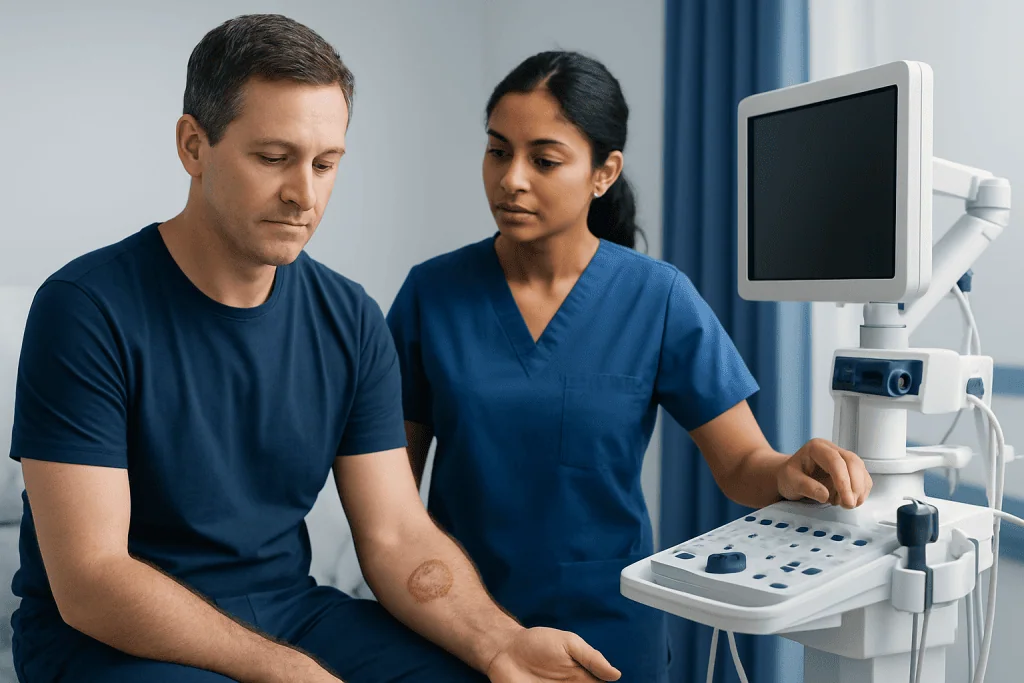
Ringworm does not always look the same in every person or on every part of the body. On the trunk, arms, or legs, it often appears as a round or oval patch with a raised, scaly border and a clearer or less inflamed center. The rash may slowly expand outward and may itch.
On the scalp, ringworm can cause flaking that resembles dandruff, tender patches, itching, or areas of broken hair and hair loss. In more inflamed cases, a swollen, painful area called a kerion can develop. Nail infections may cause thickening, discoloration, brittleness, or crumbling rather than a classic ring-shaped lesion.
Common symptoms can include:
- Itchy, scaly, or red patches
- Ring-shaped lesions with a more active outer edge
- Dry, cracked, or peeling skin
- Hair breakage or patchy hair loss on the scalp
- Thickened, brittle, or discolored nails
Because ringworm can resemble many other skin problems, appearance alone is not always enough for self-diagnosis. People with persistent rashes, scalp symptoms, or nail changes often benefit from assessment by a skin specialist, especially when the condition may overlap with psoriasis or other inflammatory skin disorders.
Causes and risk factors

Ringworm is caused by fungi that grow in warm, moist environments. It spreads through direct skin-to-skin contact with an infected person, through contact with animals, or by touching contaminated items such as towels, combs, clothing, bedding, gym mats, or floors in locker rooms. In some cases, infection can also be picked up from contaminated soil.
Several factors make ringworm more likely. Sweating, tight clothing, humid weather, minor skin injuries, and poor drying of the skin after bathing or exercise can all encourage fungal growth. People who play contact sports, share personal items, or spend time barefoot in communal wet areas may have a higher risk.
Certain health conditions can also increase susceptibility or make infections harder to clear. These include diabetes, a weakened immune system, and skin conditions that affect the skin barrier. If a fungal infection is frequent or severe, a doctor may consider whether there is an underlying issue such as diabetes.
Pets, especially cats and dogs, can sometimes carry ringworm even if they look healthy. If several family members develop similar symptoms or the infection keeps returning, checking household contacts, shared items, and pets may be part of a complete approach.
Diagnosis
Ringworm is often suspected based on the appearance of the skin, scalp, or nails and a person’s recent exposures. A doctor will usually ask when the rash started, whether it itches or spreads, and whether there has been contact with infected people, animals, or communal sports and bathing areas.
Because many rashes can mimic ringworm, diagnosis may need confirmation. A clinician may gently scrape a small sample of skin or collect hair or nail material for microscopic examination or fungal testing. In selected cases, a culture or other laboratory methods help identify the fungus and guide treatment.
This step is especially important when symptoms involve the scalp, nails, face, widespread skin, or recurrent disease. It can also help avoid unnecessary use of steroid creams, which may temporarily reduce redness while allowing the fungal infection to worsen or become less typical in appearance.
When the diagnosis is uncertain or the condition is extensive, evaluation by dermatology can be useful. In some cases, doctors may also discuss treatment approaches used in dermatology care for persistent fungal and inflammatory skin conditions.
Treatment options
Treatment depends mainly on the site and severity of infection. Mild ringworm on the body, groin, or foot often improves with topical antifungal creams, gels, sprays, or powders used consistently for the full recommended period. Even when the rash starts to fade quickly, treatment usually needs to continue long enough to reduce the chance of recurrence.
Scalp ringworm and most nail infections usually require oral antifungal medicine because creams do not reach the infected hair shafts or nail bed effectively. These treatments should be prescribed and monitored by a qualified doctor, especially in children, older adults, and people with liver disease or multiple medications.
Supportive care also matters. The affected area should be kept clean and dry, and scratching should be minimized to reduce irritation and spread. Towels, hats, socks, and bedding should not be shared until treatment is underway and symptoms are improving.
Doctors may recommend specialist review for difficult, recurrent, or widespread cases. Depending on the body area involved, management can overlap with broader skin diseases treatment or, when nail involvement is significant, nail diseases treatment. Steroid-only creams should generally be avoided unless specifically advised by a clinician, because they can mask symptoms and worsen fungal infections.
Prevention and self-care
Good daily habits can lower the risk of getting ringworm and help stop it from spreading to others. Skin should be dried well after bathing, especially between the toes and in skin folds. Breathable clothing and moisture-wicking socks can help reduce dampness, and sweaty workout clothes should be changed promptly.
It is also important to avoid sharing personal items such as towels, combs, hats, razors, shoes, and nail tools. In gyms, pools, and locker rooms, sandals or shower shoes can reduce contact with potentially contaminated surfaces. Household items that touch the affected area should be washed regularly.
If someone has ringworm, self-care steps can include:
- Using antifungal medicine exactly as directed
- Keeping the area clean and dry
- Washing hands after touching the rash
- Changing socks and underwear daily
- Checking pets if infections recur or spread within the household
Children with scalp ringworm may need specific guidance about school attendance, sports, and sharing hats or brushes. A doctor can advise when the infection is considered less contagious after treatment has started.
When to seek medical care
Many mild skin infections can be treated successfully, but some situations call for medical attention. A person should seek care if the rash involves the scalp, beard area, nails, or face; if it is painful, swollen, draining, or rapidly spreading; or if it does not improve after an appropriate trial of over-the-counter antifungal treatment.
Medical assessment is also important for infants, people with diabetes, those with weakened immune systems, and anyone with frequent recurrences. Prompt evaluation helps confirm the diagnosis, rule out look-alike conditions, and choose the right treatment before complications such as secondary bacterial infection or scarring hair loss develop.
Specialist support can be useful when the diagnosis is uncertain or symptoms are persistent. Acibadem International’s multidisciplinary specialists and JCI-accredited hospitals diagnose and treat ringworm and related skin conditions for international patients when expert evaluation is needed.
Frequently asked questions
Is ringworm actually caused by a worm?
No. Ringworm is caused by a group of fungi that infect the skin, hair, or nails. The name comes from the ring-shaped rash that often appears on the skin.
Can ringworm go away on its own?
Some mild cases may seem to improve, but untreated ringworm often persists, spreads, or comes back. Proper antifungal treatment usually clears the infection more reliably and helps prevent transmission to others.
How long does ringworm take to clear?
The timeline depends on the location and severity. Skin infections may improve within a few weeks, while scalp and nail infections often take longer and may need prescription oral treatment.
Is ringworm contagious after treatment starts?
It becomes less contagious once effective treatment has begun, but spread is still possible early on. Good hygiene, avoiding shared personal items, and following treatment instructions remain important.
Can pets give ringworm to people?
Yes. Cats, dogs, and other animals can carry the fungus and pass it to humans, sometimes even when they do not have obvious skin lesions. If infections keep recurring, a veterinarian may need to evaluate household pets.
Should steroid cream be used on ringworm?
Steroid-only creams are generally not a good choice unless a doctor specifically recommends them. They can reduce redness temporarily while allowing the fungal infection to persist or become harder to recognize.
References
- American Academy of Dermatology
- Centers for Disease Control and Prevention
- National Health Service
- Mayo Clinic
- World Health Organization
This article is for general information only and is not a substitute for professional medical advice. Please consult a qualified doctor about your individual situation.
Hair transplant in Turkey — costs, graft counts & a free assessment
JCI-accredited · board-certified surgeons · reply within 24h
Add us as a Preferred Source to see more of our trusted health content across Google Search, AI Overviews and Discover.

More from the Health Library



Related Specialists

Dr. Hüseyin Coşkun
Pediatrics
Assoc. Prof. Dr. Selin Özaltın
Gynecology & Obstetrics
Assoc. Prof. Dr. Emrullah Hayta
Physical Medicine & Rehabilitation
Fzt. Melisa İpar
Physical Medicine & Rehabilitation