Risks and Complications of Orthopedic Surgery

Most orthopedic procedures are completed safely, but all surgery involves some level of risk. Common complications may include infection, bleeding, blood clots, stiffness, nerve injury, or delayed healing.
Key Takeaways
- Most orthopedic procedures are completed safely, but all surgery involves some level of risk.
- Common complications may include infection, bleeding, blood clots, stiffness, nerve injury, or delayed healing.
- A patient’s age, general health, smoking status, and the type of surgery can affect complication risk.
- Careful preoperative assessment and following recovery instructions can lower many risks.
- Prompt medical review is important if there is fever, worsening pain, drainage, swelling, or breathing symptoms after surgery.
Orthopedic surgery can relieve pain, improve movement, and restore function, but like any operation it carries possible risks and complications. Understanding these issues helps patients prepare well, take part in safer recovery, and know when to seek medical advice.
Overview of orthopedic surgery risks and complications
Orthopedic surgery includes procedures on bones, joints, ligaments, tendons, muscles, and the spine. These operations may be recommended to treat fractures, arthritis, sports injuries, deformities, or chronic pain that has not improved with non-surgical care. Many people benefit greatly from surgery, especially when it helps restore mobility and daily function.
Even so, no operation is completely risk-free. The phrase orthopedic surgery risks and complications refers to unwanted events that may happen during surgery, shortly after it, or later in recovery. Some complications are minor and temporary, while others may need additional treatment, rehabilitation, or occasionally another procedure.
The likelihood of a complication depends on several factors, including the type of surgery, the body area involved, the patient’s overall health, and how well recovery instructions are followed. A simple arthroscopic procedure usually has different risks from a complex fracture repair or joint replacement. Understanding these differences can help patients have realistic expectations and make informed decisions with their surgical team.
Common complications after orthopedic surgery

Some complications are seen across many kinds of orthopedic procedures. Infection is one of the best-known risks. It may affect the skin around the incision or, less commonly, deeper tissues such as bone, a joint, or an implant. Signs can include redness, warmth, drainage, fever, or increasing pain rather than steady improvement.
Bleeding and blood clots are also important concerns. A small amount of bleeding or bruising can be expected after surgery, but excessive bleeding may need urgent care. Clots in the legs, known as deep vein thrombosis, can sometimes develop after reduced mobility. If a clot travels to the lungs, it can cause a pulmonary embolism, which is a medical emergency.
Other possible complications include swelling, stiffness, delayed wound healing, ongoing pain, and temporary difficulty moving the operated limb. Nerve or blood vessel injury is uncommon but can happen, especially in surgeries close to major nerves or vessels. Depending on the procedure, there may also be anesthesia-related effects such as nausea, confusion, sore throat, or rare heart and breathing problems.
- Infection at the incision site or deeper tissues
- Bleeding, bruising, or hematoma
- Blood clots in the legs or lungs
- Stiffness, swelling, and limited range of motion
- Nerve, tendon, or blood vessel injury
- Persistent pain or slower-than-expected recovery
Procedure-specific risks
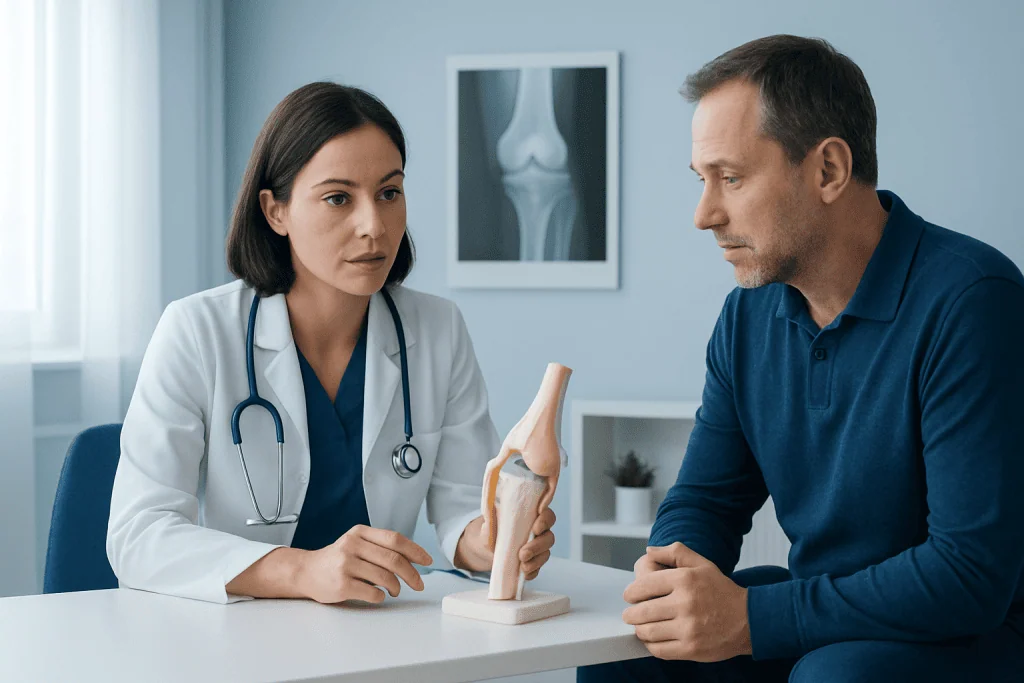
Different orthopedic operations have different patterns of risk. Joint replacement procedures, such as hip or knee replacement, may involve risks related to the prosthetic implant. These can include loosening, wear, dislocation, instability, leg length differences, or joint stiffness over time. In a small number of cases, revision surgery may be needed later.
Fracture surgery can be complicated by delayed bone healing, nonunion, malunion, hardware irritation, or infection around plates, screws, or rods. Ligament and tendon procedures may carry a risk of re-tear, graft problems, scar tissue, or reduced strength if rehabilitation is delayed or overly aggressive. Spine surgery can involve risks such as nerve irritation, spinal fluid leak, or continued pain even when the operation itself is technically successful.
Minimally invasive surgery often means smaller incisions and faster recovery, but it does not remove all risk. For example, arthroscopy can still lead to infection, stiffness, clotting, or damage to cartilage and surrounding structures. Patients considering procedures such as knee replacement, hip replacement, or arthroscopy may find it helpful to discuss risks that are specific to their condition and surgical plan.
Who has a higher risk of complications?
Complication risk is not the same for everyone. Older age alone does not prevent successful surgery, but it can be linked to slower healing or a higher chance of medical issues after an operation. Chronic conditions such as diabetes, heart disease, lung disease, obesity, kidney disease, or poor circulation may also increase the chance of infection, clotting, or delayed recovery.
Lifestyle factors matter as well. Smoking reduces blood flow and can slow bone and wound healing, while heavy alcohol use may affect immunity, nutrition, and medication safety. Poor nutrition, low activity levels before surgery, and difficulty following postoperative instructions can also make recovery more challenging.
The underlying orthopedic problem can influence risk too. Emergency surgery after major trauma is different from planned surgery for arthritis or a sports injury. People with severe osteoporosis, inflammatory joint disease, or complex problems such as scoliosis may need especially careful assessment. In some cases, patients with advanced osteoarthritis or major ligament damage such as an ACL tear may be advised to optimize their health before scheduling surgery.
How doctors assess and diagnose complications
Before surgery, doctors work to identify factors that could increase risk. This usually includes a medical history, physical examination, blood tests, and sometimes imaging such as X-rays, MRI, CT, or ultrasound. The care team may also review medications, allergies, previous surgical experiences, and any history of clotting, bleeding, or infection.
After surgery, diagnosis of a complication starts with symptoms and examination findings. Increasing pain, calf swelling, wound drainage, fever, numbness, chest pain, or shortness of breath may trigger urgent assessment. Doctors may order repeat blood tests, wound cultures, Doppler ultrasound for suspected clots, or imaging to check bone position, implant alignment, or healing progress.
Follow-up appointments are an important part of this process. Not every setback means a serious complication, but changes that are worsening rather than improving should be reviewed. Early diagnosis often allows simpler and more effective treatment, which is one reason regular communication with the surgical team matters throughout recovery.
Treatment options if complications occur
Treatment depends on the type and severity of the problem. Mild swelling, bruising, and early stiffness may improve with rest, ice, elevation, pain management, and physical therapy. Wound concerns may need dressing changes, closer observation, or antibiotics if infection is suspected or confirmed.
More serious complications may require hospital care. Blood clots are usually treated with blood-thinning medication, while significant bleeding may need monitoring, transfusion, or a procedure to control the source. Deep infection, hardware problems, or implant failure may require additional surgery to clean the area, remove infected tissue, revise an implant, or stabilize a fracture again.
Rehabilitation is often central to treatment. A structured program can help restore movement, strength, balance, and confidence after many orthopedic procedures. When complications interfere with normal recovery, doctors may recommend physical therapy and rehabilitation along with coordinated care from orthopedic surgeons, pain specialists, imaging experts, and other clinicians as needed.
Prevention and safer recovery
Although complications cannot be prevented completely, many risks can be lowered. Before surgery, patients are often advised to stop smoking, improve blood sugar control if they have diabetes, review medications, and ask about any supplements that may affect bleeding. Good nutrition, hydration, and as much safe physical conditioning as possible may also support recovery.
In the hospital, prevention measures may include antibiotics around the time of surgery, careful skin preparation, compression devices, blood clot prevention strategies, and early mobilization. Patients are usually encouraged to move safely as soon as appropriate, because walking and prescribed exercises can reduce stiffness and clot risk.
At home, following instructions closely is one of the most effective ways to support healing. This includes wound care, taking medicines as directed, attending follow-up visits, and completing rehabilitation exercises without overdoing activity too soon. Acibadem International’s multidisciplinary specialists in JCI-accredited hospitals diagnose and treat orthopedic conditions for international patients, with treatment plans based on the individual procedure and recovery needs.
When to see a doctor after orthopedic surgery
Some discomfort, swelling, and reduced mobility are expected after most orthopedic operations, especially in the first days or weeks. However, patients should contact their doctor if symptoms do not improve as expected or if they suddenly worsen. Pain that becomes stronger rather than gradually settling deserves attention, particularly if it is paired with redness, drainage, or fever.
Urgent medical evaluation is important for warning signs of serious complications. These include chest pain, shortness of breath, coughing up blood, severe calf pain, one-sided leg swelling, sudden weakness, loss of sensation, or a cold, pale limb. Heavy bleeding, a bad smell from the wound, or a joint that feels unstable after surgery should also be assessed promptly.
Patients should never feel they are overreacting by asking questions during recovery. Early reassurance can reduce anxiety, and early treatment can prevent a minor concern from becoming a larger problem. Clear communication with the surgeon, rehabilitation team, and primary doctor helps create a safer and more confident recovery process.
Frequently asked questions
Are orthopedic surgeries generally safe?
Yes, many orthopedic surgeries are performed safely and successfully every day. However, every operation has possible risks, and safety depends on the type of procedure, the patient’s health, and the quality of preparation and follow-up care.
What is the most common complication after orthopedic surgery?
Common concerns include infection, swelling, stiffness, bleeding, and blood clots. The most likely issue varies depending on whether the surgery involves a fracture, ligament repair, arthroscopy, or joint replacement.
How can a patient reduce the risk of complications?
Patients can help reduce risk by stopping smoking, controlling chronic conditions, following medication instructions, and preparing for recovery in advance. After surgery, moving safely, caring for the wound properly, and attending follow-up appointments are especially important.
How long after surgery can complications happen?
Some complications appear in the first hours or days, such as bleeding or anesthesia effects. Others, including infection, stiffness, clotting, or implant-related problems, may develop weeks, months, or even years later depending on the procedure.
Is pain after orthopedic surgery always a sign of a problem?
No, pain is a normal part of recovery after most orthopedic procedures. It may be a concern if it becomes suddenly worse, does not improve over time, or is combined with fever, drainage, severe swelling, numbness, or breathing symptoms.
Can complications require another surgery?
Yes, some complications may need a second procedure, especially deep infection, implant failure, recurrent instability, or poor bone healing. Even so, many postoperative issues can be treated without major surgery when they are recognized early.
References
- American Academy of Orthopaedic Surgeons
- National Institute for Health and Care Excellence
- Centers for Disease Control and Prevention
- World Health Organization
- MedlinePlus
This article is for general information only and is not a substitute for professional medical advice. Please consult a qualified doctor about your individual situation.
Joint and spine care in Turkey — expert assessment & treatment
JCI-accredited · board-certified surgeons · reply within 24h
Add us as a Preferred Source to see more of our trusted health content across Google Search, AI Overviews and Discover.

Orthopedics & Spine
Care for bones, joints and the musculoskeletal system, including joint replacement, sports injuries and trauma.
125 specialists in this unit