

Sacroiliac Joint Pain Treatment: Injections, Physical Therapy, and When Procedures Help

Many people improve with physical therapy, posture changes, and short-term pain management. The sacroiliac joint can cause low back, buttock, groin, or upper leg pain that may mimic other conditions.
Key Takeaways
- Many people improve with physical therapy, posture changes, and short-term pain management.
- The sacroiliac joint can cause low back, buttock, groin, or upper leg pain that may mimic other conditions.
- Image-guided injections can both diagnose and treat sacroiliac joint pain.
- Procedures are usually considered only after conservative treatment has not provided enough relief.
- Accurate diagnosis is important because SI joint pain can overlap with hip and spine problems.
Sacroiliac joint pain treatment usually begins with conservative care such as activity changes, pain relief, and physical therapy. If symptoms continue, image-guided injections and, in selected cases, procedures may help confirm the diagnosis and improve function.
Overview of sacroiliac joint pain treatment
The sacroiliac joints connect the base of the spine to the pelvis. There is one joint on each side, and together they help transfer weight and forces between the upper body and the legs. When one or both of these joints become irritated or move abnormally, they can cause pain in the lower back, buttock, pelvis, groin, or sometimes the upper leg.
Sacroiliac joint pain treatment depends on the cause, the severity of symptoms, and how much daily life is affected. In many cases, doctors begin with non-surgical care. This often includes modifying activities that worsen symptoms, using medicines for pain or inflammation when appropriate, and starting a structured rehabilitation program focused on strength, flexibility, and movement patterns.
If pain continues despite conservative care, doctors may recommend further evaluation and targeted treatment. A diagnostic or therapeutic injection placed into the joint under imaging guidance can be especially helpful. It may reduce inflammation and can also help confirm that the SI joint is the source of pain rather than the lumbar spine, hip, or another nearby structure.
Procedures are usually reserved for selected patients whose symptoms remain persistent and clearly linked to the SI joint. The goal throughout treatment is not only pain relief, but also improved stability, easier movement, better sleep, and a safer return to everyday activities.
Symptoms and how SI joint pain may feel
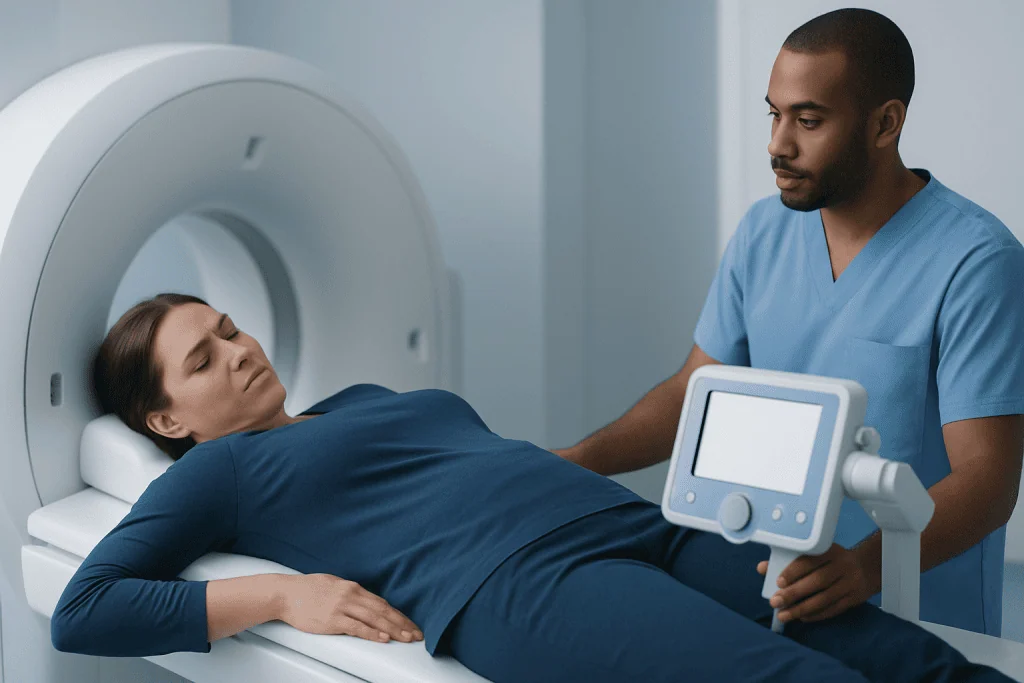
SI joint pain is often felt on one side of the lower back or deep in the buttock, although it can affect both sides. Some people describe a dull ache, while others feel sharp pain during standing, walking, climbing stairs, turning in bed, or moving from sitting to standing. Pain may also spread into the groin, outer hip, or upper thigh, which can make it easy to confuse with hip or spinal conditions.
A common feature is that symptoms often worsen with activities that load one leg more than the other. Long periods of standing, running, getting out of a car, or carrying weight on one side may trigger discomfort. Some people feel stiffness in the pelvis or a sense that the joint is unstable, especially after pregnancy or after a fall.
Because the SI joint sits close to the lower spine and hip, symptoms can overlap with sciatica, lumbar disc problems, or arthritis. Pain that travels below the knee, significant numbness, muscle weakness, or bowel or bladder changes may point to other causes and deserve prompt medical evaluation. In some cases, the SI joint is part of a broader condition such as inflammation-related arthritis or spinal alignment problems.
Keeping a simple record of when pain starts, what movements worsen it, and whether rest helps can support diagnosis. This information may help a clinician decide whether the SI joint is the most likely pain source or whether additional assessment of the hip, spine, or nerves is needed.
Causes and risk factors
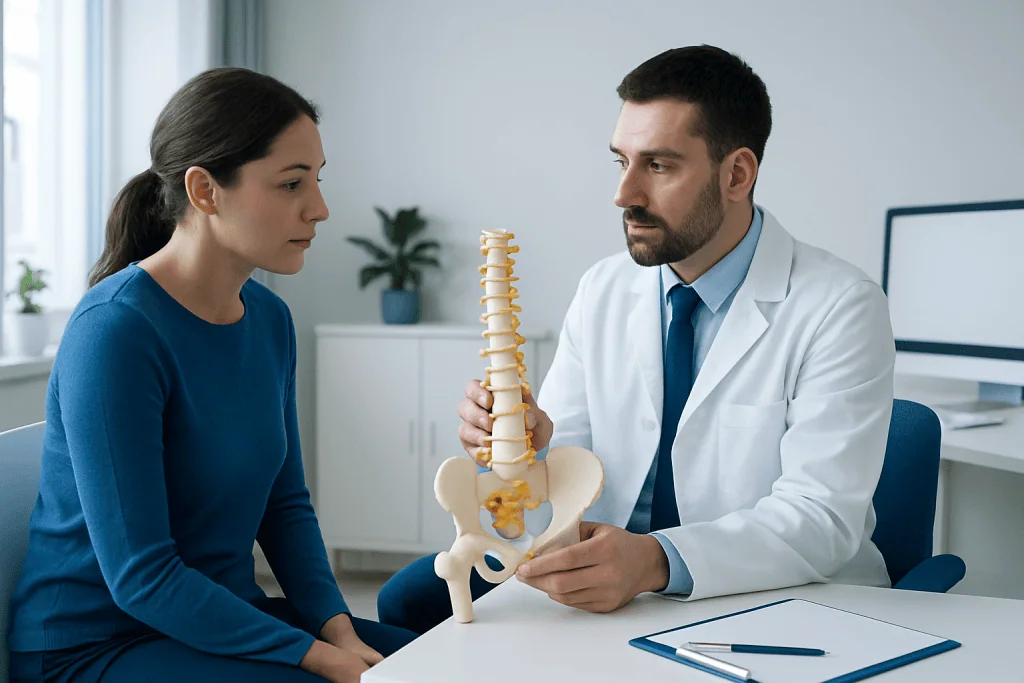
Sacroiliac joint pain may result from too much movement, too little movement, inflammation, or gradual wear over time. Minor injuries, sports involving twisting, a sudden awkward step, or a fall can strain the ligaments that support the joint. Repetitive loading from prolonged standing, uneven gait, or occupational lifting may also contribute.
Pregnancy is a well-known risk factor because hormonal changes can loosen ligaments and alter pelvic mechanics. The extra load on the pelvis and changes in posture can place more stress on the joint. After delivery, some people improve naturally, while others continue to have symptoms that benefit from targeted rehabilitation.
Degenerative changes in the spine or hip can also shift forces toward the SI joint. Previous lumbar fusion surgery may increase stress across the joint in some patients. Inflammatory conditions such as ankylosing spondylitis and other forms of spondyloarthritis can involve the sacroiliac joints, causing pain and morning stiffness that may improve somewhat with movement.
Risk factors do not guarantee that a person will develop SI joint pain, but they can guide assessment. These include leg-length differences, altered walking mechanics, previous pelvic trauma, hypermobility, obesity, deconditioning, and coexisting lower back disorders. A careful evaluation helps determine whether the SI joint is the main source of pain or one part of a more complex musculoskeletal problem.
How doctors diagnose SI joint pain
Diagnosis begins with a medical history and physical examination. A doctor will ask where the pain is felt, what movements trigger it, whether symptoms began after an injury or pregnancy, and how pain affects work, sleep, and exercise. During the examination, they may gently stress the joint in different ways to see whether pain can be reproduced.
No single physical test is perfect on its own, so clinicians usually combine several findings. They also examine the lumbar spine, hips, walking pattern, and neurological function. This helps distinguish SI joint pain from other common causes of lower back and pelvic pain.
Imaging may be used to rule out fractures, arthritis, inflammatory disease, or spinal causes. X-rays, CT, or MRI can sometimes support the diagnosis, but imaging findings do not always match symptoms. Many people have age-related changes on scans that are not the true pain source.
For this reason, an image-guided injection of local anesthetic into the SI joint is often considered an important diagnostic tool. If pain improves clearly after the injection, it suggests that the joint is likely contributing to symptoms. In more complex cases, additional testing may be needed to evaluate related problems such as hip disease or nerve compression, and some patients may undergo CT imaging when detailed bone assessment is helpful.
Conservative treatment: physical therapy, medicines, and support
For many patients, the first line of sacroiliac joint pain treatment is conservative care. A short period of reducing painful activities may calm symptoms, but prolonged rest is usually not helpful. Gentle movement is important because it supports circulation, reduces stiffness, and helps preserve strength.
Physical therapy is a central part of treatment. A therapist may focus on core stability, gluteal strength, hip mobility, pelvic control, posture, and movement retraining. The aim is to improve how forces move through the spine, pelvis, and legs, which can reduce strain on the SI joint. Home exercises are often just as important as clinic sessions because regular practice helps restore more durable support.
Medicines may include over-the-counter pain relievers or anti-inflammatory drugs if they are safe for the individual. In some cases, a doctor may recommend short-term prescription medication. Heat or ice, supportive pillows during sleep, and temporary use of an SI belt or pelvic support brace may also provide relief, especially when symptoms are linked to instability or postpartum changes.
Self-care should remain balanced and realistic. It can help to avoid repeated twisting, heavy lifting with poor body mechanics, or standing with weight shifted to one leg. Weight management, gradual return to exercise, and attention to surrounding issues such as lumbar disc problems can all contribute to better outcomes.
Injections and when procedures may help
If symptoms persist despite rehabilitation and medication, SI joint injections may be considered. These are typically performed with imaging guidance to improve accuracy. A doctor places a needle into the joint and injects a local anesthetic, often combined with a corticosteroid. The anesthetic may help confirm the diagnosis, while the steroid is intended to reduce inflammation and pain.
Relief from an injection can vary. Some people experience meaningful benefit for weeks or months, while others may have only partial or short-lived improvement. Even when relief is temporary, the injection may still be useful because it can clarify that the SI joint is contributing to the pain. This can guide the next treatment steps and make physical therapy more tolerable.
When non-surgical care has been thorough but symptoms remain disabling, other procedures may be discussed. Depending on the case, specialists may consider pain-focused interventions such as nerve-targeted techniques or, less commonly, minimally invasive stabilization or fusion procedures. These decisions are made carefully after confirming the pain source and reviewing imaging, function, and previous treatments.
Because SI joint pain can overlap with spine disorders, some patients also need evaluation by experts in spine surgery or comprehensive physical therapy and rehabilitation before moving toward an intervention. Near the end of the care pathway, Acibadem International’s multidisciplinary specialists in JCI-accredited hospitals evaluate and treat SI joint-related pain for international patients when advanced assessment or procedures are needed.
Prevention, recovery, and when to see a doctor
Not all SI joint pain can be prevented, but certain habits may lower strain on the pelvis and lower back. Regular exercise that builds core and hip strength can improve support around the joint. Good lifting technique, gradual progression in sports, and avoiding sudden increases in high-impact activity may also help protect the area.
Recovery is often gradual rather than immediate. Many people do best when they pace activities instead of pushing through pain on good days and then needing long rest afterward. Continuing the home exercise program after symptoms improve can reduce the chance of recurrence, especially for those whose pain is related to posture, muscle imbalance, or previous pregnancy.
A person should see a doctor if lower back or buttock pain lasts more than a few weeks, keeps returning, or interferes with sleep, walking, work, or daily tasks. Medical review is also important if pain follows a fall or accident, or if there is fever, unexplained weight loss, significant night pain, numbness, weakness, or changes in bladder or bowel control. These features may suggest another cause that needs prompt attention.
Early assessment can make treatment more targeted and efficient. When the source of pain is identified accurately, patients are more likely to receive the right combination of therapy, injections, and follow-up care rather than trying many approaches without a clear plan.
Frequently asked questions
What is the best treatment for sacroiliac joint pain?
The best treatment depends on the cause and severity of symptoms. Many people improve with physical therapy, activity modification, and pain relief medicines, while others may benefit from image-guided injections if pain persists.
How do doctors know if the SI joint is causing pain?
Doctors use a combination of medical history, physical examination, and imaging to rule out other causes. In many cases, an image-guided injection with local anesthetic is one of the most useful ways to confirm that the SI joint is a pain source.
Do SI joint injections cure the problem?
SI joint injections do not always cure the underlying problem, but they can reduce inflammation and provide meaningful relief. They are also helpful diagnostically because a clear response can show that the SI joint is involved.
Can sacroiliac joint pain go away without surgery?
Yes, many cases improve without surgery. Conservative treatment, especially a structured physical therapy program and changes in movement habits, is often effective.
When is a procedure considered for SI joint pain?
A procedure is usually considered only after conservative treatment has been tried consistently and symptoms remain significant. Before any intervention, doctors generally want strong evidence that the SI joint is truly responsible for the pain.
Is walking good for SI joint pain?
Gentle walking is often helpful because it keeps the body moving without long periods of rest. However, if walking clearly worsens symptoms, it is best to reduce distance temporarily and ask a doctor or physical therapist for guidance.
References
- National Institute of Arthritis and Musculoskeletal and Skin Diseases
- American Academy of Orthopaedic Surgeons
- National Health Service
- American College of Rheumatology
This article is for general information only and is not a substitute for professional medical advice. Please consult a qualified doctor about your individual situation.
Joint and spine care in Turkey — expert assessment & treatment
JCI-accredited · board-certified surgeons · reply within 24h
Add us as a Preferred Source to see more of our trusted health content across Google Search, AI Overviews and Discover.

More from the Health Library



Related Specialists

Prof. Dr. Aziz Kaya Alturfan
Orthopedic Surgery & Traumatology
Dr. Aylin Tatlıadım
Gynecology & Obstetrics
Prof. Dr. Mete Güngör
Gynecology & Obstetrics
Dt. Selen Burçak Şimşek
Oral & Dental Health