Sartorius — Explained by Medical Evidence, Not Myths
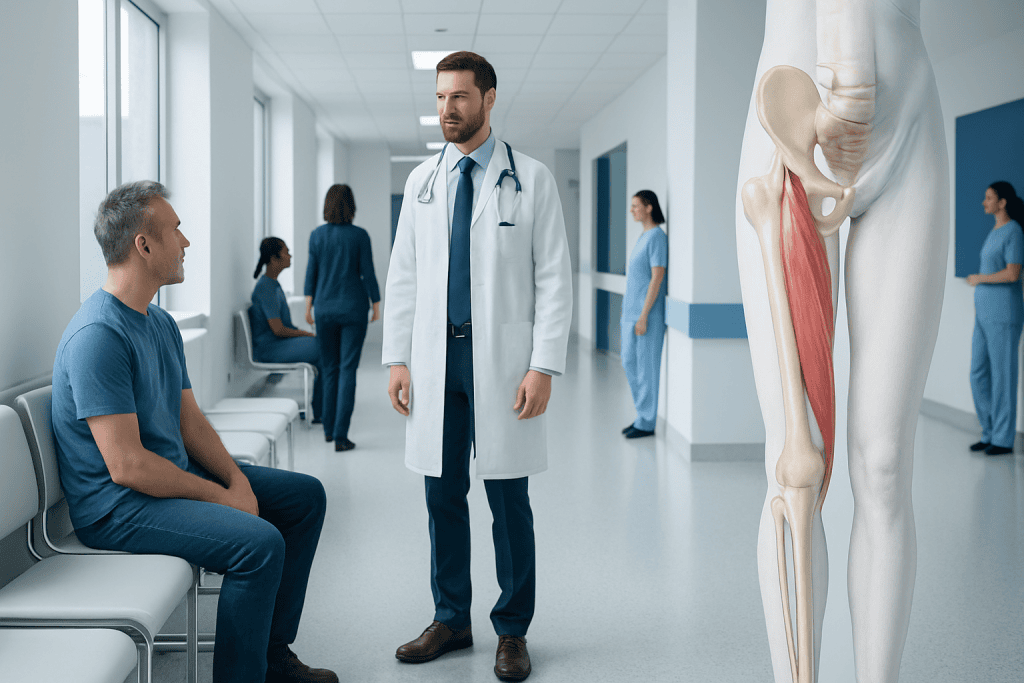
The sartorius is the longest muscle in the body and helps move both the hip and the knee. Sartorius pain often feels like discomfort in the front or inner thigh and may worsen with walking, climbing stairs, or sports.
Key Takeaways
- The sartorius is the longest muscle in the body and helps move both the hip and the knee.
- Sartorius pain often feels like discomfort in the front or inner thigh and may worsen with walking, climbing stairs, or sports.
- Common causes include muscle strain, overuse, poor flexibility, and irritation of nearby tendons or joints.
- Diagnosis is usually based on symptoms, physical examination, and imaging when needed to rule out other conditions.
- Most cases improve with rest, activity modification, physical therapy, and treatment of the underlying cause.
Sartorius refers to the long, thin muscle that runs from the front of the pelvis across the thigh to the inner knee. It helps the hip and knee move together, and discomfort in this area is most often linked to strain, overuse, poor movement mechanics, or nearby joint and tendon problems rather than myths about a "mystery" muscle injury.
Overview: what the sartorius is and why it matters
The sartorius is a long, ribbon-like muscle in the front of the thigh. It starts at the front of the pelvis and travels diagonally across the thigh to attach on the inner side of the upper shin. Because it crosses both the hip and the knee, it helps coordinate movement between these two joints.
This muscle plays a role in hip flexion, hip abduction, outward rotation of the thigh, and bending the knee. In everyday life, it is active during walking, climbing stairs, getting in and out of a car, crossing the legs, and many sports that involve quick changes of direction.
Although people may search for “sartorius” when they feel pain in the thigh or groin, the muscle itself is only one possible source of symptoms. Problems in nearby structures, such as the hip joint, tendons, nerves, or other thigh muscles, can cause similar discomfort. That is why a careful medical assessment matters when pain does not settle.
How the sartorius works in daily movement
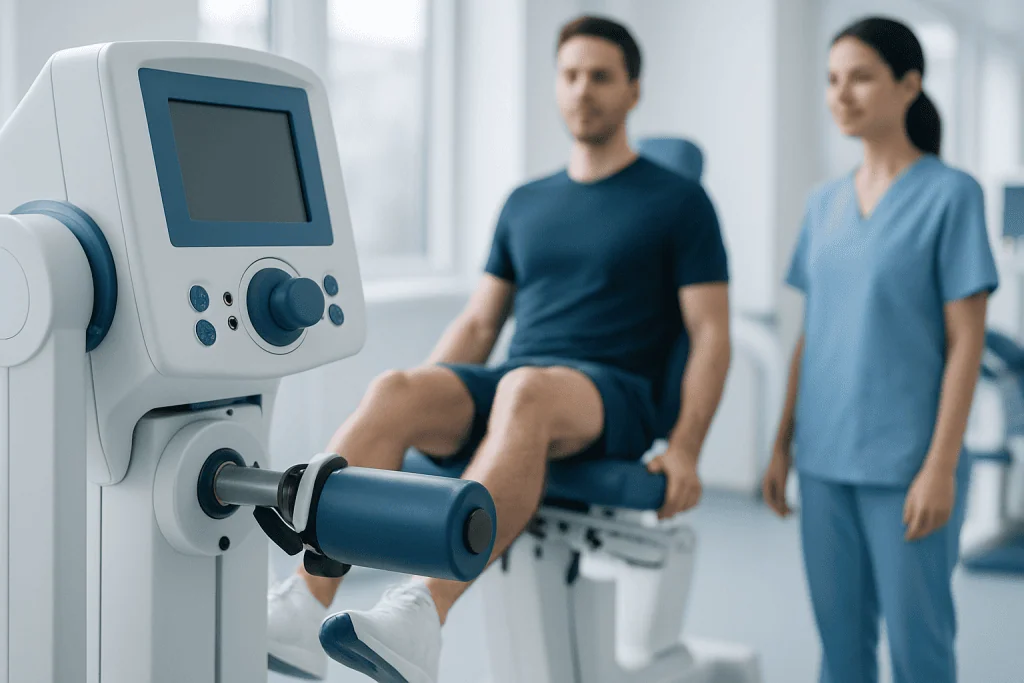
The sartorius helps create a combined movement pattern at the hip and knee. It assists in lifting the thigh forward, moving it slightly outward, and rotating it outward. At the knee, it helps with bending. These actions become especially important during stepping, squatting, pivoting, and bringing one ankle toward the opposite knee.
Because the sartorius is relatively thin, it is not the body’s strongest muscle. Instead, it works together with larger muscles around the hip and thigh. If those surrounding muscles are weak, tight, or not coordinating well, the sartorius may become overloaded during exercise or repetitive movement.
For this reason, sartorius-related pain is not always caused by a single injury. Sometimes it reflects a broader movement issue involving the hips, core, knees, or training habits. This more complete view helps separate evidence-based care from common myths that focus on the muscle alone.
Symptoms linked to sartorius problems
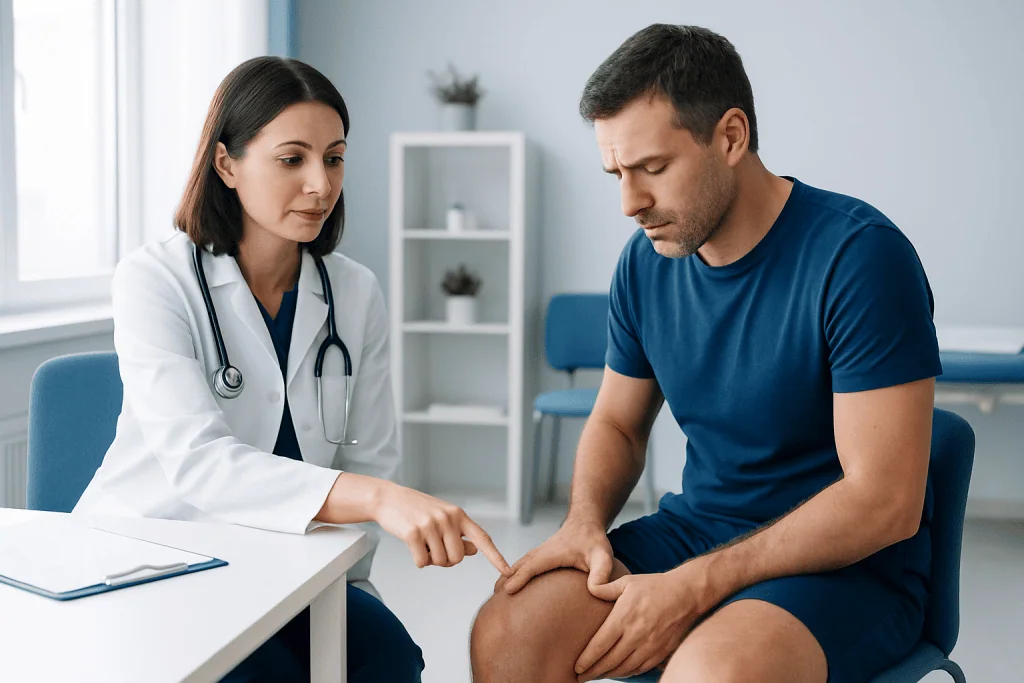
When the sartorius is irritated or strained, symptoms often appear in the front of the hip, the groin, the front of the thigh, or the inner side of the knee. The discomfort may feel sharp during certain movements or more like an ache after activity. Some people notice stiffness, mild swelling, or tenderness when pressing along the muscle’s path.
Symptoms may become more noticeable during sprinting, kicking, lunging, climbing stairs, or crossing the legs. Pain may also occur when lifting the knee, turning the leg outward, or bending the knee against resistance. If the strain is more significant, walking can become uncomfortable for a short time.
Not every pain in this area comes from the sartorius. Similar symptoms can also occur with hip flexor strain, adductor strain, tendon irritation, knee problems, or hip joint conditions such as hip pain. In some cases, back or nerve-related problems can also refer pain into the thigh.
- Front or inner thigh pain
- Groin discomfort with movement
- Tenderness along the muscle
- Pain when climbing stairs, running, or pivoting
- Stiffness after activity or prolonged sitting
Causes and risk factors: what medical evidence supports
The most direct sartorius injury is a muscle strain. This usually happens when the muscle is suddenly overstretched or forced to contract strongly, especially during running, kicking, jumping, or rapid directional changes. Mild strains may cause temporary soreness, while more severe injuries can lead to sharper pain and difficulty using the leg normally.
Overuse is another common reason for sartorius-related discomfort. Repetitive training without enough recovery, a rapid increase in exercise intensity, poor warm-up habits, and tight hip or thigh muscles can all contribute. Weakness in the core, gluteal muscles, or surrounding hip stabilizers may place extra load on the sartorius.
Some symptoms that seem to come from the sartorius actually arise from nearby structures. Examples include tendon irritation around the inner knee, bursitis, hip impingement, and osteoarthritis. Sports medicine specialists may also consider knee pain and other muscle injuries in the differential diagnosis. In less common situations, bruising, direct trauma, or previous surgery may play a role.
Risk tends to be higher in athletes who sprint, dance, play football, or perform repeated kicking movements. However, people who are less active can also develop pain if they suddenly increase activity, have reduced flexibility, or spend long periods sitting and then begin exercising intensely.
How doctors diagnose sartorius pain
Diagnosis begins with the person’s history and a physical examination. A doctor will ask where the pain is felt, which movements trigger it, whether there was a sudden injury, and how symptoms affect walking, sport, or daily function. This helps identify whether the sartorius is likely involved or whether another structure is a better explanation.
During the examination, the clinician may check tenderness, hip and knee range of motion, muscle strength, flexibility, gait, and pain with specific movements. These findings can suggest a muscle strain, tendon irritation, joint problem, or referred pain. Since several conditions overlap in this area, the examination is often focused on ruling out more common causes as well.
Imaging is not always needed for mild symptoms that clearly fit a simple strain. However, ultrasound or MRI may be considered if symptoms are severe, persistent, or unclear, especially in athletes or after significant injury. X-rays may be used if a bone or joint problem is suspected. When advanced assessment is needed, clinicians may use MRI or ultrasound imaging to clarify the cause.
Treatment options and recovery
Most sartorius-related injuries improve with conservative care. Early treatment usually includes temporary rest from painful activity, ice for comfort, gentle movement, and a gradual return to normal activity. The goal is not complete immobilization, but reducing strain while allowing healing to begin.
Physical therapy is often central to recovery. Treatment may focus on restoring flexibility, improving hip and knee movement, strengthening the core and gluteal muscles, and correcting movement patterns that overload the thigh. Guided rehabilitation can be especially helpful when pain returns repeatedly or affects sport performance. In appropriate cases, physical therapy and rehabilitation may support a structured and safe recovery.
If pain is related to another condition rather than the sartorius itself, treatment should address the true source. For example, management may differ for tendon irritation, joint inflammation, or cartilage problems. Some patients benefit from sports medicine, orthopedic, or rehabilitation evaluation when symptoms are ongoing.
Surgery for isolated sartorius strain is uncommon. It is usually considered only in unusual situations, such as complex trauma or associated structural problems that do not respond to standard care. Near the end of the care pathway, multidisciplinary specialists at Acibadem International and its JCI-accredited hospitals evaluate international patients with muscle, joint, and mobility complaints using evidence-based diagnostic and treatment approaches.
Prevention and self-care
Prevention focuses less on the sartorius alone and more on balanced movement. Warming up before exercise, increasing activity gradually, and allowing enough recovery between intense sessions can reduce the chance of strain. Good hip mobility and strength in the core, gluteal muscles, and thighs help distribute forces more evenly during movement.
Stretching may be helpful when performed gently and consistently, especially for people with hip stiffness. Strengthening exercises should be individualized, since the best program depends on the person’s sport, baseline fitness, and movement mechanics. Pushing through pain usually delays recovery and may worsen the injury.
Simple self-care steps often include:
- Temporarily reducing activities that trigger pain
- Using cold packs for short periods after a flare-up
- Returning to exercise gradually rather than all at once
- Wearing appropriate footwear for sport or walking
- Seeking guidance if symptoms last more than a few weeks
If a person has repeated thigh or groin pain, an assessment can help identify hidden contributors such as poor training technique, muscle imbalance, or an underlying hip or knee condition.
When to seek medical care
Medical advice is recommended if thigh, groin, or knee-area pain is severe, keeps returning, or does not improve with rest and simple self-care. A person should also seek assessment if they cannot walk normally, cannot bend the knee or lift the leg comfortably, or if sports performance suddenly drops because of pain.
Prompt medical care is especially important after a sudden injury with a popping sensation, marked swelling, extensive bruising, or significant weakness. These features may suggest a more substantial muscle tear or another injury that needs a clear diagnosis.
Urgent evaluation is also appropriate if pain is accompanied by fever, redness, numbness, leg swelling, or symptoms that seem out of proportion to a minor strain. In those situations, the cause may not be sartorius-related and should be assessed by a qualified clinician.
Frequently asked questions
What is the sartorius muscle?
The sartorius is a long muscle that runs diagonally across the front of the thigh from the pelvis to the inner knee area. It helps move the hip and bend the knee, especially during walking, stair climbing, and crossing the legs.
Where is sartorius pain usually felt?
Pain related to the sartorius is often felt in the front of the hip, groin, front of the thigh, or inner side of the knee. The exact location can vary because the muscle crosses two joints and works with several nearby structures.
Can a sartorius strain heal on its own?
Many mild sartorius strains improve with rest, activity modification, and gradual rehabilitation. However, persistent or severe pain should be assessed so that other causes, such as hip, knee, or tendon problems, are not missed.
How long does recovery from sartorius injury take?
Recovery time depends on the severity of the problem and whether the pain truly comes from the sartorius muscle. Mild strains may settle within days to a few weeks, while more significant injuries or symptoms linked to joint or tendon issues may take longer.
Is sartorius pain the same as hip flexor pain?
Not exactly. The sartorius helps flex the hip, but several other muscles also do this, and pain in the same region may come from any of them or from the hip joint itself. A clinical examination helps distinguish these causes.
What exercises help the sartorius?
Helpful exercises usually focus on gentle flexibility, hip and knee control, and strengthening of the core, gluteal muscles, and surrounding thigh muscles. The right program depends on the person’s symptoms, so a physical therapist or doctor can guide safe progression.
This article is for general information only and is not a substitute for professional medical advice. Please consult a qualified doctor about your individual situation.
Joint and spine care in Turkey — expert assessment & treatment
JCI-accredited · board-certified surgeons · reply within 24h
Add us as a Preferred Source to see more of our trusted health content across Google Search, AI Overviews and Discover.

More from the Health Library

Pericholecystic Fluid — Explained by Medical Evidence, Not Myths

Stamina: A Complete Medical Overview

Bakers Cyst: What Patients Need to Know
Ems Muscle Stimulator: An Evidence-Based Guide for Patients

Vibriance Super C Serum — Explained by Medical Evidence, Not Myths