Scapula — Explained by Medical Evidence, Not Myths

The scapula, or shoulder blade, connects arm movement with the chest wall and upper back muscles. Scapula pain may come from muscle strain, poor posture, joint problems, nerve irritation, or fractures.
Key Takeaways
- The scapula, or shoulder blade, connects arm movement with the chest wall and upper back muscles.
- Scapula pain may come from muscle strain, poor posture, joint problems, nerve irritation, or fractures.
- Diagnosis usually relies on a physical exam and may include X-rays or other imaging when injury is suspected.
- Treatment depends on the cause and may involve rest, physiotherapy, pain relief, or sometimes surgery.
- New weakness, deformity, trouble lifting the arm, or pain after trauma should be medically assessed.
The scapula is the shoulder blade, a flat triangular bone on the upper back that plays a central role in shoulder movement and stability. Understanding how it works helps explain common causes of shoulder blade pain, injury, and treatment options.
What the scapula is and why it matters
The scapula is the medical term for the shoulder blade. It is a flat, triangular bone located on each side of the upper back, and it helps the shoulder move smoothly while supporting the arm. In everyday terms, the scapula acts like a stable base that allows reaching, lifting, pushing, pulling, and overhead motion.
Medical evidence shows that the scapula is not just a passive bone. It works continuously with the collarbone, upper arm bone, chest wall, and surrounding muscles to keep the shoulder balanced and functional. When the scapula does not move well, pain may be felt not only in the shoulder blade area but also in the neck, shoulder, or upper arm.
This matters because many people use the term “scapula pain” to describe a wide range of symptoms. Sometimes the problem is in the muscles around the shoulder blade. In other cases, it may involve the shoulder joint, the neck, a nerve, or the scapula itself. A clear understanding of scapular anatomy helps separate common myths from evidence-based causes.
Scapula anatomy and how it supports movement
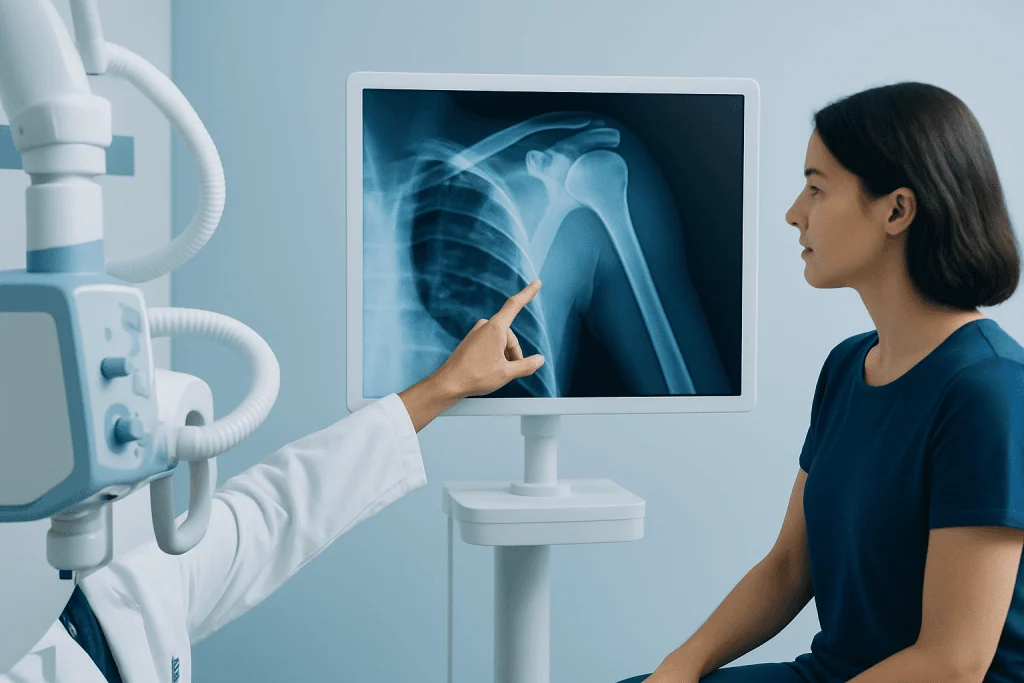
The scapula sits over the ribs on the back of the chest. It connects with the collarbone at the acromioclavicular joint and with the upper arm bone at the glenohumeral joint, often called the shoulder joint. The socket part of the scapula, called the glenoid, helps hold the head of the humerus in place while still allowing a wide range of motion.
Several important parts of the scapula have clinical significance. These include the spine of the scapula, the acromion, the coracoid process, and the glenoid. These structures provide attachment points for muscles and ligaments and help guide shoulder motion. The rotator cuff muscles, trapezius, serratus anterior, rhomboids, and deltoid all depend on healthy scapular positioning and control.
Normal shoulder function requires coordinated movement between the arm and the scapula. This relationship is sometimes called scapulohumeral rhythm. If the scapula moves too little, too much, or at the wrong time, symptoms can develop. This is one reason shoulder blade discomfort may accompany shoulder impingement syndrome or other shoulder conditions even when the bone itself is not injured.
Common symptoms linked to the scapula

Symptoms related to the scapula can vary widely. Some people feel a dull ache along the inner border of the shoulder blade, while others notice sharp pain with arm movement, tenderness, stiffness, clicking, or a sense of weakness. Pain may be constant or may appear only during exercise, computer work, lifting, or sleeping on one side.
Scapular problems can also affect function. A person may struggle to reach overhead, place a hand behind the back, carry objects, or perform sports movements. In some cases, the shoulder blade may appear to stick out more than usual, a finding called scapular winging. This can happen when the muscles or nerves that control scapular position are not working properly.
Symptoms that deserve closer attention include pain after a fall or accident, visible deformity, swelling, bruising, marked weakness, or numbness and tingling. These may suggest a fracture, a dislocation, significant soft-tissue injury, or nerve involvement rather than simple muscle tension.
- Aching between the neck and shoulder blade
- Pain with lifting or overhead activity
- Clicking or grinding during movement
- Weakness or fatigue in the shoulder
- Scapular winging or abnormal posture
Evidence-based causes of scapula pain and injury
One of the most common causes of scapula-area pain is muscle strain or overload. Long hours at a desk, repetitive lifting, sports training, and poor posture can place extra stress on the trapezius, rhomboids, and surrounding muscles. Trigger points and muscular imbalance may then cause localized pain or pain that spreads into the neck and shoulder.
The scapula can also be affected by shoulder or neck disorders. For example, rotator cuff irritation, bursitis, instability, or arthritis may change the way the shoulder moves, which in turn alters scapular mechanics. Nerve irritation coming from the cervical spine can also cause pain around the shoulder blade. In these situations, the scapula may be part of the symptom pattern rather than the original source of disease.
Less commonly, the scapula itself is injured. A scapula fracture usually follows significant trauma such as a motor vehicle collision or a hard fall. Stress-related problems can occur in athletes, though they are much less common. Scapular winging may occur when nerves such as the long thoracic nerve are affected. Some patients with persistent shoulder dysfunction are eventually diagnosed with conditions that overlap with rotator cuff tear or other structural shoulder problems.
There are also non-musculoskeletal causes of pain felt near the scapula. Irritation from the chest, lungs, gallbladder, or heart may sometimes be felt in the upper back or shoulder blade region. This is one reason unexplained, severe, or associated symptoms should not be ignored.
How doctors diagnose scapula-related problems
Diagnosis begins with a careful history and physical examination. A doctor typically asks where the pain is felt, how it started, what movements make it worse, and whether there has been trauma, sports overuse, numbness, weakness, or neck pain. The pattern of symptoms often gives important clues about whether the problem is muscular, joint-related, nerve-related, or due to a bone injury.
During the examination, posture, shoulder range of motion, scapular movement, muscle strength, and areas of tenderness are assessed. The clinician may watch the shoulder blade during arm raising or pushing against a wall to look for winging or abnormal motion. The neck and neurological function may also be checked, since cervical problems can refer pain to the scapular area.
Imaging is used when needed. X-rays help identify fractures, alignment problems, or some joint conditions. Ultrasound or MRI may be helpful when a soft-tissue injury is suspected, especially if symptoms point to the rotator cuff or surrounding structures. In selected cases, nerve studies or CT imaging may be recommended. If the history suggests a more complex shoulder problem, doctors may evaluate whether shoulder surgery or a nonsurgical treatment pathway is more appropriate.
Treatment options for scapula pain and dysfunction
Treatment depends on the cause. For muscular strain, overuse, or posture-related pain, early care often includes relative rest, activity adjustment, heat or ice, and simple pain-relief strategies recommended by a clinician. Gentle movement is usually encouraged rather than prolonged immobilization, because stiffness can make recovery slower.
Physiotherapy is often central to treatment. A structured program may focus on posture, thoracic mobility, stretching, strengthening of the scapular stabilizers, and control of shoulder movement. This can be especially useful for scapular dyskinesis, repetitive strain, and recovery from shoulder conditions. When the problem is linked to tendon or soft-tissue injury, rehabilitation may be combined with treatment for the underlying shoulder disorder, such as rotator cuff surgery when clearly indicated.
If there is a fracture, major joint injury, or persistent instability, specialist assessment is important. Many scapula fractures heal without surgery, but some displaced fractures or associated injuries require orthopedic management. In selected cases involving severe joint damage or complex shoulder disease, procedures such as shoulder replacement may be considered, although this is not a routine treatment for simple scapula pain.
The best treatment plan is individualized. It should address the actual source of symptoms rather than only the location of pain. This is why a professional diagnosis matters, especially when symptoms are severe, recurrent, or limiting daily life.
Prevention, posture, and self-care
Many common scapula-related symptoms improve with practical self-care and better movement habits. Keeping the upper back mobile, strengthening the shoulder blade muscles, and taking regular breaks from prolonged sitting can reduce strain. Workstations should support neutral posture, with screens at eye level and arms comfortably supported when possible.
Warm-up and technique matter in sports and exercise. Sudden increases in training load can overload the shoulder girdle, especially in swimming, tennis, throwing sports, and weight training. Gradual progression, balanced strengthening, and recovery days help protect the scapula and shoulder complex.
Helpful self-care habits may include:
- Changing activities that trigger pain for a short period
- Using a guided exercise plan from a qualified professional
- Improving posture without forcing a rigid position
- Sleeping in a position that does not compress the painful side
- Seeking review if pain continues despite conservative care
Self-care should not replace medical evaluation after trauma or when symptoms are unexplained. If a person is unsure whether the pain is muscular or something more serious, a doctor can help clarify the cause and the safest next steps.
When to seek medical care
Medical care should be sought promptly if scapula pain follows a fall, collision, or other injury, especially if there is swelling, bruising, visible deformity, or inability to move the arm normally. New numbness, tingling, marked weakness, fever, chest pain, shortness of breath, or pain that wakes a person from sleep also deserves evaluation.
A routine medical appointment is also appropriate if shoulder blade pain lasts more than a few weeks, keeps returning, or interferes with work, sport, or sleep. Persistent symptoms may reflect a treatable shoulder, neck, or nerve condition rather than simple muscle tension.
For patients who need further assessment, Acibadem International’s multidisciplinary specialists and JCI-accredited hospitals evaluate scapula and shoulder problems for international patients, from conservative care to advanced imaging and surgical treatment when needed.
Frequently asked questions
Is the scapula the same as the shoulder blade?
Yes. Scapula is the medical term for the shoulder blade. It is the flat triangular bone on the upper back that helps the shoulder move and stay stable.
What causes pain around the scapula?
Pain around the scapula often comes from muscle strain, poor posture, repetitive activity, or shoulder mechanics problems. It can also be related to neck irritation, nerve issues, or less commonly a fracture or another underlying medical condition.
Can scapula pain come from the neck?
Yes. Nerves and muscles in the neck can refer pain to the shoulder blade area. If scapula pain comes with neck stiffness, numbness, tingling, or pain traveling down the arm, a cervical cause may need to be considered.
How is a scapula injury diagnosed?
Diagnosis usually starts with a medical history and physical examination. If trauma, fracture, or soft-tissue damage is suspected, imaging such as X-rays, ultrasound, MRI, or CT may be used.
Do all scapula problems need surgery?
No. Many scapula-related problems improve with rest, activity changes, physiotherapy, and treatment of the underlying cause. Surgery is usually reserved for specific situations such as certain fractures, major structural injuries, or advanced shoulder joint disease.
What is scapular winging?
Scapular winging means the shoulder blade sticks out more than normal, especially during movement or when pushing against a wall. It may happen when muscles are weak or when the nerves controlling those muscles are affected.
References
- American Academy of Orthopaedic Surgeons
- National Institute of Arthritis and Musculoskeletal and Skin Diseases
- American Academy of Family Physicians
- MedlinePlus
- National Health Service
This article is for general information only and is not a substitute for professional medical advice. Please consult a qualified doctor about your individual situation.
Joint and spine care in Turkey — expert assessment & treatment
JCI-accredited · board-certified surgeons · reply within 24h
Add us as a Preferred Source to see more of our trusted health content across Google Search, AI Overviews and Discover.