Seborrheic Dermatitis and Hair Loss: Causes, Treatment, and Recovery

Seborrheic dermatitis can cause temporary hair shedding, but it does not usually destroy hair follicles. Inflammation, scratching, and thick scale on the scalp are the main reasons hair loss may happen.
Key Takeaways
- Seborrheic dermatitis can cause temporary hair shedding, but it does not usually destroy hair follicles.
- Inflammation, scratching, and thick scale on the scalp are the main reasons hair loss may happen.
- Treatment focuses on calming inflammation and removing scale with medicated shampoos and, in some cases, prescription scalp treatments.
- Persistent shedding, patchy bald spots, pain, or signs of infection should be assessed by a doctor.
- Other causes of hair loss can happen at the same time, so medical evaluation may be helpful if symptoms do not improve.
Seborrheic dermatitis hair loss is usually not permanent. In most people, hair sheds because scalp inflammation, scratching, and heavy scale disrupt the normal hair cycle, and growth often improves once the scalp condition is controlled.
Overview: Can Seborrheic Dermatitis Cause Hair Loss?
Yes, seborrheic dermatitis can contribute to hair loss, but the hair loss is usually temporary rather than permanent. The condition causes scalp inflammation, flaking, oiliness, and itching. When these symptoms are ongoing, they can disturb the scalp environment and push more hairs into a shedding phase.
The hair loss linked to seborrheic dermatitis is often described as increased shedding rather than true scarring alopecia. Hair follicles are generally still alive, which means regrowth is possible once inflammation and scale are brought under control. This is reassuring for many people who notice more hair on the pillow, in the shower, or on the hairbrush during a flare.
It is also important to know that seborrheic dermatitis does not explain every case of thinning. A person may have dandruff-like scalp symptoms along with another hair condition such as hair loss, telogen effluvium, or pattern hair thinning. That is one reason a careful diagnosis matters if shedding is prolonged or severe.
How Seborrheic Dermatitis Affects the Scalp and Hair
Seborrheic dermatitis is a common inflammatory skin condition that often affects areas rich in oil glands, especially the scalp. It tends to cause greasy or dry-looking flakes, redness, itching, and irritation. In some people, symptoms are mild and resemble dandruff. In others, inflammation is more noticeable and the scalp may feel tender or uncomfortable.
Hair does not usually fall out simply because flakes are present. Instead, shedding is more likely when inflammation disrupts the normal hair cycle. Scratching the scalp repeatedly can loosen hairs that are already near the end of their cycle. Thick scale may also build up around the hair shaft, making the scalp harder to keep clean and more irritated over time.
People sometimes worry that visible flakes mean the follicles are permanently damaged. In seborrheic dermatitis, that is uncommon. Permanent hair loss is more suggestive of a different diagnosis, especially if there are smooth bald patches, scarring, marked pain, or loss of eyebrow or body hair.
- Common scalp features include itching, flaking, redness, and oily scale.
- Shedding may increase during active flares.
- Regrowth often begins after the scalp inflammation improves.
Symptoms That May Accompany Hair Shedding

When seborrheic dermatitis affects the scalp, the most common symptoms are persistent dandruff, visible flakes on the hair or shoulders, itching, and areas of redness. Some people notice a waxy or greasy scale, while others feel dryness and irritation. These symptoms may come and go, often flaring during stress, seasonal changes, illness, or periods of inadequate scalp care.
Hair shedding may be diffuse, meaning it happens across the scalp rather than in one sharply defined area. A person may notice more strands during washing or combing. The scalp may also feel sensitive if scratching has caused minor skin injury. In general, seborrheic dermatitis does not create smooth, completely bare patches in the way some other hair disorders can.
If symptoms extend beyond the scalp, seborrheic dermatitis can also affect the eyebrows, sides of the nose, ears, beard area, or chest. This wider pattern can help support the diagnosis. Still, if shedding is rapid or the scalp shows pus, crusting, or broken hairs, a doctor may consider other conditions such as fungal infection or inflammatory alopecia.
Causes and Risk Factors
The exact cause of seborrheic dermatitis is not fully understood, but it is linked to a combination of skin oil production, individual sensitivity, and an inflammatory response to Malassezia, a yeast that normally lives on the skin. In some people, this interaction triggers persistent irritation and excessive flaking on the scalp.
Hair shedding becomes more likely when inflammation is prolonged or when itching leads to frequent scratching. Mechanical trauma from scratching may weaken or dislodge hairs. Thick scale can also trap oil and irritants against the scalp, making symptoms harder to control. Although seborrheic dermatitis may contribute to shedding, it usually acts through inflammation rather than directly damaging the follicle.
Certain factors can increase the chance of flares or make symptoms worse. These include stress, cold or dry weather, infrequent shampooing, naturally oily skin, and some neurologic or immune-related conditions. Hormonal influences may also affect scalp oil production, which is one reason some people are also evaluated for hormonal hair loss when thinning seems out of proportion to the scalp symptoms.
- Oily scalp and sensitivity to skin yeast may play a role.
- Stress and seasonal changes can worsen symptoms.
- Scratching and scale buildup may increase visible hair shedding.
- Another hair disorder may coexist and should be considered if recovery is slow.
Diagnosis: How Doctors Confirm the Cause of Hair Loss
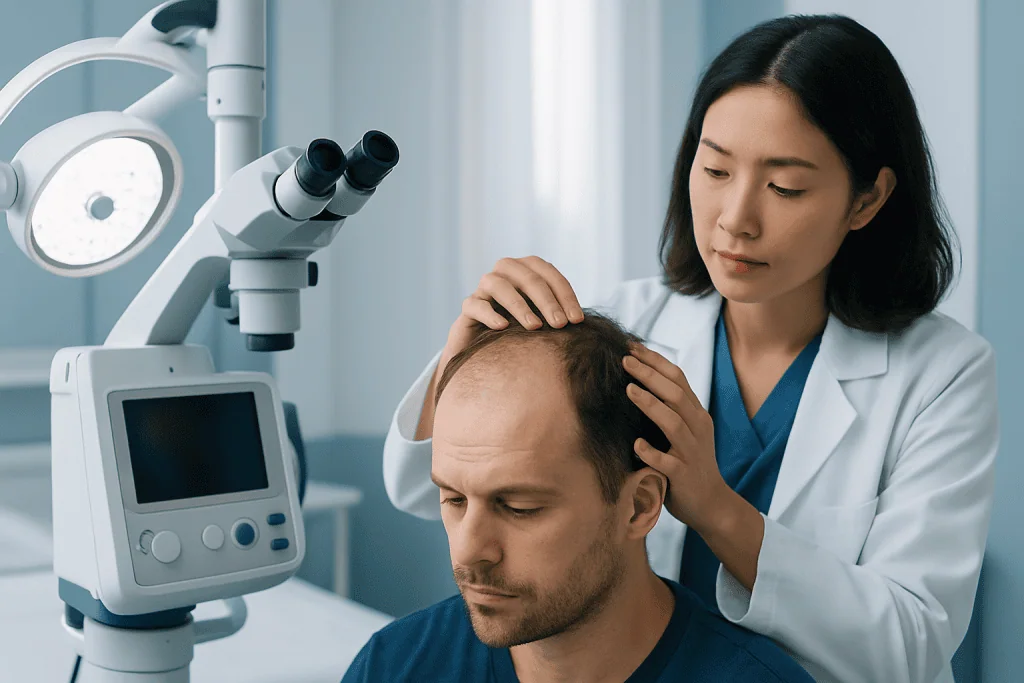
Diagnosis usually begins with a clinical examination of the scalp and a review of symptoms. A doctor looks for typical signs such as fine or greasy scale, redness, itching, and a pattern of diffuse shedding. They may ask when the problem started, whether it comes and goes, what hair products are used, and whether there is a personal or family history of skin or hair conditions.
In many cases, seborrheic dermatitis is diagnosed by appearance alone. However, if the hair loss seems more significant than expected, a doctor may evaluate for other causes. These can include androgenetic alopecia, telogen effluvium after stress or illness, psoriasis, tinea capitis, contact dermatitis, or autoimmune alopecia. Sometimes dermoscopy, a close inspection of the scalp and follicles, helps clarify the picture.
Additional tests are not always necessary, but they may be used when the diagnosis is uncertain or shedding persists despite treatment. Depending on the person, this could include fungal testing, blood work for common contributors to hair loss, or rarely a scalp biopsy. The goal is to identify whether seborrheic dermatitis is the main driver of shedding or one part of a broader hair and scalp problem.
Treatment Options and Recovery
The main treatment goal is to reduce inflammation, control flaking, and create a healthier scalp environment so normal hair growth can resume. For many people, medicated shampoos are the first step. Depending on the case, these may contain antifungal, keratolytic, or anti-inflammatory ingredients. Regular use is important, because symptoms often improve gradually rather than overnight.
If symptoms are moderate or severe, a doctor may prescribe scalp solutions, foams, or short courses of topical anti-inflammatory treatment. These are used carefully to calm redness and itching. Thick adherent scale may need softening and gentle removal so the medicated treatment can reach the scalp more effectively. A person should avoid aggressive scrubbing, as this can worsen irritation and shedding.
Hair recovery usually depends on how long the inflammation has been active and whether another form of hair loss is present. Many people notice less shedding once the scalp is controlled, though regrowth can take time because hair cycles change slowly. If there is significant long-term thinning from another cause, a clinician may discuss broader hair restoration options, including hair transplant assessment when appropriate.
In some cases, doctors also evaluate related conditions in the hair loss cluster, such as male pattern baldness or female pattern hair loss, especially when scalp symptoms improve but density does not return as expected. Distinguishing these conditions helps set realistic expectations for recovery.
Prevention and Self-care for Ongoing Scalp Health
Seborrheic dermatitis often follows a relapsing pattern, so maintenance care is important even after a flare settles. Using a doctor-recommended or pharmacist-recommended shampoo on a regular schedule can help prevent scale from building up again. The best routine depends on scalp oiliness, hair type, and how active the condition is.
Gentle scalp care can also reduce unnecessary shedding. It helps to avoid harsh scratching, very hot water, and heavily fragranced products that may irritate the skin. People with thick scale should not pick at plaques, as this may inflame the scalp further and loosen hairs. Washing often enough to control oil and flakes can be beneficial, especially for oily scalps.
General health habits may support improvement as well. Stress management, consistent sleep, and addressing any underlying medical concerns can make flares less frequent for some individuals. If persistent thinning remains a concern after the scalp condition is treated, a specialist may advise whether supportive measures or hair restoration planning, including Sapphire FUE hair transplant, are relevant for the individual’s underlying diagnosis.
When to Seek Medical Care
Medical care is appropriate if scalp symptoms are severe, painful, spreading, or not improving with routine dandruff care. A doctor should also assess hair shedding that continues for weeks to months, especially if thinning becomes noticeable or distressing. Early evaluation can help confirm the diagnosis and rule out other causes of hair loss.
Prompt review is especially important if there are signs that suggest something more than seborrheic dermatitis. These include patchy bald spots, broken hairs, pus, thick crusting, bleeding from scratching, fever, or swollen lymph nodes. These features may point to infection or a different inflammatory scalp disorder that needs specific treatment.
For international patients who need specialist assessment, Acibadem International’s multidisciplinary teams in JCI-accredited hospitals diagnose and treat scalp and hair disorders, including cases where inflammation and chronic thinning overlap. If long-standing hair loss remains after the scalp disease is controlled, options such as DHI hair transplant may be discussed only after the cause of shedding is clearly defined.
Frequently asked questions
Is hair loss from seborrheic dermatitis permanent?
Usually not. In most cases, the shedding is temporary and improves once scalp inflammation, itching, and scale are controlled. Permanent loss is uncommon and may suggest another diagnosis is also present.
How long does it take for hair to grow back after seborrheic dermatitis?
Hair regrowth often takes weeks to months after the scalp improves. This is because hair follicles recover according to the normal hair cycle, which changes slowly. If shedding continues despite treatment, a doctor may look for another cause.
Can dandruff alone make hair fall out?
Mild dandruff by itself does not usually cause major hair loss. The problem is more likely when dandruff is part of active seborrheic dermatitis with inflammation, heavy scale, and scratching. These factors can increase visible shedding.
What treatments help seborrheic dermatitis hair loss?
Treatment focuses on the scalp condition rather than the hair itself at first. Medicated shampoos and prescription anti-inflammatory or antifungal scalp treatments are commonly used to reduce irritation and flaking. Once the scalp is healthier, shedding often settles and regrowth can follow.
Should the scalp be washed more often or less often?
That depends on the person's scalp type and symptom severity, but many people with oily, flaky scalps benefit from regular washing. Infrequent washing can allow oil and scale to build up and may worsen irritation. A doctor can suggest a suitable routine based on the hair type and treatment plan.
When should someone worry that the hair loss is from something else?
Medical review is wise if there are smooth bald patches, broken hairs, scalp pain, pus, or thinning that continues after dandruff and redness improve. These signs may point to another scalp disorder or a separate type of hair loss. A proper diagnosis helps guide the right treatment.
References
- American Academy of Dermatology
- National Institute of Arthritis and Musculoskeletal and Skin Diseases
- British Association of Dermatologists
- Mayo Clinic
- DermNet
This article is for general information only and is not a substitute for professional medical advice. Please consult a qualified doctor about your individual situation.
Seborrheic Dermatitis in Turkey — costs, top hospitals & a free quote
JCI-accredited · board-certified surgeons · reply within 24h
Add us as a Preferred Source to see more of our trusted health content across Google Search, AI Overviews and Discover.

More from the Health Library



Related Specialists

Pdg. Yaren Kavlak
Podiatry & Foot Health
Assoc. Prof. Dr. Lütfiye Uygur
Gynecology & Obstetrics
Prof. Dr. Gamze Uğurluer Sümer
Radiation Oncology
Assoc. Prof. Dr. Günseli Bozdoğan
Pediatrics