

Sensitive Teeth: Causes, Prevention, and Treatment

Sensitive teeth often cause a short, sharp discomfort when teeth are exposed to cold, heat, sweet foods, acidic drinks, or brushing. Common causes include enamel wear, gum recession, tooth decay, cracked teeth, worn fillings, and recent dental procedures.
Key Takeaways
- Sensitive teeth often cause a short, sharp discomfort when teeth are exposed to cold, heat, sweet foods, acidic drinks, or brushing.
- Common causes include enamel wear, gum recession, tooth decay, cracked teeth, worn fillings, and recent dental procedures.
- Gentle brushing, fluoride toothpaste, limiting acidic foods and drinks, and treating teeth grinding can help prevent worsening sensitivity.
- Desensitizing toothpaste may help mild sensitivity, but persistent or one-sided pain should be assessed by a dentist.
- Treatment depends on the cause and may include fluoride applications, bonding, gum treatment, fillings, crowns, or root canal therapy when needed.
Sensitive teeth are common and usually manageable when the underlying cause is identified. A dentist can help distinguish simple dentin hypersensitivity from cavities, gum disease, cracked teeth, or other problems that need treatment.
Overview
Sensitive teeth, also called tooth sensitivity or dentin hypersensitivity, describe discomfort or pain triggered by everyday activities such as drinking cold water, eating ice cream, sipping hot tea, breathing in cold air, or brushing the teeth. The sensation is often sharp and brief, although some people describe it as aching or tingling.
Healthy teeth are protected by enamel above the gumline and cementum over the tooth root. Beneath these layers is dentin, a more porous tissue containing tiny channels that communicate with the tooth nerve. When enamel becomes thin or roots are exposed because of gum recession, these channels may allow temperature, pressure, or certain foods to stimulate the nerve.
Tooth sensitivity is not a disease by itself. It is a symptom that can have several causes, ranging from minor enamel wear to cavities, cracked teeth, gum disease, or a problem with an existing filling or crown. For that reason, a dental examination is important if sensitivity is persistent, worsening, or limited to one tooth.
Symptoms of Sensitive Teeth
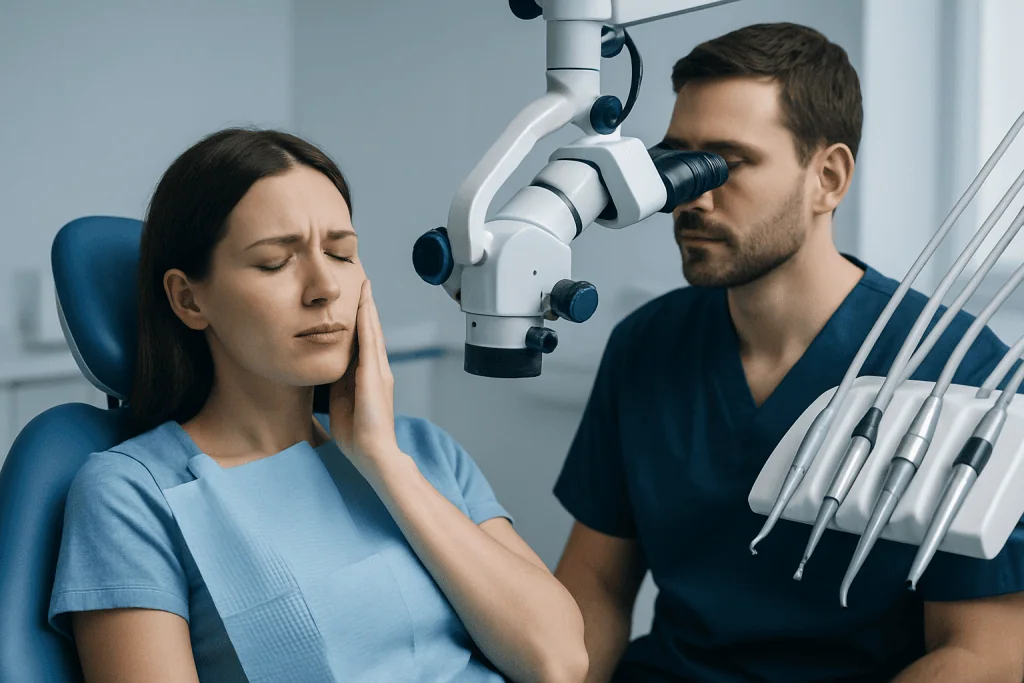
The main symptom is a sudden discomfort in one or more teeth when they are exposed to a trigger. The pain is usually short-lived and improves once the trigger is removed. Many people notice it most often while drinking cold beverages, eating sweet foods, brushing near the gumline, or using cold water to rinse the mouth.
Common triggers include:
- Cold foods and drinks, such as ice cream or chilled water
- Hot drinks or soups
- Sweet or acidic foods, including citrus fruits and soft drinks
- Toothbrushing, flossing, or use of mouthwash
- Cold air entering the mouth
- Pressure from biting if a tooth is cracked or a filling is damaged
Sensitivity related to exposed dentin typically feels sharp and brief. Pain that lasts for many minutes, wakes a person at night, occurs without a clear trigger, or is accompanied by swelling, fever, pus, or a bad taste may suggest infection or deeper tooth damage. These symptoms should be assessed promptly by a dentist.
Causes and Risk Factors
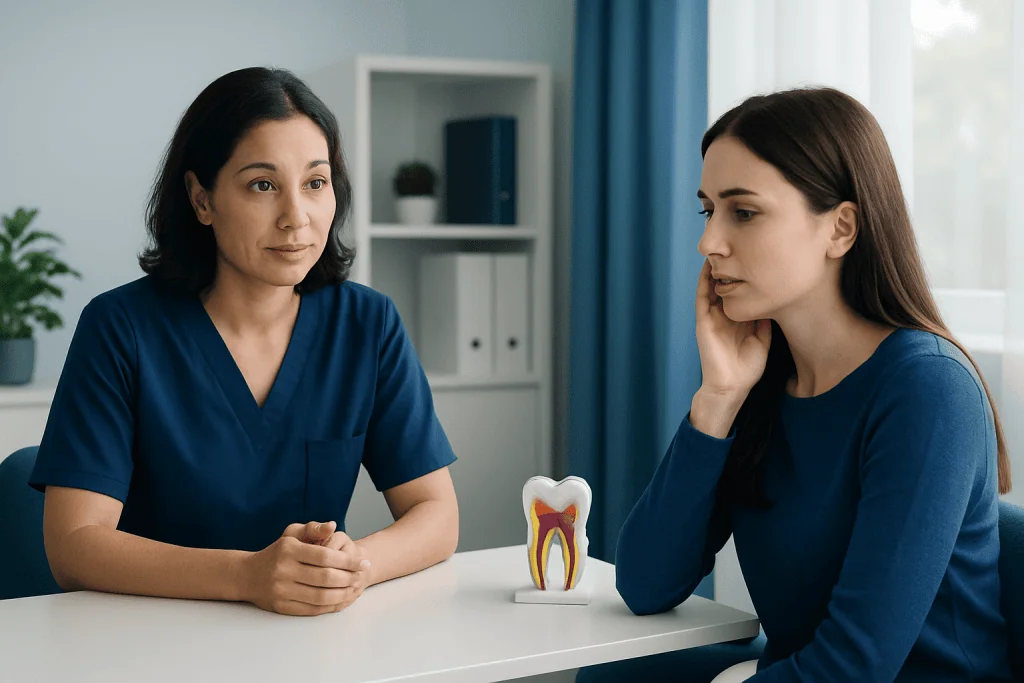
One of the most common reasons for sensitive teeth is enamel wear. Enamel can become thinner over time because of frequent exposure to acidic drinks, citrus foods, reflux-related stomach acid, aggressive brushing, abrasive toothpastes, or tooth grinding. Once enamel is reduced, the dentin underneath becomes more exposed to external stimuli.
Gum recession is another frequent cause. When the gum margin moves away from the tooth, the root surface may become exposed. Tooth roots do not have enamel protection, so they are more vulnerable to sensitivity. Gum recession can be linked to periodontal disease, brushing too hard, aging, orthodontic movement, smoking, or individual gum and bone anatomy.
Other dental problems may also cause sensitivity. Cavities can expose deeper tooth layers. Cracked teeth can allow fluid movement and irritation inside the tooth. Worn fillings, leaking crowns, or chipped teeth can create pathways for sensitivity. Some dental treatments, such as professional whitening, scaling, fillings, or crown preparation, may cause temporary sensitivity while the tooth and surrounding tissues settle.
Risk increases when several factors are present together. For example, a person who drinks acidic beverages frequently, brushes immediately afterward with a hard-bristled brush, and clenches their teeth at night may develop sensitivity more easily. Identifying these habits is useful because many can be modified with dental guidance.
Diagnosis
A dentist diagnoses the cause of sensitive teeth by asking about the pattern of symptoms and examining the teeth, gums, bite, and existing restorations. Important details include when the pain started, whether it affects one tooth or many, which triggers cause discomfort, how long the pain lasts, and whether there has been recent dental treatment or whitening.
The dental examination may include gentle air, cold, or touch testing to locate the sensitive area. The dentist may look for exposed roots, enamel wear, cavities, cracks, plaque and tartar, gum inflammation, or signs of teeth grinding. Bite tests can help identify a cracked tooth or a high filling. Dental X-rays may be recommended when decay, bone loss, infection, or hidden structural problems are suspected.
Diagnosis matters because treatment differs by cause. General dentin hypersensitivity may improve with desensitizing toothpaste and fluoride. A cavity needs a filling, a cracked tooth may need a crown, and gum disease requires periodontal care. Self-treating without diagnosis can delay the right treatment if the sensitivity is due to a more significant dental problem.
Treatment Options
Treatment for sensitive teeth is tailored to the cause and severity. For mild dentin hypersensitivity, dentists often recommend a desensitizing toothpaste used consistently over several weeks. These toothpastes contain ingredients that help block the tiny channels in dentin or reduce nerve response. A soft-bristled toothbrush and gentle technique are usually recommended at the same time.
Fluoride treatments can help strengthen enamel and reduce sensitivity. A dentist may apply fluoride varnish, gel, or other protective materials to sensitive areas. In some cases, dental bonding or sealants may be placed over exposed root surfaces. If sensitivity is caused by enamel loss from acid erosion, the dentist may also discuss dietary habits and medical conditions such as acid reflux.
When a specific dental problem is present, the treatment addresses that problem directly. Cavities may require fillings. Damaged or leaking restorations may need repair or replacement. A cracked or weakened tooth may require a crown. If the tooth nerve is inflamed or infected, root canal treatment may be needed to relieve pain and preserve the tooth when appropriate.
If gum recession or periodontal disease is involved, treatment may include professional cleaning, scaling and root planing, improved plaque control, or referral for periodontal procedures. People who grind or clench their teeth may benefit from a custom night guard and bite evaluation. Professional dental advice helps ensure that the treatment is both safe and effective for the individual situation.
Prevention and Self-Care
Daily habits play an important role in preventing sensitive teeth from worsening. Brushing twice daily with fluoride toothpaste and a soft-bristled toothbrush helps protect enamel and gums. The brush should be moved gently with small motions rather than hard scrubbing. Pressing too firmly can wear the enamel near the gumline and contribute to recession.
Acidic foods and drinks can soften enamel temporarily. It is helpful to limit frequent sipping of soft drinks, sports drinks, fruit juices, and vinegar-based beverages. When acidic foods or drinks are consumed, rinsing with water afterward and waiting before brushing can reduce enamel wear. A straw may reduce contact between acidic drinks and teeth.
People with sensitivity should avoid using highly abrasive toothpastes unless recommended by a dentist. Whitening products can sometimes increase sensitivity, especially when used too often or without professional guidance. If tooth whitening is desired, a dental professional can recommend safer options based on enamel condition, gum health, and existing restorations.
Managing teeth grinding is also important. Signs may include jaw soreness, morning headaches, flattened tooth edges, or chipped enamel. Stress management, avoiding chewing on hard objects, and using a dentist-made night guard when indicated can help protect teeth. Regular dental checkups allow early detection of enamel wear, gum recession, decay, and other causes of sensitivity.
When to See a Dentist
A dental visit is recommended when sensitivity lasts more than a few days, becomes worse, affects only one tooth, or interferes with eating, drinking, or brushing. It is also important to seek care if sensitivity occurs with visible holes, dark spots, chipped teeth, swelling, gum bleeding, pus, fever, or pain that lingers after hot or cold exposure.
People should also consult a dentist before starting repeated whitening treatments or using multiple sensitivity products at the same time. A dentist can confirm whether the problem is simple dentin hypersensitivity or another condition that requires targeted care. Early assessment often allows simpler treatment and helps preserve tooth structure.
For international patients, Acibadem International provides access to multidisciplinary dental and medical specialists in JCI-accredited hospitals, where sensitive teeth can be assessed in the context of overall oral health. As with any dental concern, the most appropriate plan depends on a qualified clinician’s examination and diagnosis.
Frequently asked questions
Why do my teeth hurt when I drink cold water?
Cold sensitivity often occurs when dentin is exposed because enamel has worn down or the gums have receded. It can also happen with cavities, cracks, or damaged fillings. If the pain is brief and affects several teeth, it may be dentin hypersensitivity; if it lingers or affects one tooth, a dentist should check it.
Can sensitive teeth go away on their own?
Temporary sensitivity after dental cleaning, fillings, or whitening may improve within a short time. Sensitivity caused by enamel wear, gum recession, decay, or cracks usually needs changes in care or dental treatment. A dentist can identify the cause and recommend the right approach.
What toothpaste is best for sensitive teeth?
Many people benefit from a desensitizing toothpaste that contains ingredients designed to reduce nerve stimulation or block dentin tubules. It should be used consistently as directed on the product label or by a dentist. If symptoms do not improve after several weeks, dental evaluation is recommended.
Does brushing harder make teeth cleaner?
No. Brushing too hard can damage enamel and push the gums away from the teeth, which may increase sensitivity. A soft-bristled toothbrush, fluoride toothpaste, and gentle technique are usually more effective and safer for long-term oral health.
Can gum recession cause sensitive teeth?
Yes. When gums recede, the tooth root may be exposed, and root surfaces are more sensitive because they are not covered by enamel. Treatment may include improved brushing technique, periodontal care, fluoride or bonding materials, and in some cases gum procedures.
When is tooth sensitivity an emergency?
Tooth sensitivity is not usually an emergency, but urgent dental care is needed if there is swelling, fever, pus, severe pain, trauma, or pain that does not settle after the trigger is removed. These signs may indicate infection or significant tooth damage. Prompt care can help relieve discomfort and protect oral health.
References
- American Dental Association
- FDI World Dental Federation
- National Institute of Dental and Craniofacial Research
- British Society of Periodontology
- European Federation of Periodontology
This article is for general information only and is not a substitute for professional medical advice. Please consult a qualified doctor about your individual situation.
Explore treatments in Turkey — costs, top hospitals & a free quote
JCI-accredited · board-certified surgeons · reply within 24h
Add us as a Preferred Source to see more of our trusted health content across Google Search, AI Overviews and Discover.

Dental & Oral Health
Full-scope dental care from implants and aesthetics to oral and maxillofacial surgery.
158 specialists in this unitRelated Treatments
More from the Health Library



Related Specialists

Assoc. Prof. Dr. Ferit Bayram
Oral & Dental Health
Dt. Alara Naz Kenir
Oral & Dental Health
Dt. Gonca Katmer
Oral & Dental HealthDt. Doğa Baysal
Oral & Dental Health