Sharp Pain in Breast: Common Causes, Related Conditions, and When to See a Doctor

Sharp breast pain is often benign and may be related to hormones, chest wall strain, cysts, or nerve irritation. Breast pain can be cyclic, linked to the menstrual cycle, or noncyclic, with causes outside the breast itself.
Key Takeaways
- Sharp breast pain is often benign and may be related to hormones, chest wall strain, cysts, or nerve irritation.
- Breast pain can be cyclic, linked to the menstrual cycle, or noncyclic, with causes outside the breast itself.
- Pain alone is less commonly a sign of breast cancer, but a new lump, skin change, or nipple discharge should be checked.
- Evaluation may include a breast exam and imaging such as ultrasound or mammography, depending on age and symptoms.
- Supportive bras, symptom tracking, and avoiding triggers may help, but persistent or worsening pain should be assessed by a doctor.
Sharp pain in breast is common and is usually not caused by breast cancer. It can come from the breast itself or from nearby muscles, ribs, nerves, hormones, or skin, and a doctor can help identify when it is harmless and when it needs further evaluation.
Overview: What sharp pain in breast can mean
Sharp pain in breast often feels sudden, stabbing, burning, or localized to one spot. In many people, it is caused by a non-serious issue such as hormonal changes, chest muscle strain, breast cysts, or irritation of nerves and tissues around the breast. Although the symptom can be unsettling, pain by itself is not the most typical sign of breast cancer.
One useful way to understand breast pain is to consider whether it is truly coming from breast tissue or from structures nearby. The breast sits over muscles, ribs, cartilage, and nerves, and pain in any of these areas may be felt as breast pain. This is why a careful history and physical examination matter.
Doctors often classify breast pain as cyclic or noncyclic. Cyclic pain tends to follow hormonal patterns, often worsening before a menstrual period and improving afterward. Noncyclic pain may be constant or intermittent and may be linked to a cyst, injury, inflammation, medication effects, or chest wall conditions.
Because the causes vary, the most helpful next step is to look at the pattern of pain, associated symptoms, age, and personal risk factors. If symptoms are new, persistent, or accompanied by a lump or visible breast changes, medical assessment is appropriate.
How the pain may feel and related symptoms
Sharp pain in breast does not feel the same for everyone. Some people notice a brief stabbing sensation that comes and goes, while others describe burning, aching, tenderness, or soreness in one area. The pain may affect one breast or both, and it may stay in one spot or spread toward the armpit, chest wall, or upper arm.
Tracking when the pain occurs can provide important clues. Pain that appears before menstruation and improves after it starts often points to hormone-related breast tenderness. Pain that worsens with movement, lifting, coughing, or pressing on the chest may suggest a muscle, rib, or cartilage source instead.
Associated symptoms can help determine whether the pain is more likely to be related to the breast or another structure. Symptoms that deserve attention include:
- A new lump or thickened area
- Nipple discharge, especially if bloody or from one side only
- Redness, warmth, swelling, or fever
- Skin dimpling, puckering, or an orange-peel texture
- Nipple inversion that is new
- Pain that steadily worsens or lasts for weeks
Some people also feel anxious because breast pain can overlap with chest discomfort from other conditions. Pain with shortness of breath, pressure in the chest, dizziness, or pain radiating to the jaw or arm should not be assumed to be breast-related and needs urgent medical evaluation.
Common causes of sharp breast pain
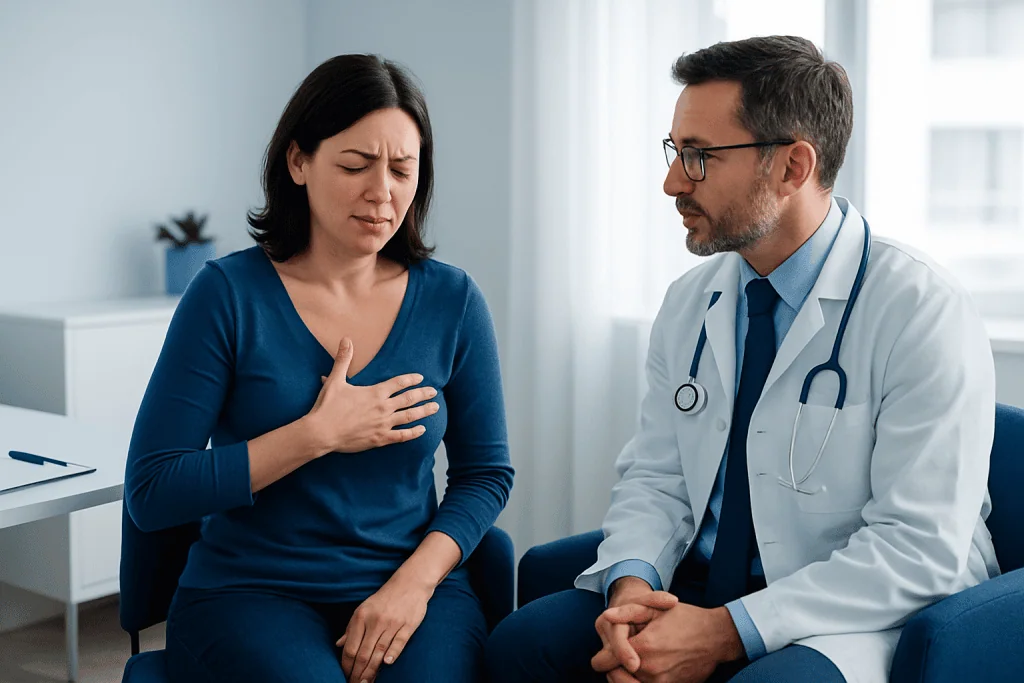
Many episodes of sharp pain in breast are linked to benign breast changes. Hormonal fluctuations are one of the most common causes, especially before a period, during perimenopause, or with hormone medications. Some people develop tender, lumpy areas related to fibrocystic breast changes, which can cause intermittent stabbing or aching discomfort. A fluid-filled cyst may also become painful if it enlarges or the surrounding tissue becomes irritated.
Not all pain felt in the breast comes from the breast itself. Chest wall pain, including strained pectoral muscles, inflamed rib cartilage, or minor injuries after exercise or lifting, can mimic breast pain. Nerve irritation can also cause sharp or burning discomfort. Conditions such as costochondritis may create tenderness near the breastbone that is mistaken for breast disease.
Skin and infection-related causes are also possible. Inflammation from mastitis, especially during breastfeeding, can cause pain along with redness, swelling, and fever. Less often, shingles may produce burning or sharp pain followed by a rash. Large breasts, poor bra support, and friction may increase discomfort by placing strain on supporting tissues.
Certain medicines can contribute to breast pain in some people, including hormone therapies and a few other prescription drugs. Benign and malignant breast conditions may also be part of the evaluation when pain is paired with other changes. Depending on the overall picture, a doctor may consider related conditions such as breast cancer or breast cysts, while keeping in mind that most breast pain has a non-cancerous explanation.
Risk factors and related conditions
Several factors can make sharp breast pain more likely. Age, menstrual status, and hormonal shifts are important influences. People who are still having menstrual cycles are more likely to experience cyclic pain, while noncyclic pain may become more common later or after breast surgery, injury, or changes in activity level.
Breast size and physical support can also play a role. Larger breasts may place more tension on ligaments and chest wall muscles, especially during exercise or prolonged standing. A poorly fitting bra can increase strain and worsen tenderness. High-impact activity, repetitive arm movement, or heavy lifting may trigger pain that feels breast-related even when the source is muscular.
Breastfeeding, recent pregnancy, and skin infections can increase the risk of painful inflammatory conditions. Family history of breast disease, prior breast procedures, and use of hormone-based medication may also be relevant when deciding whether further evaluation is needed. In some cases, what feels like breast pain may actually be referred discomfort from the neck, shoulder, upper back, or even digestive causes.
Because sharp breast pain has many possible sources, doctors look at the whole clinical picture rather than one symptom alone. This helps avoid unnecessary worry while still identifying situations where more focused testing is sensible.
How doctors diagnose the cause
Evaluation begins with a detailed history. A doctor will ask when the pain started, whether it is linked to the menstrual cycle, where it is located, what it feels like, and whether anything makes it better or worse. They may also ask about injury, exercise habits, medications, breastfeeding, family history, and any breast symptoms such as a lump or nipple discharge.
A physical examination usually includes both breasts, the underarm area, and parts of the chest wall. This helps distinguish breast tissue pain from tenderness in the muscles, ribs, or cartilage. If the pain can be reproduced by pressing on a specific point outside the breast tissue, a chest wall cause becomes more likely.
Imaging is not always necessary, especially if the pain is clearly cyclic and the examination is otherwise normal. When there is a focal area of pain, a palpable lump, or age-related screening needs, doctors may recommend mammography or breast ultrasound. Ultrasound is often useful for evaluating focal pain or suspected cysts, while mammography may be used depending on age and clinical findings.
Additional tests are guided by symptoms rather than used routinely. If there is concern about infection, inflammation, or a complex breast change, a doctor may advise further breast assessment, including breast biopsy when imaging shows an area that needs tissue diagnosis. Most people do not need invasive testing, but persistent or unexplained symptoms should be followed up appropriately.
Treatment and symptom relief
Treatment depends on the underlying cause. If the pain is linked to hormones or benign breast tenderness, supportive measures may be enough. A well-fitting supportive bra, reducing activities that worsen symptoms, and tracking the timing of pain can all help. Some people find that reassurance after a normal examination and appropriate imaging significantly reduces distress around recurrent pain.
When the source is outside the breast, treatment focuses on the chest wall or skin condition involved. Muscle strain may improve with rest, activity modification, and general pain-relief measures recommended by a doctor. Infections such as mastitis need medical treatment, and nerve-related pain may require a different approach depending on the cause.
If a cyst is causing persistent focal pain, management may vary based on its size, appearance, and symptoms. A clinician may monitor it, investigate it further, or recommend treatment if necessary. Related breast conditions such as fibrocystic breast changes are usually managed conservatively unless another finding requires more attention.
People should avoid self-prescribing repeated treatments without a diagnosis, especially if the pain is new or changing. The goal is not only relief but also confidence that the cause has been assessed appropriately. Near the end of the care pathway, patients seeking coordinated evaluation may choose centers such as Acibadem International, where multidisciplinary specialists in JCI-accredited hospitals assess breast symptoms for international patients.
Self-care and prevention
While not every episode of sharp pain in breast can be prevented, a few practical steps may reduce discomfort. Wearing a supportive bra during the day and while exercising can lessen strain on breast tissue and chest muscles. Gentle posture correction, gradual exercise progression, and avoiding sudden heavy lifting may also help prevent pain linked to the chest wall.
Keeping a symptom diary can be very useful. Recording the timing of pain, menstrual cycle changes, physical activity, and any related symptoms may reveal patterns that are not obvious day to day. This information can help a doctor decide whether the pain is more likely to be cyclic, musculoskeletal, or related to another issue.
Good skin care and attention during breastfeeding can help lower the chance of irritation or infection. Any cracked skin, warmth, redness, or fever should not be ignored. It is also sensible to attend routine breast screening as recommended for age and risk level, even though screening is not done specifically for pain alone.
Self-care should complement, not replace, medical review when warning signs are present. If pain persists, interferes with daily life, or is accompanied by a lump or visible breast change, an appointment with a qualified doctor is the safest next step.
When to seek medical care
Medical care is recommended if sharp breast pain lasts for several weeks, becomes more frequent, wakes a person from sleep, or affects daily activities. A doctor should also evaluate pain that is limited to one area and keeps returning, even if it comes and goes.
Prompt assessment is especially important if pain occurs with a new breast lump, nipple discharge, skin dimpling, redness, swelling, or a change in breast shape. Fever, warmth, and tenderness may point to infection and should be checked without delay, particularly during breastfeeding.
Urgent care is needed if the pain seems more like chest pain than breast pain. Warning signs include shortness of breath, chest pressure, faintness, sweating, or pain spreading to the arm, back, or jaw. These symptoms need immediate evaluation to rule out heart or lung causes.
Even when the cause turns out to be benign, a proper assessment can bring reassurance and guide symptom relief. Persistent uncertainty is itself a good reason to seek professional advice rather than repeatedly guessing the cause at home.
Frequently asked questions
Is sharp pain in breast usually a sign of cancer?
Usually not. Breast pain alone is more often related to hormones, benign breast changes, cysts, or chest wall strain than to cancer. However, pain with a new lump, skin change, or nipple discharge should be checked by a doctor.
Why does the pain come and go?
Intermittent pain often reflects changing hormone levels, movement-related muscle strain, or irritation from a cyst or nerve. Symptoms that follow the menstrual cycle are commonly hormone-related. A pain diary can help identify patterns.
Can chest muscle pain feel like breast pain?
Yes. Muscles, ribs, and cartilage beneath the breast can cause pain that feels as if it is coming from the breast itself. Pain that worsens with movement, lifting, or pressing on the chest may suggest a chest wall source.
Should imaging be done for breast pain?
Not always. If the pain is clearly linked to the menstrual cycle and the breast exam is normal, imaging may not be needed right away. Doctors are more likely to recommend ultrasound or mammography when there is focal pain, a lump, or another concerning finding.
What helps relieve sharp breast pain at home?
A supportive bra, avoiding activities that trigger pain, and tracking symptoms may help. General pain-relief measures may also be useful if recommended by a doctor. Home care should not replace evaluation when symptoms persist or warning signs appear.
When should someone see a doctor urgently for breast pain?
Urgent medical care is needed if breast pain comes with fever, spreading redness, significant swelling, or signs of a breast infection. Immediate emergency evaluation is also important if the discomfort includes chest pressure, shortness of breath, faintness, or pain radiating to the jaw or arm.
References
- American Cancer Society
- Centers for Disease Control and Prevention
- National Health Service
- American College of Obstetricians and Gynecologists
- Mayo Clinic
This article is for general information only and is not a substitute for professional medical advice. Please consult a qualified doctor about your individual situation.
Oncology care in Turkey — second opinion and treatment plan
JCI-accredited · board-certified surgeons · reply within 24h
Add us as a Preferred Source to see more of our trusted health content across Google Search, AI Overviews and Discover.