

Si Joint Fusion: An Evidence-Based Guide for Patients

SI joint fusion is intended for selected people with persistent, confirmed sacroiliac joint pain. A detailed assessment, including physical examination and image-guided diagnostic injection, helps identify whether the SI joint is the pain source.
Key Takeaways
- SI joint fusion is intended for selected people with persistent, confirmed sacroiliac joint pain.
- A detailed assessment, including physical examination and image-guided diagnostic injection, helps identify whether the SI joint is the pain source.
- Minimally invasive techniques are commonly used and usually involve placing implants across the SI joint to support fusion.
- Recovery requires temporary activity restrictions, gradual rehabilitation and follow-up with the surgical team.
- Surgery can improve pain and function for appropriate candidates, but it cannot guarantee complete pain relief and carries surgical risks.
SI joint fusion is a surgical procedure that joins and stabilizes the sacroiliac (SI) joint to reduce pain caused by carefully confirmed SI joint dysfunction. It is generally considered only after appropriate non-surgical care has not provided sufficient relief and other causes of lower back or hip-area pain have been evaluated.
What is SI joint fusion?
SI joint fusion, also called sacroiliac joint fusion or arthrodesis, is an operation designed to stabilize one or both sacroiliac joints. These joints sit low in the pelvis, where the triangular sacrum at the base of the spine meets the iliac bones. Although SI joints normally move only a small amount, they transfer forces between the upper body and legs and can become a source of ongoing pain.
During fusion, a surgeon places implants and sometimes bone graft material across the painful joint. The aim is to reduce abnormal or painful motion and encourage the bones to grow together over time. Modern procedures are often performed through a small incision using X-ray guidance; however, the precise technique, implant type and approach depend on the individual anatomy, diagnosis and surgeon’s assessment.
SI joint fusion is not a first-line treatment for nonspecific low back pain. It may be considered when pain has continued for months, has a pattern consistent with SI joint dysfunction, and has not improved enough with well-directed non-surgical care. A careful diagnosis is particularly important because pain in this area may also come from the lumbar spine, hip, muscles, nerves or other structures.
Understanding SI joint pain and who may benefit
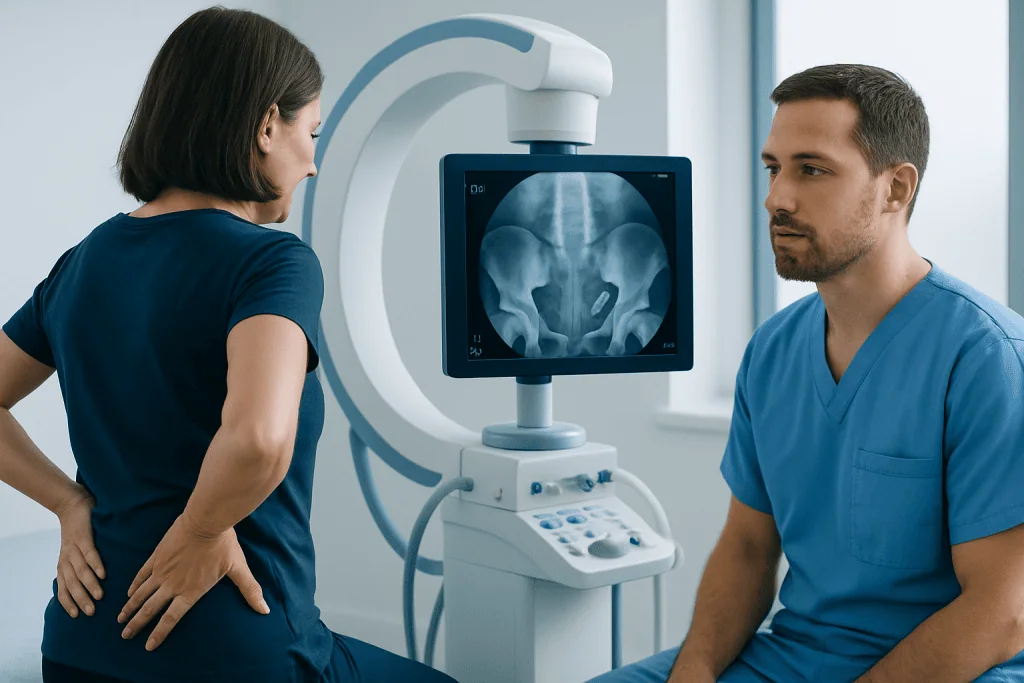
SI joint pain is often felt on one side of the lower back or upper buttock, sometimes near the posterior pelvic “dimple.” It may extend into the buttock, groin, hip or upper thigh. People may notice that prolonged standing, walking, climbing stairs, turning in bed, rising from a chair or putting weight on one leg aggravates their symptoms. The pattern varies, and pain below the knee or neurological symptoms may suggest another or an additional condition.
Potential candidates for SI joint fusion usually have pain that significantly affects daily activities and persists despite an adequate trial of conservative measures. These can include activity modification, physiotherapy, exercises to improve pelvic and core control, anti-inflammatory medicines when medically appropriate, and image-guided injections. The decision is based on the overall clinical picture rather than on pain severity alone.
Some people develop SI joint dysfunction after pregnancy-related pelvic changes, trauma, arthritis affecting the joint, altered walking mechanics or previous lumbar spine fusion. Prior lumbar fusion can increase stress on nearby joints in some patients. However, having one of these factors does not by itself establish that the SI joint is the primary pain generator or that surgery is needed.
- Symptoms should be persistent and function-limiting.
- Examination findings should support the SI joint as a likely source of pain.
- Other important causes of back, hip and leg pain should be assessed.
- A diagnostic SI joint injection should provide meaningful temporary relief in appropriately selected cases.
How doctors confirm the diagnosis
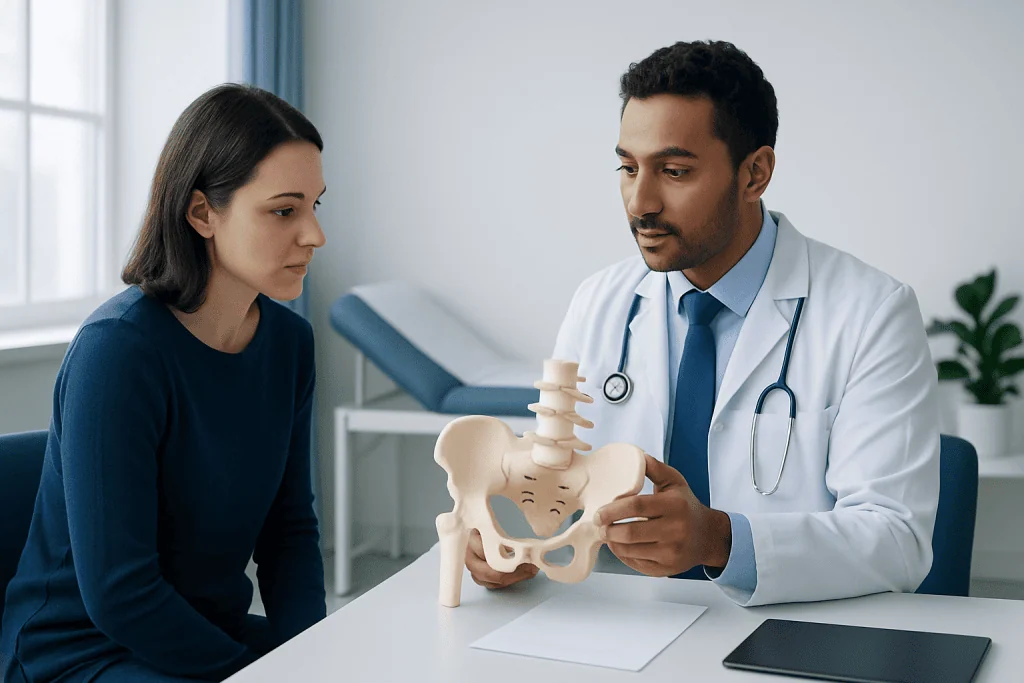
There is no single scan or blood test that can diagnose all SI joint pain. Assessment starts with a medical history, including the location and timing of symptoms, previous injury or surgery, pregnancy history, inflammatory conditions and how pain affects movement. A clinician also examines posture, walking, hip movement, lower-back motion, strength, sensation and reflexes.
Several gentle physical examination maneuvers may place stress on the SI joint. When more than one of these tests reproduces the person’s familiar pain, SI joint involvement becomes more likely. These tests are useful but are not perfect, which is why they are interpreted together with the history and other findings rather than in isolation.
X-rays, CT scans or MRI may be used to assess the pelvis, hips and spine, look for arthritis or injury, and exclude other explanations for symptoms. Imaging may show changes in an SI joint, but structural findings do not always match the source of pain. In many cases, an image-guided injection of local anesthetic into the SI joint is an important diagnostic step. Clear temporary pain relief after the injection supports the joint as a pain source.
A thorough review also considers conditions that can resemble SI joint dysfunction, including <a href="https://acibademinternational.com/diseases/hip-osteoarthritis/”>hip osteoarthritis, lumbar disc disease, spinal stenosis, nerve root irritation, fractures and inflammatory sacroiliitis. This structured approach helps avoid surgery when a different treatment would be more suitable.
Non-surgical care before fusion
Most people with suspected SI joint pain begin with non-surgical treatment. A tailored physiotherapy program may focus on improving movement, strengthening the trunk and hip muscles, and learning ways to reduce strain during work, exercise and daily tasks. The goal is not simply to avoid movement; gradual, supported activity is often important for maintaining function and confidence.
Clinicians may recommend short-term use of pain-relieving or anti-inflammatory medication when it is safe for the individual. Medicines are chosen with consideration of other health conditions, allergies and interactions. A pelvic support belt may help some people, particularly where joint instability or pregnancy-related pelvic symptoms are suspected, although it is not appropriate or necessary for everyone.
Image-guided injections can have both diagnostic and therapeutic roles. An injection may reduce inflammation and pain for a period of time, enabling participation in rehabilitation. Radiofrequency procedures that target nearby sensory nerves are another option for certain patients. The expected benefits, limitations and duration of relief should be discussed with a pain specialist or spine clinician.
Trying conservative care does not mean a person must continue ineffective treatments indefinitely. If symptoms remain disabling despite a sufficiently targeted program, and diagnostic findings consistently point to the SI joint, a surgical consultation may be reasonable.
The procedure, expected benefits and possible risks
Most contemporary SI joint fusion procedures are minimally invasive. The patient receives anesthesia, and the surgeon makes a small incision over the buttock or pelvic area. Using live X-ray imaging or other navigation technology, the surgeon places specially designed implants across the SI joint. These implants stabilize the joint while bone healing develops. Open surgery may be used in less common or more complex situations.
The expected benefit is a reduction in SI joint-related pain and improved ability to sit, stand, walk and carry out daily activities. Clinical studies suggest that many carefully selected patients experience meaningful improvement after minimally invasive fusion. Results vary, however, and improvement may be gradual as tissues heal and activity is rebuilt. Pain from other spinal, hip or muscular conditions may continue even when the SI joint component improves.
As with any operation, SI joint fusion has potential risks. These include bleeding, infection, blood clots, wound problems, reaction to anesthesia, ongoing pain, implant-related problems, incomplete fusion and the possible need for additional treatment or revision surgery. Because nerves and blood vessels are near the surgical area, precise implant placement is important. Serious complications are uncommon but should be discussed openly before surgery.
Smoking and nicotine exposure can impair bone healing and increase complications. Diabetes, osteoporosis, immune suppression, poor nutrition and certain medicines may also affect surgical planning or recovery. The surgeon may recommend health optimization before proceeding.
Recovery and long-term self-care
Recovery plans differ according to the surgical technique, whether one or both joints are treated, overall health and the surgeon’s instructions. Some people go home on the day of surgery, while others need a short hospital stay. Early recovery commonly includes wound care, pain management, short walks and temporary limits on bending, twisting, heavy lifting or full weight-bearing activities.
Crutches, a walker or other support may be advised for a period after surgery. Follow-up visits allow the team to check the incision, review symptoms and monitor healing. Imaging may be used when clinically needed to assess implant position and the progression of fusion. It is important not to return to high-impact activity, heavy work or sports before receiving individualized clearance.
Rehabilitation generally progresses in stages. Initially, the focus is on safe mobility and protecting the healing area. Later, physiotherapy may address walking pattern, hip strength, core control, flexibility and gradual return to work or recreation. Consistent participation in the rehabilitation plan can support functional recovery.
Long-term self-care includes avoiding nicotine, maintaining a balanced diet with adequate protein and nutrients, following advice on bone health, and staying physically active within comfortable limits. New symptoms should not be assumed to be part of normal recovery; they should be reported to the care team for advice.
When to seek medical care
Medical assessment is appropriate for lower-back, buttock or pelvic pain that lasts for several weeks, returns repeatedly, limits walking or sleep, or does not improve with basic self-care. A clinician can determine whether symptoms may relate to the SI joint and whether physiotherapy, medication, imaging or referral to a spine, orthopedic or pain specialist would be helpful.
Urgent medical care is needed for back or pelvic pain accompanied by new bowel or bladder control problems, numbness around the groin or inner thighs, progressive leg weakness, fever, unexplained weight loss, severe pain after a significant fall or accident, or a history of cancer with new persistent back pain. These features need prompt evaluation because they may indicate a condition other than routine mechanical SI joint pain.
After SI joint fusion, patients should contact their surgical team promptly for increasing redness, drainage or swelling at the incision, fever, worsening pain that is not controlled by the prescribed plan, calf swelling, chest pain, shortness of breath, or new weakness or numbness. Early communication supports timely care.
Acibadem International’s multidisciplinary specialists and JCI-accredited hospitals diagnose and treat SI joint conditions for international patients, with treatment planning based on individual clinical assessment and recovery needs.
Frequently asked questions
Is SI joint fusion the same as spinal fusion?
No. SI joint fusion stabilizes the joint between the sacrum and pelvic bone, while spinal fusion joins two or more vertebrae in the spine. Both procedures aim to reduce painful movement, but they involve different anatomy, indications and recovery considerations.
How long does it take to recover from SI joint fusion?
Initial recovery commonly takes several weeks, while bone healing and return to fuller activity may take several months. The timeline varies with the surgical technique, a person's health, work demands and adherence to rehabilitation instructions. The surgical team provides the most appropriate activity progression.
Will SI joint fusion completely eliminate pain?
The procedure may substantially reduce pain caused by a confirmed SI joint problem, but complete pain relief cannot be guaranteed. Some people have more than one cause of lower-back, hip or leg pain. Identifying these conditions before surgery helps set realistic expectations.
Can SI joint pain be treated without surgery?
Yes. Many people improve with individualized physiotherapy, activity adjustments, appropriate medication, pelvic support when indicated, and image-guided procedures such as injections. Surgery is generally reserved for persistent, function-limiting pain after non-surgical options have been appropriately tried.
What tests are used before SI joint fusion?
Assessment typically includes a detailed history, physical examination and imaging to evaluate the SI joint, spine and hips. An image-guided injection that temporarily relieves the usual pain is commonly used to support the diagnosis. No single test should be used alone to decide on surgery.
Can both SI joints be fused?
Both SI joints can be painful, but treatment planning is individualized. A surgeon may assess whether pain is truly coming from both joints and whether treatment should be staged or directed at one side first. The safest approach depends on symptoms, function, imaging and overall health.
References
- American Academy of Orthopaedic Surgeons
- North American Spine Society
- International Society for the Advancement of Spine Surgery
- National Institute of Arthritis and Musculoskeletal and Skin Diseases
- U.S. Food and Drug Administration
This article is for general information only and is not a substitute for professional medical advice. Please consult a qualified doctor about your individual situation.
Joint and spine care in Turkey — expert assessment & treatment
JCI-accredited · board-certified surgeons · reply within 24h
Add us as a Preferred Source to see more of our trusted health content across Google Search, AI Overviews and Discover.

More from the Health Library



Related Specialists

Dr. Metin Bozkuş
Emergency Service
Dr. Mehmet Tayfun Osmanağaoğlu
Gynecology & Obstetrics
Fzt. Emre Erden
Physical Medicine & Rehabilitation
Prof. Dr. Yusuf Kenan Yalçınbaş
Cardiovascular Surgery