Signs of minor heart blockage: A Complete Medical Guide for Patients

Minor heart blockage usually refers to early or less severe narrowing in the coronary arteries, not a complete blockage. Symptoms may be mild, intermittent, or absent, especially in the early stages.
Key Takeaways
- Minor heart blockage usually refers to early or less severe narrowing in the coronary arteries, not a complete blockage.
- Symptoms may be mild, intermittent, or absent, especially in the early stages.
- Chest pressure with activity, shortness of breath, fatigue, and reduced exercise tolerance are common warning signs.
- Diagnosis may involve a physical exam, ECG, blood tests, stress testing, echocardiography, or coronary imaging.
- Treatment focuses on lowering risk, relieving symptoms, and preventing progression through lifestyle changes, medicines, and sometimes procedures.
- Urgent medical care is needed for chest pain at rest, severe shortness of breath, fainting, or symptoms suggestive of a heart attack.
Signs of minor heart blockage often appear when the heart needs more oxygen, such as during walking, climbing stairs, stress, or cold weather. Common clues include chest pressure, shortness of breath, unusual fatigue, or no symptoms at all, which is why medical evaluation matters.
Overview: what “minor heart blockage” usually means
The phrase signs of minor heart blockage is commonly used by patients to describe early narrowing of the arteries that supply blood to the heart muscle. In medical terms, this is usually related to coronary artery disease, where fatty deposits called plaque build up in the artery wall. “Minor” does not always mean harmless; it often means the narrowing is less severe or causing symptoms only under strain.
When the coronary arteries narrow, blood flow may still be enough at rest but less able to meet the heart’s needs during physical activity, emotional stress, heavy meals, or exposure to cold. This can lead to warning signs that come and go. In some people, especially in the early stages, there are no noticeable symptoms at all.
It is also important to separate coronary artery narrowing from electrical “heart block,” which is a problem with the heart’s rhythm pathway rather than blood flow. Patients often use the same word for both conditions, but the causes, tests, and treatments are different. This article focuses on blood flow blockage in the coronary arteries, including early coronary artery disease.
Possible signs and symptoms of minor heart blockage
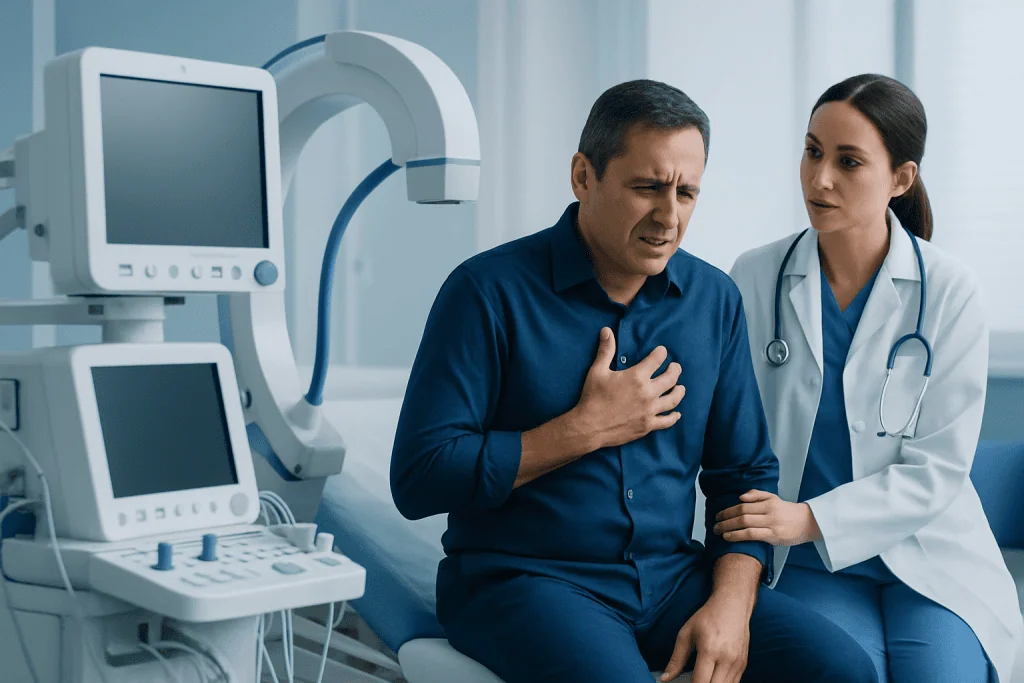
The most typical symptom is discomfort in the chest, often described as pressure, tightness, heaviness, squeezing, or burning rather than sharp pain. It may happen during walking uphill, climbing stairs, carrying groceries, or hurrying. Many people notice that it improves with rest because the heart no longer needs as much oxygen.
Another common sign is shortness of breath, especially during activity that used to feel easy. Some people describe a reduced ability to exercise, needing to stop sooner, or feeling unusually winded. Others notice fatigue, low stamina, or a sense that their body “runs out of energy” more quickly than before.
Symptoms can vary from person to person. Some people feel discomfort in the neck, jaw, shoulder, back, or arm instead of the center of the chest. Nausea, sweating, lightheadedness, or a vague sense of unease may occur, particularly in older adults, women, and people with diabetes. Symptoms may also be milder than expected, which can delay recognition.
- Chest pressure or tightness with exertion
- Shortness of breath during activity
- Unusual fatigue or reduced exercise tolerance
- Discomfort spreading to the jaw, arm, shoulder, or back
- Nausea, sweating, or lightheadedness
- No symptoms at all in some cases
Because these symptoms are not specific, they can overlap with indigestion, muscle strain, anxiety, lung conditions, or anemia. Even so, repeated or activity-related symptoms should not be ignored, especially in someone with cardiovascular risk factors.
Why symptoms may be subtle or absent

Early coronary narrowing often causes only partial reduction in blood flow, so symptoms may appear only when demand rises. A person may feel entirely well while sitting or resting but develop chest pressure or breathlessness during brisk walking or emotional stress. This pattern is one reason early disease can be overlooked.
The body can also adapt over time. Some patients gradually limit their activity without realizing it, avoiding hills, heavy lifting, or fast walking because these tasks have started to feel uncomfortable. As a result, the warning signs may seem mild simply because the person is no longer challenging the heart in the same way.
Another reason symptoms may be absent is that plaque does not always cause a severe narrowing before becoming dangerous. Some heart attacks occur when a smaller plaque suddenly ruptures and forms a clot. This is why prevention and risk-factor control matter even when symptoms are minimal. Patients with diabetes may be more likely to have “silent” ischemia, meaning reduced blood flow without clear pain.
Causes and risk factors
The usual cause of minor heart blockage is atherosclerosis, a process in which cholesterol-rich plaque builds up in the coronary arteries over many years. This buildup can narrow the artery and reduce blood flow to the heart muscle. In some cases, artery spasm or problems affecting the small vessels of the heart may also contribute to symptoms.
Several factors increase the likelihood of coronary artery disease. Some cannot be changed, such as older age, male sex, and a family history of early heart disease. Many others can be improved, including smoking, high blood pressure, high LDL cholesterol, diabetes, obesity, physical inactivity, poor sleep, and ongoing stress.
Diet also plays a role. Regular intake of foods high in saturated fat, trans fat, salt, and ultra-processed ingredients can worsen blood pressure, cholesterol, and weight over time. Heavy alcohol use and untreated conditions such as high blood pressure can further strain the heart and blood vessels.
Understanding risk matters because symptoms alone do not reliably show how much disease is present. A person with only mild symptoms may still have important risk factors that need treatment, while another person with chest discomfort may have a non-cardiac cause. A clinician uses both symptom pattern and risk profile to decide what testing is appropriate.
How doctors diagnose the cause
Diagnosis begins with a careful history. A doctor will ask what the discomfort feels like, where it is located, what brings it on, how long it lasts, and whether rest relieves it. They will also review blood pressure, cholesterol, diabetes status, smoking history, family history, and any previous heart problems.
A physical examination and electrocardiogram (ECG) are common first steps, but these may be normal between episodes. Blood tests may be used to look at cholesterol, blood sugar, kidney function, and in urgent situations, markers of heart muscle injury. Depending on the situation, further evaluation may include echocardiography or a supervised stress echocardiogram to assess how the heart performs during exertion.
When doctors need a closer look at the coronary arteries, they may recommend noninvasive imaging such as coronary CT angiography. In selected cases, especially when symptoms are significant or test results suggest reduced blood flow, an invasive coronary angiography may be considered. The aim is not only to confirm whether blockage is present, but also to estimate risk and guide treatment.
Because chest symptoms can come from many causes, the evaluation may also consider reflux, lung disease, anemia, musculoskeletal pain, or rhythm problems. A proper diagnosis helps avoid both under-treatment and unnecessary worry.
Treatment options and what they aim to do
Treatment for minor heart blockage usually has three goals: reduce symptoms, prevent the disease from getting worse, and lower the risk of heart attack or stroke. The plan depends on symptoms, test findings, and overall cardiovascular risk. Many patients are treated successfully with lifestyle changes and medicines.
Doctors may recommend medications to improve blood flow, reduce strain on the heart, control blood pressure, lower LDL cholesterol, and treat diabetes when present. The exact choice differs from person to person, so treatment should always be individualized by a qualified clinician. It is important for patients to take medicines as prescribed and discuss side effects rather than stopping them suddenly on their own.
If symptoms continue despite medical therapy, or if tests show more significant narrowing, a procedure may be needed to restore blood flow. Depending on the anatomy of the blockage and the patient’s overall health, options may include coronary stent placement or surgery. Not every plaque requires a procedure; in many early cases, careful risk reduction is the most effective long-term strategy.
Near the end of the care pathway, some patients may seek evaluation at specialized centers. Acibadem International’s multidisciplinary specialists and JCI-accredited hospitals diagnose and treat coronary artery conditions for international patients when advanced assessment or coordinated cardiac care is needed.
Prevention and self-care to slow progression
The most effective self-care approach is to reduce the conditions that allow plaque to grow. Stopping smoking is one of the most important steps. If smoking cessation is difficult, structured support from a healthcare professional can improve success. Regular movement also matters; many people benefit from a gradual plan built around walking or other moderate activity approved by their doctor.
Heart-healthy eating supports blood pressure, cholesterol, and weight management. A practical pattern emphasizes vegetables, fruits, legumes, whole grains, nuts, fish, and unsaturated fats while limiting processed meats, sugary drinks, excess salt, and foods high in saturated or trans fats. Weight loss, when appropriate, can also improve blood pressure, blood sugar, and symptoms.
Good sleep, stress management, and regular follow-up are often overlooked but important. Patients should keep track of their blood pressure, cholesterol, and diabetes care, and ask how often these should be checked. If a doctor has prescribed medicines for cholesterol, blood pressure, or angina symptoms, taking them consistently is part of prevention as well as treatment.
People who notice symptoms only during exertion should avoid pushing through chest discomfort or marked breathlessness. Instead, they should stop, rest, and arrange medical evaluation. Self-care supports heart health, but it does not replace proper testing when warning signs are present.
When to seek medical care
Routine medical care is appropriate if a person develops new chest pressure with activity, shortness of breath that seems out of proportion to effort, unexplained fatigue, or a drop in exercise capacity. Evaluation is also wise when there are no symptoms but multiple risk factors such as diabetes, smoking, high cholesterol, hypertension, or a strong family history of early heart disease.
Urgent care is needed for chest pain or pressure that is severe, occurs at rest, lasts more than a few minutes, or comes with shortness of breath, sweating, nausea, fainting, confusion, or pain spreading to the arm, jaw, or back. These can be signs of a heart attack and should not be watched at home. Calling emergency services is safer than driving oneself when symptoms are intense or ongoing.
Patients should also seek prompt advice if known symptoms become more frequent, happen with less activity than before, or stop improving with rest. A changing pattern can suggest unstable disease that needs timely assessment.
Frequently asked questions
Can minor heart blockage cause symptoms every day?
It can, but not always. Some people notice symptoms only during exertion or stress, while others have no symptoms at all. If chest discomfort or shortness of breath is recurring, a medical evaluation is important.
Is minor heart blockage the same as a heart attack?
No. Minor heart blockage usually refers to early or partial narrowing in the coronary arteries, while a heart attack happens when blood flow to part of the heart is suddenly blocked enough to injure heart muscle. However, early disease can progress, so it still deserves attention.
Can someone have heart blockage with a normal ECG?
Yes. A resting ECG can be normal when symptoms are not happening at the time of the test. That is why doctors may use stress tests, echocardiography, or coronary imaging when symptoms or risk factors suggest coronary disease.
Do women have different signs of minor heart blockage?
Women can have the classic symptom of chest pressure, but they may also report shortness of breath, fatigue, nausea, back pain, or jaw discomfort. Symptoms can be less typical, which is one reason they should not be dismissed.
Can lifestyle changes really help early coronary blockage?
Yes. Stopping smoking, improving diet, increasing physical activity as advised, controlling blood pressure, lowering LDL cholesterol, and managing diabetes can all slow progression and reduce risk. Lifestyle change is often a key part of treatment, even when medicines are also needed.
When should chest discomfort be treated as an emergency?
Chest pain or pressure should be treated urgently if it is severe, occurs at rest, lasts more than a few minutes, or comes with sweating, fainting, marked shortness of breath, or pain spreading to the arm, jaw, or back. In that situation, emergency medical care is the safest choice.
References
- American Heart Association
- National Heart, Lung, and Blood Institute
- Centers for Disease Control and Prevention
- European Society of Cardiology
- Mayo Clinic
This article is for general information only and is not a substitute for professional medical advice. Please consult a qualified doctor about your individual situation.
Explore treatments in Turkey — costs, top hospitals & a free quote
JCI-accredited · board-certified surgeons · reply within 24h
Add us as a Preferred Source to see more of our trusted health content across Google Search, AI Overviews and Discover.
Check your numbers in seconds
BMI, calories, due date, blood pressure and 30+ more clinical calculators — free, instant, doctor-reviewed ranges.