

Signs of Recovery From Spinal Cord Injury: An Evidence-Based Patient Guide
Recovery after spinal cord injury is variable and depends on the injury level, completeness, cause and overall health. New or improving sensation, voluntary movement and functional skills can be meaningful recovery signs.
Key Takeaways
- Recovery after spinal cord injury is variable and depends on the injury level, completeness, cause and overall health.
- New or improving sensation, voluntary movement and functional skills can be meaningful recovery signs.
- C5 and T8 injuries can affect different body areas because they occur at different levels of the spinal cord.
- Rehabilitation focuses on safety, independence, physical health and emotional adjustment at every stage of recovery.
- Sudden new weakness, breathing difficulty, fever or changes in bladder and bowel function require prompt medical advice.
Signs of recovery from spinal cord injury may include returning sensation, voluntary movement, improving muscle strength, better balance or changes in bladder and bowel awareness. Recovery is highly individual, and even small changes should be assessed and supported by a spinal cord injury rehabilitation team.
Overview: what recovery after spinal cord injury can look like
A spinal cord injury occurs when damage to the spinal cord disrupts messages between the brain and body. It may result from trauma, such as a fall, road traffic collision or sports injury, or from non-traumatic causes including tumors, infection, inflammation or spinal degeneration. Effects can include weakness or paralysis, altered sensation, pain, and changes in bladder, bowel, sexual or autonomic function.
Signs of recovery from spinal cord injury are not the same for every person. They can involve improved sensation, small voluntary muscle contractions, stronger movement, greater endurance, improved balance, or growing independence with daily tasks. Recovery may occur over months or years, and progress can be uneven; a plateau at one point does not mean that rehabilitation goals are no longer valuable.
Clinicians describe injuries by their neurological level and whether they are complete or incomplete. In an incomplete injury, some sensory or motor messages remain below the injury level, which may be associated with greater potential for neurological recovery. However, the outlook cannot be predicted from one feature alone, and regular assessment is more informative than comparing progress with another person.
What are the signs that someone is recovering from a spinal cord injury?
Early recovery signs can be subtle. A person may notice tingling, temperature sensation, awareness of touch, or a different response to pressure in areas below the injury. Sensory changes do not always develop into functional movement, but they are important findings to report because they help the clinical team track neurological status.
Motor recovery may begin as a flicker of voluntary movement, such as moving a toe, tightening a thigh muscle or activating a hand muscle on purpose. Over time, movement may become stronger, more coordinated or more useful for tasks such as repositioning in bed, transferring between surfaces, using a wheelchair, standing with support or walking with assistive devices. Changes in spasticity alone are not a reliable sign of nerve recovery, as muscle stiffness can increase or decrease for several reasons.
Functional recovery also matters. Better sitting tolerance, improved hand control, less fatigue during self-care, safer transfers, clearer awareness of bladder or bowel needs, and improved ability to participate in work, school or family life are meaningful outcomes. Formal examinations may include muscle strength testing, sensory mapping and standardized measures of independence.
- Return or improvement of light touch, pinprick, temperature or body-position sensation
- New voluntary muscle activation or stronger, more coordinated movement
- Improved balance, transfers, wheelchair skills, standing or walking capacity
- Greater independence with dressing, eating, bathing and communication
- More predictable bladder or bowel routines, with medical guidance
What are the symptoms of a C5 vertebrae injury?
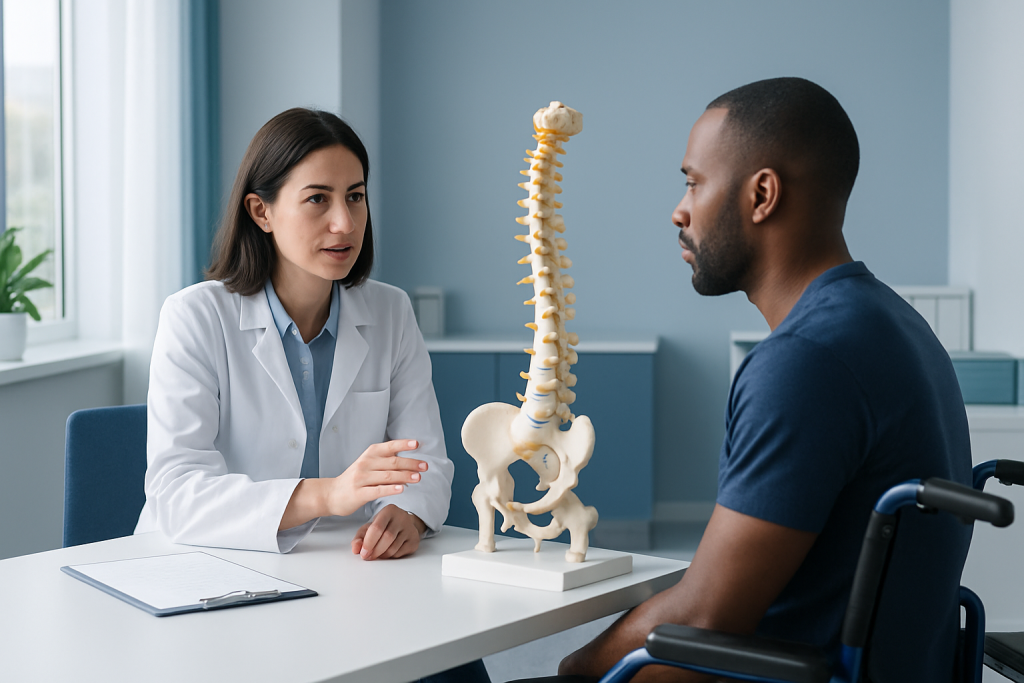
The C5 vertebra is in the neck, but symptoms depend on the spinal cord segment and nerves affected rather than the bone alone. A spinal cord injury at about the C5 neurological level commonly affects the arms, trunk and legs. It can cause weakness or paralysis below the shoulders, though shoulder movement and elbow bending may be partly preserved.
Many people with a C5-level injury can use the deltoid and biceps muscles, supporting shoulder lifting and elbow flexion. Hand and finger movements may be weak or absent, so splints, adaptive equipment and assistive technology can be helpful for daily activities. Sensation may be altered below the upper arm or shoulder region, but the exact pattern varies.
Because the injury is in the cervical spine, possible concerns include impaired trunk control, bladder and bowel changes, sexual-function changes, spasticity and blood-pressure regulation difficulties. Breathing may be weaker in the early period, particularly when swelling, chest injury or lung illness is also present. Prompt assessment is needed for shortness of breath, a weak cough, fever or increasing secretions.
Care may involve emergency stabilization, imaging, surgical assessment when spinal compression or instability is present, and specialist rehabilitation. For injuries that require decompression or stabilization, spine surgery may be part of the acute treatment plan, followed by structured rehabilitation and long-term follow-up.
What are the common symptoms of a T8 vertebrae injury?
The T8 vertebra is in the middle of the thoracic spine. Injuries around the T8 neurological level usually preserve arm and hand function but can affect trunk stability and leg movement or sensation. A person may have paraplegia or weakness in both legs, altered sensation below the upper or middle abdomen, and difficulty with standing or walking.
Trunk control may be better than with higher thoracic injuries, although balance and abdominal muscle strength can still be affected. This can influence transfers, sitting posture, wheelchair propulsion and cough strength. People may also experience neuropathic pain, muscle spasms, changes in sweating or temperature regulation, and altered bladder, bowel and sexual function.
A T8-level injury is generally less likely than a high cervical injury to directly impair breathing muscles. Nevertheless, chest infections, reduced mobility and ineffective coughing can still create respiratory risks, especially soon after injury. Individual symptoms and function differ depending on whether the injury is complete or incomplete and whether other injuries are present.
Rehabilitation may include strengthening, sitting balance practice, wheelchair skills, gait training where appropriate, pressure-injury prevention, and bladder and bowel management. People with thoracic spinal cord injury may also benefit from review for related spinal stenosis or other structural causes when symptoms developed without a traumatic event.
Treatment and rehabilitation: how the care plan works
Spinal cord injury treatment begins with urgent protection of the spine, careful neurological assessment and treatment of associated injuries or complications. In some cases, doctors recommend surgery to relieve pressure on the spinal cord, remove damaged tissue, align the spine or stabilize it with implants. Surgery is considered according to the cause, timing, spinal stability, compression, overall medical condition and expected benefits.
When a procedure is appropriate, the typical process includes imaging and preoperative assessment, anesthesia, decompression or stabilization of the affected spinal level, and close monitoring afterward. The exact technique varies substantially by injury and should be explained by the treating surgeon. Potential benefits include protecting spinal alignment and reducing ongoing cord compression; risks can include infection, bleeding, blood clots, nerve injury, cerebrospinal fluid leakage, implant problems and anesthesia-related complications.
Not every person with spinal cord injury is a candidate for surgery. For example, an injury without instability or ongoing compression may be managed without an operation, while treatment for non-traumatic injury targets its underlying cause. A multidisciplinary team may include spinal surgeons, neurologists, physiatrists, rehabilitation nurses, physical and occupational therapists, respiratory therapists, psychologists, urologists and pain specialists.
Rehabilitation starts as soon as it is medically safe. It is tailored to the person’s neurological function, goals, home environment and support needs. Therapy can address positioning, skin care, movement, strength, self-care, assistive devices, mobility training, communication, vocational planning and emotional well-being.
Recovery timeline, benefits and realistic goals
The first days and weeks after injury are often focused on medical stability, prevention of complications and establishing a rehabilitation plan. During this period, swelling around the spinal cord may change, and neurological findings can evolve. The care team will monitor sensation, strength, breathing, skin integrity, pain, circulation and bladder and bowel function.
Many neurological improvements occur during the first several months, but progress can continue beyond this period. Recovery is rarely linear: fatigue, illness, pain, mood, spasticity and changes in activity can affect day-to-day function. Rehabilitation remains useful even when neurological recovery is limited because it can improve safety, fitness, confidence, comfort and independence.
Helpful goals are specific and practical. They may include learning a safe transfer, protecting the skin, independently using a wheelchair, improving hand function, managing a bowel program, returning to education or employment, or participating in valued hobbies. Reviewing goals regularly allows the plan to reflect new abilities and changing priorities.
Follow-up also helps detect treatable complications, including pressure injuries, urinary infections, constipation, fractures, shoulder pain, depression, sleep problems and autonomic dysreflexia in people with injuries at or above T6. New symptoms should not automatically be assumed to be a normal part of recovery.
How do I adjust to life after a spinal cord injury?
Adjustment after a spinal cord injury is a process, not a single milestone. It often involves learning new routines while grieving losses, recognizing abilities and building confidence. Emotional responses such as sadness, anger, anxiety or uncertainty are understandable, and support from a psychologist, counselor, peer mentor or spinal injury support group can be an important part of care.
Practical planning can make daily life safer and more manageable. Occupational therapists can advise on home adaptations, seating, bathroom equipment, driving options, workplace adjustments and technology for communication or environmental control. Physical therapists can help create a sustainable activity plan that protects joints and supports cardiovascular health.
Ongoing self-care includes daily skin checks, regular pressure relief, prescribed bladder and bowel routines, adequate hydration and nutrition, sleep support, vaccination and prompt attention to infection symptoms. It is also important to discuss sexuality, fertility, relationships and family planning with qualified clinicians; these topics are relevant to health and quality of life.
Acibadem International’s multidisciplinary specialists and JCI-accredited hospitals support assessment, treatment and rehabilitation planning for international patients with spinal cord injury. A personalized plan should always be developed with the treating medical team and adjusted as needs change.
When to seek medical care
Any suspected spinal injury after a fall, collision, diving accident or other trauma needs emergency medical assessment. The person should be kept as still as possible, and the neck or back should not be moved unnecessarily. Emergency services should be contacted rather than attempting to transport the person in a private vehicle when spinal injury is suspected.
People already living with spinal cord injury should seek urgent care for new or rapidly worsening weakness, numbness, severe neck or back pain, difficulty breathing, chest pain, fever, a new pressure injury, inability to pass urine, heavy bleeding, or symptoms of a possible blood clot such as one-sided leg swelling. These symptoms may have causes unrelated to neurological recovery and need timely evaluation.
For people with injury at or above T6, sudden severe headache, flushing or sweating above the injury level, nasal congestion, anxiety or a sharp rise in blood pressure may indicate autonomic dysreflexia. This can be a medical emergency. Following the person’s emergency plan and seeking urgent medical help is important, particularly if symptoms do not resolve quickly after addressing common triggers such as bladder or bowel problems.
Frequently asked questions
Can feeling tingling be a sign of recovery after spinal cord injury?
Tingling or returning sensation can be a meaningful neurological change, particularly if it occurs below the injury level. However, it does not reliably predict how much movement or function will return. It should be reported to the rehabilitation or neurology team so it can be documented and assessed in context.
Does an incomplete spinal cord injury have a better recovery outlook?
An incomplete injury means that some sensory or motor function remains below the neurological level of injury. In general, this may offer more potential for neurological improvement than a complete injury, but outcomes still vary widely. The injury level, cause, timing of treatment, complications and rehabilitation participation all matter.
How long does spinal cord injury recovery take?
Recovery timing differs greatly between individuals. The most noticeable neurological changes often occur in the first months, but functional gains and adaptation can continue for much longer. Rehabilitation and follow-up remain important even if recovery slows or reaches a plateau.
Can someone walk again after a spinal cord injury?
Some people regain standing or walking ability, especially with certain incomplete injuries, while others use wheelchairs or other mobility devices for long-term independence. Walking potential depends on the level and severity of injury, strength, balance, sensation and medical factors. A rehabilitation team can provide an individualized assessment and mobility plan.
What is the difference between a C5 and T8 spinal cord injury?
A C5 injury is in the cervical, or neck, region and can affect arm, hand, trunk and leg function. A T8 injury is in the thoracic, or mid-back, region and usually leaves arm and hand function intact while affecting the trunk and legs. Both may affect sensation, bladder, bowel, sexual function and autonomic control.
What should families do during spinal cord injury rehabilitation?
Families can support recovery by attending education sessions, learning safe transfer and skin-care practices, and helping plan accessible routines and environments. It is also important to respect the person’s independence and choices. Caregivers should seek support for their own physical and emotional well-being as well.
References
- World Health Organization
- National Institute of Neurological Disorders and Stroke
- American Spinal Injury Association
- Mayo Clinic
- National Spinal Cord Injury Statistical Center
This article is for general information only and is not a substitute for professional medical advice. Please consult a qualified doctor about your individual situation.
Persistent digestive symptoms? Get evaluated in Turkey
JCI-accredited · board-certified surgeons · reply within 24h
Add us as a Preferred Source to see more of our trusted health content across Google Search, AI Overviews and Discover.

More from the Health Library


Related Specialists

Prof. Dr. Emel Güngör
Dermatology
Prof. Dr. Turgay Çelikel
Internal Medicine
Dr. Mehmet Fatih Özkan
Emergency Service
Prof. Dr. Bülent Özçelik
Gynecology & Obstetrics