Signs of Throat Cancer Explained: Common Triggers and Red Flags

Persistent hoarseness, sore throat, swallowing difficulty, and a neck lump are important signs of throat cancer. Many throat symptoms are caused by non-cancerous conditions, but symptoms lasting more than a few weeks need medical review.
Key Takeaways
- Persistent hoarseness, sore throat, swallowing difficulty, and a neck lump are important signs of throat cancer.
- Many throat symptoms are caused by non-cancerous conditions, but symptoms lasting more than a few weeks need medical review.
- Smoking, alcohol use, and HPV infection are among the main risk factors for throat cancer.
- Diagnosis may involve an ENT examination, laryngoscopy, imaging, and a biopsy.
- Early evaluation can help identify whether symptoms are due to cancer, infection, reflux, or another treatable cause.
Signs of throat cancer often include symptoms that last longer than expected, such as persistent hoarseness, a sore throat, trouble swallowing, ear pain, or a lump in the neck. These symptoms are not specific to cancer and can happen with infections or irritation, but they should be checked if they do not improve.
Overview: what the signs of throat cancer can look like
The signs of throat cancer are usually not dramatic at first. More often, they appear as common throat or voice problems that do not settle as expected, such as a sore throat that lingers, hoarseness, pain with swallowing, a feeling that something is stuck in the throat, or a lump in the neck. The key feature is persistence rather than severity.
“Throat cancer” is a general term that may refer to cancers affecting the pharynx or larynx. Because these areas help with speaking, swallowing, and breathing, symptoms often involve the voice, throat comfort, or eating. Depending on where the cancer starts, one person may notice voice changes first, while another may mainly feel swallowing difficulty or swollen lymph nodes in the neck.
It is also important to know that most throat symptoms are not caused by cancer. Colds, allergies, reflux, overuse of the voice, and throat infections are much more common explanations. Still, when symptoms last for several weeks, keep returning, or are accompanied by a neck mass or unexplained weight loss, a medical evaluation is appropriate.
Common symptoms and red flags
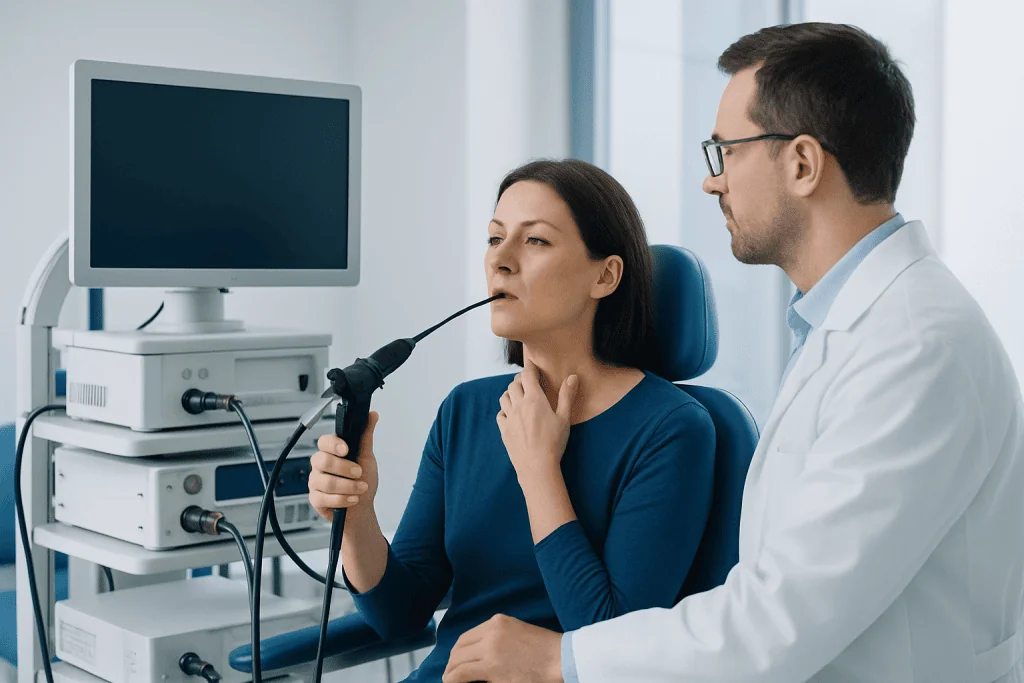
The most recognized signs of throat cancer include persistent hoarseness, a chronic sore throat, difficulty swallowing, pain when swallowing, and a neck lump. Some people develop a cough that does not go away, noisy breathing, or a change in the quality of their voice. Others notice that foods seem to stick, or that they need more effort to swallow than before.
Additional symptoms can include ear pain without an obvious ear infection, bad breath, coughing up blood, unexplained weight loss, and ongoing throat irritation. Mouth or throat sores that do not heal may also raise concern, especially when combined with smoking or alcohol use. In some cases, the first noticeable sign is not pain in the throat itself but an enlarged lymph node in the neck.
Symptoms that may deserve closer attention include:
- Hoarseness lasting more than 2 to 3 weeks
- A sore throat that does not improve
- Trouble swallowing or painful swallowing
- A lump in the neck
- Ear pain on one side without a clear ear problem
- Unexplained weight loss or reduced appetite
- Persistent cough or coughing up blood
These symptoms do not confirm cancer, but they should not be ignored if they persist. A doctor may also consider related conditions, such as throat cancer, voice disorders, reflux, or infection, depending on the overall pattern.
Why these symptoms are often missed at first

One reason the signs of throat cancer can be overlooked is that they resemble much more common conditions. A person may assume hoarseness is from talking too much, a sore throat is from a lingering virus, or swallowing discomfort is from acid reflux. These explanations are often correct, especially in younger people or when symptoms improve quickly.
Another reason is that the symptoms may develop gradually. A slight change in the voice, mild discomfort while swallowing, or occasional ear pain may not seem urgent. When symptoms slowly become more frequent over weeks or months, people can adapt to them and delay getting checked.
This is why duration matters. A symptom that is mild but persistent can be more important than one that is intense but brief. If a throat-related symptom does not resolve in the expected time frame, particularly in someone with risk factors such as smoking or heavy alcohol use, a clinician will usually recommend a closer examination.
Common triggers and risk factors
Several factors can increase the chance of developing throat cancer. Tobacco use is one of the strongest risk factors, including cigarettes, cigars, pipes, and sometimes smokeless tobacco. Alcohol use, especially when combined with smoking, adds further risk. Long-term exposure to these irritants can damage the lining of the throat over time.
Human papillomavirus, or HPV, is another important trigger for some throat cancers, especially in the oropharynx, which includes areas such as the tonsils and base of the tongue. HPV-related throat cancers may occur in people who do not smoke, so the absence of a smoking history does not fully rule out concern when symptoms persist.
Other possible contributors include older age, poor oral health, certain workplace exposures, prior radiation exposure to the head and neck, and a personal history of cancers in the mouth or throat. Having risk factors does not mean a person will develop cancer, and people without clear risk factors can still develop it.
Doctors also consider other conditions that may mimic cancer symptoms, such as chronic reflux, recurrent tonsil infections, or laryngeal cancer affecting the voice box specifically. The symptom pattern, exam findings, and testing help distinguish among these possibilities.
How doctors evaluate throat symptoms
Evaluation usually begins with a careful history and physical examination. A doctor will ask how long symptoms have been present, whether they are getting worse, and whether there is smoking, alcohol, reflux, or HPV-related risk. The neck, mouth, and throat are examined for visible changes, swelling, ulcers, or enlarged lymph nodes.
If symptoms suggest a deeper problem, an ear, nose, and throat specialist may perform laryngoscopy. This allows the doctor to view the throat and voice box more closely using a thin flexible scope. It is one of the most useful tests for persistent hoarseness, swallowing problems, or suspected abnormalities in the larynx or pharynx.
If an abnormal area is seen, imaging such as CT, MRI, or PET imaging may be used to understand the size and spread. A biopsy is needed to confirm whether cancer is present. In some cases, related tests are also recommended, including PET-CT imaging or endoscopic evaluation as part of a fuller assessment.
Because many non-cancerous conditions can cause similar symptoms, testing is aimed at clarity rather than assuming the worst. A structured evaluation can identify cancer, but it can also reassure patients when the cause is infection, inflammation, reflux, or a benign vocal cord problem.
Treatment options if throat cancer is diagnosed
Treatment depends on the exact location of the cancer, its stage, the person’s general health, and whether speaking or swallowing are already affected. Common approaches include surgery, radiation therapy, chemotherapy, targeted therapy, or combinations of these treatments. Care is usually planned by a multidisciplinary team that may include ENT surgeons, medical oncologists, radiation oncologists, radiologists, pathologists, and speech and swallowing specialists.
Early-stage disease may sometimes be treated with one main treatment, such as surgery or radiation. More advanced disease may require combined treatment to control the tumor and reduce the chance of recurrence. Preserving breathing, swallowing, and voice function is an important part of treatment planning whenever possible.
Supportive care is also an essential part of treatment. Some patients benefit from nutrition support, pain management, dental care, and therapy for speech or swallowing. Depending on the case, treatment may include procedures such as robotic surgery or radiation therapy as part of a personalized plan.
Near the end of the care pathway, some patients seek evaluation at specialized centers. Acibadem International’s multidisciplinary specialists in JCI-accredited hospitals diagnose and treat throat cancers for international patients, with care coordinated across imaging, pathology, surgery, and oncology services.
When to seek medical care
A medical review is advisable if throat symptoms last more than 2 to 3 weeks, especially hoarseness, a persistent sore throat, trouble swallowing, or a lump in the neck. Symptoms should also be checked sooner if they are clearly getting worse, interfering with eating, or causing repeated choking or coughing with meals.
Urgent medical attention is important for coughing up blood, difficulty breathing, severe trouble swallowing liquids, rapid swelling in the neck, or dehydration from being unable to eat or drink. These symptoms do not always mean cancer, but they should not wait.
People with higher risk, including smokers, heavy alcohol users, or those with prior head and neck cancers, should be especially alert to persistent symptoms. Even when the cause turns out to be non-cancerous, timely care can improve comfort and prevent complications.
Prevention and self-care for ongoing throat symptoms
Not all throat cancers can be prevented, but risk can be reduced. Avoiding tobacco, limiting alcohol, and staying up to date with HPV prevention strategies are among the most effective steps. Good oral hygiene and regular dental care may also support overall mouth and throat health.
For persistent throat irritation that may be related to non-cancerous causes, simple measures can help while waiting for medical review. These include staying well hydrated, avoiding smoking and secondhand smoke, resting the voice when hoarse, and managing reflux triggers if advised by a clinician. However, self-care should not replace evaluation when symptoms continue.
It can be useful to track symptoms in a simple diary. Noting how long they have lasted, whether they are one-sided, whether swallowing is painful, or whether there is associated weight loss can help the doctor make a faster assessment. Persistent symptoms deserve attention even if they are mild.
Frequently asked questions
What are the first signs of throat cancer?
Early signs of throat cancer may include persistent hoarseness, a sore throat that does not go away, pain or difficulty with swallowing, or a lump in the neck. The symptoms are often mild at first, which is why persistence is such an important clue.
Can throat cancer feel like a regular sore throat?
Yes. Throat cancer can begin with symptoms that feel similar to a common sore throat, irritation, or voice strain. The difference is that cancer-related symptoms tend to last longer, recur, or gradually worsen instead of resolving as expected.
Is hoarseness always a sign of throat cancer?
No. Hoarseness is much more commonly caused by infections, reflux, allergies, or overuse of the voice. Still, hoarseness that lasts more than 2 to 3 weeks should be assessed, especially in adults with smoking or alcohol-related risk factors.
Does throat cancer always cause pain?
No. Some people have little or no pain early on and may notice only a voice change or difficulty swallowing. Others may develop throat discomfort, ear pain, or pain with swallowing as the condition progresses.
Who is at higher risk for throat cancer?
People who smoke or use tobacco, drink alcohol heavily, or have HPV-related risk are at higher risk. Risk may also rise with older age, certain workplace exposures, and a previous history of head and neck cancers.
How is throat cancer confirmed?
Throat cancer cannot be confirmed by symptoms alone. Doctors usually use an examination, laryngoscopy, imaging, and a biopsy of any suspicious area to make a clear diagnosis.
This article is for general information only and is not a substitute for professional medical advice. Please consult a qualified doctor about your individual situation.
Oncology care in Turkey — second opinion and treatment plan
JCI-accredited · board-certified surgeons · reply within 24h
Add us as a Preferred Source to see more of our trusted health content across Google Search, AI Overviews and Discover.

More from the Health Library

Are Rice Noodles Healthy? Causes, Explanations, and Next Steps

Do antibiotics make you pee more: Common Causes, Warning Signs, and When to See a Doctor

Can You Sneeze in Your Sleep? Causes, Explanations, and Next Steps

How to Flatten Stomach? Here Is What the Evidence Says

How Many Apricot Seeds Should I Eat a Day? A Doctor-Reviewed Answer

Zyrtec vs Benadryl: Key Differences and How Doctors Tell Them Apart
Otorhinolaryngology Specialists at Acibadem

Prof. Dr. Çetin Vural
Otorhinolaryngology
Prof. Dr. Çiğdem Kalaycık
Otorhinolaryngology
Dr. Cüneyt Altunay
Otorhinolaryngology
Prof. Dr. Deniz Tuna Edizer
Otorhinolaryngology