

Skin Bridge Removal Cream: Procedure, Recovery and Results

A true penile skin bridge is scar-like healed tissue and does not usually respond to creams, oils or home cutting. Some skin bridges cause no symptoms, while others may pull during erections, trap debris or cause discomfort.
Key Takeaways
- A true penile skin bridge is scar-like healed tissue and does not usually respond to creams, oils or home cutting.
- Some skin bridges cause no symptoms, while others may pull during erections, trap debris or cause discomfort.
- Removal is usually a short outpatient procedure performed with local anaesthetic, although the approach depends on the bridge and the patient’s age.
- Early healing often takes one to two weeks, while comfort with all activities may take longer depending on the procedure and clinician advice.
- New pain, redness, swelling, discharge, fever or difficulty passing urine should be assessed promptly.
A skin bridge is a band of healed skin that commonly forms between the penile shaft skin and the glans after circumcision. Despite online claims, no skin bridge removal cream can safely dissolve a true bridge; assessment by a qualified clinician is the safest way to decide whether observation or a minor release procedure is appropriate.
Overview: Is there a skin bridge removal cream?
Skin bridge removal cream is a common online search, but a true skin bridge cannot be safely removed with an over-the-counter cream. A skin bridge is a firm band of healed skin, not simply dry skin or a surface adhesion. Products marketed for scars, skin tags or wart removal may irritate sensitive genital tissue and should not be used to try to dissolve, burn or cut a bridge.
Most skin bridges discussed in this context occur after circumcision, when shaft skin heals to the edge or surface of the glans (head of the penis). A clinician can distinguish a skin bridge from a mild, thin adhesion that may separate with normal growth and gentle care. If treatment is required, it is generally a minor procedure rather than cream-based treatment.
Online discussions such as “skin bridge removal Reddit” or “skin bridge surgery Reddit” may describe very different experiences. They cannot confirm what a particular area of tissue is or whether a home approach is safe. A paediatric urologist, urologist or qualified clinician can provide an individual examination and recommendation.
What does a skin bridge look like?
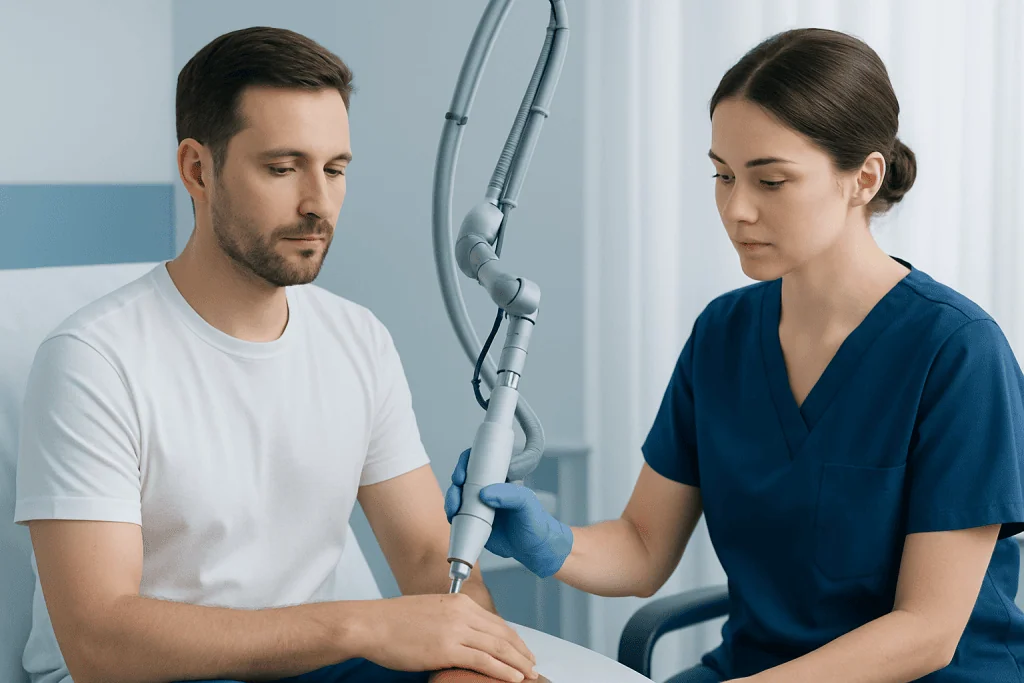
A penile skin bridge often looks like a narrow or wider strip of skin joining the penile shaft skin to the glans. It may appear skin-coloured, slightly paler or darker than nearby skin, and may look more noticeable when the penis is erect or when the skin is gently moved. Unlike a loose skin fold, it remains attached at both ends.
There is a spectrum of post-circumcision attachments. A light, thin adhesion may look like skin resting against the glans and may be easier to separate during a clinical examination. A skin bridge is usually thicker, more defined and may contain small blood vessels. It should not be pulled apart without professional advice.
Occasionally, people use the term “skin bridge between incisions” to describe a band of tissue after another type of surgery. Any new or changing tissue connection near a surgical wound should be examined by the operating team or another qualified clinician, because the correct management depends on the surgical site and healing stage.
Should you get a skin bridge removed?

Not every skin bridge needs to be removed. If it is small, stable and causes no pain, pulling, hygiene difficulty or concern about appearance, observation may be reasonable after a clinician has confirmed the diagnosis. Decisions should reflect symptoms, examination findings, the person’s age and personal preferences.
Removal may be considered when the bridge causes tugging or pain during erections, recurrent irritation, difficulty cleaning underneath the attachment, accumulation of smegma, bleeding from stretching, or significant distress about its appearance. In children, the clinician may also consider whether the attachment is likely to cause problems as the penis grows.
A consultation is important before arranging a procedure. The clinician will check for related concerns, such as scar tissue, infection, inflammation or another penile condition. For symptoms involving the foreskin or glans in an uncircumcised person, assessment may also consider conditions such as phimosis.
How skin bridge removal works: candidacy and procedure steps
Skin bridge removal is commonly an outpatient procedure. Suitable candidates are people with a confirmed bridge that is symptomatic, interferes with hygiene or is causing functional or cosmetic concern. The choice between observation, an office-based release and a procedure in an operating room depends on the thickness and location of the bridge, the person’s comfort, age, medical history and the clinician’s assessment.
First, the clinician examines the area and explains expected benefits, alternatives and possible complications. Local anaesthetic may be used to numb the area for a simple release. Young children or people with anxiety, complex anatomy or a larger bridge may need sedation or general anaesthesia in an appropriate clinical setting.
During the procedure, the bridge is carefully divided using sterile instruments or another clinician-selected technique. Any bleeding is controlled, and the small wound may be left to heal or closed with absorbable stitches when needed. A dressing or protective ointment may be advised. For a specialist assessment and management plan, penile surgery may be considered when clinically appropriate.
Questions about skin bridge removal surgery cost or skin bridge removal NYC are understandable, but fees and availability vary by country, clinic, anaesthesia needs and procedure complexity. It is best to request an itemised estimate and discuss insurance or payment arrangements directly with the treating facility.
What is the recovery time for skin bridge removal?
Recovery time for skin bridge removal varies with the size of the bridge and the type of anaesthesia or repair used. After a simple release, mild tenderness, swelling or a small amount of spotting can occur for several days. Many people feel comfortable resuming routine non-strenuous activities within a few days, but should follow their clinician’s individual instructions.
The surface wound often heals over about one to two weeks. If stitches are used, they are commonly absorbable and gradually dissolve. Full settling of swelling and sensitivity can take longer, especially if the bridge was broad or if a more extensive revision was required.
Aftercare usually includes gentle cleaning, keeping the area dry as directed, and using any prescribed or recommended protective ointment. Sexual activity, masturbation, swimming, vigorous exercise and activities that create friction should be avoided until the clinician confirms that healing is adequate. For infants and children, caregivers should follow specific diapering, bathing and medication guidance from the surgical team.
Benefits, risks and self-care considerations
When removal is indicated, potential benefits include relief of pulling or discomfort, easier hygiene and improved comfort during erections. A successful release may also prevent repeated irritation caused by tension on the bridge. However, no procedure is necessary solely because a bridge is present if it is not causing a problem and a clinician advises observation.
Possible risks include pain, swelling, bruising, bleeding, infection, delayed healing, visible scarring, changes in skin appearance, recurrence of adhesion and dissatisfaction with the cosmetic result. Anaesthesia has separate risks that should be discussed before the procedure. Serious complications are uncommon, but prompt follow-up is important if concerning symptoms develop.
Do not use skin tag removers, wart treatments, acid-based products, depilatory creams, unprescribed steroid creams or sharp tools on a suspected skin bridge. These methods can cause chemical burns, bleeding, infection and scarring. Gentle hygiene and professional assessment are safer than attempting removal at home.
Acibadem International’s multidisciplinary specialists and JCI-accredited hospitals can assess and treat penile conditions for international patients, with care plans based on clinical findings and individual needs.
Can skin bridges go away on their own?
A true, established skin bridge generally does not go away on its own because it is a healed connection between two skin surfaces. It may stretch or become more noticeable over time, particularly during growth or erections. Creams and massage should not be expected to remove it.
In contrast, a minor penile adhesion, especially in infants or young children, may resolve gradually as the penis grows and with normal erections. A clinician can explain whether the finding is a temporary adhesion or a true bridge. Caregivers should not force the skin apart because this can cause pain, bleeding and new scarring.
Follow-up is useful if the area changes, becomes painful or makes hygiene difficult. A clinician may recommend observation with simple care, or a planned release if the attachment is persistent or symptomatic.
When to seek medical care
Arrange a routine medical appointment if there is a persistent band of skin attached to the glans, discomfort during erections, repeated irritation, difficulty cleaning the area or uncertainty about whether the tissue is an adhesion or a bridge. A urologist or paediatric urologist can assess the finding respectfully and discuss whether treatment is needed.
Seek prompt medical advice for increasing redness, warmth, swelling, pus-like discharge, fever, persistent bleeding, severe pain, a dark or pale change in skin colour, or difficulty urinating. These symptoms may indicate infection, injury or another problem that needs timely examination.
After any release procedure, contact the treating team if pain or swelling is worsening rather than improving, a wound opens, bleeding does not stop with advised gentle pressure, or there are concerns about healing. Following the post-procedure plan and attending recommended review appointments supports safe recovery.
Frequently asked questions
Can a skin bridge removal cream work?
No. A true skin bridge is healed tissue, so creams cannot safely dissolve it. Products intended for warts, skin tags or scars can damage delicate genital skin and should not be used without medical advice.
Is skin bridge removal painful?
The procedure is designed to minimise discomfort with local anaesthetic or, when appropriate, sedation or general anaesthesia. Mild soreness, swelling or tenderness may occur during the early healing period. The treating clinician can explain pain-control options and aftercare.
How long does skin bridge removal take?
A straightforward release may take only a short time once anaesthesia is in place, but the full visit can be longer because it includes assessment, preparation and recovery. Larger or more complex bridges may require a different approach. The clinician can provide a more precise estimate after examination.
Can I remove a skin bridge at home?
No. Cutting, pulling or applying chemical products at home can lead to bleeding, infection, pain and scarring. A qualified clinician should confirm the diagnosis and perform any needed release using sterile techniques.
Will a skin bridge affect erections or sexual function?
Some skin bridges cause no functional problem. Others can pull or cause discomfort during erections, which may make sexual activity uncomfortable. Removal may be considered when symptoms are present, but individual assessment is needed.
Does a skin bridge always need surgery?
No. An asymptomatic bridge may be monitored if a clinician confirms that observation is appropriate. If it causes pain, hygiene problems, recurrent irritation or significant concern, a minor release procedure may be recommended.
References
- American Urological Association
- Urology Care Foundation
- American Academy of Pediatrics
- National Health Service
- Mayo Clinic
This article is for general information only and is not a substitute for professional medical advice. Please consult a qualified doctor about your individual situation.
Explore treatments in Turkey — costs, top hospitals & a free quote
JCI-accredited · board-certified surgeons · reply within 24h
Add us as a Preferred Source to see more of our trusted health content across Google Search, AI Overviews and Discover.

More from the Health Library


Related Specialists

Prof. Dr. Cahide Soydaş Çınar
Cardiology
Prof. Dr. Ayşe Sesin Kocagöz
Clinical Laboratory
Assoc. Prof. Dr. Erman Çilsal
Pediatric Cardiology
Dr. Azad Bairamovi
Inpatient Clinic Physicians Clinical Service