Skin Cancer Treatment Center: How It Works, Results and What to Expect

A suspicious skin change should be assessed promptly; a biopsy is usually needed to confirm skin cancer. Treatment depends on the cancer type, size, location, depth, stage and the person's overall health.
Key Takeaways
- A suspicious skin change should be assessed promptly; a biopsy is usually needed to confirm skin cancer.
- Treatment depends on the cancer type, size, location, depth, stage and the person's overall health.
- Most common non-melanoma skin cancers can be treated effectively, especially when found early.
- Melanoma and certain uncommon skin cancers may require coordinated care involving surgery, medical oncology and radiation oncology.
- Follow-up skin checks and sun protection remain important after treatment.
A skin cancer treatment center brings dermatology, pathology, surgical and oncology expertise together to confirm a diagnosis and create an individual treatment plan. Care may range from a simple office procedure for an early lesion to surgery, medicines or radiation for higher-risk or advanced disease.
Overview: How a Skin Cancer Treatment Center Works
A skin cancer treatment center is a coordinated clinical service that evaluates suspicious skin lesions, confirms whether cancer is present, and provides treatment and long-term monitoring. The central aim is to remove or control the cancer while preserving function and appearance as much as possible, particularly when a lesion is on the face, ears, hands, scalp or other sensitive areas.
Care often begins with a dermatologist or surgical specialist examining the skin and reviewing the person’s medical history, previous skin cancers, immune status and sun exposure. If cancer is suspected, a small tissue sample, called a biopsy, is examined by a pathologist. The results identify the cancer type and help the team decide whether further testing or treatment is needed.
A center may involve dermatologists, dermatopathologists, surgical oncologists, plastic and reconstructive surgeons, medical oncologists and radiation oncologists. This multidisciplinary approach is particularly useful for melanoma, recurrent tumors, cancers in complex locations and cancers that have spread beyond the skin.
What Conditions Can Be Treated?
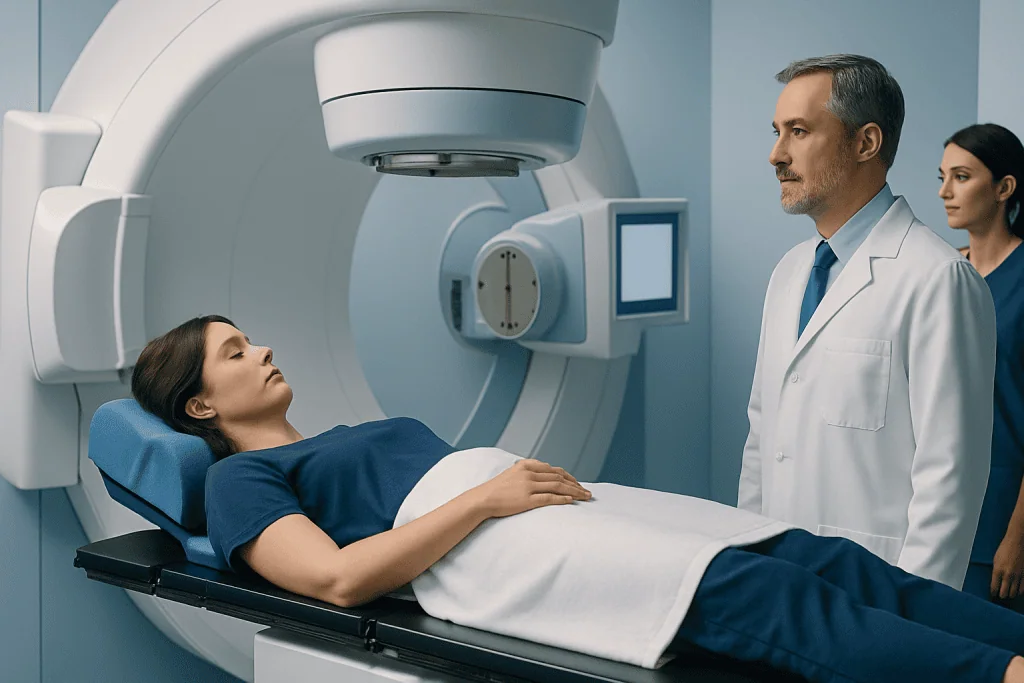
The most common skin cancers are basal cell carcinoma, squamous cell carcinoma and melanoma. Basal cell carcinoma usually grows slowly and rarely spreads, but it can cause local tissue damage if left untreated. Squamous cell carcinoma has a greater potential to spread than basal cell carcinoma, especially when it is large, deep, recurrent, located on the lip or ear, or develops in a person with a weakened immune system.
Melanoma begins in pigment-producing cells and is less common than basal or squamous cell carcinoma, but it can spread to other parts of the body. Its management is guided closely by the thickness and other features of the tumor. A specialist assessment is important for any lesion that changes in size, shape, color, sensation or behavior.
Skin cancer services may also assess rarer tumors, including Merkel cell carcinoma, dermatofibrosarcoma protuberans and some skin lymphomas. These conditions often benefit from review by clinicians experienced in skin oncology and from a treatment plan agreed by several specialties.
Candidacy and the Diagnostic Assessment
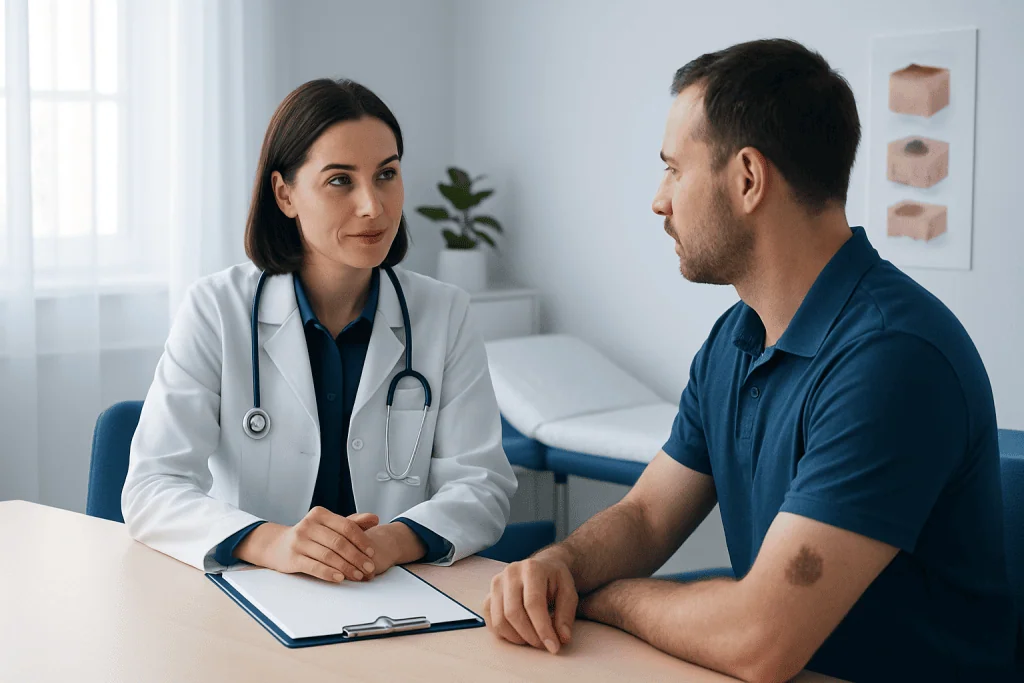
Anyone with a new, changing, non-healing or unusual skin lesion may be a candidate for evaluation at a skin cancer treatment center. Warning signs include a sore that does not heal, a spot that bleeds or crusts repeatedly, a growing pearly or scaly bump, or a mole that changes. For pigmented lesions, clinicians often use the ABCDE guide: asymmetry, irregular border, varied color, diameter that is increasing, and evolution over time.
During the appointment, the clinician may inspect the full skin surface and use dermoscopy, a handheld magnifying device with light, to assess structures beneath the surface of a lesion. A biopsy may be a shave, punch, incisional or excisional biopsy. The appropriate method depends on the lesion’s location and the clinical concern; it is selected to obtain a reliable diagnosis while minimizing unnecessary tissue removal.
If melanoma or a higher-risk squamous cell carcinoma is confirmed, the team may recommend additional assessment. This can include examination of nearby lymph nodes, imaging in selected situations, or sentinel lymph node biopsy for certain melanomas. Not every person requires scans or extensive tests; decisions are based on pathology findings and the likelihood of spread.
Treatment Plan: Step by Step
After biopsy results are available, the care team discusses the diagnosis, the recommended treatment, alternatives, expected healing and follow-up. Early basal and squamous cell cancers are commonly treated with surgical excision, in which the tumor and a small margin of surrounding skin are removed. The specimen is then checked under a microscope to help confirm that the cancer has been fully removed.
For cancers in areas where conserving healthy tissue is especially important, a staged technique such as Mohs micrographic surgery may be considered. It removes thin layers of tissue one at a time, with microscopic examination between stages. Depending on the defect after removal, the wound may heal naturally, be closed with stitches, or require a skin graft or reconstructive procedure.
Some superficial, low-risk cancers may be suitable for non-surgical options, such as topical medicines, cryotherapy, curettage and electrodessication, photodynamic therapy or radiation therapy. These choices are not appropriate for every cancer, and biopsy results help guide selection. If disease is advanced, treatment may include immunotherapy, targeted therapy, radiation therapy or, less commonly, chemotherapy. Skin cancer treatment options are chosen according to tumor type, stage and individual needs.
For melanoma, surgery is usually the main treatment for localized disease. Wider excision around the biopsy site may be needed, and some people benefit from additional systemic treatment after surgery or for cancer that cannot be removed completely. The team should explain the purpose of each option and support shared decision-making.
Benefits, Risks and Recovery Timeline
The main benefit of treatment is removal or control of cancer and a reduced risk of local damage or spread. When skin cancer is found early, treatment is often less extensive. The expected outcome depends on the exact cancer type, pathology findings, location, stage and whether the person has had previous treatment in the same area.
Possible treatment effects include pain or tenderness, swelling, bruising, bleeding, infection, delayed healing, scarring, changes in skin sensation and changes in appearance. Surgery near the eyes, nose, lips, ears, fingers or joints may require particular planning to protect function. Radiation can cause temporary skin irritation and, in some cases, longer-term changes in skin texture or color. Systemic treatments can have broader side effects that require regular monitoring.
Recovery after a small biopsy or uncomplicated excision often involves wound care at home and may take days to a few weeks, depending on the size and location of the wound. Stitches, if used, are removed according to the body area and the clinician’s advice. Larger surgery, grafts, flap reconstruction, lymph node procedures, radiation or drug treatment can require a longer and more individualized recovery plan.
Patients should follow wound-care instructions closely and contact their clinical team for increasing redness, warmth, swelling, pus, fever, worsening pain, persistent bleeding or separation of the wound. Activity restrictions vary, but avoiding strain on a fresh surgical site can help protect healing.
What Is the 2 Week Rule for Skin Cancer?
The “2 week rule” is an informal reminder rather than a universal medical rule. It generally means that a spot, sore or change on the skin that does not heal within about two weeks, or that continues to bleed, crust, grow or change, should be assessed by a qualified healthcare professional.
Many harmless skin problems can take longer than two weeks to settle, so this timeframe does not mean a lesion is cancer. Equally, some skin cancers may not be painful or may not look like a wound. The most useful approach is to seek assessment promptly for a persistent or changing lesion rather than waiting for it to become severe.
What Is the Hardest Skin Cancer to Cure?
Melanoma is often considered the most concerning common skin cancer because it is more likely than basal cell carcinoma or most squamous cell carcinomas to spread to lymph nodes and distant organs. However, melanoma found at an early stage can often be treated successfully with surgery. Its prognosis cannot be judged from appearance alone and depends on features such as thickness, ulceration, lymph node involvement and spread.
Rare cancers such as Merkel cell carcinoma can also be aggressive and may need prompt multidisciplinary management. At the same time, some basal cell carcinomas can be difficult to treat when they are very large, recurrent, deeply invasive or located in anatomically complex areas. A pathology-confirmed diagnosis and stage-specific plan are more informative than trying to rank cancers by appearance.
How Much Time Does Cancer Take From Stage 1 to 4?
There is no predictable timetable for skin cancer to progress from stage 1 to stage 4. Some cancers may remain localized for a long time, while others can grow or spread more quickly. Progression is influenced by the type of cancer, its biological features, the person’s immune system and whether it receives treatment.
Stages are not a clock that every cancer moves through at the same pace. A cancer may be diagnosed at an early or advanced stage depending on when it is detected, and some non-melanoma skin cancers are not routinely staged in the same way as melanoma. This uncertainty is why new or evolving skin changes should be checked without delay.
How Quickly Is Skin Cancer Treated?
The time from diagnosis to treatment depends on the cancer type, pathology results, urgency, availability of the appropriate specialist and whether further assessment is needed. Many low-risk basal cell and squamous cell cancers can be scheduled for treatment after diagnostic confirmation. Higher-risk cancers, rapidly changing lesions and suspected melanoma are usually prioritized for timely specialist review.
It is important that treatment is both prompt and properly planned. For example, a lesion in a cosmetically or functionally important location may require a specialist surgical approach, while melanoma may need pathology review and planning for an appropriate surgical margin. Patients should ask their clinician what timeframe is recommended for their individual diagnosis and what symptoms should prompt earlier contact.
Prevention, Follow-Up and When to Seek Medical Care
After treatment, regular follow-up helps detect recurrence and identify new skin cancers early. The frequency of examinations depends on the original diagnosis and individual risk factors. People with a history of melanoma, multiple skin cancers, extensive sun damage, a strong family history or immune suppression may need closer surveillance.
Daily sun protection supports long-term skin health. Practical steps include seeking shade when ultraviolet radiation is strongest, wearing protective clothing and a wide-brimmed hat, using broad-spectrum sunscreen as directed, avoiding tanning beds, and checking the skin regularly in good light. Sun protection is important even after a cancer has been removed because it does not eliminate the possibility of future lesions.
Medical care should be sought for a new or changing mole; a persistent sore; a lesion that bleeds, itches, hurts or repeatedly crusts; or a lump near a previous skin cancer site. Urgent contact with the treating team is appropriate for concerning postoperative symptoms such as uncontrolled bleeding, fever or signs of infection. Acibadem International’s multidisciplinary specialists and JCI-accredited hospitals provide diagnostic assessment and treatment planning for international patients with suspected or confirmed skin cancer.
Frequently asked questions
Do all suspicious moles need to be removed?
No. A clinician may determine that a mole appears benign and recommend observation with routine skin checks. If a lesion has concerning features, a biopsy or removal may be advised to establish a diagnosis under the microscope.
Is a skin biopsy painful?
A skin biopsy is usually performed with local anesthetic, which numbs the area. There may be brief discomfort from the anesthetic injection and mild soreness afterward, but most people can manage this with the aftercare advice provided by their clinician.
Can skin cancer return after treatment?
Yes, some skin cancers can recur at or near the treated site, and a person who has had one skin cancer has an increased chance of developing another. Regular follow-up, self-examination and sun protection help support early detection.
Can a dermatologist diagnose skin cancer by looking at it?
A dermatologist can often recognize features that make a lesion suspicious and may use dermoscopy to examine it more closely. However, a biopsy reviewed by a pathologist is generally needed to confirm the diagnosis and identify the exact cancer type.
Does skin cancer always look dark?
No. Melanoma may be brown, black, pink, red, blue, white or skin-colored, while basal and squamous cell cancers can look pearly, scaly, crusted, red or like a non-healing sore. Any changing or persistent lesion should be assessed regardless of color.
What happens after skin cancer is removed?
The removed tissue is examined by a pathologist to assess the diagnosis and whether the cancer appears fully removed. The treating clinician will explain the result, wound care, any need for further treatment and a schedule for follow-up skin examinations.
References
- World Health Organization
- American Academy of Dermatology
- National Cancer Institute
- European Society for Medical Oncology
- American Cancer Society
This article is for general information only and is not a substitute for professional medical advice. Please consult a qualified doctor about your individual situation.
Skin Cancer in Turkey — costs, top hospitals & a free quote
JCI-accredited · board-certified surgeons · reply within 24h
Add us as a Preferred Source to see more of our trusted health content across Google Search, AI Overviews and Discover.