

Skin Cancer Types: Melanoma and Nonmelanoma

Melanoma is less common than nonmelanoma skin cancer but is more likely to spread if not treated early. The most common nonmelanoma skin cancers are basal cell carcinoma and squamous cell carcinoma.
Key Takeaways
- Melanoma is less common than nonmelanoma skin cancer but is more likely to spread if not treated early.
- The most common nonmelanoma skin cancers are basal cell carcinoma and squamous cell carcinoma.
- A changing mole, a sore that does not heal, or a new unusual skin spot should be checked by a doctor.
- Sun protection and regular skin checks can help lower risk and support early diagnosis.
- Many skin cancers can be treated effectively, especially when found early.
Skin cancer types are usually grouped into melanoma and nonmelanoma cancers. Understanding the differences, warning signs, and treatment options can help people seek timely care and protect long-term skin health.
Overview of Skin Cancer Types
Skin cancer begins when skin cells grow abnormally. Doctors usually divide skin cancer types into two broad groups: melanoma and nonmelanoma skin cancer. Melanoma starts in pigment-producing cells called melanocytes, while nonmelanoma skin cancers most often begin in other skin cells, especially basal cells or squamous cells.
Melanoma is less common than nonmelanoma skin cancer, but it tends to be more serious because it is more likely to grow deeper into the skin and spread to other parts of the body. Nonmelanoma skin cancers, especially basal cell carcinoma, are often slower growing and highly treatable, although they can still damage nearby tissue if ignored.
The main nonmelanoma skin cancer types are basal cell carcinoma and squamous cell carcinoma. There are also rarer forms of skin cancer, but these two account for most nonmelanoma cases. In some people, skin changes may resemble other conditions, so a medical evaluation is important rather than self-diagnosing.
Early detection matters for all skin cancer types. When skin cancer is recognized and treated promptly, outcomes are often very good. Learning what to watch for can help people know when a spot or mole deserves medical attention.
Symptoms and Warning Signs
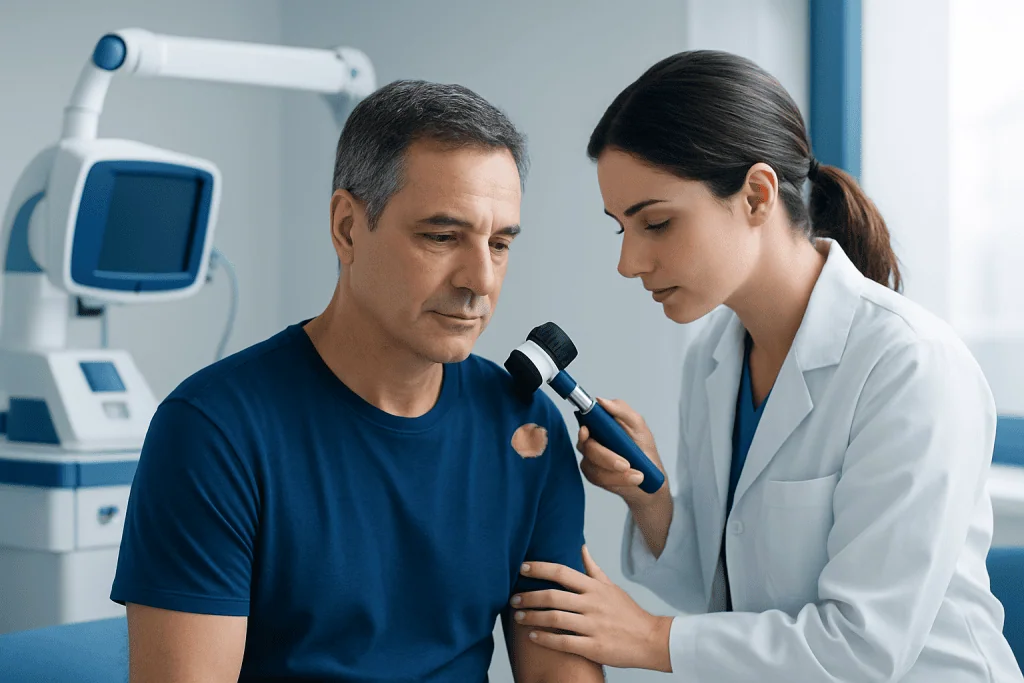
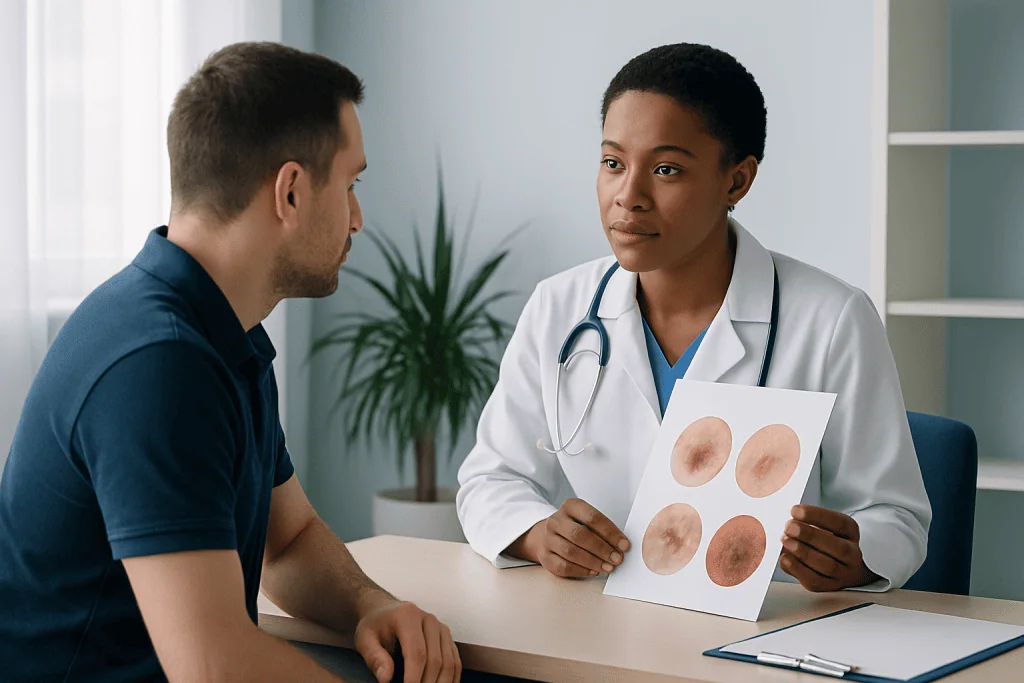
Skin cancer symptoms can vary depending on the type. Melanoma often appears as a new mole or a change in an existing mole. It may become uneven in color, grow larger, develop an irregular border, or change in shape over time. Some melanomas are dark brown or black, but others can be pink, red, skin-colored, or even nearly colorless.
Doctors often suggest using the ABCDE rule to notice possible melanoma warning signs: asymmetry, border irregularity, color variation, diameter that is larger than about 6 millimeters, and evolution, meaning any change over time. A lesion that looks different from a person’s other moles, sometimes called the “ugly duckling,” can also be important.
Nonmelanoma skin cancer may look different. Basal cell carcinoma can appear as a pearly bump, a shiny pink patch, a sore that bleeds easily, or an area that crusts and then returns. Squamous cell carcinoma may look like a scaly red patch, a wart-like growth, or an open sore that does not heal properly.
Common warning signs across skin cancer types include:
- A new growth on the skin
- A mole or spot that changes in size, shape, or color
- A sore that does not heal
- Bleeding, crusting, or itching in one area
- A tender, rough, or raised patch that persists
Not every unusual spot is cancer, but persistent changes should be checked by a qualified doctor, especially if they continue for several weeks or seem to worsen.
Causes and Risk Factors
The most important risk factor for many skin cancer types is ultraviolet, or UV, exposure from the sun or tanning devices. UV rays can damage the DNA in skin cells, and over time this damage can lead to cancer. Repeated sunburns, especially severe burns during childhood, can increase the risk of melanoma later in life.
Risk is also affected by skin type and personal history. People with fair skin, light-colored eyes, red or blond hair, many moles, or freckles may have a higher risk, although skin cancer can occur in any skin tone. A personal or family history of skin cancer also raises concern, particularly for melanoma.
Other factors can contribute as well. Older age, a weakened immune system, chronic sun exposure from outdoor work, previous radiation treatment, and contact with certain environmental substances may increase risk for some nonmelanoma skin cancers. Areas that receive frequent sun exposure, such as the face, ears, scalp, neck, shoulders, and hands, are common sites, but melanoma can also develop in less sun-exposed areas.
Having a risk factor does not mean a person will definitely develop skin cancer, and some people who are diagnosed have no obvious major risk factors. Even so, understanding individual risk can help guide prevention and screening habits.
How Melanoma and Nonmelanoma Skin Cancers Are Diagnosed
Diagnosis usually begins with a medical history and a skin examination. A doctor will ask when the spot appeared, whether it has changed, and if there are symptoms such as itching, pain, or bleeding. The doctor will then closely examine the skin, sometimes using a handheld magnifying tool called a dermatoscope to see structures not visible to the naked eye.
If a lesion looks suspicious, the next step is usually a biopsy. During a biopsy, part or all of the abnormal area is removed and examined in a laboratory. A biopsy is the only reliable way to confirm whether a lesion is cancer and to determine which type it is. For melanoma, the pathology report also helps assess how deep the tumor is, which is important for planning treatment.
Further tests are not needed for every patient. Small basal cell carcinomas often require only local treatment after diagnosis. If melanoma or a higher-risk squamous cell carcinoma is suspected to be more advanced, doctors may recommend additional evaluation, such as lymph node assessment or imaging, to look for spread.
Because some skin cancers can resemble harmless spots, regular professional skin checks may be useful for people at higher risk. Prompt assessment of a changing lesion can support earlier treatment and may reduce the chance of complications.
Treatment Options
Treatment depends on the skin cancer type, size, location, depth, and whether it has spread. In many cases, the main treatment is surgery to remove the cancer with a margin of healthy tissue. This is often enough for localized basal cell carcinoma, squamous cell carcinoma, and early melanoma. A doctor may discuss cancer treatment choices based on the exact diagnosis and pathology findings.
Some nonmelanoma skin cancers can be treated with procedures such as curettage and electrodesiccation, cryotherapy, topical medicines, or specialized techniques like Mohs surgery in selected cases. Radiation therapy may be considered when surgery is not the best option or when cancer has features that increase the risk of recurrence. Patients may also hear about radiation oncology if a multidisciplinary plan is needed.
Melanoma treatment often starts with surgery, but additional care may be recommended depending on the stage. This can include lymph node evaluation and systemic therapies for advanced disease. In some patients, modern medicines that help the immune system recognize cancer cells play an important role; these may be discussed as part of medical oncology.
Follow-up is an important part of treatment for all skin cancer types. Even after successful therapy, people who have had one skin cancer have a higher chance of developing another. Ongoing skin examinations help doctors look for recurrence, new cancers, and treatment-related concerns. Near the end of the care journey, some international patients seek evaluation at centers such as Acibadem International, where multidisciplinary specialists in JCI-accredited hospitals diagnose and treat skin cancers.
Prevention and Self-care
Many cases of skin cancer are linked to UV exposure, so sun protection is a key prevention step. This does not mean avoiding outdoor life completely. Instead, it means using practical habits consistently, such as seeking shade during peak sun hours, wearing protective clothing, and applying broad-spectrum sunscreen with appropriate reapplication as directed on the product.
Avoiding indoor tanning is also important. Tanning beds expose the skin to UV radiation and can increase the risk of both melanoma and nonmelanoma skin cancer. Parents and caregivers can help children and teenagers build healthy sun habits early, since UV damage accumulates over time.
Self-examination can support early detection. People can check their skin regularly in good light, using a mirror for hard-to-see areas such as the back, scalp, and backs of the legs. Photos may help track spots over time, especially for those with many moles. Any evolving lesion should be reviewed by a doctor rather than watched indefinitely at home.
General skin health also matters. People who have already had treatment for a skin cancer should follow their doctor’s advice about follow-up visits, scar care, and monitoring for new lesions. If another suspicious skin condition appears, a specialist may also evaluate related concerns such as skin cancer patterns or overlapping dermatologic findings.
When to See a Doctor
A doctor should assess any skin spot that is new, changing, bleeding, painful, or not healing. This is especially important for moles that change in appearance or lesions that continue to crust, scab, or return after seeming to improve. It is better to have a harmless spot checked than to delay evaluation of a cancerous one.
People with many moles, a history of severe sunburns, previous skin cancer, or a family history of melanoma may benefit from regular skin examinations even if they do not currently notice a concerning lesion. Those with a weakened immune system should also ask a doctor how often they should be monitored.
Urgent medical advice is appropriate if a lesion changes rapidly, a surgical scar area becomes abnormal again, or there are symptoms such as enlarged lymph nodes near the lesion. These signs do not always mean advanced cancer, but they deserve timely review.
If there is uncertainty about whether a spot is serious, a dermatologist or another qualified physician can help decide whether monitoring, biopsy, or treatment is needed. Early professional assessment remains one of the most effective ways to manage skin cancer safely and calmly.
Frequently asked questions
What is the difference between melanoma and nonmelanoma skin cancer?
Melanoma starts in melanocytes, the cells that give skin its pigment, and it is more likely to spread if not treated early. Nonmelanoma skin cancer usually refers to basal cell carcinoma and squamous cell carcinoma, which are generally more common and often highly treatable.
Which skin cancer type is most common?
Basal cell carcinoma is the most common skin cancer type. It is a form of nonmelanoma skin cancer and often develops on sun-exposed areas such as the face, ears, and neck.
Can skin cancer happen in people with darker skin?
Yes, skin cancer can develop in any skin tone. Although risk patterns differ, unusual spots, sores that do not heal, or changing lesions should still be checked by a doctor.
Is every changing mole melanoma?
No, many changing moles are not melanoma. However, any mole that changes in size, shape, color, or texture should be assessed by a qualified doctor because change is an important warning sign.
Can nonmelanoma skin cancer spread?
Yes, although many nonmelanoma skin cancers are localized and slow growing, some can spread if they are not treated. Squamous cell carcinoma is generally more likely to spread than basal cell carcinoma.
How often should someone check their skin?
Regular self-checks can help people notice new or changing lesions early. The best schedule for professional skin exams depends on personal risk factors, so it is sensible to ask a doctor for individual advice.
References
- World Health Organization
- American Cancer Society
- National Cancer Institute
- American Academy of Dermatology
- National Health Service
This article is for general information only and is not a substitute for professional medical advice. Please consult a qualified doctor about your individual situation.
Skin Cancer in Turkey — costs, top hospitals & a free quote
JCI-accredited · board-certified surgeons · reply within 24h
Add us as a Preferred Source to see more of our trusted health content across Google Search, AI Overviews and Discover.

Medical Oncology Department
Medical treatment of cancer with chemotherapy, immunotherapy and targeted therapies under a multidisciplinary tumor board.
60 specialists in this unitMore from the Health Library



Related Specialists

Assoc. Prof. Dr. Hakan Yardımcı
General Surgery
Assoc. Prof. Dr. Tayfun Yoldaş
General Surgery
Dr. Kumsal Kurucu
Acibadem Life Clinical Service
Prof. Dr. Erhan Serin
Orthopedic Surgery & Traumatology