

Skin Diseases: Diagnosis, Outlook, and Modern Treatment Approaches

Skin diseases include many different conditions, so symptoms and treatment plans can vary widely. A careful history and skin examination are often the most important parts of diagnosis.
Key Takeaways
- Skin diseases include many different conditions, so symptoms and treatment plans can vary widely.
- A careful history and skin examination are often the most important parts of diagnosis.
- Modern treatment may include creams, tablets, light therapy, biologic medicines, or minor procedures depending on the condition.
- Not every rash is contagious, and not every skin change is serious, but persistent or changing symptoms should be assessed.
- Early evaluation can help relieve symptoms, reduce flares, and prevent complications such as infection or scarring.
Skin diseases are a broad group of conditions that affect the skin, and sometimes the hair and nails, with causes ranging from irritation and allergy to infection, autoimmune disease, and chronic inflammation. Most can be identified through clinical evaluation and managed effectively with the right diagnosis, modern treatments, and practical skin-care habits.
Overview: what skin diseases are and how they are approached
Skin diseases are conditions that affect the body’s outer protective barrier. They may involve the skin alone or also affect the scalp, hair, nails, and sometimes the mouth or other mucosal surfaces. The term covers a wide spectrum, from short-lived rashes and allergic reactions to long-term inflammatory disorders, infections, and autoimmune conditions.
Because the skin is visible and constantly exposed to the environment, skin diseases often cause both physical discomfort and emotional stress. Common concerns include itching, pain, redness, scaling, changes in color, acne-like bumps, blisters, or thickened areas. In some cases, a skin problem is isolated; in others, it may be linked to an internal condition such as immune dysfunction, hormonal changes, circulation problems, or infection.
Modern care focuses on accurate diagnosis first. Many skin conditions look similar at the start, but their causes and treatments can be quite different. Dermatologists usually assess the appearance, distribution, timing, triggers, and associated symptoms before deciding whether additional tests are needed.
Outlook depends on the specific diagnosis. Some skin diseases clear fully after treatment, while others tend to relapse and improve with long-term management. With individualized care, many people can control symptoms well, protect skin health, and maintain quality of life.
Common signs and symptoms of skin diseases
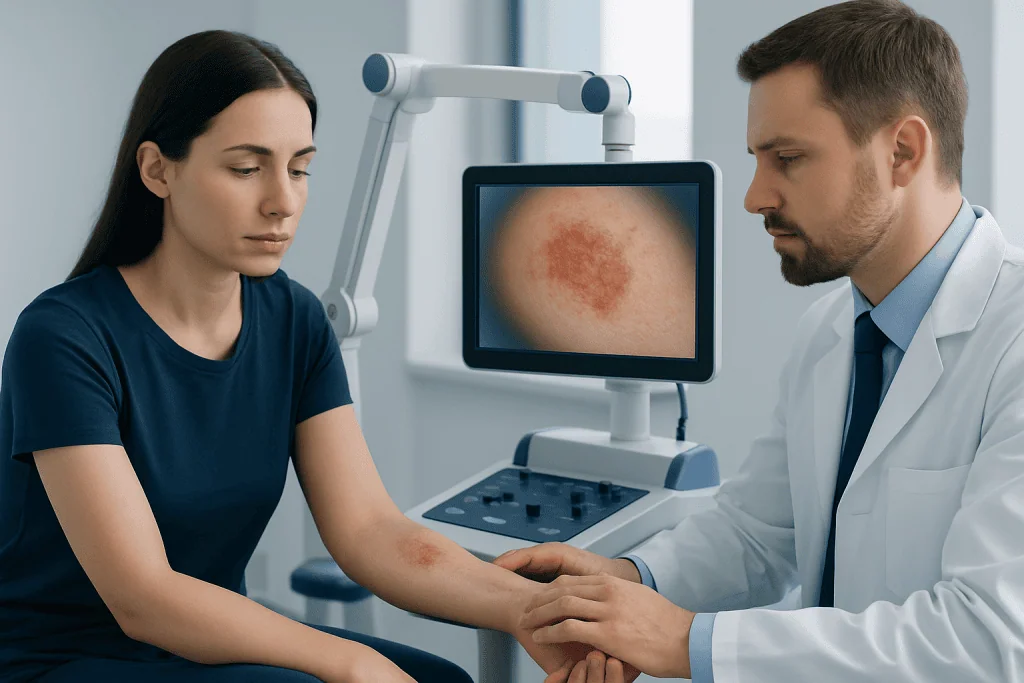
Skin diseases can appear in many ways. Some begin suddenly over hours or days, while others develop slowly over weeks, months, or longer. Symptoms may stay localized to one area, such as the hands or scalp, or may become widespread.
Typical signs and symptoms include:
- Redness or darker inflamed patches
- Itching, burning, stinging, or tenderness
- Dryness, scaling, flaking, or cracking
- Blisters, pustules, bumps, or hives
- Crusting, oozing, or open sores
- Changes in skin color or texture
- Hair shedding or scalp irritation
- Nail thickening, discoloration, or brittleness
Some disorders are mainly cosmetic, while others can interfere with sleep, work, or daily comfort. For example, inflamed eczema may itch intensely, psoriasis may cause thick scaly plaques, fungal infections may lead to ring-shaped rashes, and acne may leave marks or scars if inflammation is deep. Conditions such as psoriasis and eczema often follow a chronic pattern with periods of flare and remission.
It is also important to note that the same disease can look different across skin tones. Redness may be less obvious in darker skin, and inflammation may appear brown, purple, gray, or as changes in pigmentation. This is one reason why professional assessment can be especially helpful when symptoms persist or do not respond to self-care.
Why skin diseases happen: causes and risk factors

Skin diseases do not have one single cause. They can develop because of irritation, allergic reactions, infections, blocked pores, overactive oil production, genetic predisposition, immune system changes, heat, friction, medicines, or underlying health conditions. Stress does not directly cause every skin disease, but it can worsen many inflammatory disorders and make itching or picking behavior more difficult to control.
Infections are one important group. Bacteria, fungi, viruses, and parasites can all affect the skin. Examples include impetigo, fungal rashes, warts, shingles, and scabies. These conditions often require specific treatment because skin-care products alone will not remove the cause.
Chronic inflammatory diseases are another major category. In these conditions, the immune system and the skin barrier do not function normally. This can lead to recurring dryness, scaling, plaques, facial flushing, or acne-like lesions. Common examples include acne, rosacea, seborrheic dermatitis, eczema, and psoriasis.
Risk factors vary by condition, but may include family history, asthma or allergies, obesity, smoking, occupational exposure to chemicals, frequent handwashing, hot humid environments, immune suppression, and certain medications. Sun exposure is also a major factor in some skin changes and in skin cancer risk, which is why changing or non-healing lesions should never be ignored.
How diagnosis is made
Diagnosis of skin diseases usually begins with a detailed medical history and visual examination. A clinician will ask when the symptoms started, whether they itch or hurt, what seems to trigger them, what treatments have already been tried, and whether there are related issues such as fever, joint pain, allergies, new medications, or similar symptoms in family members.
The pattern and location of the rash can provide strong clues. For example, hand dermatitis may suggest irritant exposure, a ring-shaped rash may suggest fungal infection, and thick plaques on elbows or knees may point toward psoriasis. Scalp, nail, or mucosal findings can also help narrow the diagnosis.
Additional tests are sometimes needed if the diagnosis is uncertain or if treatment is not working as expected. These may include skin scraping for fungus or parasites, patch testing for contact allergy, bacterial or viral swabs, blood tests, or a skin biopsy. A biopsy is a small sample of skin examined under a microscope and can be especially useful when an autoimmune, blistering, or precancerous condition is suspected.
Imaging is not commonly needed for routine rashes, but advanced assessment may be part of care when deeper tissues, vascular issues, or systemic disease are involved. The main goal is not just to name the condition, but to understand its severity, triggers, and whether there are any complications or associated diseases that also need attention.
Modern treatment approaches for skin diseases
Treatment is guided by the cause, body area involved, severity of symptoms, and how much the disease affects daily life. Some skin diseases improve with gentle skin care and short-term medicines, while others benefit from long-term plans that combine topical treatment, trigger control, and follow-up with a dermatologist.
Topical therapies are often the first step. These may include moisturizers to repair the skin barrier, medicated creams or ointments to reduce inflammation, antifungal or antibacterial preparations for infection, and keratolytic products to soften thick scale. For acne and some inflammatory conditions, topical retinoids, benzoyl peroxide, or prescription anti-inflammatory agents may be used under medical guidance.
When symptoms are more widespread, persistent, or severe, systemic treatment may be considered. Depending on the diagnosis, this can include oral medicines, injectable therapies, or advanced immune-targeted drugs known as biologics. In selected cases, dermatologists may also use phototherapy to calm inflammation, especially in conditions such as eczema, psoriasis, or itching that has not responded well to standard creams.
Procedures can also play a role. Examples include drainage of certain abscesses, treatment of precancerous lesions, or removal and biopsy of suspicious growths. Some patients with chronic inflammatory or difficult-to-classify conditions may need multidisciplinary support. Where appropriate, care may involve dermatology evaluation, allergy testing, infection management, or coordinated review with rheumatology, internal medicine, or pathology specialists.
Prevention, self-care, and living with a chronic skin condition
Not all skin diseases can be prevented, especially those linked to genetics or immune function, but many flares can be reduced with consistent skin care. A simple routine is often best: gentle cleansing, regular moisturizing, avoiding harsh scrubs, and using fragrance-free products when the skin is sensitive. Moisturizers are particularly important for dry, eczema-prone, or irritated skin because they help strengthen the protective barrier.
Trigger awareness is another important part of self-care. Common triggers include heat, sweating, rough fabrics, stress, certain cosmetics, cleaning products, sun exposure, smoking, and scratching. Keeping a symptom diary may help identify patterns, especially when flares come and go. For contagious conditions, hand hygiene and avoiding shared personal items can reduce spread.
Sun protection supports skin health across many conditions. Broad-spectrum sunscreen, protective clothing, and avoiding excessive midday sun may help prevent irritation, reduce post-inflammatory discoloration, and lower the risk of sun-related skin damage. People with changing moles, persistent scaly spots, or lesions that bleed should discuss these findings promptly with a doctor.
Living with a chronic skin disease can affect confidence, sleep, and social comfort. Regular follow-up allows treatment to be adjusted over time. In complex or long-standing cases, specialist centers can help refine the diagnosis and tailor management. Acibadem International’s multidisciplinary specialists in JCI-accredited hospitals diagnose and treat skin diseases for international patients, including access to services such as skin biopsy when further evaluation is needed.
When to seek medical care
Many mild skin problems improve with basic skin care, but medical assessment is important when symptoms are severe, persistent, or unclear. A clinician should review any rash that lasts more than a few weeks, repeatedly returns, spreads quickly, or does not improve with appropriate over-the-counter measures.
Prompt care is especially important if there is significant pain, fever, pus, rapidly increasing redness, swelling, skin breakdown, or signs of dehydration in infants and young children. People should also seek help for widespread blistering, sores in the mouth or eyes, sudden hives with breathing difficulty, or a rash that begins soon after starting a new medication.
Changing skin lesions also deserve attention. A mole or spot that changes in size, shape, color, or starts to bleed can require dermatologic evaluation. A non-healing sore, a dark streak in a nail, or a thick rough patch that persists should also be examined rather than watched indefinitely.
Early diagnosis can shorten discomfort and reduce complications such as infection, scarring, sleep loss, or unnecessary treatment. If symptoms are interfering with daily life or causing concern, a qualified doctor or dermatologist can help clarify the cause and discuss safe, evidence-based options.
Frequently asked questions
Are all skin diseases contagious?
No. Many skin diseases, such as eczema, psoriasis, acne, and rosacea, are not contagious. Some infections, including fungal rashes, scabies, or certain viral conditions, can spread through contact, so an accurate diagnosis matters.
Can a skin disease be diagnosed just by looking at it?
Often, a dermatologist can strongly suspect the diagnosis based on the appearance and distribution of the skin changes. However, some conditions look alike, so tests such as a skin scraping, swab, patch test, or biopsy may be needed to confirm the cause.
Do skin diseases always mean there is a serious internal illness?
Usually not. Many skin conditions are local problems related to irritation, allergy, infection, or chronic inflammation. Still, some skin findings can be linked to immune, hormonal, or systemic disease, which is why persistent or unusual symptoms deserve medical review.
What is the best treatment for skin diseases?
There is no single best treatment because skin diseases are a large and varied group of conditions. The most effective approach depends on the diagnosis and may include moisturizers, medicated creams, tablets, injections, light therapy, or minor procedures.
When should a rash be checked by a doctor?
A rash should be assessed if it is severe, painful, widespread, recurrent, or not improving after reasonable self-care. Urgent assessment is needed if there is fever, blistering, facial swelling, breathing difficulty, pus, or a rash that appears after starting a new medicine.
Can chronic skin diseases be controlled long term?
Yes, many chronic skin diseases can be managed successfully even if they do not disappear permanently. Long-term control usually involves a combination of diagnosis, trigger reduction, treatment during flares, and regular follow-up when needed.
References
- American Academy of Dermatology
- National Institute of Arthritis and Musculoskeletal and Skin Diseases
- National Health Service
- Mayo Clinic
- World Health Organization
This article is for general information only and is not a substitute for professional medical advice. Please consult a qualified doctor about your individual situation.
Hair transplant in Turkey — costs, graft counts & a free assessment
JCI-accredited · board-certified surgeons · reply within 24h
Add us as a Preferred Source to see more of our trusted health content across Google Search, AI Overviews and Discover.

More from the Health Library



Related Specialists

Prof. Dr. Murat Yayla
Gynecology & Obstetrics
Dr. Rasim Farajov
General Surgery
Dr. Mehmet Can Şahin
Inpatient Clinic Physicians Clinical Service
Assoc. Prof. Dr. Kamer Dere
Treatment of Pain Algology