Skin Peeling in Tongue — Explained by Medical Evidence, Not Myths

Skin peeling in tongue is a symptom, not a disease by itself. Temporary peeling may happen after irritation from hot foods, spicy foods, smoking, or oral care products.
Key Takeaways
- Skin peeling in tongue is a symptom, not a disease by itself.
- Temporary peeling may happen after irritation from hot foods, spicy foods, smoking, or oral care products.
- Persistent peeling, pain, white patches, or sores may point to infection, inflammation, or nutrient deficiency.
- A doctor or dentist can often identify the cause through an oral exam and, when needed, simple tests.
- Treatment focuses on the underlying cause and may include mouth care changes, medicines, or nutritional support.
- Medical care is important if symptoms last more than two weeks or occur with trouble eating, fever, or bleeding.
Skin peeling in tongue usually means the tongue’s surface is irritated or inflamed rather than that actual “skin” is coming off. Common reasons include minor irritation, dryness, nutritional issues, infections, or inflammatory mouth conditions, and the best next step depends on what other symptoms are present.
What skin peeling in tongue usually means
Skin peeling in tongue is a common way people describe a tongue surface that looks as if a thin layer is shedding, flaking, or lifting away. In most cases, this does not mean the tongue has true skin like the rest of the body. Instead, it usually reflects irritation or inflammation affecting the tongue’s outer lining, called the mucosa.
The appearance can vary. Some people notice white peeling on the tongue, while others see smooth red areas, map-like patches, tender spots, or a coated tongue that seems to rub off. The symptom may be brief and mild, especially after eating very hot or spicy food, or it may continue because of an underlying condition that needs attention.
A helpful way to think about this symptom is that the tongue reacts to many different influences, including heat, friction, dehydration, infection, allergies, immune conditions, and nutrient deficiencies. Because the tongue heals quickly, mild irritation often settles on its own. When peeling keeps returning, becomes painful, or is joined by ulcers or thick white plaques, a professional evaluation is more important.
How it can look and feel

People with skin peeling in tongue may notice more than one change at the same time. The tongue may feel sore, sensitive, dry, rough, swollen, or unusually smooth. Foods that are acidic, salty, or spicy can make the discomfort more noticeable.
The visual pattern can offer clues. A patchy, migrating look may suggest a benign inflammatory condition such as geographic tongue. A creamy white coating that wipes off and leaves a red tender area underneath may occur with oral yeast infection. Small raw areas after brushing, using a whitening product, or eating something very hot may point more toward local irritation.
Other symptoms may involve the rest of the mouth. These can include cracked lips, bad breath, altered taste, mouth ulcers, gum irritation, or a burning feeling. If the tongue change happens together with a skin rash, digestive symptoms, joint pain, or recurrent mouth sores, the cause may be part of a broader health condition rather than an isolated oral problem.
- White film or flaky patches
- Red, smooth, or shiny areas
- Burning or stinging with foods
- Tenderness or pain when brushing the tongue
- Dry mouth or sticky saliva
- Changes in taste or mouth odor
Common causes and risk factors
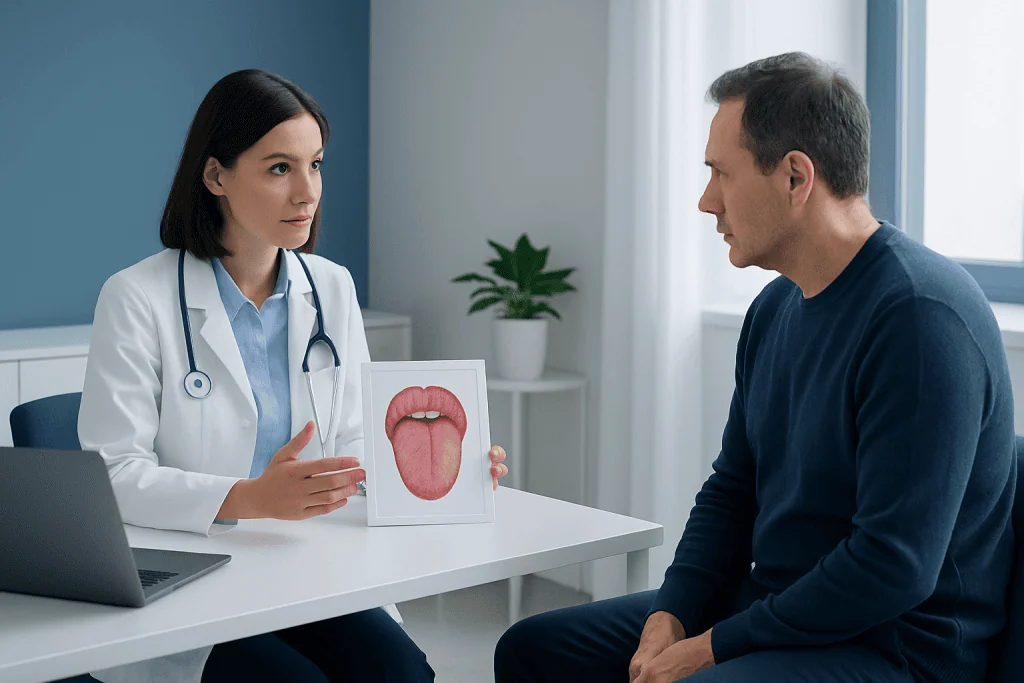
The most common causes are everyday irritants. Hot drinks, spicy foods, acidic foods, tobacco, alcohol, aggressive tongue brushing, and some toothpastes or mouthwashes can all irritate the tongue surface. Dry mouth is another frequent contributor because saliva protects the mouth and helps the tongue heal.
Infections can also lead to peeling or a coated tongue. Oral thrush, caused by an overgrowth of yeast, is more likely after antibiotic use, inhaled steroid use, diabetes, immune suppression, or wearing dentures. Viral illnesses can sometimes trigger temporary inflammation as well. In some people, a painful inflammatory reaction may overlap with conditions such as oral thrush or can resemble canker sores.
Nutritional issues are another possibility. Low levels of iron, vitamin B12, folate, or other nutrients may lead to tongue soreness, redness, or a smooth glossy appearance. Allergic or sensitivity reactions to foods, flavorings, dental materials, or oral care products can irritate the tongue too. Less commonly, peeling may be linked to inflammatory disorders, autoimmune conditions, lichen planus, psoriasis, or gastrointestinal diseases that affect nutrient absorption.
Risk factors include smoking, frequent alcohol use, poorly controlled diabetes, recent antibiotics, reduced immunity, dehydration, dentures, mouth breathing, and chronic reflux. A clinician looks at the whole picture rather than the tongue alone, because the same appearance can have different explanations in different people.
What doctors look for during diagnosis
Diagnosis starts with a careful history and mouth examination. A doctor or dentist will usually ask when the peeling began, whether it comes and goes, which foods or products make it worse, and whether there is pain, fever, dry mouth, weight loss, or trouble swallowing. This conversation helps narrow down whether the cause is local irritation, infection, deficiency, or a wider medical issue.
The oral exam looks at the tongue’s color, texture, location of peeling, and whether patches can be wiped away. The clinician also checks the lips, cheeks, gums, throat, and neck. If the person has dentures, dental appliances, or signs of teeth grinding, these may also be relevant. Sometimes the diagnosis is clear from the appearance alone, especially in benign patterns such as geographic tongue.
When symptoms persist or the cause is not obvious, testing may be helpful. This can include blood tests for iron, vitamin B12, folate, blood sugar, or markers of inflammation. If infection is suspected, a swab or scraping may be taken. Rarely, a biopsy is needed to investigate persistent unusual patches, especially if they are thick, one-sided, bleeding, or not healing.
If symptoms are linked to broader digestive, immune, or allergy concerns, referral may be appropriate. In some cases, doctors may also recommend evaluation with endoscopy if reflux, malabsorption, or upper digestive symptoms suggest an underlying gastrointestinal problem affecting oral health.
Treatment depends on the cause
There is no single treatment for skin peeling in tongue because the symptom can have many causes. If irritation is the problem, treatment often begins with avoiding triggers such as very hot foods, strong mouthwashes, tobacco, or harsh brushing. Switching to a gentle toothpaste and keeping the mouth moist may allow the tongue lining to recover naturally.
If the cause is infection, treatment may include antifungal medication for thrush or other targeted medicines based on the diagnosis. For inflammatory conditions, doctors may recommend soothing rinses, protective gels, or anti-inflammatory treatment. If nutritional deficiency is found, treatment focuses on correcting the deficiency and addressing why it developed.
When dry mouth is contributing, the plan may include hydration, saliva-supporting strategies, and review of medications that reduce saliva. People with symptoms related to reflux or digestive irritation may benefit from assessment and management of the underlying problem, sometimes with support from gastroenterology care. If persistent mouth sores, complex oral lesions, or cancer-related concerns are being evaluated, clinicians may coordinate with medical oncology or other specialists when appropriate.
Most importantly, self-treatment should not continue for too long if symptoms are ongoing. Repeated use of strong antiseptic rinses or abrasive scraping can make the tongue more irritated. A clear diagnosis usually leads to simpler and more effective care.
Self-care and prevention
Good oral habits can reduce irritation and support healing. Gentle brushing of the teeth, regular dental care, and cleaning the tongue lightly rather than aggressively are usually enough. Drinking adequate water and limiting smoking and alcohol can also help protect the mouth’s lining.
Food choices matter when the tongue is already inflamed. Temporarily reducing spicy, acidic, salty, or very hot foods may lessen discomfort. If a new toothpaste, mouthwash, chewing gum, or whitening product seemed to trigger the problem, stopping it for a short period may help identify whether sensitivity is involved.
People who wear dentures should make sure they fit well and are cleaned properly. Those using inhaled steroids for asthma should rinse the mouth after each use to lower the risk of thrush. If nutrient deficiency is a concern, a doctor may advise testing rather than guessing with supplements, since the right treatment depends on the specific deficiency.
- Stay hydrated throughout the day
- Use mild, non-irritating oral care products
- Avoid smoking and limit alcohol
- Let hot foods and drinks cool before eating
- Manage chronic conditions such as diabetes
- Seek dental review for sharp teeth or ill-fitting dentures
When to seek medical care
Brief tongue peeling after a clear irritant often improves within days. Medical advice is more important when symptoms last longer than two weeks, keep coming back, or are painful enough to affect eating, drinking, or speaking. Ongoing symptoms deserve attention even if they seem mild.
It is especially important to seek care if there are thick white patches, bleeding, a lump, one-sided persistent changes, fever, swollen glands, unexplained weight loss, or trouble swallowing. People with diabetes, cancer treatment, immune suppression, or recent antibiotic use should not ignore white or painful tongue changes because infection can be more likely.
A doctor, dentist, or oral medicine specialist can usually guide the next steps. Acibadem International’s multidisciplinary specialists and JCI-accredited hospitals diagnose and treat oral, digestive, and systemic conditions that may contribute to this symptom in international patients.
Frequently asked questions
Is skin peeling in tongue a serious problem?
Often, it is not serious and may be caused by irritation, dryness, or a temporary mouth condition. However, if it lasts more than two weeks, becomes painful, or comes with white patches, sores, or trouble swallowing, medical evaluation is wise.
Can dehydration cause a peeling tongue?
Yes. When the mouth is dry, the tongue is more easily irritated and may look coated, rough, or flaky. Improving hydration and addressing dry mouth triggers can help, but persistent symptoms still need assessment.
What is the difference between tongue peeling and oral thrush?
Tongue peeling is a general description of how the tongue looks or feels, while oral thrush is a specific fungal infection. Thrush often causes creamy white patches that may wipe off and leave a red, tender surface underneath.
Can vitamin deficiency cause skin peeling in tongue?
Yes, deficiencies such as iron, vitamin B12, or folate deficiency can affect the tongue’s surface and cause soreness, redness, or a smooth appearance. A blood test can help confirm whether a deficiency is involved.
Should the tongue be scraped or brushed if it is peeling?
Gentle cleaning is usually fine, but aggressive scraping or brushing can worsen irritation. If the tongue feels raw or painful, it is better to avoid forceful cleaning until a clinician has assessed the cause.
Can spicy or hot food make the tongue peel?
Yes. Spicy, acidic, or very hot foods can irritate the tongue lining and lead to temporary peeling or tenderness. If symptoms improve after avoiding these triggers, irritation is more likely, but repeated episodes should still be discussed with a professional.
References
- American Dental Association
- National Institute of Dental and Craniofacial Research
- Mayo Clinic
- Merck Manual Consumer Version
- Cleveland Clinic
This article is for general information only and is not a substitute for professional medical advice. Please consult a qualified doctor about your individual situation.
Explore treatments in Turkey — costs, top hospitals & a free quote
JCI-accredited · board-certified surgeons · reply within 24h
Add us as a Preferred Source to see more of our trusted health content across Google Search, AI Overviews and Discover.