Skin Tag Remover: What Patients Need to Know

Skin tags are common, benign growths that often appear where skin rubs together. A skin tag remover should only be used after the growth is confidently identified as a skin tag.
Key Takeaways
- Skin tags are common, benign growths that often appear where skin rubs together.
- A skin tag remover should only be used after the growth is confidently identified as a skin tag.
- Doctor-led removal is usually quick and may involve snipping, freezing, or cautery.
- Trying to cut or tie off a growth at home can lead to bleeding, infection, or scarring.
- Medical review is important if a growth changes color, bleeds, hurts, or grows quickly.
A skin tag remover may help with some harmless skin tags, but the safest first step is making sure the growth really is a skin tag and not another skin condition. Many people can have skin tags removed quickly in a clinic, while home options should be used cautiously and only on clearly identified skin tags.
Overview: what a skin tag remover can and cannot do
A skin tag remover is a product or medical method used to take off a small, soft, benign growth of skin. In many cases, skin tags do not need treatment at all. They are often removed because they catch on clothing or jewelry, become irritated by shaving, or cause cosmetic concern.
The most important point is that a skin tag remover is only appropriate when the lesion truly is a skin tag. Other growths, including moles, warts, seborrheic keratoses, and some skin cancers, can sometimes look similar to an untrained eye. For that reason, a clinician’s assessment is often the safest first step before any removal is attempted.
When removal is needed, in-clinic treatment is usually simple and brief. A doctor may freeze the tag, remove it with sterile scissors, or use heat-based cautery. Some over-the-counter products are marketed as home skin tag remover options, but they are not suitable for every location or every skin lesion.
What skin tags are and why they happen
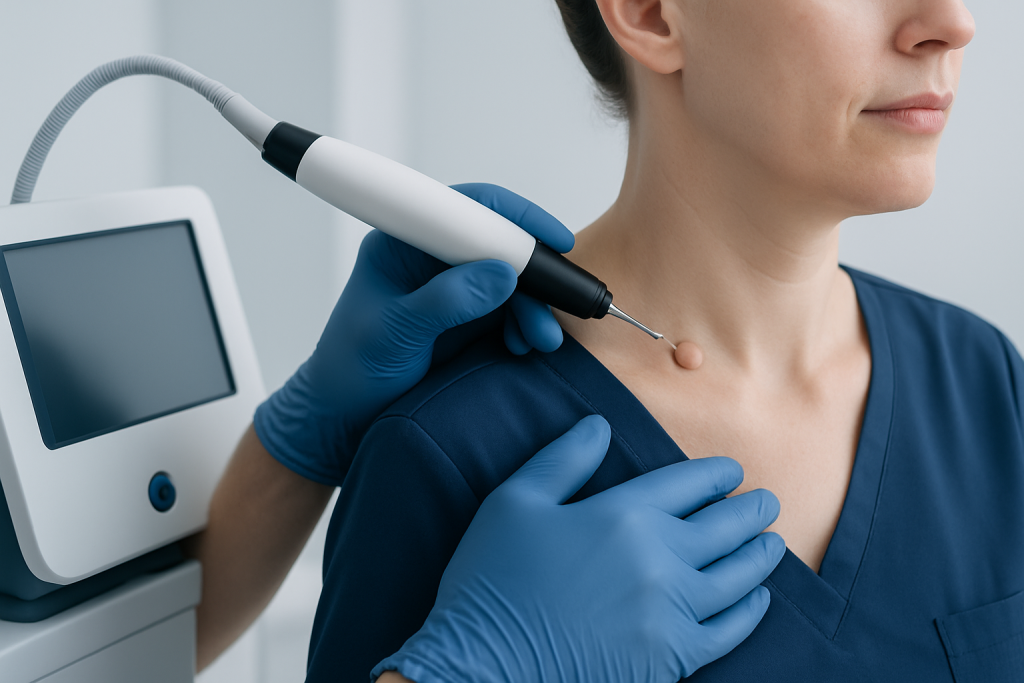
Skin tags, also called acrochordons, are small growths made of normal skin tissue and collagen. They often appear flesh-colored or slightly darker and may be attached to the skin by a narrow stalk. Common sites include the neck, underarms, eyelids, groin, under the breasts, and other areas where skin rubs against skin.
These growths are very common in adults. Friction appears to play a role, which is why they tend to form in skin folds. They are also seen more often in people with obesity, insulin resistance, type 2 diabetes, and during pregnancy, although anyone can develop them.
Skin tags are not contagious and are not caused by poor hygiene. They are not the same as warts, which are linked to certain strains of human papillomavirus. If there is uncertainty about the diagnosis, a dermatologist can help distinguish a skin tag from other benign or concerning lesions, including skin cancer.
How to recognize a possible skin tag

A typical skin tag is soft, smooth or slightly wrinkled, and easy to move when touched. It is usually small, although some can become larger over time. Many people notice one tag at first and then develop several in the same general area.
Skin tags are usually painless unless they become twisted, rubbed, or inflamed. Irritation may happen if they catch on clothing, razors, necklaces, or bra straps. In these cases, the area can become red, tender, or even bleed slightly.
Features that make self-diagnosis less reliable include a very dark color, a broad base instead of a stalk, crusting, repeated bleeding, rapid growth, or irregular borders. Growths on the eyelids, genitals, or other sensitive areas should also be assessed carefully before any removal is considered.
- Common appearance: soft, small, pedunculated growth
- Common locations: neck, armpits, groin, eyelids, under breasts
- Common reasons for removal: irritation, snagging, cosmetic preference
Skin tag remover options: home products versus medical removal
There are two broad categories of skin tag remover options: home-use products and clinician-performed procedures. Home products may include freezing kits or topical solutions marketed for skin tags. These may be helpful in selected cases, but only if the growth has been accurately identified and the instructions are followed closely.
Home removal is not risk-free. The wrong product can damage nearby healthy skin, especially on thin or delicate areas such as the eyelids, face, groin, or underarms. Trying to cut off a lesion or tie it off with string may lead to pain, bleeding, infection, scarring, or incomplete removal. It can also delay diagnosis if the lesion was not actually a skin tag.
Medical removal is often preferred because it combines diagnosis and treatment. Doctors may remove a skin tag by cryotherapy, sterile snip excision, or cautery, depending on the size, location, and skin type. If a lesion looks unusual, the doctor may recommend a biopsy or complete skin assessment through dermatology care before removal.
People who take blood thinners, have diabetes, have a history of keloid scarring, or have many skin lesions may particularly benefit from professional advice before using any skin tag remover. Clinical evaluation also matters when a tag is in a hard-to-see area or close to the eye.
How doctors diagnose and remove skin tags
In most cases, diagnosis is made during a simple skin examination. A clinician usually identifies a skin tag based on its shape, texture, attachment to the skin, and location. No imaging or blood tests are typically needed for a straightforward skin tag.
If the lesion has unusual features, a sample may be sent for laboratory examination after removal. This helps rule out other conditions that can mimic skin tags. Although uncommon, any uncertain lesion deserves proper review rather than treatment with a home skin tag remover alone.
Professional removal methods are generally quick. Snip excision uses sterile scissors or a scalpel after cleansing the area, sometimes with a local anesthetic for larger tags. Cryotherapy freezes the tissue, while cautery uses controlled heat to remove the growth and help limit bleeding. In selected cases, minor skin lesion treatment techniques may also be used if the lesion needs closer evaluation.
After removal, mild tenderness or a small scab can occur for a short time. Keeping the area clean and following aftercare advice usually supports healing. Most removals leave little or no visible mark, though any skin procedure carries a small risk of scarring or pigment change.
Prevention, self-care, and what to avoid
Skin tags cannot always be prevented, but reducing repeated friction may help in some people. Comfortable clothing, gentle skin care, and managing rubbing in skin folds can be practical steps. Maintaining a healthy weight and addressing metabolic health may also be helpful for overall skin health.
Self-care begins with observation rather than immediate removal. If a growth appears stable, soft, and typical of a skin tag, it may not need any treatment. Many people choose to leave skin tags alone unless they cause discomfort or bother them cosmetically.
It is best to avoid cutting, burning, or using harsh chemicals on a growth at home. These methods can injure the skin and increase the chance of infection. Products meant for warts should not automatically be used as a skin tag remover, because wart treatments may be too strong for normal surrounding skin and may be wrong for the lesion itself.
If someone develops many new skin tags over time, a broader health review may be reasonable, especially if there are risk factors such as weight gain or diabetes. In some cases, evaluation by endocrinology or primary care may help address related health issues alongside skin concerns.
When to seek medical care
Medical care is advisable before using a skin tag remover if the growth is not clearly a skin tag. This is especially important for lesions that are very dark, rapidly enlarging, painful, bleeding repeatedly, crusting, or changing in shape. A new growth on the eyelid, genitals, or another sensitive area also deserves professional review.
It is also wise to seek care if a home removal attempt caused redness, swelling, drainage, significant pain, or ongoing bleeding. These can be signs of irritation or infection and should not be ignored. People with diabetes, poor circulation, immune system problems, or a tendency to scar easily should be especially cautious.
Persistent uncertainty is itself a good reason to see a doctor. A proper diagnosis often prevents unnecessary worry and helps ensure the right treatment. Near the end of the care pathway, patients may choose to consult centers such as Acibadem International, where multidisciplinary specialists in JCI-accredited hospitals diagnose and treat skin conditions for international patients.
Frequently asked questions
What is the safest skin tag remover?
The safest option is usually professional removal after a clinician confirms the growth is truly a skin tag. This reduces the chance of treating the wrong lesion and helps lower the risk of bleeding, infection, or scarring.
Can a skin tag remover be used at home?
Some home products are sold for skin tags, but they should be used cautiously and only on clearly identified skin tags. Home treatment is not a good choice for uncertain lesions or for areas such as the eyelids, face, or genitals.
Do skin tags go away on their own?
Many skin tags stay the same for long periods and do not disappear on their own. Some may become irritated or twist, but most remain harmless unless they are rubbed or snagged repeatedly.
Is removing a skin tag painful?
Removal is often only mildly uncomfortable, and some methods may involve little pain at all. Larger tags or sensitive locations may require local anesthetic when removed in a clinic.
Can I cut off a skin tag myself?
It is generally not recommended. Cutting off a growth at home can cause bleeding, infection, scarring, and mistaken treatment of something that is not a skin tag.
When should a skin tag be checked by a doctor?
A doctor should assess any growth that changes quickly, becomes painful, bleeds often, turns very dark, or has an unusual shape. Medical review is also important if the diagnosis is uncertain or the lesion is in a sensitive area.
This article is for general information only and is not a substitute for professional medical advice. Please consult a qualified doctor about your individual situation.
Explore treatments in Turkey — costs, top hospitals & a free quote
JCI-accredited · board-certified surgeons · reply within 24h
Add us as a Preferred Source to see more of our trusted health content across Google Search, AI Overviews and Discover.

More from the Health Library

Fruits That Lower Blood Pressure — Explained by Medical Evidence, Not Myths

Purple Coloured Feet — Explained by Medical Evidence, Not Myths

Altered Mental Status: A Complete Medical Overview

Gastroparesis: A Complete Medical Overview

Psyllium Husk: A Complete Medical Overview