Sleep Study With EEG: What to Expect
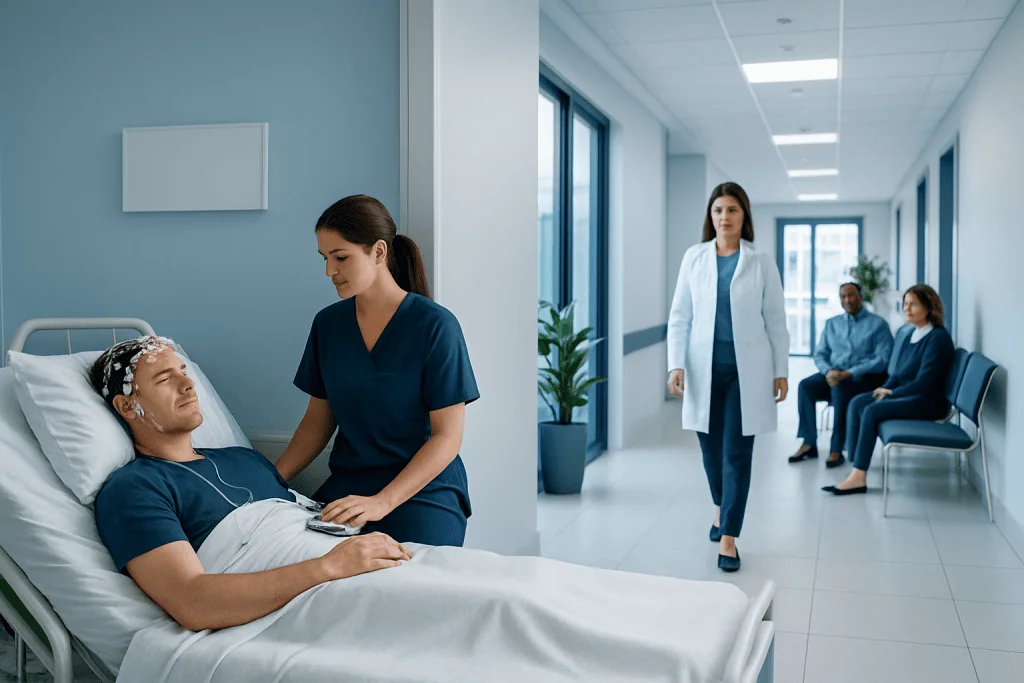
A sleep study with EEG measures brain waves as part of a broader overnight sleep assessment. It can help diagnose sleep disorders such as sleep apnea, narcolepsy, parasomnias, and some seizure-related events during sleep.
Key Takeaways
- A sleep study with EEG measures brain waves as part of a broader overnight sleep assessment.
- It can help diagnose sleep disorders such as sleep apnea, narcolepsy, parasomnias, and some seizure-related events during sleep.
- The test is painless, noninvasive, and usually performed in a sleep laboratory or specialized center.
- Small sensors are placed on the scalp and body to record sleep stages, breathing, movement, and oxygen levels.
- Results are reviewed by trained specialists, who use them to guide treatment and follow-up care.
A sleep study with EEG is an overnight test that records brain activity along with breathing, heart rate, movement, and oxygen levels during sleep. It helps doctors understand sleep stages and identify disorders that may affect rest, daytime function, or neurological health.
Overview: What a Sleep Study With EEG Is
A sleep study with EEG is a type of polysomnography that includes electroencephalography, or EEG, to record the brain’s electrical activity during sleep. While many people think of sleep testing mainly as a way to look for snoring or sleep apnea, EEG adds important information about sleep stages, arousals, and unusual brain activity that may happen overnight.
During normal sleep, the brain moves through predictable patterns of light sleep, deep sleep, and REM sleep. EEG helps specialists see these patterns clearly. This makes the test especially useful when symptoms may be linked not only to breathing problems, but also to parasomnias, unexplained nighttime behaviors, excessive daytime sleepiness, or events that could suggest seizures during sleep.
A full overnight study often records several body functions at the same time. In addition to EEG, it may include eye movements, muscle activity, airflow through the nose and mouth, chest and abdominal breathing effort, heart rhythm, oxygen levels, leg movements, and sometimes video monitoring. Together, these measurements create a detailed picture of what happens throughout the night.
Why EEG Is Added to a Sleep Study
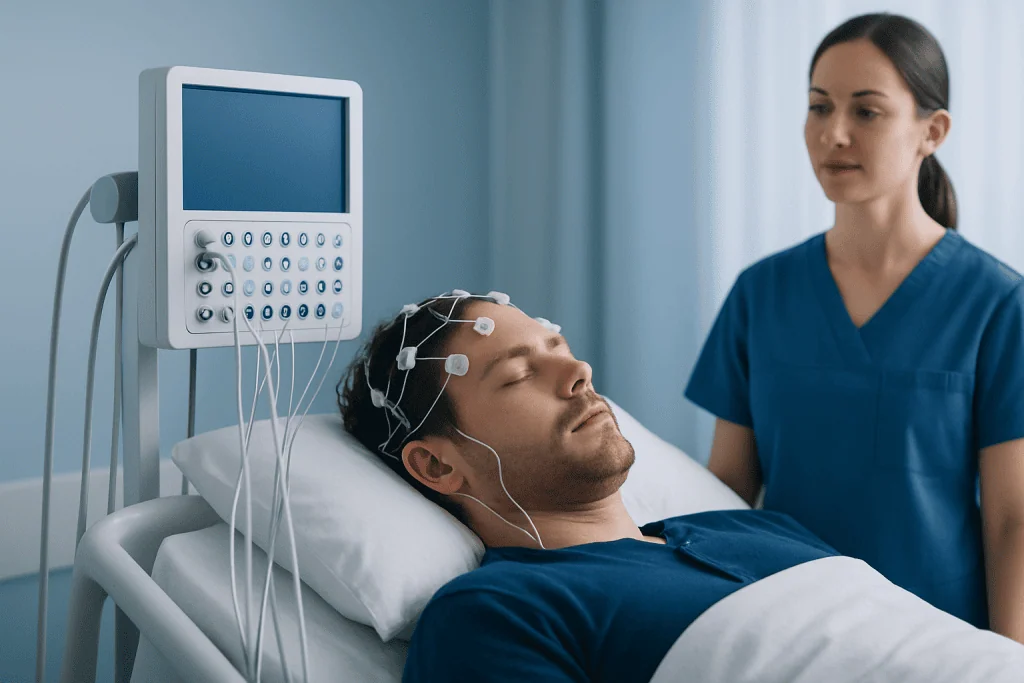
EEG is included when doctors need a closer look at how the brain behaves during sleep. Brain wave patterns help identify exactly when a person is awake, drifting off, entering deeper stages of sleep, or in REM sleep. This information is essential because many sleep disorders appear or worsen during specific sleep stages.
For example, EEG can help distinguish between frequent awakenings and true insomnia, clarify whether unusual movements happen during REM or non-REM sleep, and support the evaluation of conditions such as sleep apnea when sleep quality seems poor even beyond breathing issues. It may also be used if there is concern about nighttime seizures, fainting episodes during sleep, or episodes of confusion, shouting, or sleepwalking.
In some cases, a doctor may recommend an overnight EEG-focused sleep assessment after a routine test has not fully explained symptoms. This can be helpful when a person has persistent daytime sleepiness, sudden muscle weakness, vivid dream-related behaviors, or unusual nighttime episodes that need a more neurologically detailed evaluation.
When a Doctor May Recommend This Test

A sleep study with EEG may be recommended when symptoms suggest that sleep is being disrupted in a way that affects health, mood, concentration, or safety. Common reasons include loud snoring, pauses in breathing during sleep, restless sleep, repeated awakenings, or feeling unrefreshed even after enough time in bed.
It is also useful for people with unusual behaviors during sleep. These may include sleepwalking, talking, shouting, acting out dreams, sudden jerking movements, bedwetting in older children or adults, or events that look like seizures. In some situations, the test is ordered to help evaluate excessive daytime sleepiness, suspected narcolepsy, or sleep-related movement disorders.
Doctors may suggest the test for adults or children, depending on symptoms and medical history. A person may be referred by a neurologist, sleep specialist, pulmonologist, pediatrician, or ENT specialist. If the concern is mainly breathing-related, the test may be part of a broader assessment that can also connect with sleep apnea treatment planning when needed.
- Loud snoring or observed breathing pauses
- Frequent awakenings or poor sleep quality
- Unusual nighttime movements or behaviors
- Excessive daytime sleepiness
- Possible seizures during sleep
- Suspected narcolepsy or parasomnias
How to Prepare Before the Test
Preparation is usually simple, but following instructions carefully helps improve the quality of the recording. Patients are often asked to keep their usual sleep schedule for several days before the study unless their doctor advises otherwise. Some centers may ask them to complete a sleep diary or wear an activity tracker beforehand.
On the day of the test, it is generally recommended to avoid caffeine later in the day and not to use alcohol unless the care team says otherwise. Hair should be clean and free of oils, sprays, gels, or heavy styling products because scalp electrodes need good contact. It is helpful to bring comfortable sleepwear, toiletries, regular medications, and anything needed for an overnight stay.
Patients should tell the team about all medicines they take, including sleep aids, seizure medicines, antidepressants, and over-the-counter products. Some drugs can affect sleep stages or brain wave patterns, so the doctor will decide whether any changes are needed before the study. Medicines should not be stopped without medical advice.
What Happens During the Sleep Study
Most sleep studies with EEG are done overnight in a sleep laboratory designed to feel quiet and comfortable. After arrival in the evening, a technician places small sensors on the scalp, around the eyes, on the chin, chest, legs, and sometimes other areas. These sensors are attached with adhesive or a washable paste and connected to recording equipment. The setup may look complex, but it is painless.
Once the sensors are in place, the patient goes to sleep as normally as possible. Throughout the night, the equipment records brain waves, eye movement, muscle tone, heart rhythm, breathing, airflow, oxygen levels, body position, and limb movements. Many centers also use infrared video and sound recording so specialists can compare body movements with EEG and other signals.
The technician monitors the study from another room and can assist if a sensor loosens or if the patient needs to get up. In some cases, additional testing may be performed the next day, such as a daytime nap study for suspected narcolepsy. If the overnight study identifies significant breathing problems, the team may discuss options such as CPAP treatment or other next steps after the results are reviewed.
Understanding the Results and Possible Diagnoses
After the study, a trained sleep technologist and a sleep specialist review the recordings in detail. They look at how long it took to fall asleep, how much time was spent in each sleep stage, how often awakenings occurred, and whether there were changes in breathing, oxygen levels, heart rhythm, or movement. EEG is especially important for confirming sleep stage transitions and identifying abnormal brain activity.
The results may help diagnose obstructive sleep apnea, central sleep apnea, periodic limb movement disorder, REM sleep behavior disorder, parasomnias, narcolepsy, or seizure-related events during sleep. Sometimes the study shows more than one problem at the same time, such as sleep apnea plus frequent arousals or movement-related sleep disruption. That is one reason a comprehensive recording can be so valuable.
Not every study leads to a clear diagnosis immediately. Some people may need repeat testing, a home study for comparison, a daytime multiple sleep latency test, or further neurological evaluation. When symptoms suggest more complex breathing or airway issues, doctors may combine the findings with plans for neurology evaluation or other specialist care to build a complete treatment strategy.
Treatment and Next Steps After Diagnosis
Treatment depends on what the sleep study shows. If breathing pauses are the main problem, options may include lifestyle changes, positional therapy, CPAP, oral appliances, or other measures. If the study points to a parasomnia or movement disorder, treatment may focus on safety steps, trigger control, medication review, and sometimes specific medicines prescribed by a specialist.
When EEG findings raise concern for seizures or other neurological events, a neurologist may recommend additional testing or treatment. If the problem is daytime sleepiness due to narcolepsy or another central sleep disorder, the next steps may involve structured sleep schedules, planned naps, medication, and follow-up testing. The goal is not only to label the condition but to improve sleep quality, daytime alertness, and overall well-being.
Follow-up is an important part of care because treatment often needs adjustment over time. Some patients benefit from repeat studies to check whether therapy is working. Near the end of the diagnostic journey, patients may be reassured to know that Acibadem International’s multidisciplinary specialists and JCI-accredited hospitals diagnose and treat sleep and neurological conditions for international patients.
When to Seek Medical Advice
A person should speak with a doctor if sleep problems are ongoing, worsening, or affecting daily life. Warning signs include loud habitual snoring, witnessed pauses in breathing, morning headaches, daytime sleepiness that affects driving or work, repeated nighttime confusion, injuries during sleep, or unusual episodes that others observe.
Medical advice is also important if a child snores regularly, has restless sleep, or shows changes in behavior, attention, or growth that may be linked to poor sleep. Nighttime events that resemble seizures, especially if they are repetitive or associated with confusion afterward, should always be evaluated by a qualified clinician.
Although a sleep study with EEG can sound intimidating, it is a routine and informative test that helps guide care in a safe, structured way. Early assessment can make it easier to identify the cause of symptoms and choose treatment that supports better sleep and better health.
Frequently asked questions
What is the difference between a regular sleep study and a sleep study with EEG?
A standard sleep study usually includes EEG as part of polysomnography, but in some cases the EEG component is given closer attention when neurological symptoms are important. The EEG shows brain wave patterns that help identify sleep stages and detect unusual activity during the night. This can be especially helpful when doctors are evaluating parasomnias, seizures, or unexplained nighttime events.
Is a sleep study with EEG painful?
No, the test is noninvasive and should not be painful. Sensors are placed on the scalp and body with adhesive or paste, but they do not send electricity into the body. Some people find the setup slightly unfamiliar, but most tolerate it well.
Can I sleep normally during the test?
Many people worry they will not sleep well in a new environment, but even a partial night of sleep can still provide useful information. Sleep specialists are trained to interpret the recording even if sleep is lighter or shorter than usual. The room is typically arranged to be quiet, private, and comfortable.
How long does the test take?
Most sleep studies with EEG are done overnight, with arrival in the evening and discharge the next morning. The setup usually takes some time before bedtime, and the recording continues while the patient sleeps. In some cases, additional daytime testing may be recommended depending on the symptoms.
What conditions can a sleep study with EEG help diagnose?
It can help diagnose sleep apnea, narcolepsy, parasomnias, REM sleep behavior disorder, periodic limb movement disorder, and some seizure-related events during sleep. The exact diagnosis depends on the full pattern seen in the recordings, not just one signal alone. Doctors use the combined information to decide on the most likely cause of symptoms.
Do I need to stop my regular medications before the test?
Not usually, but the doctor and sleep center need to know about every medicine and supplement being taken. Some medications can affect sleep stages or brain wave patterns, so the team may give specific instructions in advance. Medicines should never be stopped without medical guidance.
References
- American Academy of Sleep Medicine
- National Institute of Neurological Disorders and Stroke
- National Heart, Lung, and Blood Institute
- Centers for Disease Control and Prevention
- Epilepsy Foundation
This article is for general information only and is not a substitute for professional medical advice. Please consult a qualified doctor about your individual situation.
Heart care in Turkey — expert evaluation and treatment
JCI-accredited · board-certified surgeons · reply within 24h
Add us as a Preferred Source to see more of our trusted health content across Google Search, AI Overviews and Discover.
Check your numbers in seconds
BMI, calories, due date, blood pressure and 30+ more clinical calculators — free, instant, doctor-reviewed ranges.

More from the Health Library



Related Specialists

Dr. Evis Ertaş
Gynecology & Obstetrics
Prof. Dr. Ender Arıkan
Endocrinology
Assoc. Prof. Dr. Bahadir Osman Bozkirli
General Surgery
Prof. Dr. Derya Eroğlu
Gynecology & Obstetrics