Spasticity Treatment: Physical Therapy, Injections, and Neuromodulation Options

Spasticity is a symptom of an underlying neurological condition, not a disease by itself. Physical therapy, stretching, positioning, and task-specific practice are often the foundation of care.
Key Takeaways
- Spasticity is a symptom of an underlying neurological condition, not a disease by itself.
- Physical therapy, stretching, positioning, and task-specific practice are often the foundation of care.
- Botulinum toxin injections can help focal spasticity in specific muscles, while oral medicines or baclofen pump therapy may be considered for more widespread symptoms.
- Neuromodulation and surgical options may help selected patients when conservative treatments are not enough.
- The best treatment plan depends on the cause, severity, goals, comfort, mobility, and daily care needs of the person.
Spasticity is increased muscle stiffness caused by changes in the brain, spinal cord, or nerves that control movement. Treatment is usually individualized and may include rehabilitation, oral medicines, injections, casting or bracing, intrathecal therapy, and selected neuromodulation options.
Overview
Spasticity is a movement problem in which muscles become stiff, tight, or difficult to control because of changes in the nervous system. It can affect one limb, one side of the body, both legs, or several muscle groups. Some people notice mild tightness only during certain movements, while others experience spasms, pain, abnormal posture, or difficulty with walking, dressing, hygiene, sleep, and caregiving.
Spasticity Treatment is not the same for every person. The goal is not always to remove all muscle tone, because some people use a degree of stiffness to stand, transfer, or walk. Instead, treatment aims to reduce harmful tightness, protect joints and skin, ease pain, improve comfort, and support meaningful function. A plan may combine rehabilitation, home stretching, medicines, injections, orthoses, assistive devices, and, in selected cases, neuromodulation therapies.
Care is usually most effective when it is coordinated by a multidisciplinary team. Neurologists, physiatrists, physical and occupational therapists, rehabilitation nurses, orthopedic specialists, neurosurgeons, and speech or swallowing therapists may all be involved depending on the cause and the person’s needs. Family members and caregivers also play an important role, especially when daily positioning, stretching, transfers, or skin care are needed.
Symptoms and Daily Impact
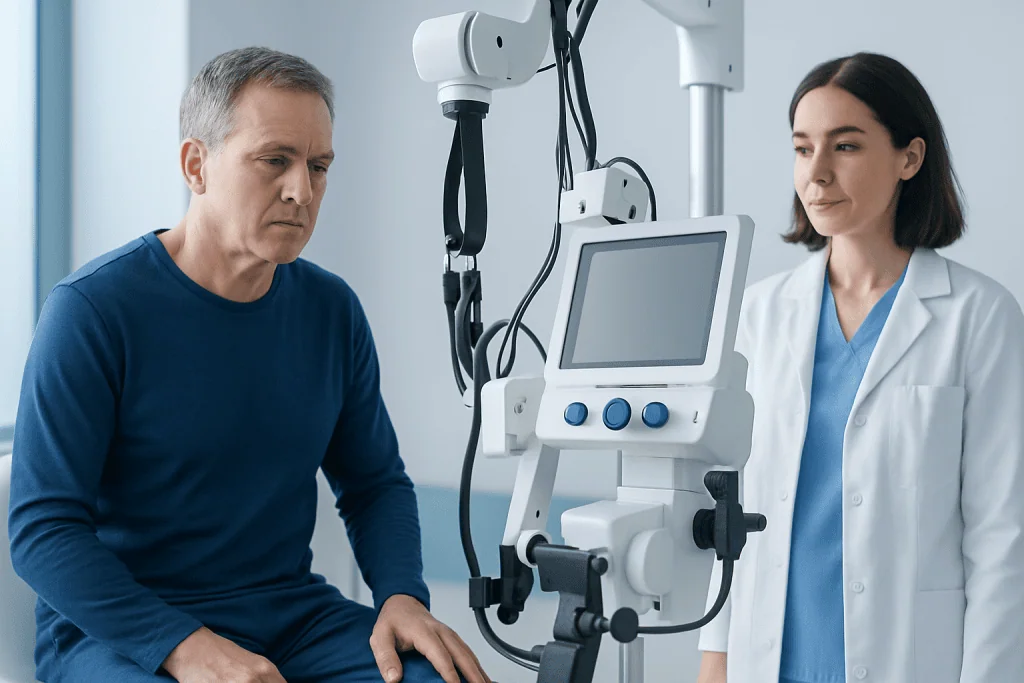
Spasticity can feel like tightness, pulling, cramping, or sudden involuntary muscle contractions. A limb may resist movement, jerk, cross over, curl inward, or become difficult to straighten. Common patterns include a clenched fist, flexed elbow, pointed foot, stiff knee, scissoring legs, or a hip that pulls inward. Symptoms may fluctuate during the day and can worsen with fatigue, stress, pain, infection, constipation, poor sleep, or an ill-fitting brace.
The impact depends on which muscles are involved and how severe the stiffness is. In the arm and hand, spasticity may interfere with washing, dressing, writing, typing, or reaching. In the legs, it may affect standing balance, gait, transfers, and wheelchair positioning. When stiffness is prolonged, it can contribute to contractures, where muscles and soft tissues shorten and joints lose range of motion.
Spasticity is not always harmful. In some people with weakness, a certain amount of tone may help support the body during standing or walking. This is why clinicians carefully assess what the stiffness is doing before choosing treatment. Reducing tone too much can sometimes make a limb feel weaker, so treatment goals should be practical, measurable, and personalized.
Causes and Risk Factors

Spasticity usually develops after an injury or condition affecting the upper motor neuron pathways, which are nerve pathways in the brain and spinal cord that help regulate movement. When these pathways are disrupted, signals to the muscles can become overactive or poorly controlled. This leads to increased reflexes, muscle tightness, and involuntary spasms.
Common causes include stroke, cerebral palsy, multiple sclerosis, spinal cord injury, traumatic brain injury, brain tumors, certain infections or inflammatory conditions, and some neurodegenerative or hereditary disorders. Spasticity after stroke is often managed within a broader rehabilitation and secondary prevention plan, including specialist stroke medicine care when appropriate. In children, cerebral palsy is one of the most common settings in which spasticity is evaluated and treated over time.
Risk factors for troublesome spasticity include severe weakness, limited mobility, poor positioning, untreated pain, joint stiffness, and long periods without movement. Medical triggers such as urinary tract infection, skin irritation, pressure injury, constipation, or a fracture can suddenly worsen spasms. Identifying and treating these triggers is an important part of safe care.
Diagnosis and Assessment
Diagnosis begins with a clinical examination and a detailed discussion of symptoms, medical history, and daily goals. The clinician checks muscle tone, reflexes, strength, sensation, range of motion, posture, walking pattern, balance, skin condition, and the presence of contractures. The assessment also explores whether stiffness is causing pain, interfering with care, or helping with function.
Several standardized scales may be used to describe spasticity, such as measures of resistance during passive movement, spasm frequency, pain, and functional ability. These tools help track progress, but they do not replace a careful examination. A person-centered goal may be more meaningful than a number on a scale, such as opening the hand for hygiene, placing the foot flat in a brace, reducing night spasms, or improving walking safety.
Tests may be recommended to understand the underlying condition or guide treatment. MRI or CT imaging can evaluate the brain or spine when needed, while laboratory tests may look for triggers such as infection or inflammation. In some cases, neurophysiology testing can help assess nerve and muscle function, especially when symptoms are complex or when spasticity overlaps with weakness, dystonia, neuropathy, or other movement disorders.
Physical Therapy, Occupational Therapy, and Self-care
Rehabilitation is often the foundation of Spasticity Treatment. Physical therapy focuses on flexibility, strengthening, balance, posture, transfers, walking, and safe mobility. Occupational therapy helps with arm and hand function, daily activities, splinting, adaptive equipment, energy conservation, and caregiver techniques. Therapy is usually most helpful when exercises are repeated consistently and linked to daily routines.
Stretching can help maintain range of motion, but it should be gentle, slow, and comfortable. Sudden forceful stretching may increase resistance or cause pain. Positioning is equally important: proper seating, pillows, wheelchair supports, night splints, ankle-foot orthoses, or hand splints may reduce prolonged abnormal postures. Serial casting may be used in selected cases to gradually improve joint position, especially when a muscle group is tight but still has some flexibility.
Helpful self-care strategies may include:
- Following a therapist-approved stretching and positioning program.
- Keeping skin clean and dry, especially in areas affected by tight fists, bent elbows, or crossed legs.
- Checking braces and shoes for pressure marks or discomfort.
- Maintaining hydration, bowel routines, sleep habits, and pain control, because these can influence spasms.
- Using heat or cold only if recommended, and avoiding burns or prolonged exposure in areas with reduced sensation.
Exercise plans should be individualized. Some people benefit from strengthening and task-specific gait practice, while others need caregiver-assisted range of motion, seating adjustments, or aquatic therapy. The right program balances tone management with function, endurance, safety, and comfort.
Medicines, Injections, and Local Procedures
Medicines may be considered when stretching and therapy are not enough or when spasticity is widespread. Oral antispasticity medicines can reduce muscle overactivity, but they may also cause sleepiness, dizziness, weakness, or other side effects. A doctor usually starts with careful assessment and adjusts treatment gradually, especially in older adults or people taking several medicines.
For focal spasticity, botulinum toxin injections are commonly used to relax selected overactive muscles for a limited period of time. The clinician identifies target muscles based on the person’s posture, movement pattern, and goals. Guidance with ultrasound, electrical stimulation, or anatomical landmarks may be used. The effect is temporary, so injections may be repeated at appropriate intervals if they remain helpful and safe.
Other local options may include nerve or motor point blocks in selected patients. Phenol or alcohol neurolysis can reduce tone in specific nerves, although it requires careful selection and expertise. These interventions are often combined with therapy, splinting, or casting because reduced tone creates an opportunity to improve range of motion and practice better movement patterns.
Injections are not a stand-alone cure for spasticity. Their value depends on realistic goals, accurate muscle selection, follow-up therapy, and monitoring for changes in strength, function, pain, and caregiving needs. Patients should discuss expected benefits, possible side effects, and alternatives with a qualified clinician.
Intrathecal Therapy, Neuromodulation, and Surgery
When spasticity is severe, generalized, or difficult to manage with oral medicines and injections, intrathecal baclofen therapy may be considered. This treatment delivers baclofen directly into the fluid around the spinal cord through an implanted pump. Because the medicine is delivered close to its target, lower total amounts may be used compared with oral therapy, but the approach requires surgery, pump refills, monitoring, and long-term follow-up.
Neuromodulation options aim to influence nerve activity to improve symptoms. Depending on the condition and treatment goals, clinicians may consider approaches such as functional electrical stimulation, therapeutic electrical stimulation, or other specialized techniques. Evidence and suitability vary by diagnosis, severity, and rehabilitation goals, so these therapies should be discussed with specialists who understand both the neurological condition and the person’s functional needs.
Surgery may be appropriate for a smaller group of patients, especially when fixed contractures, deformities, or severe spasticity limit comfort, hygiene, or mobility. Orthopedic procedures may lengthen tendons or correct joint position. Neurosurgical procedures, such as selective dorsal rhizotomy in carefully selected children with spastic cerebral palsy, may reduce spasticity by interrupting specific sensory nerve root signals. Each option has benefits, limitations, and rehabilitation requirements.
Decisions about implanted pumps, neuromodulation, or surgery should involve careful discussion of goals, risks, maintenance needs, and recovery. A stepwise plan is common, starting with conservative treatments and moving to more advanced interventions only when the expected benefits justify the added complexity.
When to See a Doctor and What to Expect
A person should seek medical advice if muscle stiffness is new, worsening, painful, disrupting sleep, limiting hygiene, causing falls, interfering with braces, or making caregiving more difficult. Prompt assessment is also important if spasticity suddenly increases, because treatable triggers such as infection, constipation, skin injury, fracture, medication changes, or bladder problems may be involved.
During the visit, patients and caregivers can prepare by noting which muscles are tight, when spasms occur, what makes symptoms better or worse, and which daily activities are most affected. Bringing braces, splints, walking aids, and a medication list can help the team make practical recommendations. Clear goals are important; examples include reducing pain, improving hand opening, making transfers safer, improving wheelchair sitting, or making walking smoother.
For international patients seeking coordinated neurological and rehabilitation care, Acibadem International provides access to multidisciplinary specialists and JCI-accredited hospitals that diagnose and treat spasticity and related neurological conditions. Care plans may involve neurology, rehabilitation medicine, imaging, injections, therapy, or surgical consultation, depending on individual needs.
Frequently asked questions
Can spasticity be cured completely?
Spasticity can often be reduced and managed, but whether it disappears depends on the underlying neurological condition. Many treatment plans focus on improving comfort, movement, hygiene, sleep, and daily function rather than eliminating all muscle tone. A clinician can help set realistic and useful goals.
Is stretching enough to treat spasticity?
Stretching is important, especially for maintaining range of motion and preventing worsening stiffness. However, it may not be enough when spasticity causes pain, spasms, abnormal posture, or difficulty with care. Therapy is often combined with positioning, splints, medicines, injections, or other treatments when needed.
How long do botulinum toxin injections for spasticity last?
The effect is temporary and typically develops gradually after treatment, then wears off over time. The exact duration varies by person, muscle group, dose, and rehabilitation plan. Follow-up therapy and stretching can help make the most of the period when the muscle is more relaxed.
Will reducing spasticity make someone weaker?
It can, in some cases, because a person may rely on stiffness to stand, transfer, or walk. This is why clinicians assess strength, function, and goals before treatment. The aim is to reduce harmful tone without taking away useful support whenever possible.
Who may need a baclofen pump?
A baclofen pump may be considered for people with severe or widespread spasticity that has not responded well to other treatments or causes unacceptable side effects with oral medicine. It requires an implanted device, refills, monitoring, and long-term specialist follow-up. Careful testing and discussion are needed before deciding.
Can children receive treatment for spasticity?
Yes, children with conditions such as cerebral palsy can receive individualized spasticity care. Treatment may include therapy, orthoses, casting, injections, medicines, and selected surgical procedures. Pediatric plans must consider growth, development, mobility goals, comfort, and family routines.
References
- American Academy of Neurology
- National Institute for Health and Care Excellence
- American Stroke Association
- International Society of Physical and Rehabilitation Medicine
- European Academy of Neurology
This article is for general information only and is not a substitute for professional medical advice. Please consult a qualified doctor about your individual situation.
Neuromodulation in Turkey — costs, top hospitals & a free quote
JCI-accredited · board-certified surgeons · reply within 24h

Related Treatments
Related Conditions
More from the Health Library


Related Specialists

Prof. Dr. Ayşe Sağduyu Kocaman
Neurology
Prof. Dr. Mehmet Zafer Berkman
Neurosurgery
Prof. Dr. Pınar Yalınay Dikmen
Neurology
Prof. Dr. Elif Ilgaz Aydınlar
Neurology