Spinal Cord: An Evidence-Based Guide for Patients

The spinal cord connects the brain with the rest of the body and supports movement, sensation, and reflexes. Symptoms of spinal cord problems may include neck or back pain, weakness, numbness, balance problems, or bowel and bladder changes.
Key Takeaways
- The spinal cord connects the brain with the rest of the body and supports movement, sensation, and reflexes.
- Symptoms of spinal cord problems may include neck or back pain, weakness, numbness, balance problems, or bowel and bladder changes.
- Common causes include trauma, spinal stenosis, disc problems, tumors, infection, and inflammatory conditions.
- Diagnosis often involves a neurological examination and imaging such as MRI, sometimes with additional blood tests or nerve studies.
- Treatment depends on the cause and may include medicines, rehabilitation, injections, or surgery.
- Sudden weakness, loss of sensation, or new bladder or bowel problems need urgent medical assessment.
The spinal cord is the main pathway that carries messages between the brain and the body, helping control movement, sensation, and automatic body functions. When the spinal cord is affected by injury, compression, inflammation, or disease, symptoms can range from pain and numbness to weakness and changes in bladder or bowel control.
What the spinal cord does
The spinal cord is a long bundle of nerve tissue that runs from the base of the brain down through the spinal canal. It acts as the body’s main communication route, carrying signals from the brain to the arms, trunk, and legs, and sending sensory information back to the brain. In simple terms, the spinal cord helps a person move, feel touch, temperature, and pain, and respond quickly to the environment.
The spinal cord also plays an important role in automatic functions that many people do not consciously control. These include some aspects of breathing, blood pressure regulation, sexual function, and bladder and bowel control. Because it serves so many pathways at once, even a small problem in the spinal cord can affect several parts of the body.
The level of the spinal cord problem often shapes the symptoms. A problem in the neck may affect both arms and legs, while a problem lower in the back may mainly affect the legs or pelvic organs. This is one reason doctors pay close attention to exactly where symptoms begin and how they spread.
How the spinal cord is structured
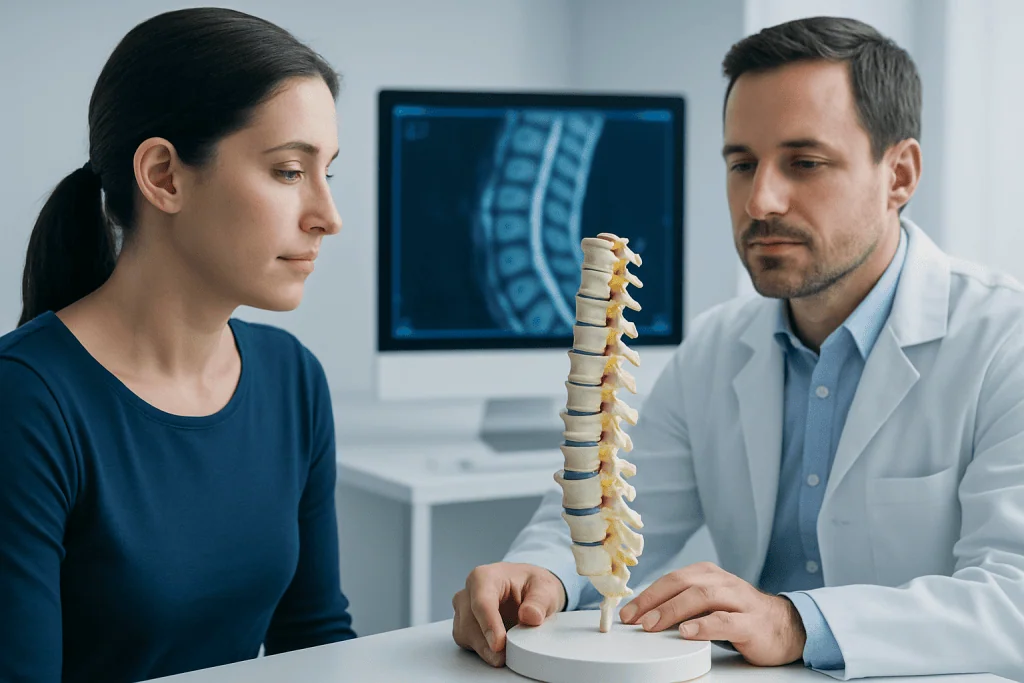
The spinal cord is protected by the bones of the spine, also called vertebrae, and by layers of tissue and fluid around the nerves. It is commonly divided into regions: cervical in the neck, thoracic in the upper and mid-back, lumbar in the lower back, and sacral near the pelvis. Each region gives rise to nerve roots that travel to specific muscles and areas of skin.
Inside the spinal cord are pathways that carry motor signals downward and sensory signals upward. These pathways are organized in a precise way, which helps doctors use a physical examination to identify where a problem may be located. Reflexes, muscle tone, walking pattern, and sensation can all provide clues.
The spinal cord itself ends higher than many people expect, usually around the upper lumbar spine, while nerve roots continue downward in a bundle called the cauda equina. Problems affecting the spinal cord and problems affecting the nerve roots can cause different symptom patterns, so careful evaluation matters.
Signs and symptoms of spinal cord problems

Symptoms depend on the cause, the location, and how quickly the problem develops. Some people notice neck or back pain first, while others develop weakness, clumsiness, numbness, tingling, or difficulty walking. If the spinal cord is compressed or inflamed, symptoms may come on gradually over weeks or months, or they may appear suddenly in an emergency.
A spinal cord problem can affect sensation in different ways. A person may feel numbness, reduced sensitivity to touch, or altered sensation such as burning or electric-shock feelings. Others notice that they trip more often, lose balance, or have trouble with fine hand tasks like buttoning clothes or writing.
Changes in bladder, bowel, or sexual function can also suggest spinal cord involvement, especially when they occur with weakness or numbness. Symptoms that may need urgent attention include:
- Sudden weakness in an arm or leg
- Loss of feeling around the groin or buttocks
- New trouble controlling the bladder or bowels
- Severe back or neck pain after an injury
- Rapidly worsening difficulty walking or standing
These symptoms do not always mean permanent damage, but they should be assessed promptly to reduce the risk of complications.
Common causes and risk factors
Spinal cord problems can develop from injury, pressure on the cord, reduced blood flow, infection, inflammation, or growths within or around the spine. Traumatic injury from falls, road traffic accidents, sports, or violence can damage the spinal cord directly or indirectly through fractures and dislocation of the spine.
Non-traumatic causes are also important. Age-related wear and tear can narrow the spinal canal, a condition often called spinal stenosis, and a herniated disc may press on nearby nerves or the spinal cord. Tumors, abscesses, bleeding, and degenerative conditions may also interfere with normal spinal cord function. In some cases, doctors look for related conditions such as brain tumor or other neurological disorders if symptoms or imaging raise concern.
Inflammatory and autoimmune conditions, such as transverse myelitis or multiple sclerosis, can affect the spinal cord without a structural injury. Infections, vitamin deficiencies, and vascular problems may be less common but remain part of the evaluation when symptoms are unexplained. Risk factors vary by cause, but may include older age, osteoporosis, cancer history, immune suppression, infection risk, smoking, or previous spinal disease.
How doctors diagnose spinal cord conditions
Diagnosis starts with a detailed medical history and neurological examination. The doctor asks when symptoms began, whether they are worsening, and whether there was any injury, fever, cancer history, infection, or change in bladder or bowel function. During the examination, strength, reflexes, sensation, balance, coordination, and walking are assessed to help locate the problem.
Imaging is often central to diagnosis. MRI is commonly used because it shows the spinal cord, discs, ligaments, and surrounding soft tissues in detail. CT scans can help identify fractures or bony narrowing, and plain X-rays may be used in selected situations. When needed, doctors may also request blood tests, lumbar puncture, or nerve studies to look for inflammation, infection, or other neurological causes.
The goal of testing is not only to confirm that the spinal cord is involved, but also to find the exact reason. This matters because treatment differs for trauma, disc disease, infection, inflammatory disease, or tumor. If compression or another serious structural problem is suspected, referral for neurosurgical evaluation may be part of the next step.
Treatment options and recovery
Treatment for a spinal cord problem depends on the underlying cause, how severe the symptoms are, and how quickly they are progressing. Some conditions are managed with medicines, rest, rehabilitation, and close monitoring. Others require urgent hospital care to prevent lasting nerve damage. The main aim is to protect spinal cord function, treat the cause, and support recovery.
For compression from disc disease, stenosis, or some tumors, surgery may be considered to relieve pressure on the spinal cord. In selected cases, this may involve spine surgery to stabilize the spine or create more space for the nerves. Inflammatory conditions may be treated with medicines that reduce immune-related nerve damage, while infections may need antibiotics or drainage. Pain relief, muscle spasm treatment, and bladder or bowel support can also be important parts of care.
Rehabilitation is often a key part of treatment, whether symptoms are mild or more significant. Physical therapy can improve strength, posture, mobility, and balance, while occupational therapy can help with daily activities. Some patients benefit from a structured physical therapy and rehabilitation program to improve function and confidence over time. Recovery can be gradual, and follow-up helps the team track progress and adjust care plans.
Near the end of the care pathway, some patients may be managed by a multidisciplinary team including neurologists, neurosurgeons, orthopedic spine specialists, radiologists, rehabilitation physicians, and pain specialists. Acibadem International’s multidisciplinary specialists in JCI-accredited hospitals diagnose and treat spinal cord conditions for international patients when specialized evaluation is needed.
Protecting spinal cord health and daily self-care
Not every spinal cord problem can be prevented, but some practical steps may reduce risk and support long-term spine health. Using seat belts, wearing appropriate sports protection, and taking fall-prevention measures at home are especially important for children, older adults, and anyone with balance difficulties. Good posture, regular movement, and safe lifting techniques may also help lower strain on the spine.
People with chronic neck or back conditions should follow medical advice and avoid ignoring new neurological symptoms. Smoking cessation, bone health support, and management of long-term conditions such as diabetes may also contribute to healthier nerves and better healing. If a doctor has recommended exercises, therapy, or regular imaging, following that plan can help detect changes early.
Self-care should be realistic and safe. Home measures such as gentle activity, supportive positioning, and symptom tracking may be useful for minor discomfort, but persistent weakness, numbness, or walking difficulty should not be treated as a simple muscle strain. When symptoms involve the spinal cord, early assessment is often more helpful than waiting to see if the problem resolves on its own.
When to seek medical care
Medical care is recommended if a person has ongoing neck or back pain with numbness, tingling, weakness, balance problems, or changes in hand coordination. A doctor should also assess symptoms that disturb sleep, interfere with work or daily tasks, or continue despite rest and simple measures. New neurological symptoms deserve attention, even when pain is mild.
Urgent medical evaluation is important after trauma, especially if there is severe pain, weakness, or loss of sensation. Immediate care is also needed for sudden trouble walking, loss of bladder or bowel control, or numbness in the saddle area around the groin and inner thighs. These symptoms can indicate significant nerve or spinal cord compression and should not be delayed.
In some cases, symptoms may overlap with other neurological conditions that need specialist assessment, such as brain hemorrhage or advanced spinal disease. Prompt diagnosis improves the chance of receiving the right treatment at the right time and may help protect long-term function.
Frequently asked questions
What is the spinal cord in simple terms?
The spinal cord is a bundle of nerves that carries messages between the brain and the rest of the body. It helps control movement, sensation, reflexes, and some automatic functions such as bladder and bowel control.
Can spinal cord symptoms start gradually?
Yes. Some spinal cord problems develop slowly over time, especially when caused by spinal stenosis, tumors, or inflammatory conditions. Gradual weakness, hand clumsiness, walking problems, or numbness should still be assessed by a doctor.
Is every case of back pain related to the spinal cord?
No. Most back pain is caused by muscles, joints, or discs and does not involve the spinal cord. However, back or neck pain combined with weakness, numbness, balance changes, or bladder and bowel symptoms needs medical attention.
Which test is most commonly used to examine the spinal cord?
MRI is one of the most common and useful tests because it shows the spinal cord and surrounding tissues in detail. Depending on the situation, a doctor may also use CT, X-rays, blood tests, or other neurological tests.
Can spinal cord problems be treated without surgery?
Yes, many can. Treatment may include medicines, physical therapy, rehabilitation, and careful monitoring, depending on the cause. Surgery is usually considered when there is significant compression, instability, or another problem that is unlikely to improve without an operation.
When is a spinal cord problem an emergency?
It is an emergency if there is sudden weakness, loss of sensation, difficulty walking, new bladder or bowel control problems, or severe symptoms after an injury. These signs can suggest serious pressure on the spinal cord or another urgent neurological condition.
This article is for general information only and is not a substitute for professional medical advice. Please consult a qualified doctor about your individual situation.
Joint and spine care in Turkey — expert assessment & treatment
JCI-accredited · board-certified surgeons · reply within 24h
Add us as a Preferred Source to see more of our trusted health content across Google Search, AI Overviews and Discover.
Check your numbers in seconds
BMI, calories, due date, blood pressure and 30+ more clinical calculators — free, instant, doctor-reviewed ranges.

More from the Health Library

Frigidity: A Complete Medical Overview

Tingling Sensation in Head and Back: An Evidence-Based Guide for Patients

Gestational Diabetes — Explained by Medical Evidence, Not Myths

Light Skin: What Patients Need to Know

Brain Aneurysm: An Evidence-Based Guide for Patients

Dilostic: An Evidence-Based Guide for Patients
Orthopedic Surgery & Traumatology Specialists at Acibadem

Assoc. Prof. Dr. Ali Şahin
Orthopedic Surgery & Traumatology
Dr. Alp Er Tunga Bölükbaşı
Orthopedic Surgery & Traumatology
Dr. Alper Gölpınar
Orthopedic Surgery & Traumatology
Prof. Dr. Alper Kaya
Orthopedic Surgery & Traumatology