Spinal Dural Arteriovenous Fistula: Early Symptoms, Diagnosis, and Treatment Options

Spinal dural arteriovenous fistula often causes gradually progressive leg weakness, numbness, walking difficulty, and bladder or bowel changes. Symptoms can mimic more common spine problems, so diagnosis is often delayed.
Key Takeaways
- Spinal dural arteriovenous fistula often causes gradually progressive leg weakness, numbness, walking difficulty, and bladder or bowel changes.
- Symptoms can mimic more common spine problems, so diagnosis is often delayed.
- MRI may suggest the condition, but spinal angiography is usually needed to confirm it and plan treatment.
- Treatment usually involves endovascular embolization or microsurgery to close the abnormal connection.
- Earlier treatment generally offers a better chance of stabilizing symptoms and improving recovery.
Spinal dural arteriovenous fistula is a rare abnormal connection between an artery and a vein in the covering of the spinal cord. Early recognition matters because treatment can often stop worsening symptoms and may improve function, especially when diagnosis is not delayed.
Overview
Spinal dural arteriovenous fistula, often shortened to SDAVF, is an abnormal connection between an artery and a vein in the dura, the protective covering around the spinal cord. In this condition, blood flows directly from an artery into a vein at higher pressure than normal. Over time, this increased venous pressure can interfere with normal drainage from the spinal cord and reduce how well the cord functions.
Although it is uncommon, spinal dural arteriovenous fistula is considered the most common type of spinal vascular malformation in adults. It usually develops in middle-aged or older adults and tends to cause symptoms gradually rather than suddenly. Because the symptoms are often nonspecific, the condition may be mistaken for spinal stenosis, disc disease, neuropathy, or inflammatory spinal cord disorders.
This condition is important to recognize because it is treatable. Without treatment, the pressure and congestion affecting the spinal cord may lead to worsening weakness, sensory changes, balance problems, and bladder or bowel dysfunction. With appropriate care, many people can stop further progression and may regain some lost function.
Symptoms and Early Warning Signs
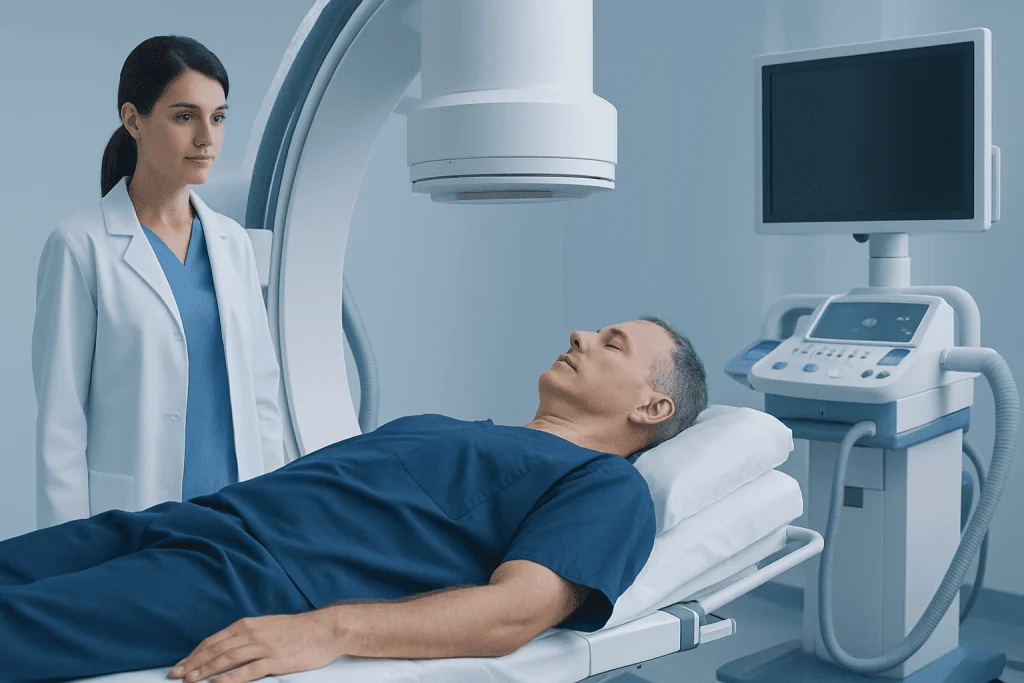
The symptoms of spinal dural arteriovenous fistula usually appear slowly and worsen over months or even years. Early symptoms may be subtle, which is one reason diagnosis can be delayed. Many people first notice fatigue in the legs, heaviness when walking, or difficulty climbing stairs.
As the condition progresses, common symptoms can include numbness, tingling, leg weakness, muscle stiffness, back discomfort, and problems with balance. Symptoms often affect both legs, though one side may seem worse at first. Some people notice that symptoms become more pronounced after exertion or standing for longer periods.
Changes in bladder, bowel, or sexual function can also occur. These may include urinary urgency, trouble emptying the bladder, incontinence, constipation, or erectile dysfunction. Because these symptoms may develop gradually, they are sometimes attributed to aging or unrelated spine conditions.
- Progressive weakness in one or both legs
- Numbness, tingling, or altered sensation
- Difficulty walking or frequent falls
- Leg stiffness or cramping
- Bladder or bowel changes
- Back pain or a feeling of pressure in the lower spine
Causes and Risk Factors
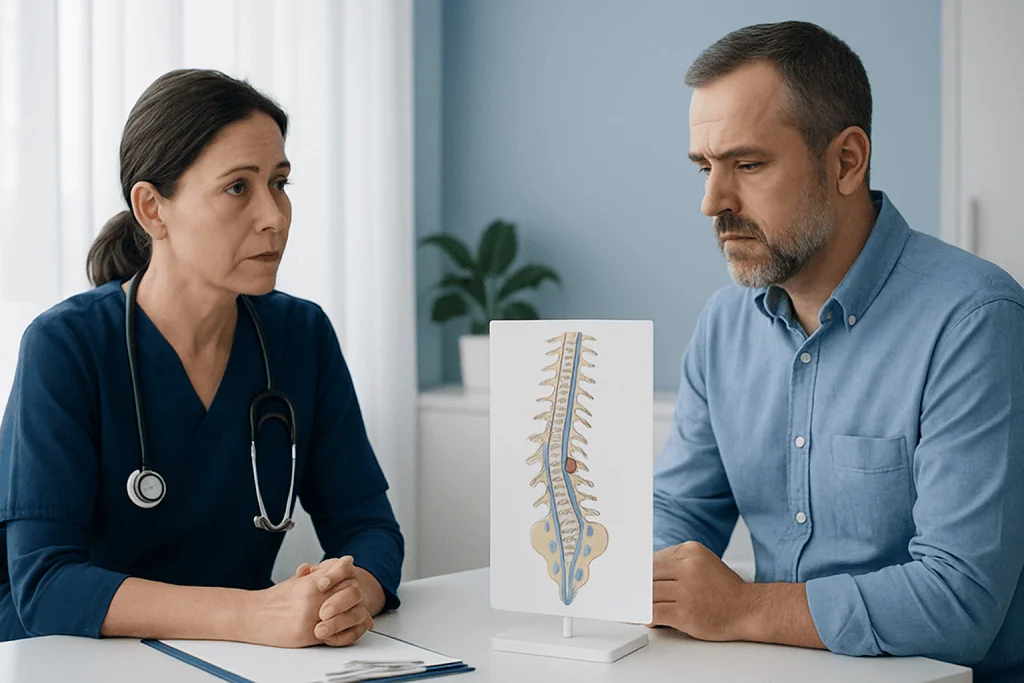
In many cases, the exact cause of spinal dural arteriovenous fistula is not known. It is generally considered an acquired condition rather than one present at birth, although spinal vascular abnormalities can exist in different forms. In SDAVF, the abnormal connection forms between a small artery supplying the dura and a nearby vein, creating abnormal venous pressure around the spinal cord.
This venous hypertension is the main reason symptoms develop. When pressure builds in the spinal veins, blood drains less efficiently from the cord. The result can be chronic congestion, swelling, and reduced oxygen delivery to spinal cord tissue. Over time, this can impair nerve signaling and lead to gradually worsening neurological symptoms.
SDAVF is seen more often in adults, especially men in midlife or later life, but it can occur in others as well. It is not usually linked to lifestyle habits, and there is often no clear action a person could have taken to prevent it. Because symptoms overlap with other disorders, doctors may also consider related conditions such as spinal cord tumors or degenerative spine disease during evaluation.
How Diagnosis Is Made
Diagnosis begins with a careful medical history and neurological examination. A doctor will usually ask about changes in walking, sensation, leg strength, bladder control, and how symptoms have progressed over time. On examination, there may be weakness, increased reflexes, sensory changes, or signs of spinal cord dysfunction.
MRI of the spine is often the first imaging test that raises suspicion for spinal dural arteriovenous fistula. MRI may show swelling within the spinal cord and enlarged abnormal blood vessels around it. However, MRI alone may not be enough to make a definite diagnosis because other problems can produce similar findings, including inflammation, compression, or other vascular malformations such as arteriovenous malformations.
The gold standard test is spinal angiography, in which contrast dye is injected into blood vessels to map the exact location of the fistula and its blood supply. This test is essential because it confirms the diagnosis and helps determine the safest and most effective treatment approach. Doctors may also use advanced imaging such as MRI scanning or CT imaging as part of the broader evaluation.
Treatment Options
The goal of treatment is to close the abnormal artery-to-vein connection and reduce the pressure affecting the spinal cord. Two main treatment approaches are used: endovascular embolization and microsurgery. The best choice depends on the exact anatomy of the fistula, the blood vessels involved, and the person’s overall health.
Endovascular embolization is a minimally invasive procedure performed through a catheter placed in a blood vessel, often guided by an interventional neuroradiology team. A specialized material is delivered to block the fistula and stop the abnormal blood flow. This approach may be effective in selected cases, especially when the anatomy allows safe access and durable closure.
Microsurgery may be recommended when embolization is not suitable, is unlikely to provide complete closure, or has not fully resolved the fistula. In surgery, the abnormal connection is identified and disconnected directly. Both approaches aim to prevent further spinal cord damage. Some patients also benefit from rehabilitation, physical therapy, and bladder care support during recovery. Where appropriate, treatment planning may involve endovascular embolization and, in selected cases, neurosurgical treatment.
Recovery varies from person to person. Many patients experience stabilization first, meaning symptoms stop getting worse. Improvement in strength, walking, or bladder function may follow over weeks to months, but recovery is often incomplete if the spinal cord has been affected for a long time before treatment.
Recovery, Rehabilitation, and Self-care
After treatment, regular follow-up is important to confirm that the fistula has been completely closed and to monitor neurological recovery. Follow-up imaging may be recommended, and the care team will usually assess walking ability, strength, sensation, and bladder or bowel function. If symptoms persist or return, further evaluation may be needed.
Rehabilitation can play a major role in improving day-to-day function. Physical therapy may help with strength, flexibility, balance, and safe walking. Occupational therapy may support independence with daily activities. When bladder symptoms are present, a urology or rehabilitation specialist may also be involved.
Self-care focuses on safety and gradual recovery. People may be advised to pace activities, use mobility aids if needed, follow bowel and bladder guidance from their care team, and report any new neurological changes promptly. A supportive, multidisciplinary approach can help patients adapt during recovery and maintain quality of life.
When to See a Doctor
A person should seek medical evaluation for unexplained, progressive leg weakness, numbness, walking difficulty, or new bladder or bowel symptoms. Even when symptoms seem mild at first, gradual worsening over time deserves attention, especially if both legs are affected or there are signs of spinal cord involvement.
Urgent medical attention is needed if there is rapidly worsening weakness, sudden inability to walk, acute urinary retention, loss of bowel control, or severe neurological decline. These symptoms do not always mean spinal dural arteriovenous fistula, but they require prompt assessment to identify the cause and protect spinal cord function.
Because SDAVF is rare and can resemble more common spine disorders, evaluation by specialists in neurology, neurosurgery, or interventional neuroradiology may be helpful. Acibadem International’s multidisciplinary specialists and JCI-accredited hospitals diagnose and treat complex spinal vascular conditions for international patients.
Frequently asked questions
Is spinal dural arteriovenous fistula the same as a herniated disc?
No. A herniated disc is a structural spine problem, while spinal dural arteriovenous fistula is an abnormal blood vessel connection near the spinal cord. The symptoms can overlap, which is one reason the condition may be misdiagnosed at first.
Can spinal dural arteriovenous fistula cause permanent damage?
It can cause lasting spinal cord injury if diagnosis and treatment are delayed. However, timely treatment can often stop further worsening and may allow some improvement. The degree of recovery depends on how long the spinal cord has been affected and how severe symptoms were before treatment.
What test confirms spinal dural arteriovenous fistula?
MRI often suggests the diagnosis, but spinal angiography usually confirms it. Angiography shows the exact location of the fistula and helps doctors choose the most appropriate treatment.
Is treatment always surgery?
Not always. Some fistulas can be treated with endovascular embolization, which is done through a catheter without open surgery. Others are better treated with microsurgery, depending on the vascular anatomy and the likelihood of complete closure.
Will symptoms improve after treatment?
Many people experience stabilization, meaning symptoms stop progressing after the fistula is closed. Some also improve in walking, strength, or bladder function over time. Recovery can be gradual, and not all symptoms fully resolve, especially if they were present for a long period.
Is spinal dural arteriovenous fistula an emergency?
It is often a progressive condition rather than a sudden emergency, but it should not be ignored. Prompt assessment is important because earlier treatment usually offers a better chance of preserving function. Sudden major worsening, especially loss of walking or bladder control, needs urgent medical care.
References
- National Institute of Neurological Disorders and Stroke
- National Organization for Rare Disorders
- American Association of Neurological Surgeons
- Radiological Society of North America
- World Federation of Interventional and Therapeutic Neuroradiology
This article is for general information only and is not a substitute for professional medical advice. Please consult a qualified doctor about your individual situation.
Joint and spine care in Turkey — expert assessment & treatment
JCI-accredited · board-certified surgeons · reply within 24h
Add us as a Preferred Source to see more of our trusted health content across Google Search, AI Overviews and Discover.

Neurosurgery
Surgical treatment of the brain, spine and nervous system, including minimally invasive and functional procedures.
72 specialists in this unit