Spinal Tap Procedure Steps: An Evidence-Based Patient Guide

A spinal tap collects or tests cerebrospinal fluid, the fluid surrounding the brain and spinal cord. The procedure usually involves local anaesthetic and often takes about 30 to 45 minutes, including positioning and preparation.
Key Takeaways
- A spinal tap collects or tests cerebrospinal fluid, the fluid surrounding the brain and spinal cord.
- The procedure usually involves local anaesthetic and often takes about 30 to 45 minutes, including positioning and preparation.
- Most people can go home the same day, although they should follow their clinical team's aftercare instructions.
- Headache and temporary back soreness are the most common side effects; serious complications are uncommon.
- Medicines that affect bleeding and certain health conditions should be discussed before a lumbar puncture.
A spinal tap, also called a lumbar puncture, is a procedure in which a clinician collects a small sample of cerebrospinal fluid from the lower back or measures its pressure. It is commonly used to help diagnose infections, inflammation, bleeding and certain neurological conditions, and it is not the same procedure as an epidural.
Overview: what a spinal tap is and how it works
A spinal tap procedure, medically called a lumbar puncture, involves placing a thin needle into the lower back to collect cerebrospinal fluid (CSF) or measure the pressure of this fluid. CSF surrounds and cushions the brain and spinal cord. Testing it can provide important information that may not be available from blood tests or scans alone.
The needle enters the lumbar area below the level where the spinal cord ends, usually between two lower-back bones. A clinician may perform the procedure at the bedside, in a procedure room or with imaging guidance. A spinal tap procedure note in the medical record commonly documents the reason for the test, consent, the site used, the opening pressure if measured, the amount of fluid collected and how the person tolerated the procedure.
A spinal tap is not the same as an epidural. Both procedures use the lower back, but an epidural places medicine into a space outside the protective sac around the spinal cord, often for pain relief or anaesthesia. A lumbar puncture enters the fluid-filled space to obtain CSF, measure pressure or, less commonly, deliver specific medicines.
Why a lumbar puncture may be recommended
Clinicians may recommend a lumbar puncture when symptoms, examination findings or other tests suggest a condition affecting the brain, spinal cord or their coverings. CSF can be examined for signs of infection, inflammation, immune activity, bleeding, cancer cells and changes in pressure. The results are interpreted alongside a person’s symptoms, medical history, blood tests and imaging.
Common reasons include evaluating suspected meningitis or encephalitis, investigating certain severe or unusual headaches, and helping diagnose inflammatory or immune-mediated neurological disorders. It may also be used as part of the assessment of conditions such as multiple sclerosis or to look for bleeding around the brain when appropriate imaging has not provided a clear answer.
Not everyone is a suitable candidate immediately. Before proceeding, the clinical team considers bleeding risk, medicines, skin infection near the intended insertion site, immune status, neurological symptoms and whether brain imaging is needed first. In some circumstances, the procedure is delayed, performed with additional precautions or replaced by another investigation.
Spinal tap procedure preparation: what not to do before a lumbar puncture

Before a lumbar puncture, people should give the healthcare team a full list of prescription medicines, over-the-counter products, vitamins and herbal supplements. In particular, anticoagulants, antiplatelet medicines and some anti-inflammatory pain medicines can affect bleeding risk. They should not stop these medicines independently; the clinician who prescribed them and the procedure team should provide an individual plan.
People should not hide a history of bleeding problems, low platelet counts, allergies to medicines or local anaesthetics, pregnancy, recent illness, or infection or rash on the lower back. They should also report new severe headache, fever, confusion, weakness, seizures or visual changes before the appointment, as these symptoms may affect the timing and safety assessment.
Instructions about eating and drinking vary. Many routine spinal taps performed with local anaesthetic do not require fasting, but fasting may be requested if sedation or another procedure is planned. It is sensible to avoid alcohol and recreational drugs beforehand, arrange transport home if advised, and ask whether a support person is needed. Wearing comfortable clothing can make positioning easier.
- Do follow instructions for blood tests, imaging and medication adjustments.
- Do not take an unapproved extra dose of pain medicine or sedative to manage anxiety before the visit.
- Do not stop prescribed blood-thinning medicine unless the responsible clinician tells the person to do so.
- Do tell the team about all allergies, medicines and relevant medical conditions.
What are the steps involved in a spinal tap procedure?
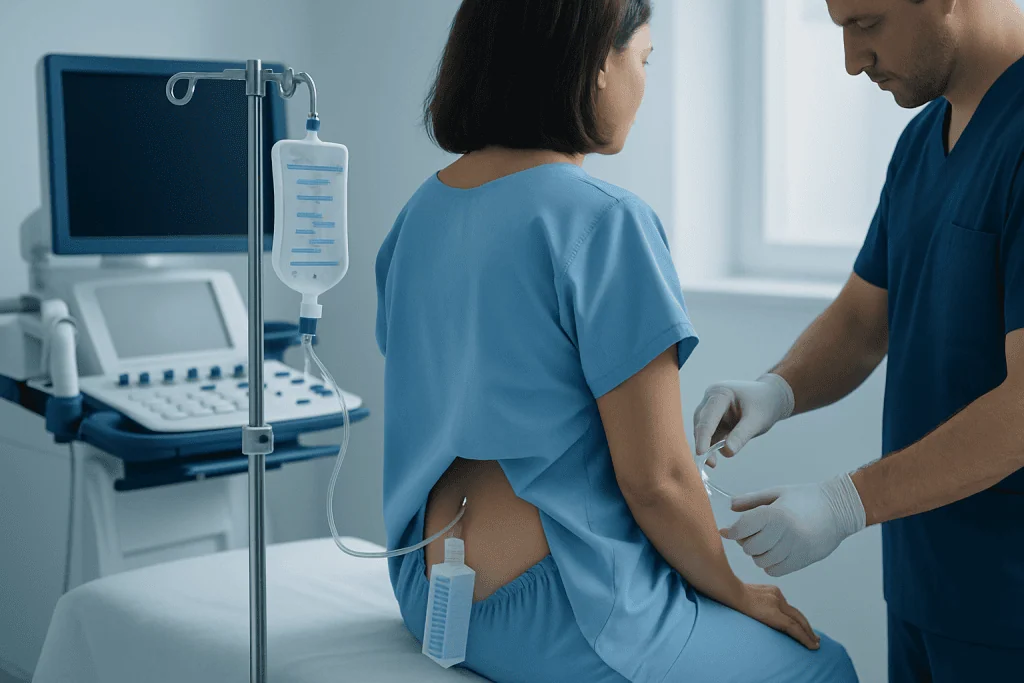
The spinal tap procedure steps begin with confirmation of identity, the reason for the test and informed consent. The clinician reviews relevant results and medicines, checks vital signs when needed, and explains positioning. The person is commonly asked to lie on one side with knees drawn toward the chest, or to sit leaning forward. Staying as still as comfortably possible helps the clinician identify the correct space.
The lower back is cleaned with antiseptic and covered with sterile drapes. Local anaesthetic is injected into the skin and deeper tissues, which may cause a brief stinging sensation. Once the area is numb, the clinician gently advances a specialised needle between the lower spinal bones. Ultrasound, fluoroscopy or CT guidance may be used if anatomy is difficult to feel or a previous attempt was unsuccessful.
For a spinal tap procedure step by step, the next stage may include measuring CSF opening pressure while the person lies in a suitable position. Small tubes of fluid are then collected and labelled for laboratory testing. The amount taken is usually small, and the body continually makes new CSF. If the procedure is being used to administer medication, the medicine may be given after fluid collection or assessment, depending on the clinical purpose.
The needle is removed, light pressure is applied and a small dressing may be placed. The person may be observed for a short period, especially if sedation was used or if symptoms need monitoring. The procedure itself often lasts only several minutes once positioning is complete, although the full visit can take longer because of preparation, testing and aftercare.
Benefits, limitations and possible risks
The main benefit of a lumbar puncture is diagnostic clarity. CSF results can help clinicians identify or rule out conditions that require prompt treatment, guide the choice of further tests and monitor certain neurological illnesses. In selected situations, removing a measured amount of CSF or giving medicine into the CSF may also have a therapeutic purpose.
No test provides answers in isolation. Results can take different amounts of time depending on the laboratory studies requested, and some findings need careful interpretation. A normal result does not always exclude every possible condition, while an abnormal result may need confirmation through clinical assessment, imaging or repeat testing.
The most common side effects are temporary tenderness or bruising at the lower back and a post-lumbar-puncture headache. This headache often becomes worse when sitting or standing and improves when lying down. Less common risks include bleeding, infection, nerve irritation, persistent CSF leakage or an unsuccessful attempt to collect fluid. Serious complications are uncommon, and careful screening helps reduce risk.
Urgent complications are more likely in particular situations, such as significant bleeding disorders, certain infections, or raised pressure inside the skull caused by a mass. This is why the team may order imaging or blood tests before the procedure. People should ask what the procedure is intended to show and how the result could influence their care.
Do and don'ts after lumbar puncture and recovery timeline
How long it takes to recover from a spinal tap procedure varies, but many people resume light routine activities within 24 hours if they feel well and their clinician has not given different instructions. Mild lower-back soreness can last for a day or two. If sedation was used, driving, drinking alcohol, operating machinery and making important decisions should be avoided for the period specified by the care team.
Aftercare usually includes keeping the puncture site clean and dry as instructed, drinking fluids normally unless fluid intake is restricted for another medical reason, and allowing time to rest. Some clinicians advise avoiding strenuous exercise, heavy lifting and intense bending for the rest of the day or for 24 hours. Acetaminophen/paracetamol may be suitable for discomfort for some people, but the individual should first follow the advice given by their own team.
People should not ignore a headache that is severe, persists, becomes worse, or prevents normal activity. A post-lumbar-puncture headache often improves with rest, fluids and simple pain relief, but persistent symptoms may require assessment. In some cases, clinicians may discuss an epidural blood patch, a procedure designed to help seal a continuing CSF leak.
- Do rest, follow discharge instructions and contact the team if symptoms are concerning.
- Do not return immediately to vigorous exercise unless the clinician confirms it is appropriate.
- Do not drive after sedating medicine until it is safe to do so.
- Do not remove or disturb the dressing earlier than instructed.
When to seek medical care
People should seek urgent medical advice after a spinal tap if they develop a severe or worsening headache, fever, stiff neck, confusion, fainting, new weakness, numbness, difficulty walking, loss of bladder or bowel control, repeated vomiting, or seizures. These symptoms do not necessarily mean a serious complication, but they need timely clinical assessment.
Prompt contact with the procedure team is also appropriate for increasing redness, warmth, swelling, drainage or persistent bleeding at the puncture site, or for back pain that is worsening rather than settling. Anyone who feels unwell after the procedure should not drive themselves to urgent care.
For international patients, Acibadem International’s multidisciplinary specialists and JCI-accredited hospitals can assess neurological symptoms and coordinate investigations, including lumbar puncture assessment and care, when clinically appropriate. The treating clinician remains the best source of personalised advice about preparation, recovery and test results.
Frequently asked questions
What not to do before a lumbar puncture?
People should not stop blood thinners, antiplatelet medicines or other prescribed medicines without specific instructions from a clinician. They should avoid alcohol and recreational drugs, follow any fasting instructions provided, and report all medicines, allergies, bleeding problems and new symptoms to the procedure team.
Do and don'ts after lumbar puncture?
Rest for the period advised, drink fluids normally if permitted, and keep the puncture area clean and dry according to discharge instructions. Avoid strenuous activity and heavy lifting initially, and do not drive if sedation was used. Contact a clinician if there is a severe or persistent headache, fever, new neurological symptoms or signs of infection at the site.
What are the steps involved in a spinal tap procedure?
A clinician confirms consent and safety checks, positions the patient, cleans and numbs the lower back, and places a thin needle into the lumbar fluid space. They may measure CSF pressure, collect small fluid samples or give medication when indicated. The needle is then removed and the patient receives monitoring and aftercare instructions.
How long does it take to recover from a spinal tap procedure?
Many people feel able to return to light activities within about 24 hours, although mild back soreness may last a few days. Recovery can take longer if a post-lumbar-puncture headache develops or if the underlying illness requires ongoing care. The care team may recommend a different timeline based on the person's health and the reason for the procedure.
Is a spinal tap procedure the same as an epidural?
No. A spinal tap, or lumbar puncture, is mainly performed to collect cerebrospinal fluid, measure its pressure or sometimes deliver selected medicines. An epidural places anaesthetic or pain-relieving medicine outside the protective sac around the spinal cord and is commonly used for pain control or anaesthesia.
Does a spinal tap hurt?
The local anaesthetic injection may sting briefly, and people may feel pressure or discomfort while they hold the required position. Significant pain should be reported immediately so the clinician can pause and assess. Some people experience temporary soreness at the lower back afterward.
References
- Mayo Clinic
- National Institute of Neurological Disorders and Stroke
- Merck Manual Consumer Version
- National Health Service
- American Academy of Neurology
This article is for general information only and is not a substitute for professional medical advice. Please consult a qualified doctor about your individual situation.
Joint and spine care in Turkey — expert assessment & treatment
JCI-accredited · board-certified surgeons · reply within 24h
Add us as a Preferred Source to see more of our trusted health content across Google Search, AI Overviews and Discover.