Stage 2 Lung Cancer Survival Rate by Age: Diagnosis, Outlook, and Modern Treatment Approaches
There is no single survival rate for stage 2 lung cancer based only on age. Stage 2A and stage 2B can have different outlooks because tumor size and lymph node spread matter.
Key Takeaways
- There is no single survival rate for stage 2 lung cancer based only on age.
- Stage 2A and stage 2B can have different outlooks because tumor size and lymph node spread matter.
- Most stage 2 lung cancers are treated with a combination of surgery and additional therapy such as chemotherapy, targeted therapy, immunotherapy, or radiation when appropriate.
- Younger and older adults may have different treatment plans, but healthy older adults can still benefit from active treatment.
- Personal prognosis is best discussed with an oncology team that considers overall health, lung function, cancer subtype, and molecular testing.
Stage 2 lung cancer survival rate by age does not have one single number that applies to everyone. Age can influence treatment tolerance and overall health, but prognosis is also shaped by whether the cancer is stage 2A or 2B, the tumor type, lymph node involvement, surgery options, and how well the cancer responds to modern treatment.
Overview: What stage 2 lung cancer survival rate by age really means
When people search for stage 2 lung cancer survival rate by age, they are usually looking for a clear estimate of outlook. The most helpful answer is that age alone does not determine survival. In stage 2 lung cancer, prognosis is influenced by several factors together, including whether the cancer is stage 2A or 2B, whether lymph nodes are involved, the exact tumor size, the type of lung cancer, the person’s overall health, and which treatments are possible.
Stage 2 lung cancer most often refers to non-small cell lung cancer that is larger than an early-stage tumor and may have spread to nearby lymph nodes, but has not spread to distant organs. This is different from more advanced disease, where treatment goals and expected outcomes may change. In many patients, stage 2 lung cancer is still considered potentially treatable with curative intent, especially when surgery is possible.
Age can still matter, but mainly because it may affect heart health, lung function, kidney function, frailty, and recovery from treatment. A fit older adult may do very well with surgery and additional therapy, while a younger person with significant medical problems may need a more adjusted plan. This is why doctors discuss prognosis in a personalized way rather than giving a single number based only on age.
How stage 2 lung cancer is defined
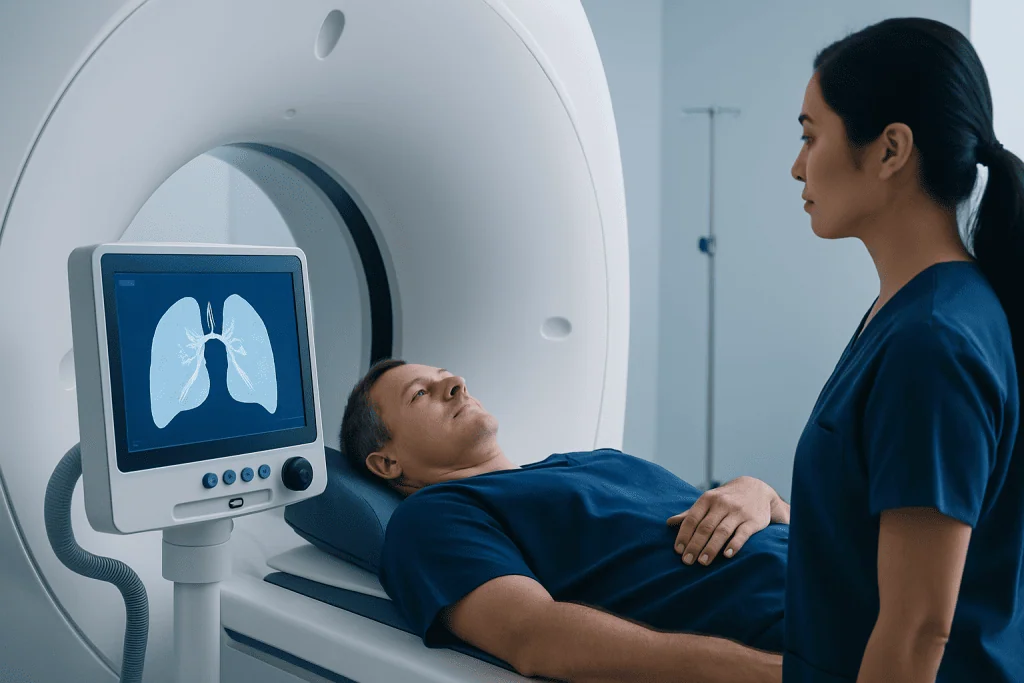
Doctors use a staging system called TNM, which looks at the primary tumor, nearby lymph nodes, and whether there is distant spread. Stage 2 lung cancer is usually divided into stage 2A and stage 2B. These subgroups differ by tumor size, how deeply the tumor has grown into nearby structures, and whether cancer cells have reached nearby lymph nodes inside the chest.
In general, stage 2A may involve a somewhat smaller or less extensive tumor than stage 2B, and stage 2B more often includes local lymph node involvement. Because of this, stage 2B may carry a less favorable outlook than stage 2A, even though both are still considered localized or locally advanced rather than metastatic. This distinction helps explain why one overall survival figure does not tell the full story.
Most stage 2 cases are lung cancer of the non-small cell type, such as adenocarcinoma or squamous cell carcinoma. Small cell lung cancer is staged somewhat differently and usually behaves more aggressively. Knowing the exact type of cancer is important because treatment choices and outlook can differ meaningfully between subtypes.
What affects outlook besides age
Although age is often discussed, several other factors are usually more important in estimating prognosis. The first is whether the tumor can be removed completely with surgery. Complete resection, when feasible, is one of the strongest positive factors in stage 2 disease. The next key issue is lymph node involvement, because cancer found in nearby nodes can increase the risk of recurrence after initial treatment.
Tumor biology also matters. Some non-small cell lung cancers have gene changes that may open the door to targeted therapy after surgery or in selected situations. Doctors may test for changes such as EGFR and other biomarkers, depending on the pathology and treatment plan. These details can influence both the risk of recurrence and the choice of modern therapy.
General health plays a major role as well. Lung function, smoking status, heart disease, diabetes, kidney function, and performance status all affect how safely a person can undergo surgery, chemotherapy, radiation, or newer systemic treatments. For this reason, doctors usually talk about prognosis in terms of the whole patient rather than age in isolation.
- Stage 2A vs stage 2B
- Tumor size and exact location
- Nearby lymph node involvement
- Non-small cell vs small cell lung cancer
- Molecular and biomarker test results
- Overall health and ability to tolerate treatment
Diagnosis and evaluation before treatment
Confirming stage 2 lung cancer involves more than finding a spot on a scan. Doctors usually begin with chest imaging, often including CT and PET-CT, to assess the size of the tumor and whether nearby lymph nodes are suspicious. MRI of the brain may be recommended in some situations to make sure there is no hidden spread, even when the cancer appears limited.
A biopsy is needed to confirm the diagnosis and identify the exact cancer type. This may be done through bronchoscopy, needle biopsy, or another method depending on the tumor’s location. Tissue from the biopsy helps pathologists classify the cancer and may also be used for molecular testing, which can affect treatment planning.
Before treatment, many patients also have lung function testing and a general medical assessment to see whether surgery is safe. Multidisciplinary review is especially valuable because thoracic surgeons, pulmonologists, medical oncologists, radiation oncologists, radiologists, and pathologists each contribute to the plan. In patients who may need tissue diagnosis or airway assessment, bronchoscopy can be an important part of the workup.
Modern treatment approaches for stage 2 lung cancer
Treatment for stage 2 lung cancer often combines local treatment with systemic therapy. If the tumor can be removed safely, surgery is commonly the main treatment. Depending on the tumor’s location and size, this may involve removal of part of the lung or a larger resection, along with sampling or removal of nearby lymph nodes. In many centers, patients are evaluated for lung cancer surgery as part of curative treatment planning.
After surgery, additional treatment may be recommended to lower the risk that microscopic cancer cells remain. This may include chemotherapy, and in selected patients it may also include targeted therapy or immunotherapy based on pathology and biomarker results. The choice depends on the exact stage, lymph node findings, and the person’s general health. When surgery is not possible because of medical risk or tumor factors, radiation therapy and systemic treatment may be considered instead.
Some patients receive therapy before surgery, especially when the tumor or lymph nodes make immediate surgery less ideal. This can include chemotherapy with or without immunotherapy, depending on current standards and the individual case. Advanced planning with medical oncology helps tailor treatment to the cancer’s biology and the person’s needs. Radiation-based approaches such as radiation oncology may also be used when surgery is not suitable or as part of a combined plan.
How age influences treatment decisions and survival discussions
Age can affect outlook indirectly, but it should not be used as the only guide to treatment. Older adults are more likely to have reduced lung reserve, heart disease, or other conditions that increase treatment risk. They may also need more careful evaluation for frailty, nutrition, and medication interactions. Even so, many older patients remain good candidates for surgery or combined treatment when they are otherwise fit.
Younger adults may sometimes tolerate intensive treatment more easily, but younger age does not automatically guarantee a better outcome. More aggressive tumor biology, smoking history, delayed diagnosis, or significant symptoms can still affect prognosis. This is why oncologists discuss both cancer-related and patient-related factors when explaining expected outcomes.
Rather than asking only, “What is the survival rate for my age group?” it is often more useful to ask, “What is my stage, what type of lung cancer do I have, can it be removed completely, what treatment do you recommend, and what does my general health mean for recovery?” These questions usually provide a more realistic picture of prognosis than age alone.
Self-care, follow-up, and reducing recurrence risk
After treatment, regular follow-up is important because stage 2 lung cancer can recur even after apparently successful care. Follow-up often includes scheduled imaging, symptom review, and assessment for treatment side effects. The exact schedule varies by the treatment used and the oncology team’s recommendations.
Stopping smoking is one of the most important steps a person can take after diagnosis, regardless of age. Smoking cessation may improve healing, lung function, tolerance of treatment, and overall long-term health. Good nutrition, physical activity suited to the person’s abilities, vaccination as recommended, and management of other medical conditions also support recovery.
Patients should keep their care team informed about new cough, shortness of breath, unexplained weight loss, worsening fatigue, pain, or other changes. For international patients seeking coordinated care, Acibadem International’s multidisciplinary specialists at JCI-accredited hospitals diagnose and treat lung cancer with individualized planning and follow-up.
When to seek medical care
Medical care should be sought promptly for symptoms that could suggest lung cancer or recurrence. These include a persistent cough, coughing up blood, chest pain, shortness of breath, repeated chest infections, hoarseness, unexplained weight loss, or unusual fatigue. While these symptoms do not always mean cancer, they deserve professional evaluation.
People already diagnosed with stage 2 lung cancer should contact their doctor sooner if symptoms suddenly worsen, if breathing becomes difficult, if fever develops during treatment, or if there are new neurological symptoms such as weakness, severe headache, or confusion. These changes may be related to treatment side effects, infection, or cancer progression and should not be ignored.
Anyone with questions about their personal stage, pathology results, treatment options, or expected outlook should speak with a qualified oncology team. A clear discussion with a specialist is the safest way to understand what stage 2 lung cancer survival rate by age means in an individual situation.
Frequently asked questions
Does age alone determine stage 2 lung cancer survival?
No. Age is only one part of the picture, and it often matters less than stage details, lymph node involvement, tumor biology, overall health, and whether the cancer can be treated completely. A healthy older adult may have a better outlook than a younger person with major health problems or more aggressive disease.
Is stage 2 lung cancer curable?
In some patients, yes. Stage 2 lung cancer is often treated with curative intent, especially when the tumor can be removed and followed by appropriate additional therapy. However, cure cannot be guaranteed, and careful follow-up is needed because recurrence can still happen.
What is the difference between stage 2A and stage 2B lung cancer?
Stage 2A and 2B are subgroups based on tumor size, local spread, and nearby lymph node involvement. Stage 2B often reflects more extensive local disease or node involvement than stage 2A, which may affect treatment recommendations and outlook.
Do older adults always receive less treatment for stage 2 lung cancer?
Not necessarily. Treatment is based more on fitness, lung function, other medical conditions, and patient goals than on age alone. Many older adults can safely benefit from surgery, chemotherapy, radiation, or newer therapies when carefully selected.
What treatments are commonly used for stage 2 lung cancer?
Surgery is often the main treatment when possible, usually followed by additional therapy to reduce recurrence risk. Depending on the pathology and molecular findings, treatment may include chemotherapy, immunotherapy, targeted therapy, radiation, or a combination of these approaches.
Can survival estimates predict exactly what will happen to one person?
No. Survival statistics describe groups of patients and cannot predict an individual outcome with certainty. A person’s exact prognosis depends on many factors, including response to treatment, pathology findings, and overall health.
References
- National Cancer Institute
- American Cancer Society
- National Comprehensive Cancer Network
- American Society of Clinical Oncology
- World Health Organization
This article is for general information only and is not a substitute for professional medical advice. Please consult a qualified doctor about your individual situation.
Lung Cancer in Turkey — costs, top hospitals & a free quote
JCI-accredited · board-certified surgeons · reply within 24h
Add us as a Preferred Source to see more of our trusted health content across Google Search, AI Overviews and Discover.
Check your numbers in seconds
BMI, calories, due date, blood pressure and 30+ more clinical calculators — free, instant, doctor-reviewed ranges.

Medical Oncology Department
Medical treatment of cancer with chemotherapy, immunotherapy and targeted therapies under a multidisciplinary tumor board.
60 specialists in this unit