Sudden Hearing Loss: Why Immediate Treatment Can Protect Hearing

Sudden hearing loss usually develops over hours to a few days and often affects one ear. It is different from gradual age-related hearing changes and should be assessed urgently.
Key Takeaways
- Sudden hearing loss usually develops over hours to a few days and often affects one ear.
- It is different from gradual age-related hearing changes and should be assessed urgently.
- Early treatment, often with corticosteroids, may improve the chance of recovery.
- Diagnosis may include a hearing test, ear examination, blood tests, or imaging depending on the case.
- Anyone with sudden hearing loss, especially with dizziness or neurological symptoms, should seek prompt medical care.
Sudden hearing loss is a rapid change in hearing, often in one ear, that should be treated as a medical urgency. Prompt evaluation and early treatment may improve the chance of hearing recovery and help rule out serious underlying causes.
Overview
Sudden hearing loss refers to a quick drop in hearing, typically developing within hours or up to about three days. Many people notice it when they wake up, while talking on the phone, or when one ear suddenly seems blocked or muffled. In most cases, it affects only one ear.
The most concerning form is sudden sensorineural hearing loss, which happens when there is a problem in the inner ear or the hearing nerve pathway. This is different from conductive hearing loss, which may be caused by earwax, fluid behind the eardrum, or other problems in the outer or middle ear. Because the symptoms can feel similar at first, a proper medical examination is important.
Sudden hearing loss is considered an ear emergency. Early diagnosis can help identify whether the cause is relatively simple, such as wax blockage, or whether urgent treatment is needed for inner ear inflammation, infection, circulation problems, or a less common underlying condition. Acting quickly gives the best chance to protect hearing.
Symptoms and Warning Signs
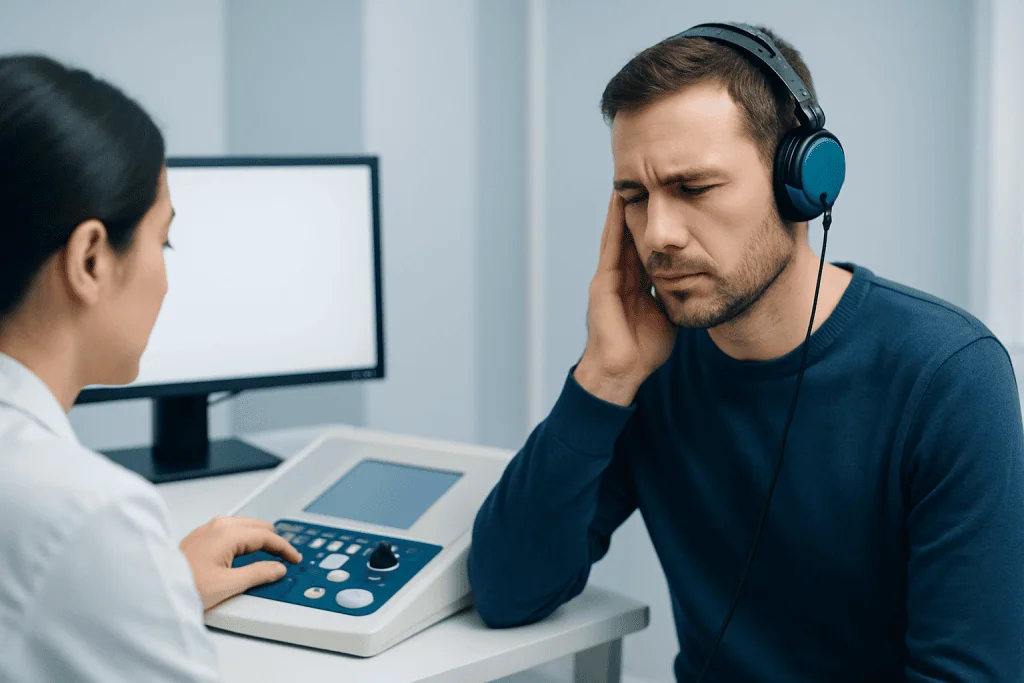
The main symptom is a rapid decrease in hearing in one ear. Some people describe voices as faint, distorted, or as if they are hearing underwater. Others notice that they cannot hear well on one side when using headphones or speaking on the phone.
Sudden hearing loss may occur along with other ear-related symptoms. These can include ringing in the ear (tinnitus), a feeling of fullness or pressure, mild ear discomfort, or sound sensitivity. Although some people assume these symptoms are due to congestion or a minor ear problem, they should not be ignored when hearing changes suddenly.
Additional symptoms can suggest that the problem involves the inner ear or nearby structures. These may include:
- Dizziness or vertigo
- Problems with balance
- Nausea related to spinning sensations
- A feeling that sounds are distorted
- Difficulty understanding speech even when it seems loud enough
If sudden hearing loss happens with facial weakness, severe headache, confusion, difficulty speaking, double vision, or weakness in an arm or leg, emergency care is especially important. These symptoms may point to a neurological problem rather than an isolated ear condition.
Causes and Risk Factors

In many cases, the exact cause of sudden sensorineural hearing loss is not identified, even after testing. Doctors sometimes call this idiopathic sudden hearing loss. Even when no clear trigger is found, treatment is still often recommended because the condition may improve with early care.
Possible causes include viral inner ear inflammation, immune-related conditions, circulation problems affecting the inner ear, head trauma, exposure to very loud noise, or side effects from certain medications that can affect hearing. Less commonly, sudden hearing loss can be linked to growths affecting the hearing nerve, such as an acoustic neuroma, also known as a vestibular schwannoma.
Not every sudden decrease in hearing is sensorineural. Conductive causes such as impacted earwax, middle ear infection, eardrum injury, or fluid in the middle ear can also produce a sudden blocked-ear sensation. This is one reason an ear examination is one of the first steps in care.
Risk factors vary depending on the cause but may include recent viral illness, autoimmune disease, cardiovascular risk factors, prior ear disease, significant noise exposure, and use of medications with known hearing-related side effects. A doctor will consider the person’s full medical history when deciding which tests are most appropriate.
Why Immediate Treatment Matters
Time is important in sudden hearing loss, especially when the cause is suspected to be sensorineural. The inner ear contains delicate structures that do not tolerate inflammation, reduced blood flow, or other injury well. When treatment is delayed, the chance of complete recovery may decrease.
One of the goals of urgent assessment is to separate reversible conductive causes from sudden sensorineural hearing loss, which often requires prompt therapy. Corticosteroids are commonly used early in treatment because they may reduce inflammation and swelling in the inner ear. In some situations, doctors may also consider injections of steroid medication through the eardrum into the middle ear so the medicine can reach the inner ear more directly.
Immediate evaluation is also important because sudden hearing loss can occasionally be the first sign of another condition that needs attention, such as a severe infection, autoimmune disease, or a problem involving the hearing nerve. In a smaller number of cases, dizziness and hearing loss together may overlap with disorders such as vertigo or tinnitus, but sudden hearing change still needs its own urgent assessment.
How Doctors Diagnose Sudden Hearing Loss
Diagnosis begins with a careful history and physical examination. The doctor will ask when the hearing change began, whether one or both ears are affected, and whether there are related symptoms such as ringing, dizziness, recent infection, head injury, or medication use. The ear is then examined to look for wax, infection, fluid, or visible damage to the eardrum.
A hearing test is a key part of the evaluation. Audiometry can help determine how much hearing has been lost and whether the pattern is more consistent with conductive or sensorineural hearing loss. This distinction guides treatment decisions and helps determine how urgent further testing may be.
Depending on the clinical picture, additional tests may be recommended. These can include blood tests, balance assessment, or imaging such as MRI to evaluate the hearing nerve and rule out structural causes. Imaging is especially useful when symptoms are one-sided, persistent, or accompanied by neurological findings.
In some centers, a patient may be evaluated by an ear, nose, and throat specialist and an audiologist in coordination. If surgery or advanced procedures are needed for a separate ear problem, options such as cochlear implant care may be discussed later for selected people with severe permanent loss, but this is not the first-line response to a new sudden hearing event.
Treatment Options
Treatment depends on the underlying cause. If the hearing loss is due to earwax, middle ear fluid, or infection, treatment focuses on removing the blockage or treating the ear condition. If sudden sensorineural hearing loss is diagnosed or strongly suspected, corticosteroids are commonly the first treatment unless there is a reason they should not be used.
Steroids may be given by mouth or, in some cases, by injection through the eardrum. Intratympanic steroid injections can be used when oral steroids are not suitable, when hearing does not improve enough, or as part of a combined approach. This type of care may be offered alongside broader ear surgery and otologic treatment services when a specialist is involved.
Other treatments depend on the specific diagnosis. For example, an autoimmune cause may require a different medical plan, while a structural issue may need targeted intervention. If imaging finds a tumor affecting the hearing nerve, management may involve monitoring, radiosurgery, or brain tumor surgery in selected cases, guided by a multidisciplinary team.
Follow-up is an important part of treatment. Repeat hearing tests help show whether hearing is improving, stable, or declining. For people left with lasting hearing difficulty, hearing aids, auditory rehabilitation, and communication strategies can improve everyday quality of life.
Self-care, Prevention, and Recovery
Self-care does not replace urgent medical assessment, but it can support recovery. A person with sudden hearing loss should avoid delaying care, avoid inserting cotton swabs or other objects into the ear, and avoid loud noise exposure while symptoms are being evaluated. It is also helpful to note exactly when symptoms started and whether dizziness, ringing, or recent illness occurred.
There is no guaranteed way to prevent all cases of sudden sensorineural hearing loss, because many occur without a clear cause. Still, protecting hearing in general is worthwhile. This includes using hearing protection in noisy environments, taking medications only as directed, and discussing possible hearing-related side effects with a doctor or pharmacist.
People who have cardiovascular risk factors may also benefit from good overall health management, since blood vessel health supports the inner ear as well. Managing blood pressure, diabetes, and smoking-related risks can be part of broader hearing protection, even though these measures do not prevent every case.
Recovery varies. Some people regain much or all of their hearing, while others may have partial improvement or lasting hearing changes. Because recovery is hard to predict at the start, follow-up with an ENT specialist and hearing tests are important even if symptoms seem to improve quickly.
When to See a Doctor
Anyone who notices a sudden decrease in hearing in one or both ears should seek medical attention as soon as possible, ideally the same day or within 24 to 48 hours. It is especially important not to assume the problem is only congestion, allergies, or wax without being examined.
Urgent assessment is particularly important if hearing loss is accompanied by ringing, dizziness, balance problems, or a feeling of fullness in one ear. These symptoms can occur with inner ear disorders that benefit from early treatment.
Emergency care is needed if sudden hearing loss occurs with severe vertigo, facial drooping, difficulty speaking, weakness, numbness, chest pain, or a severe headache. These may suggest a neurological or vascular emergency that needs immediate attention.
For international patients seeking specialist evaluation, Acibadem International’s multidisciplinary teams in JCI-accredited hospitals assess hearing loss with ENT, audiology, imaging, and neurological expertise when needed. A qualified doctor can advise on the most appropriate tests and treatments for the individual situation.
Frequently asked questions
Is sudden hearing loss always permanent?
No. Some people recover fully or partially, especially when treatment begins early. However, recovery is not guaranteed, which is why urgent medical evaluation is important.
How can a person tell the difference between earwax and sudden sensorineural hearing loss?
It is often difficult to tell based on symptoms alone because both can cause muffled hearing or a blocked-ear feeling. An ear examination and hearing test help doctors distinguish a simple blockage from an inner ear emergency.
Can sudden hearing loss happen without pain?
Yes. Many people with sudden sensorineural hearing loss do not have ear pain. A painless but rapid hearing change still needs prompt medical attention.
What is the usual first treatment for sudden sensorineural hearing loss?
Corticosteroids are commonly used as early treatment if the condition is diagnosed or strongly suspected. They may be given by mouth or, in some cases, by injection through the eardrum depending on the person’s needs.
Should someone go to the emergency department for sudden hearing loss?
If hearing drops suddenly, urgent assessment is recommended, especially if the change is significant or accompanied by dizziness, ringing, or neurological symptoms. The emergency department is appropriate if the person cannot access prompt medical care elsewhere or has warning signs such as weakness, facial drooping, or trouble speaking.
Can colds or sinus problems cause a sudden blocked-ear feeling?
Yes. Congestion, middle ear fluid, or pressure changes can create a blocked sensation and temporary hearing reduction. Even so, a true sudden hearing change should not be self-diagnosed, because inner ear hearing loss can feel similar at first.
References
- National Institute on Deafness and Other Communication Disorders
- American Academy of Otolaryngology–Head and Neck Surgery
- NHS
- Mayo Clinic
- World Health Organization
This article is for general information only and is not a substitute for professional medical advice. Please consult a qualified doctor about your individual situation.
Explore treatments in Turkey — costs, top hospitals & a free quote
JCI-accredited · board-certified surgeons · reply within 24h
Add us as a Preferred Source to see more of our trusted health content across Google Search, AI Overviews and Discover.

More from the Health Library



Related Specialists

Assoc. Prof. Dr. Mustafa Taş
Gynecology & Obstetrics
Prof. Dr. Tuğçin Bora Polat
Pediatric Cardiology
Dr. Rıdvan Mete Demir
Emergency Service
Dr. Evis Ertaş
Gynecology & Obstetrics