

Surgical Neurophysiologist: How This Specialist Helps Protect Nerves During Operations
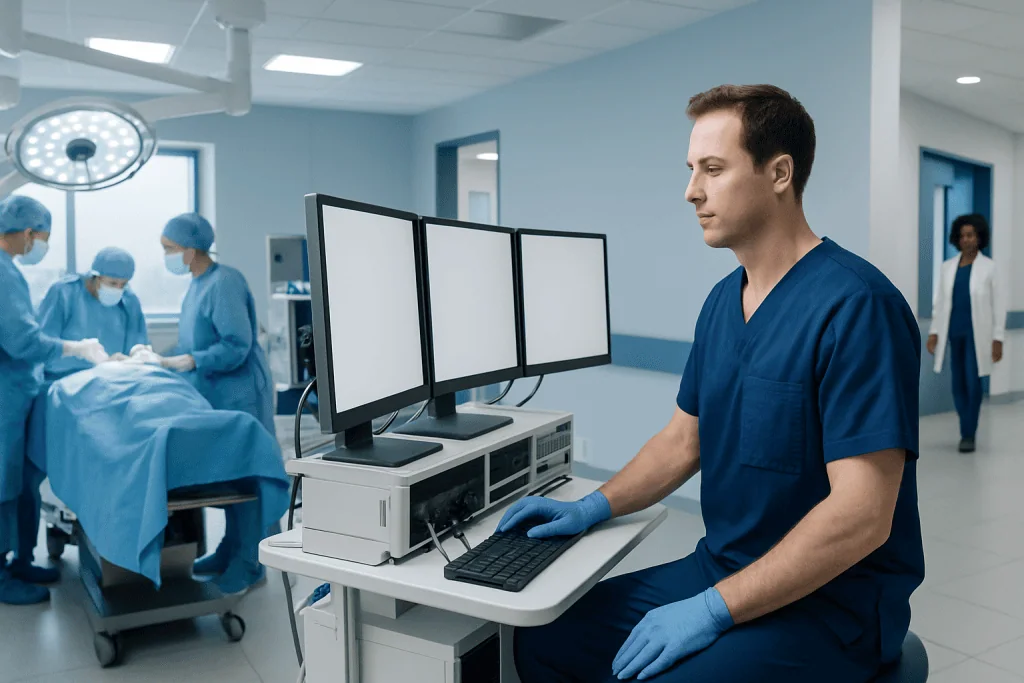
A surgical neurophysiologist monitors nerve and brain activity during selected operations. This specialist helps the surgical team identify possible stress or injury to the nervous system in real time.
Key Takeaways
- A surgical neurophysiologist monitors nerve and brain activity during selected operations.
- This specialist helps the surgical team identify possible stress or injury to the nervous system in real time.
- Monitoring is commonly used in spine, brain, vascular, ENT, and some orthopedic surgeries.
- Intraoperative monitoring supports safety, but it does not remove all surgical risk.
- Patients usually meet or learn about this specialist before surgery as part of the wider care team.
A surgical neurophysiologist is a specialist who monitors the nervous system during certain operations to help reduce the risk of injury to the brain, spinal cord, and nerves. By tracking electrical signals in real time, this expert helps the surgical team respond quickly if changes appear during a procedure.
Overview: What a Surgical Neurophysiologist Does
A surgical neurophysiologist is a healthcare specialist who monitors the function of the nervous system during an operation. This process is called intraoperative neurophysiological monitoring, often shortened to IONM. The goal is to help protect important pathways in the brain, spinal cord, and peripheral nerves while surgery is taking place.
During the procedure, the specialist uses electrodes and monitoring equipment to track electrical signals from the nervous system in real time. If the signals change in a way that may suggest pressure, stretching, reduced blood flow, or other stress to nerve tissue, the surgical team can be alerted immediately. This gives the team an opportunity to check positioning, adjust the surgical approach, or look for another reversible cause.
Surgical neurophysiologists are part of a multidisciplinary operating room team. They work closely with surgeons, anesthesiologists, nurses, and technologists. Their role is not to perform the surgery itself, but to provide continuous information that supports safer decision-making throughout the operation.
When Nerve Monitoring May Be Used
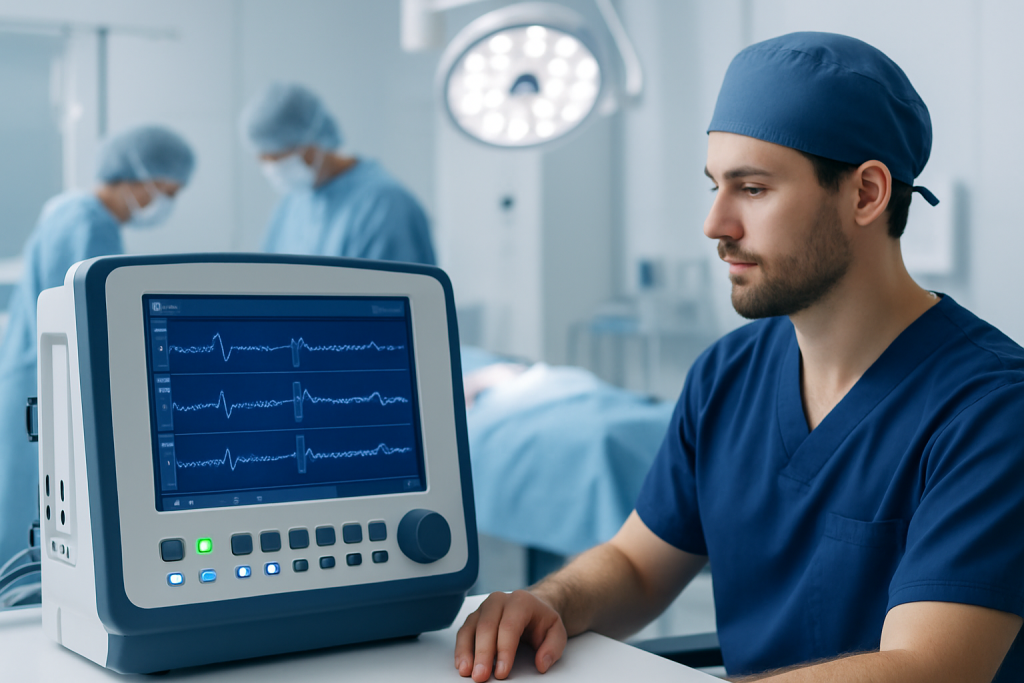
Not every operation needs a surgical neurophysiologist. Monitoring is most often used when a procedure carries a meaningful risk to the brain, spinal cord, cranial nerves, or major peripheral nerves. This is especially relevant in surgeries where delicate nerve structures are very close to the treatment area.
Common examples include spinal surgery, brain surgery, surgery for certain blood vessel conditions affecting the nervous system, and some head and neck operations. It may also be used in orthopedic procedures, thyroid or parathyroid surgery, and operations that require positioning that could place pressure on nerves.
Types of surgery that may involve monitoring include:
- Spine procedures for scoliosis, deformity, or nerve compression
- Brain and skull base surgery
- Operations involving the carotid arteries or aorta where brain blood flow is a concern
- ENT and hearing-related procedures involving facial or auditory nerves
- Complex orthopedic surgeries, including some pelvic or shoulder procedures
The exact need for monitoring depends on the type of operation, the patient’s anatomy, the underlying condition, and the surgeon’s judgment. In many cases, it is chosen as an added safety measure rather than because a problem is expected.
How Monitoring Works During an Operation

Before surgery starts, small electrodes may be placed on the scalp, skin, or muscles. These sensors allow the team to stimulate parts of the nervous system and record the responses. The signals create a baseline that can be compared with later readings during the operation.
Several monitoring methods may be used, depending on the procedure. Somatosensory evoked potentials check how signals travel through sensory pathways. Motor evoked potentials help assess motor pathways that control movement. Electromyography can detect irritation or activation of muscles supplied by specific nerves. Electroencephalography may be used to observe brain activity in selected surgeries.
Interpretation is continuous, not just a one-time check. The surgical neurophysiologist watches for changes in signal strength, timing, or pattern. If a concerning change appears, the specialist communicates it promptly so the team can evaluate possible causes such as surgical traction, altered blood flow, body temperature changes, blood pressure shifts, or the effects of anesthesia.
An important point for patients is that monitoring does not hurt during the operation because it is done after anesthesia has begun. The exact setup varies from person to person, and the methods selected depend on which nerves or pathways need to be observed most closely.
Benefits and Limits of Intraoperative Neurophysiological Monitoring
The main benefit of a surgical neurophysiologist’s work is early warning. Real-time monitoring can reveal changes before nerve injury becomes permanent, allowing the team to pause and reassess. In some operations, this can help preserve movement, sensation, hearing, facial function, or other important neurological functions.
Monitoring can also help map nerve pathways and identify important structures that are difficult to see directly. This may be especially useful in complex anatomy, scar tissue from earlier surgery, or procedures near sensitive cranial or spinal nerves. In this way, the neurophysiologist supports the surgeon with functional information in addition to the visual view of the surgical field.
At the same time, IONM has limits. It is a support tool, not a guarantee of outcome. Signal changes do not always mean injury will occur, and normal signals do not completely eliminate the possibility of a postoperative neurological problem. Results must always be interpreted in the context of the entire clinical situation.
The quality of monitoring can also be influenced by factors such as anesthesia type, body temperature, blood pressure, and pre-existing nerve disease. For that reason, successful monitoring depends on good communication and coordination across the whole surgical team.
What Patients Can Expect Before and During Surgery
Patients do not usually need to do much differently when a surgical neurophysiologist will be involved. Before the operation, the team may review the medical history, any neurological symptoms, previous surgeries, and test results such as MRI or nerve studies. This helps the monitoring specialist understand any pre-existing weakness, numbness, or nerve disorder that could affect baseline readings.
During the preoperative discussion, patients may be told that monitoring is being planned to support nerve protection. They can ask which nerves will be monitored, whether this changes the anesthesia plan, and whether there are any special preparations. In some cases, medications or conditions that affect the nervous system may be relevant, so the team should know about all medicines, supplements, and implanted devices.
Once the patient is asleep in the operating room, electrodes are positioned and the monitoring begins. The surgical neurophysiologist then follows the signals throughout the case and stays in close contact with the surgeon and anesthesiologist. Patients are generally unaware of this process because it takes place while they are under anesthesia.
After surgery, the monitoring findings may be documented in the operative record. If needed, the surgeon can explain whether the signals stayed stable or whether any changes occurred and how the team responded. For some patients undergoing spine surgery or brain surgery, this information can be a useful part of understanding the overall procedure.
Training, Teamwork, and Where This Specialist Fits in Care
Surgical neurophysiologists are highly trained in nervous system function, electrophysiology, and operating room monitoring. Depending on the country and hospital system, this role may be carried out by a physician, doctoral-level clinical neurophysiologist, or another qualified professional working with specialized technologists. The exact title can vary, but the focus remains the same: watching neurological function continuously during surgery.
Because the operating room is a fast-moving environment, teamwork is essential. The neurophysiologist needs to understand the planned surgical steps, communicate clearly, and recognize when changes may be due to technical issues, anesthesia, or a true neurological concern. A well-coordinated team can respond more efficiently when a signal alert occurs.
This specialist may be involved in operations related to conditions affecting the spine, brain, and peripheral nerves. For example, monitoring may support surgery for brain tumors or procedures addressing scoliosis. In selected settings, it may also accompany neurosurgical treatment aimed at protecting critical pathways during delicate procedures.
At Acibadem International, multidisciplinary specialists in JCI-accredited hospitals evaluate and treat international patients who may need surgery with neurophysiological monitoring, helping coordinate care across neurosurgery, neurology, anesthesia, and rehabilitation when appropriate.
Questions to Ask and When to Discuss Monitoring With a Doctor
If a patient is preparing for surgery near the brain, spinal cord, or major nerves, it is reasonable to ask whether nerve monitoring will be used. This discussion can help the patient understand the purpose of monitoring, what part of the nervous system is being watched, and how the team plans to respond if signals change.
Helpful questions may include:
- Is intraoperative neurophysiological monitoring recommended for this operation?
- Which nerves or pathways are at risk during the procedure?
- Will monitoring affect the anesthesia plan?
- What are the benefits and limits of monitoring in this specific case?
- How will the team explain the findings after surgery?
Patients should also speak up if they have a pacemaker or other implanted device, a known nerve or muscle disorder, hearing problems, weakness, numbness, or prior surgery in the same area. These details may influence the monitoring plan or the interpretation of results.
In general, monitoring is worth discussing whenever surgery involves important neurological structures or when preserving speech, movement, sensation, facial function, or hearing is a major concern. A qualified surgeon or anesthesiologist can explain whether this added layer of monitoring is appropriate for the planned operation.
Frequently asked questions
What is a surgical neurophysiologist?
A surgical neurophysiologist is a specialist who monitors the nervous system during certain operations. The role is to watch brain, spinal cord, and nerve signals in real time and alert the surgical team if important changes occur.
Is a surgical neurophysiologist present in every surgery?
No. This specialist is usually involved only in surgeries where there is a higher risk to important nerve structures or where monitoring could provide useful safety information. The decision depends on the type of procedure and the surgeon’s assessment.
Does nerve monitoring guarantee that there will be no nerve damage?
No monitoring method can guarantee a specific outcome. Intraoperative monitoring is designed to reduce risk by providing early warning signs, but it cannot prevent every complication or predict every postoperative result.
Will the patient feel the monitoring during surgery?
Patients are usually under anesthesia when monitoring is performed, so they generally do not feel it during the operation. Electrodes are placed on the skin or scalp after the patient is prepared for surgery.
What kinds of surgeries commonly use intraoperative neurophysiological monitoring?
It is often used in spine surgery, brain surgery, some vascular procedures, and selected ENT or orthopedic operations. It may also be used when facial, hearing, or other major nerves are close to the surgical area.
Can pre-existing nerve problems affect monitoring results?
Yes. Conditions such as neuropathy, prior nerve injury, spinal cord disease, or earlier surgery can influence baseline signals and how the results are interpreted. That is why the monitoring specialist reviews medical history and relevant tests before the operation.
References
- American Clinical Neurophysiology Society
- National Institute of Neurological Disorders and Stroke
- American Association of Neurological Surgeons
- North American Spine Society
- National Institute for Health and Care Excellence
This article is for general information only and is not a substitute for professional medical advice. Please consult a qualified doctor about your individual situation.
Joint and spine care in Turkey — expert assessment & treatment
JCI-accredited · board-certified surgeons · reply within 24h
Add us as a Preferred Source to see more of our trusted health content across Google Search, AI Overviews and Discover.
Check your numbers in seconds
BMI, calories, due date, blood pressure and 30+ more clinical calculators — free, instant, doctor-reviewed ranges.

More from the Health Library



Related Specialists

Dr. Mehmet Celal Şen
Pediatric Surgery
Dr. Füsun Görözen
Pediatrics
Prof. Dr. A. Sibel Erdamar Çetin
Gastrointestinal Oncology Unit Clinical Service
Dr. Şule Ketenci Ertaş
Rheumatology