

Swelling Inside Earlobe — Explained by Medical Evidence, Not Myths

Swelling inside earlobe is a symptom, not a diagnosis, and can have several causes. Common reasons include cysts, inflamed hair follicles, piercings, skin irritation, and infection.
Key Takeaways
- Swelling inside earlobe is a symptom, not a diagnosis, and can have several causes.
- Common reasons include cysts, inflamed hair follicles, piercings, skin irritation, and infection.
- Warning signs include worsening pain, redness, fever, drainage, or a firm lump that does not go away.
- Diagnosis usually relies on a physical examination and only sometimes needs imaging or a biopsy.
- Treatment depends on the cause and may range from warm compresses to drainage or surgical removal.
Swelling inside earlobe is often linked to a blocked skin gland, minor injury, piercing-related irritation, or infection. Most cases are manageable, but a lump that persists, becomes painful, drains pus, or keeps growing should be evaluated by a qualified doctor.
What swelling inside earlobe usually means
Swelling inside earlobe usually means that tissue in the soft lower part of the ear has become irritated, inflamed, blocked, or infected. In many people, the cause is not dangerous. A small cyst, a reaction around an ear piercing, a minor injury, or an inflamed skin gland are among the most common explanations.
The earlobe contains skin, fatty tissue, tiny blood vessels, and oil-producing structures, but no cartilage. Because of this, lumps in the earlobe often feel softer and more movable than swelling in the upper ear. The exact feel of the lump can offer clues: some are tender and warm, some are smooth and firm, and some slowly enlarge over time without pain.
Rather than relying on myths, it helps to think of swelling inside earlobe as a symptom with several possible medical causes. The key questions are how long it has been there, whether it hurts, whether the skin is red or draining, and whether the swelling is getting bigger. These details help guide whether home care is reasonable or a medical assessment is needed.
Common causes of an earlobe lump or swelling
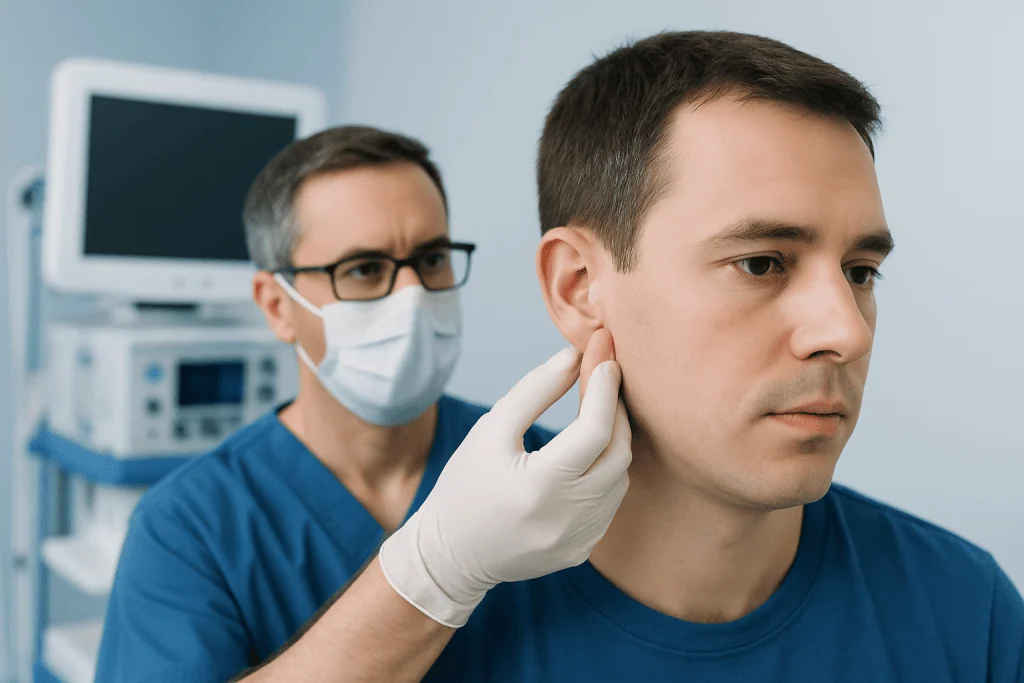
A very common cause of swelling inside earlobe is an epidermoid or sebaceous-type cyst. This happens when skin cells or oils become trapped under the skin, forming a round lump. These cysts are often slow-growing and may feel smooth or rubbery. They may stay stable for a long time, but can become inflamed or infected.
Piercings are another frequent reason. The tissue around a piercing can react to friction, pressure from earrings, poor-quality metals, or a minor tear in the skin. In some people, this leads to local swelling or scar overgrowth. Infection can also begin around a piercing, especially if it is new or has been irritated repeatedly.
Other causes include an inflamed hair follicle, a small abscess, an allergic skin reaction, or swelling after a bump or pull on the ear. Less often, doctors consider enlarged lymph nodes near the ear, benign tumors such as lipomas, or skin conditions that can affect the outer ear. Rarely, a persistent or unusual lump may need evaluation to rule out a more serious growth.
- Blocked skin gland or cyst
- Piercing-related irritation or infection
- Ingrown hair or inflamed follicle
- Minor trauma or pressure
- Allergic contact dermatitis, often from jewelry
- Abscess or skin infection
Symptoms that help tell causes apart

The features of the swelling often help point toward the cause. A painless, round lump under normal-looking skin may suggest a cyst or lipoma. A sore, red, warm area that seems to enlarge over a few days may be more consistent with infection or an abscess. If the swelling started soon after changing earrings, metal sensitivity or irritation is possible.
Drainage also matters. Thick white or yellow material can occur when a cyst opens or becomes infected. Clear fluid may appear with skin irritation. If there is significant tenderness, spreading redness, or throbbing pain, the area should be checked promptly, because deeper infection can develop.
Scarring changes can create a different pattern. A raised, firm growth around a piercing may be a hypertrophic scar or keloid, which can continue to enlarge beyond the original wound. People who are prone to prominent scarring should be especially cautious with repeated piercings and should ask a specialist to distinguish scar tissue from other causes of keloid formation.
Risk factors and why swelling can recur
Some people are more likely to develop swelling inside earlobe because of skin type, daily habits, or previous ear procedures. Repeated touching, squeezing, or trying to pop a lump can worsen inflammation and introduce bacteria. Tight earrings, heavy earrings, and sleeping on earrings can also create ongoing pressure and irritation.
Certain skin conditions increase the chance of recurrent lumps or irritation. Oily skin, acne-prone skin, eczema, and contact allergy to nickel or other metals can all affect the earlobe. A history of cysts elsewhere on the body may make cysts more likely in the ear area as well.
Recurrence is common when the underlying problem remains. For example, an infected cyst may improve temporarily but return if the cyst wall is still present. Likewise, persistent swelling around a piercing may continue until the irritant is removed or the tissue is properly treated. For people with repeated infections or chronic outer ear symptoms, doctors may also review related ENT conditions such as otitis externa when the clinical picture suggests broader ear canal involvement.
How doctors diagnose swelling inside earlobe
Diagnosis usually begins with a careful physical examination. A doctor will ask when the swelling started, whether it changes in size, whether there is pain or drainage, and whether there was a piercing, injury, or skin allergy. The doctor also checks the skin color, warmth, mobility of the lump, and whether nearby lymph nodes are enlarged.
Most earlobe swellings can be diagnosed clinically without extensive tests. If the lump is clearly a simple cyst or localized skin infection, no imaging may be needed. However, ultrasound can sometimes help show whether a lump is fluid-filled or solid. If the finding is unusual, repeatedly returns, or does not behave like a typical benign lump, a small tissue sample may be recommended.
When there are signs of infection, the doctor may assess whether drainage is needed and whether antibiotics are appropriate. In selected cases, treatment may involve minor office procedures or referral to ENT, dermatology, or plastic surgery. If a lump must be removed, this may be done through a small procedure such as ear surgery when clinically appropriate.
Treatment options based on the cause
Treatment depends on what is causing the swelling. Mild irritation from pressure, earrings, or a small inflamed follicle may improve with avoiding the trigger, keeping the area clean, and using warm compresses. It is generally best not to squeeze or pierce the lump at home, because this can increase swelling and infection risk.
If there is infection, a doctor may recommend topical care, drainage, or oral antibiotics, depending on how severe it is. A true abscess often needs drainage rather than antibiotics alone. If the swelling is due to a cyst, treatment may not be necessary unless it is painful, repeatedly inflamed, infected, or cosmetically bothersome. In those situations, complete removal can help prevent recurrence.
Scar-related lumps after piercing may be managed with pressure strategies, injections, or planned removal in selected cases. If the issue is an allergy to jewelry, avoiding the triggering metal is important. Persistent lumps that affect appearance or comfort may be assessed by specialists who also perform plastic and reconstructive surgery when needed for careful removal and repair. In some patients, minimally invasive assessment or support from ENT care is also useful.
Self-care and prevention
Good self-care starts with protecting the skin. The earlobe should be kept clean and dry, but not over-scrubbed. If a piercing is present, aftercare should follow professional instructions, and earrings should be made from skin-friendly materials. Avoid heavy earrings or anything that pulls on the lobe for long periods.
Warm compresses can help some mild, non-severe swellings feel more comfortable and may encourage drainage of a small inflamed follicle. However, home drainage, needles, or repeated squeezing should be avoided. These approaches can push bacteria deeper, delay healing, and make later treatment more difficult.
People who tend to develop scars, allergic reactions, or recurring cysts may benefit from earlier medical advice rather than waiting for the lump to worsen. Keeping an eye on size, color, and pain level can help. Taking a photo every few days may be useful when explaining changes to a doctor.
When to seek medical care
Medical care is recommended if swelling inside earlobe lasts more than a few weeks, keeps growing, or repeatedly comes back. A doctor should also assess any lump that is hard, fixed, irregular in shape, or associated with skin breakdown. These features do not always mean something serious, but they should not be ignored.
Prompt evaluation is important if there is increasing redness, marked tenderness, fever, pus, or red streaking of the skin. These signs can suggest infection that may need professional treatment. New swelling after trauma, especially if there is significant bleeding or deformity, also deserves assessment.
For international patients who need diagnosis or treatment planning, Acibadem International offers multidisciplinary evaluation in JCI-accredited hospitals for ear, skin, and soft-tissue conditions. The right specialist may be ENT, dermatology, or plastic surgery, depending on the cause and whether the main concern is infection, recurrence, or appearance.
Frequently asked questions
Is swelling inside earlobe usually serious?
Usually not. Many cases are caused by a cyst, piercing irritation, a minor infection, or local inflammation. Still, a lump that persists, enlarges, becomes very painful, or drains should be checked by a doctor.
Can a cyst cause swelling inside earlobe?
Yes. A cyst is one of the most common causes of an earlobe lump or swelling. It may feel round and movable under the skin, and it can sometimes become red or tender if inflamed or infected.
Should a swollen earlobe lump be squeezed?
No. Squeezing can worsen inflammation, push material deeper, and raise the risk of infection or scarring. It is safer to use a warm compress and seek medical advice if the lump does not improve.
How do doctors treat an infected earlobe?
Treatment depends on severity. A doctor may recommend cleaning measures, antibiotics, or drainage if there is an abscess. If infection is linked to a cyst or piercing problem, treating the underlying cause is also important.
Can earrings or piercings cause swelling inside earlobe?
Yes. Piercings can lead to irritation, allergy, local infection, or scar tissue formation. Swelling may happen soon after piercing or later if earrings are heavy, tight, or made from a metal that irritates the skin.
How long should swelling inside earlobe last before seeing a doctor?
If it lasts more than a few weeks, it is reasonable to arrange a medical evaluation. Earlier care is advisable if the swelling is painful, red, warm, draining, or growing quickly. Persistent or recurrent lumps should not be dismissed.
References
- American Academy of Otolaryngology–Head and Neck Surgery
- American Academy of Dermatology
- National Health Service
- Merck Manual Consumer Version
This article is for general information only and is not a substitute for professional medical advice. Please consult a qualified doctor about your individual situation.
Explore treatments in Turkey — costs, top hospitals & a free quote
JCI-accredited · board-certified surgeons · reply within 24h
Add us as a Preferred Source to see more of our trusted health content across Google Search, AI Overviews and Discover.

More from the Health Library

Flanks: What Patients Need to Know

Stairmaster: A Complete Medical Overview

Methylcellulose: An Evidence-Based Guide for Patients

Insitolo: What Patients Need to Know

Ins Eye: A Complete Medical Overview

Akinesia: An Evidence-Based Guide for Patients
Otorhinolaryngology Specialists at Acibadem

Prof. Dr. A. Erdem Kılavuz
Otorhinolaryngology
Dr. Abdülkadir Oran
Otorhinolaryngology
Dr. Ahmet Bülent Demirbağ
Otorhinolaryngology
Prof. Dr. Ahmet Koç
Otorhinolaryngology