Symptoms of Thyroid Cancer Explained: Common Triggers and Red Flags

A new lump or swelling in the neck is one of the most common signs linked with thyroid cancer. Early thyroid cancer may cause no symptoms and is sometimes found during imaging or a routine exam.
Key Takeaways
- A new lump or swelling in the neck is one of the most common signs linked with thyroid cancer.
- Early thyroid cancer may cause no symptoms and is sometimes found during imaging or a routine exam.
- Hoarseness, trouble swallowing, neck pain, or enlarged lymph nodes deserve medical evaluation, especially if they persist.
- Most thyroid nodules are not cancer, but a doctor can assess concerning features with examination, ultrasound, and sometimes biopsy.
- Prompt evaluation helps identify whether symptoms are due to thyroid cancer, a benign thyroid nodule, or another throat or neck condition.
Symptoms of thyroid cancer often start with a painless lump in the front of the neck, but many people have no clear symptoms at first. Changes such as hoarseness, trouble swallowing, neck discomfort, or enlarged lymph nodes can also be warning signs, although these symptoms can happen for many reasons besides cancer.
Overview: what the symptoms of thyroid cancer can look like
The symptoms of thyroid cancer most often involve changes in the front of the neck. A person may notice a small lump, fullness, or swelling near the thyroid gland, which sits low in the neck in front of the windpipe. Some people also develop hoarseness, a sensation of pressure, difficulty swallowing, or enlarged lymph nodes in the neck.
At the same time, thyroid cancer can be difficult to recognize early because it may not cause pain or obvious illness. Many thyroid cancers are found when a clinician feels a thyroid nodule during an exam or when an ultrasound, CT scan, or another imaging test is done for an unrelated reason. This is one reason symptom-based searches can be confusing: not everyone with thyroid cancer has symptoms, and not everyone with these symptoms has cancer.
The thyroid helps regulate metabolism, body temperature, and energy through hormone production. Most thyroid cancers do not cause major changes in thyroid hormone levels, so symptoms such as weight change, fatigue, or feeling unusually hot or cold are not usually the main clue. Instead, local neck symptoms are more typical.
Because many common, noncancerous thyroid and throat conditions can cause similar complaints, medical evaluation focuses on the pattern of symptoms, the feel and appearance of any nodule, and imaging findings. A diagnosis cannot be made from symptoms alone.
Common symptoms and red flags to know
A thyroid nodule or visible swelling in the neck is the symptom most often associated with thyroid cancer. The lump is often painless and may be discovered by the person, a family member, or a clinician during a routine visit. Some nodules stay stable for a long time, while others seem to enlarge gradually.
Other symptoms can happen if a thyroid growth presses on nearby structures. These may include a change in the voice, especially persistent hoarseness; trouble swallowing solid foods or pills; a sense of pressure in the throat; or breathing discomfort when lying flat. Neck pain can occur, though many thyroid cancers are not painful.
Enlarged lymph nodes in the neck can also be a warning sign. These may feel like firm bumps to the side of the neck rather than directly over the thyroid. In some cases, a swollen lymph node is noticed before the thyroid lump itself.
- A new lump in the lower front of the neck
- Persistent hoarseness or voice change
- Difficulty swallowing or a feeling that food sticks
- Neck pressure, fullness, or discomfort
- Enlarged lymph nodes in the neck
- A nodule that appears to be getting bigger
These red flags do not automatically mean cancer. Benign thyroid nodules, cysts, inflammation, and other neck conditions are much more common. Still, symptoms that are persistent, progressive, or unexplained should not be ignored.
What can trigger concern, and what does not always mean cancer

People often ask what “triggers” thyroid cancer symptoms. In practice, the symptom itself is usually caused by the physical presence of a thyroid nodule, tumor, or enlarged lymph node rather than by a specific daily trigger. A cancerous growth may become more noticeable over time as it slowly enlarges, changes the contour of the neck, or affects nearby tissues.
Some patterns make clinicians more cautious. These include a hard or fixed-feeling nodule, a lump that seems to be growing, symptoms involving the voice or swallowing, or associated swollen lymph nodes. A personal history of radiation exposure to the head or neck, certain inherited syndromes, or a family history of thyroid cancer can also raise concern and influence how urgently a nodule is assessed.
However, many neck symptoms turn out to have other explanations. Benign thyroid nodules are common, especially with age. Goiter, thyroid cysts, thyroiditis, reflux, allergies, and vocal strain can also cause fullness, throat irritation, or voice change. This is why it is important not to self-diagnose based on one symptom alone.
Thyroid cancer is also not usually triggered by stress, exercise, or a particular food. While general health habits matter, symptoms linked to thyroid cancer are more often structural than lifestyle-driven. The key issue is whether a symptom is new, lasting, or changing.
How doctors tell thyroid cancer symptoms from other conditions
The first step is a clinical evaluation. A doctor will ask when the symptom started, whether the lump has grown, and whether there is hoarseness, swallowing difficulty, pain, or breathing change. They will also ask about thyroid disease, prior radiation exposure, and family history. During the examination, the neck is checked for nodules, tenderness, and enlarged lymph nodes.
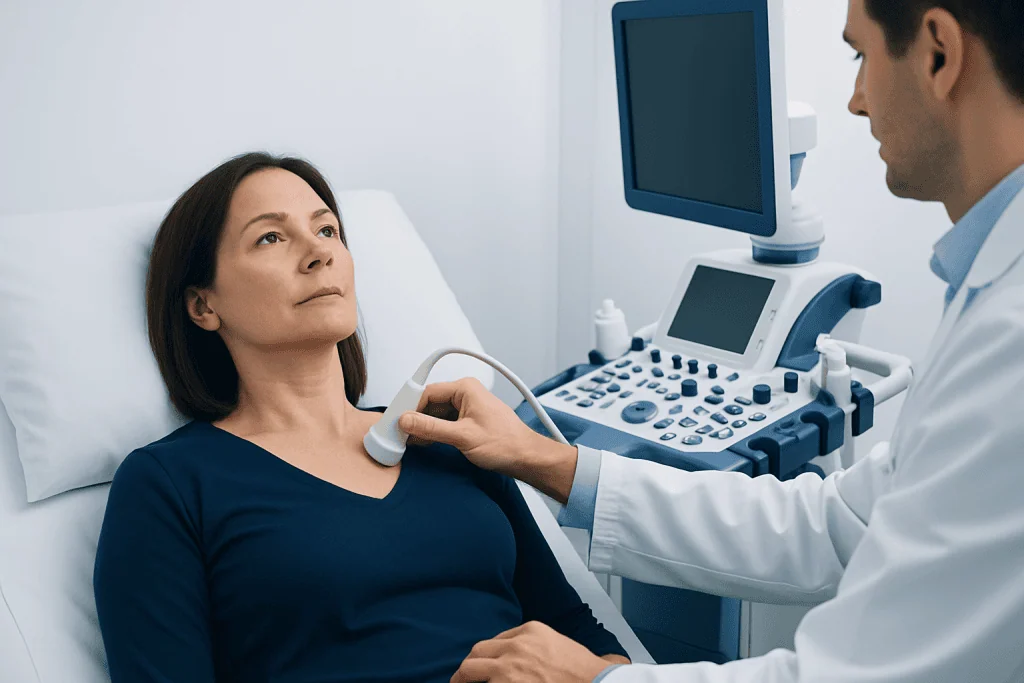
Ultrasound is the main imaging test used to examine the thyroid. It helps show the size, shape, and features of a nodule and whether suspicious lymph nodes are present. Ultrasound does not confirm cancer by itself, but it helps identify which nodules need closer attention and is a key part of thyroid cancer treatment planning when cancer is diagnosed.
If a nodule has concerning features or is large enough to warrant sampling, a fine-needle aspiration biopsy may be recommended. In this test, a thin needle is used to collect cells from the nodule for laboratory analysis. Blood tests may also be done to measure thyroid function, although normal thyroid hormone levels do not rule out thyroid cancer.
Depending on the symptoms, doctors may also evaluate nearby structures such as the voice box. Persistent hoarseness can lead to an examination of the vocal cords, especially before surgery. In selected situations, additional imaging may be needed to assess the extent of disease.
What happens after diagnosis
There are several types of thyroid cancer, including papillary, follicular, medullary, and anaplastic thyroid cancer. Papillary thyroid cancer is the most common type and often grows slowly. The exact diagnosis and stage help guide treatment decisions and provide a clearer picture than symptoms alone ever can.
Treatment commonly involves surgery to remove part or all of the thyroid, depending on the type, size, and spread of the cancer. Some people may also need treatment for lymph nodes in the neck. In selected cases, additional therapies such as radioactive iodine treatment are used after surgery to target remaining thyroid tissue or cancer cells.
Not every thyroid cancer is treated in exactly the same way. Some very small, low-risk cancers may be managed differently from larger or more aggressive tumors. Follow-up can include blood tests, ultrasound, and long-term monitoring, because thyroid cancer care often continues after the initial treatment period.
Specialist teams usually include endocrinologists, endocrine or head and neck surgeons, radiologists, pathologists, and oncologists. Where needed, care may overlap with broader oncology treatment services. Near the end of the care pathway, international patients may also seek assessment at centers such as Acibadem International, where multidisciplinary specialists in JCI-accredited hospitals diagnose and treat thyroid cancer.
When to seek medical care
Medical care should be sought if a person notices a new lump or swelling in the front of the neck, especially if it lasts more than a short period or seems to grow. Persistent hoarseness, trouble swallowing, or enlarged lymph nodes in the neck also deserve evaluation. While these symptoms are often caused by noncancerous conditions, they should be checked rather than watched indefinitely.
More prompt assessment is important if symptoms are getting worse, if there is breathing difficulty, or if the voice has changed without a clear short-term cause such as a recent cold. People with a strong family history of thyroid cancer or prior radiation exposure to the neck should be especially careful about new thyroid-related symptoms.
A routine appointment is usually appropriate for a stable, painless neck lump with no urgent symptoms. But urgent medical attention is needed for significant shortness of breath, rapidly increasing neck swelling, or severe swallowing problems. These symptoms are not specific to thyroid cancer, but they should not be delayed.
Even when symptoms seem mild, professional evaluation can provide reassurance or early diagnosis. It can also distinguish thyroid cancer from other thyroid conditions, including goiter and benign nodules.
Self-checks, monitoring, and practical next steps
There is no reliable home test for thyroid cancer, and frequent self-examination can sometimes create unnecessary worry. Still, it is reasonable for a person to pay attention to visible changes in the lower neck, a persistent new lump, or ongoing voice and swallowing symptoms. If a symptom is noticed, writing down when it started and whether it is changing can help during a medical visit.
It is also helpful to know that most thyroid nodules are not cancerous. For this reason, finding a nodule should prompt evaluation, not panic. The purpose of testing is to identify which nodules are low risk and which need biopsy, treatment, or closer follow-up.
People already diagnosed with a benign thyroid nodule should follow their clinician’s advice about repeat ultrasound or review. A previously benign nodule may simply remain stable, but new symptoms such as increasing size, hoarseness, or swallowing difficulty should be reported rather than assumed to be harmless.
General healthy habits support overall well-being, but they do not replace assessment of concerning symptoms. Anyone unsure whether a neck symptom is significant should speak with a qualified doctor, especially if it persists, progresses, or occurs together with swollen lymph nodes.
Frequently asked questions
What is usually the first symptom of thyroid cancer?
The first noticeable sign is often a painless lump or swelling in the front of the neck. However, some people have no symptoms at all in the early stages, and the cancer is found during a routine exam or imaging test.
Can thyroid cancer cause hoarseness?
Yes, persistent hoarseness can happen if a thyroid tumor affects structures involved in the voice. Hoarseness is common with many noncancerous conditions too, so it should be evaluated if it lasts or has no clear explanation.
Are thyroid cancer symptoms always painful?
No. Many thyroid cancers are painless, especially in the beginning. Pain in the neck can occur, but a lack of pain does not rule out a problem, and pain alone does not mean cancer.
Do all thyroid nodules mean thyroid cancer?
No, most thyroid nodules are benign. A doctor uses examination, ultrasound, and sometimes biopsy to decide whether a nodule has suspicious features.
Can blood tests detect thyroid cancer?
Blood tests can show how well the thyroid is functioning, but they usually cannot confirm or exclude most thyroid cancers on their own. Imaging and, when needed, fine-needle aspiration biopsy are more important for diagnosis.
When should someone worry about a lump in the neck?
A neck lump should be checked if it is new, persists, enlarges, or occurs with hoarseness, swallowing difficulty, or swollen lymph nodes. Urgent care is important if there is trouble breathing, rapidly increasing swelling, or severe difficulty swallowing.
References
- American Cancer Society
- National Cancer Institute
- American Thyroid Association
- National Comprehensive Cancer Network
- Mayo Clinic
This article is for general information only and is not a substitute for professional medical advice. Please consult a qualified doctor about your individual situation.
Thyroid Cancer in Turkey — costs, top hospitals & a free quote
JCI-accredited · board-certified surgeons · reply within 24h
Add us as a Preferred Source to see more of our trusted health content across Google Search, AI Overviews and Discover.