Syndactyly Treatment: How It Works, Results and What to Expect

Syndactyly is a congenital difference in which two or more fingers or toes are joined by skin, soft tissue or, less commonly, bone. Surgery is often considered for joined fingers that may limit development or function; uncomplicated toe syndactyly may not require treatment.
Key Takeaways
- Syndactyly is a congenital difference in which two or more fingers or toes are joined by skin, soft tissue or, less commonly, bone.
- Surgery is often considered for joined fingers that may limit development or function; uncomplicated toe syndactyly may not require treatment.
- The operation separates the digits, reconstructs the web space and may use skin grafts to provide adequate skin coverage.
- Recovery involves dressings, splinting when needed, wound care and follow-up to monitor healing, movement and growth.
- Most children heal well, but scars, web-space changes, skin-graft concerns and the possibility of further surgery should be discussed in advance.
Syndactyly treatment is individualized: some joined fingers or toes need no intervention, while surgical separation may improve hand function, support normal growth, or address practical concerns. A pediatric hand or plastic surgeon can assess the type of syndactyly and explain the likely benefits, timing and recovery process.
Overview: How Syndactyly Treatment Works
Syndactyly treatment usually means carefully planned surgery to separate fingers or toes that are joined together. The aim is not simply cosmetic: for the hand, separation can help preserve movement, allow the digits to grow more evenly and support everyday skills such as grasping, writing and using tools. The best approach depends on which digits are joined, how extensively they are connected and whether bones, tendons or nerves are involved.
Not every person with syndactyly needs an operation. Mild joining of toes commonly causes no functional difficulty and may be safely observed. In contrast, joined fingers—especially when digits of different lengths are connected—may need early assessment because unequal growth can gradually pull a finger sideways or restrict development.
Care is usually coordinated by a specialist in pediatric hand surgery, plastic and reconstructive surgery or orthopedics. Assessment and treatment planning for syndactyly focus on the individual child or adult, rather than applying one standard operation to every form of webbing.
What Causes Syndactyly?

Syndactyly develops before birth, when the fingers and toes do not separate fully during early fetal development. It is one of the more common congenital limb differences. It may affect one hand or foot, both sides of the body, or several digit spaces, and its appearance can range from a small skin bridge to complete joining along most of the digit length.
In many cases, syndactyly occurs on its own and there is no identifiable cause beyond differences in early development. It can also run in families and may be inherited. A clinician may ask about relatives with webbed fingers or toes, other limb differences, developmental concerns or known genetic diagnoses.
Syndactyly may be simple, meaning the digits are joined mainly by skin and soft tissue, or complex, meaning there is fusion or unusual development of bones, nails, tendons or other structures. Complex forms require more detailed imaging and surgical planning. This is different from an injury-related scar contracture, which may also join adjacent digits but develops after birth.
Are Webbed Toes Linked to Autism?
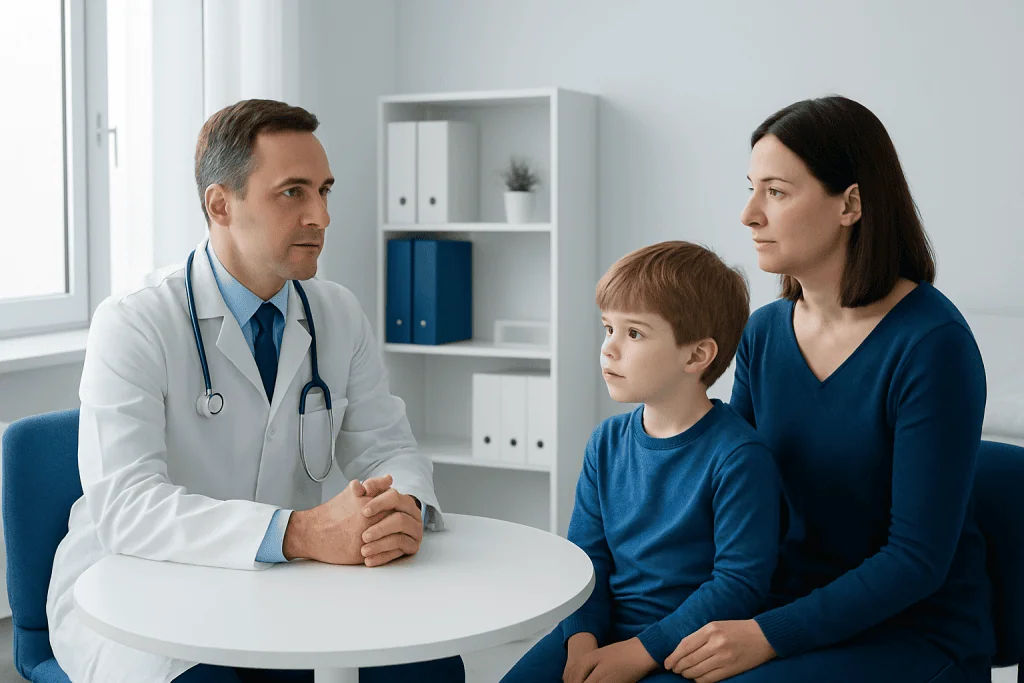
Webbed toes are not considered a sign that a child has autism. Most webbed toes are an isolated physical difference present from birth, and many children with them have typical development. Syndactyly by itself does not diagnose autism or predict that autism will develop.
Autism spectrum disorder is identified through patterns of social communication differences and restricted or repetitive behaviors, assessed through developmental history and clinical evaluation. A child with webbed toes should be assessed for developmental concerns only if there are relevant signs, such as delayed language, reduced social interaction, loss of skills or repetitive behaviors—not because of toe webbing alone.
If syndactyly occurs alongside other congenital differences, growth concerns or developmental differences, a pediatrician may suggest a genetics or developmental assessment. This helps clarify the overall picture and can provide appropriate support when needed.
What Is the Difference Between Syndactyly and Polydactyly?
Syndactyly means that two or more fingers or toes are joined together. The joining may involve skin only, deeper soft tissues, bones or nails. It can affect the hands, feet or both, and it is present from birth.
Polydactyly means having an extra finger or toe. The additional digit may be small and attached by a narrow stalk, or it may be more fully formed and connected to bones, joints and tendons. Although syndactyly and polydactyly are distinct conditions, they can occasionally occur together in the same person.
Both differences are evaluated according to their anatomy and effect on function. Treatment may range from observation to reconstructive surgery. When an extra digit affects hand use or footwear, a surgeon can discuss evaluation and polydactyly surgery where appropriate.
What Syndromes Are Associated with Syndactyly?
Most syndactyly is isolated, meaning it is not part of a wider medical syndrome. However, syndactyly can occur in some genetic conditions. Examples include Apert syndrome, Poland syndrome, Saethre-Chotzen syndrome, Smith-Lemli-Opitz syndrome and certain forms of Carpenter syndrome.
The pattern of joined digits, presence of bone fusion, facial or skull differences, heart findings, growth pattern, hearing concerns and family history can help clinicians decide whether further assessment is useful. A genetics specialist may recommend an examination, family-history review and, in selected situations, genetic testing.
Finding an associated syndrome does not automatically mean that a person will have severe health problems. It means care may need to involve more than one specialty, with follow-up tailored to the specific diagnosis and the person’s needs.
Who May Benefit from Syndactyly Surgery?
Syndactyly surgery may be recommended when joined digits interfere with function, are likely to grow unevenly, cause discomfort, make footwear difficult or create concerns that are important to the patient or family. Hand syndactyly is evaluated particularly carefully because hand movement and fine motor development can be affected. Joining between a thumb and index finger, or between fingers with significantly different lengths, often requires earlier attention.
For many children, surgery is planned during infancy or early childhood, often after the child is old enough to tolerate anesthesia safely but before unequal growth and movement patterns become more established. The exact timing varies. Complex syndactyly, multiple affected spaces and certain digit combinations may require staged procedures rather than a single operation.
Before surgery, the specialist examines circulation, sensation, nail shape, joint motion and the degree of separation required. X-rays may be used to show whether bones are joined or unusually shaped. Families should also discuss medical history, allergies, medications and any known genetic condition with the surgical team.
Syndactyly Surgery: Step by Step
Syndactyly surgery is generally performed under anesthesia, so children are asleep and do not feel the procedure. The surgeon makes carefully designed incisions to separate the digits while protecting blood vessels, nerves, tendons and joints. The new web space between the fingers or toes is shaped using small skin flaps, which are arranged to reduce straight-line scar tightening as the child grows.
There is often not enough local skin to cover both newly separated sides of the digits. In that situation, the surgeon may use a skin graft, commonly taken from an area such as the groin, lower abdomen or inner arm. The choice depends on the amount of skin needed and the individual surgical plan. Complex cases may also involve bone, nail-bed or tendon reconstruction.
At the end of the procedure, the hand or foot is protected with a bulky dressing and sometimes a splint or cast. The goal of hand surgery in syndactyly is to create safely separated, well-aligned digits while protecting function and allowing healing. The operation is usually performed as day surgery or with a short hospital stay, depending on the procedure and the patient’s health needs.
Recovery, Results and Possible Risks
After surgery, pain is usually managed with medicines recommended by the care team. Dressings must be kept clean and dry, and families are given clear instructions about bathing, activity and signs that require prompt contact with the hospital. Follow-up visits allow the team to check wound healing, circulation, skin-graft take and the position of the web space.
Initial healing commonly takes several weeks, although scar maturation and adaptation continue for many months. Once protection is removed, gentle movement and play are often encouraged. Some children benefit from hand therapy, splinting or scar care, particularly after complex procedures or when stiffness is present. The surgical team gives individualized guidance on return to school, sports and other activities.
Potential risks include bleeding, infection, problems with wound or graft healing, stiffness, scar sensitivity, altered sensation and separation that does not heal as intended. As a child grows, a scar may tighten and the web space may gradually creep upward, sometimes called web creep. Revision surgery is occasionally needed, especially in complex syndactyly. Most patients achieve improved separation and useful function, but results depend on the original anatomy and cannot be predicted identically for every case.
Acibadem International’s multidisciplinary specialists and JCI-accredited hospitals can assess and treat congenital hand differences for international patients, with care plans based on detailed surgical evaluation and follow-up needs.
When to Seek Medical Care
A child born with joined fingers or toes should be assessed by a pediatrician or qualified hand specialist, even if the webbing appears mild. Early review helps identify whether the condition is simple or complex and whether the timing of surgery could affect growth or function. Parents do not need to assume that surgery will be necessary.
Prompt medical advice is particularly important if the joined digits appear painful, change color, feel cold, have swelling, show limited circulation, or are associated with other visible congenital differences. A clinician should also be consulted if a child has difficulty using the hand, cannot comfortably wear shoes, or if development raises broader concerns.
After surgery, urgent contact with the surgical team is appropriate for fever, worsening redness, drainage, increasing swelling, uncontrolled pain, a wet or damaged cast, or fingers or toes that become pale, blue, cold or unusually numb. These symptoms do not always indicate a serious problem, but they should be checked without delay.
Frequently asked questions
Can syndactyly be treated without surgery?
Yes. Mild syndactyly, particularly involving toes, may not need treatment if it does not cause discomfort, footwear problems or functional limitations. A specialist can monitor growth and advise whether observation is appropriate.
At what age is syndactyly surgery performed?
Timing depends on which digits are joined and how complex the anatomy is. Many procedures are performed in early childhood, but some digit combinations or complex cases may be treated earlier or in stages. The surgeon will recommend timing based on growth, function and anesthesia considerations.
Is syndactyly surgery painful?
The operation is performed under anesthesia, so the patient does not feel surgery itself. Some discomfort is expected during early recovery, but it is usually managed with the pain-relief plan provided by the surgical team.
Will my child need a skin graft for syndactyly surgery?
A skin graft is commonly needed because separating joined digits creates more surface area that must be covered. Whether it is necessary depends on the extent of webbing, the digit location and the surgical technique used.
Can webbed fingers or toes grow back together after surgery?
The digits do not usually fully rejoin, but scars can tighten or the reconstructed web space can change as a child grows. This is more likely in complex cases, and some patients may need scar treatment, splinting or revision surgery.
Does syndactyly affect intelligence or development?
Isolated syndactyly does not affect intelligence. If it occurs with other congenital differences or developmental concerns, a clinician may recommend further evaluation to look for an associated genetic condition or to provide appropriate support.
References
- American Society for Surgery of the Hand
- American Academy of Orthopaedic Surgeons
- National Institute of Arthritis and Musculoskeletal and Skin Diseases
- MedlinePlus
- Orphanet
This article is for general information only and is not a substitute for professional medical advice. Please consult a qualified doctor about your individual situation.
Explore treatments in Turkey — costs, top hospitals & a free quote
JCI-accredited · board-certified surgeons · reply within 24h
Add us as a Preferred Source to see more of our trusted health content across Google Search, AI Overviews and Discover.

More from the Health Library



Related Specialists

Dr. Mesut Fatih
Orthopedic Surgery & Traumatology
Prof. Dr. Mehmet Aytaç Yüksel
Gynecology & Obstetrics
Assoc. Prof. Dr. Murat Kiraz
Neurosurgery
Dr. Helin Kuşsever Topçu
Oral & Dental Health