Synovial Joints: What They Are and How They Work

Synovial joints are freely moving joints found in the shoulders, knees, hips, elbows, wrists, and many other areas. Their smooth cartilage surfaces and synovial fluid help bones move with less friction.
Key Takeaways
- Synovial joints are freely moving joints found in the shoulders, knees, hips, elbows, wrists, and many other areas.
- Their smooth cartilage surfaces and synovial fluid help bones move with less friction.
- Ligaments, tendons, and the joint capsule provide stability while still allowing motion.
- Common problems include sprains, dislocations, inflammation, and degenerative joint disease such as osteoarthritis.
- Healthy movement, strength, weight management, and prompt evaluation of joint pain can help protect joint function.
Synovial joints are the body’s most mobile joints, allowing everyday movements such as walking, bending, and gripping. Understanding their structure and function helps explain why they can also be affected by pain, stiffness, arthritis, and injury.
Overview
Synovial joints are the most common and most movable type of joint in the human body. They connect two or more bones in a way that allows a wide range of motion, which is why they are essential for walking, reaching, turning, and nearly every other daily activity.
These joints are found in places such as the shoulders, elbows, wrists, hips, knees, ankles, fingers, and toes. Their special structure helps them move smoothly while still remaining stable enough to support the body.
Each synovial joint has several parts working together. The ends of the bones are covered with cartilage, the joint is enclosed by a capsule, and a slippery fluid called synovial fluid reduces friction. When any part of this system is affected, movement may become painful or limited.
How Synovial Joints Work
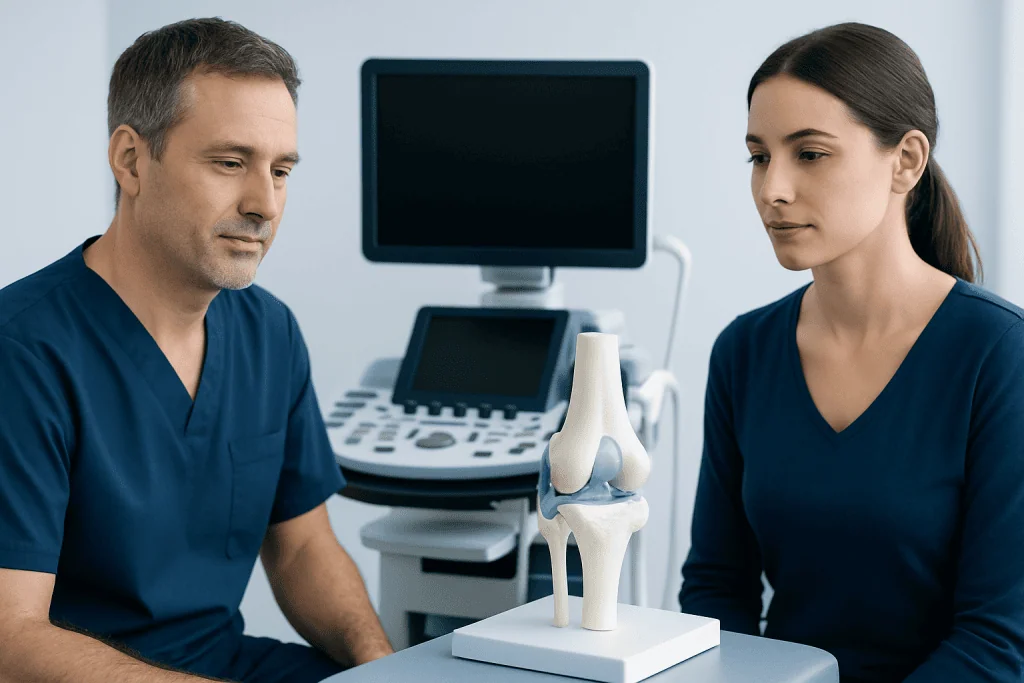
A synovial joint works much like a well-designed hinge or swivel system. The joint surfaces are coated with articular cartilage, a smooth tissue that helps bones glide without rubbing directly against each other. This is important because bone-on-bone contact would quickly cause damage and pain.
The joint capsule surrounds the joint and helps hold it together. Inside the capsule, the synovial membrane produces synovial fluid, which lubricates the joint and nourishes the cartilage. Because cartilage has limited blood supply, this fluid is important for maintaining joint health.
Ligaments connect bone to bone and help keep the joint aligned. Tendons connect muscle to bone and allow muscles to move the joint. Together, these structures create a balance between mobility and stability, which is the key feature of synovial joints.
Types of Synovial Joints
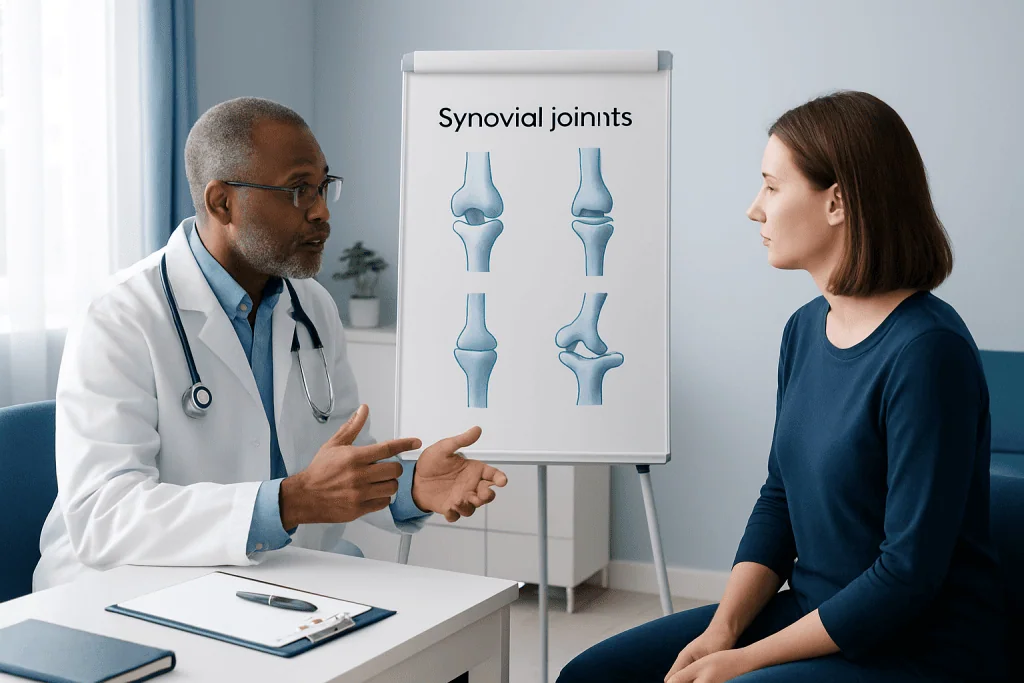
Not all synovial joints move in the same way. Different joint shapes allow different types of motion, depending on the body’s needs. This variation helps the skeleton support both strength and flexibility.
Common types include hinge joints, such as the elbow and knee, which mainly bend and straighten. Ball-and-socket joints, such as the shoulder and hip, allow movement in many directions. Pivot joints, like the one in the neck, permit rotation, while gliding joints allow small sliding movements in the wrists and ankles.
Other forms, such as saddle joints and condyloid joints, support more complex motion in the hands and thumbs. These specialized designs make precise movements possible, from writing to grasping objects.
Symptoms of Synovial Joint Problems
When a synovial joint is irritated or injured, symptoms often appear gradually or after a specific event such as a twist, fall, or strain. Pain is one of the most common signs, and it may worsen with movement or after periods of rest.
Other symptoms can include stiffness, swelling, warmth, reduced range of motion, clicking, catching, or a feeling that the joint is unstable. In some cases, symptoms may be mild at first and become more noticeable over time.
People may also notice weakness, difficulty bearing weight, or trouble using the joint in normal activities. If a joint looks visibly deformed after an injury, that can suggest a dislocation or fracture and should be assessed promptly.
Causes and Risk Factors
Synovial joint problems can develop for many reasons. Common causes include acute injuries, such as sprains, strains, dislocations, and cartilage tears, as well as overuse from repetitive movements or sports.
Inflammatory conditions, including rheumatoid arthritis and other autoimmune diseases, can affect the synovial membrane and lead to pain, swelling, and stiffness. Degenerative changes, especially osteoarthritis, may gradually wear down cartilage over time.
Risk factors may include aging, previous joint injury, heavy repetitive use, weak supporting muscles, excess body weight, poor biomechanics, and certain family or genetic tendencies. Some infections can also affect a joint, although this is less common and needs medical evaluation.
Diagnosis
Diagnosis usually begins with a medical history and a physical examination. A clinician will ask about the location of pain, how long symptoms have been present, whether there was an injury, and which activities make the joint better or worse.
Imaging tests may be used to look at the bones and soft tissues. X-rays can show alignment, fractures, and signs of arthritis, while ultrasound, CT, or MRI may provide more detail about cartilage, ligaments, tendons, and fluid in the joint.
In some cases, blood tests or joint fluid analysis are helpful to look for inflammation, infection, or autoimmune disease. Because different joint disorders can cause similar symptoms, a careful evaluation is important for choosing the right treatment.
Treatment Options
Treatment depends on the cause and severity of the problem. Many mild joint injuries improve with rest, activity modification, ice or heat, compression, elevation, and guided rehabilitation. Supportive measures such as braces or splints may also be recommended.
For inflammatory or degenerative joint conditions, treatment may include pain-relieving medicines, anti-inflammatory medicines, physical therapy, and exercises to improve mobility and strength. In some cases, doctors may recommend injections or other procedures to reduce inflammation or restore function. When structural damage is significant, surgery may be considered.
People with persistent knee or shoulder pain, cartilage damage, or degenerative joint disease may benefit from specialist evaluation. Depending on the condition, options such as arthroscopy or other joint procedures may help diagnose and treat internal joint problems with minimal disruption to surrounding tissues.
Prevention and Self-care
Healthy habits can help protect synovial joints over time. Regular low-impact exercise, stretching, and strength training support the muscles that stabilize joints and may reduce stiffness. Warm-up before activity and good technique during sports or exercise are also helpful.
Maintaining a healthy body weight reduces stress on weight-bearing joints such as the hips, knees, and ankles. Good posture, proper footwear, and ergonomic adjustments at work can lower strain during daily activities.
People who already have joint discomfort may benefit from pacing activities, avoiding sudden increases in training, and using assistive devices when needed. Staying active within comfortable limits is usually preferable to complete inactivity, because gentle movement helps preserve flexibility and function.
When to See a Doctor
Medical evaluation is advisable when joint pain lasts more than a few days, keeps returning, or limits normal activities. Swelling, stiffness, and reduced range of motion that do not improve with rest also deserve attention.
Prompt care is especially important after a significant injury, if the joint appears deformed, if weight-bearing becomes difficult, or if there is redness, warmth, fever, or severe swelling. These findings can indicate a problem that needs timely treatment.
For ongoing or complex joint concerns, a specialist can help determine whether the issue is mechanical, inflammatory, or degenerative and guide an appropriate care plan. Acibadem International’s multidisciplinary specialists and JCI-accredited hospitals diagnose and treat synovial joint conditions for international patients.
Frequently asked questions
What makes a synovial joint different from other joints?
Synovial joints have a joint cavity filled with synovial fluid, which allows smooth movement. They also have cartilage, a capsule, and supporting ligaments that help them move freely while staying stable.
Which joints in the body are synovial joints?
Most movable joints are synovial joints. Common examples include the shoulder, hip, knee, elbow, wrist, ankle, and the joints of the fingers and toes.
Why do synovial joints become painful?
Pain can happen when the joint is injured, overused, inflamed, or affected by arthritis. Problems with cartilage, ligaments, tendons, or the synovial membrane can all contribute to symptoms.
Can exercise help synovial joints?
Yes, gentle and regular exercise usually helps maintain flexibility, muscle support, and joint function. Low-impact activities and strength training are often useful, but the right plan depends on the person’s condition and symptoms.
Is stiffness in the morning a sign of a joint problem?
Morning stiffness can be a sign of joint inflammation or degenerative change, especially if it lasts a long time or recurs often. It is worth discussing with a doctor if it is persistent or accompanied by swelling or pain.
When should joint pain be checked urgently?
Urgent assessment is important if a joint looks deformed, cannot bear weight, becomes very swollen, or is hot and red. Fever with joint pain also needs prompt medical evaluation.
References
- National Institute of Arthritis and Musculoskeletal and Skin Diseases
- American Academy of Orthopaedic Surgeons
- Mayo Clinic
- Merck Manual Professional Edition
This article is for general information only and is not a substitute for professional medical advice. Please consult a qualified doctor about your individual situation.
Joint and spine care in Turkey — expert assessment & treatment
JCI-accredited · board-certified surgeons · reply within 24h
Add us as a Preferred Source to see more of our trusted health content across Google Search, AI Overviews and Discover.