Tai Chi Offers Older Adults Gentle Balance and Strength Training
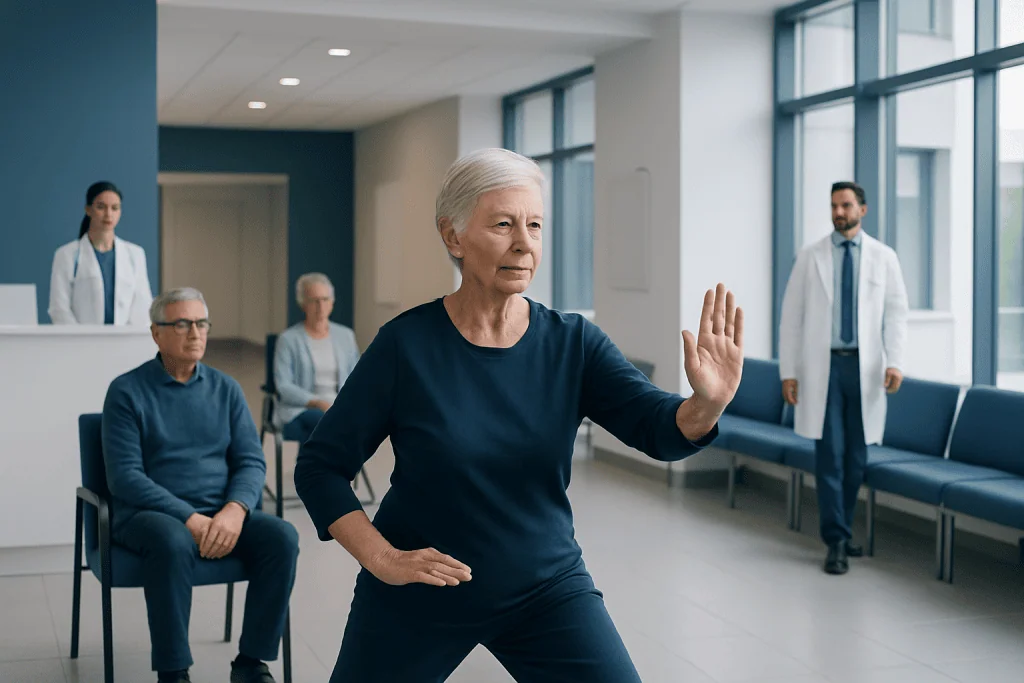
Tai chi uses slow, controlled movements and relaxed breathing, and may help older adults improve balance, leg strength, and confidence in daily activities. Most seniors can practice it with movements adapted to their abilities. Those with recent surgery, heart symptoms, or significant balance problems should ask a doctor or physiotherapist first.
Key Takeaways
- Tai chi is a low-impact exercise that combines slow movements, breathing, and attention to posture.
- For many older adults, regular tai chi practice may support balance, flexibility, leg strength, and confidence with walking.
- It can often be adapted for beginners, people with limited mobility, and those who need chair-based options.
- Safety matters: comfortable pacing, a clear practice space, and medical advice for certain health conditions are important.
- Tai chi works best as part of a broader healthy aging plan that may also include strength training, walking, and medical care.
Does standing up from a chair or turning quickly leave you feeling a little unsteady? That worry is common with age, and it often makes people move less — which only makes things harder.
Tai chi is a gentle mind-body exercise that may help improve balance, mobility, strength, posture, and overall well-being. Many older adults can practice it safely, especially when the movements are adapted to your own health needs and you start with guidance if you need it.
What tai chi for seniors is and why it is recommended
Tai chi for seniors is a gentle form of exercise that uses slow, controlled movements, relaxed breathing, and mental focus. For many older adults, it can be a practical way to stay active because it places relatively little stress on the joints and can be adjusted to different fitness levels. The main goals are better body awareness, steadier movement, and improved confidence in everyday activities.
Evidence from clinical research suggests that tai chi may help some older adults improve balance, mobility, lower-body strength, and fear of falling. It is not a cure for medical problems, and results vary from person to person, but it is widely used as a supportive exercise in healthy aging. Many people also find that the calm, rhythmic nature of tai chi helps them feel more relaxed and focused.
Unlike some exercise programs that emphasize speed or high effort, tai chi emphasizes alignment, weight shifting, coordination, and gradual progress. This makes it different from simply stretching or walking, although it can complement both. For seniors who are new to exercise, that combination of movement and mindfulness can make tai chi easier to continue long term.
How tai chi may help older adults
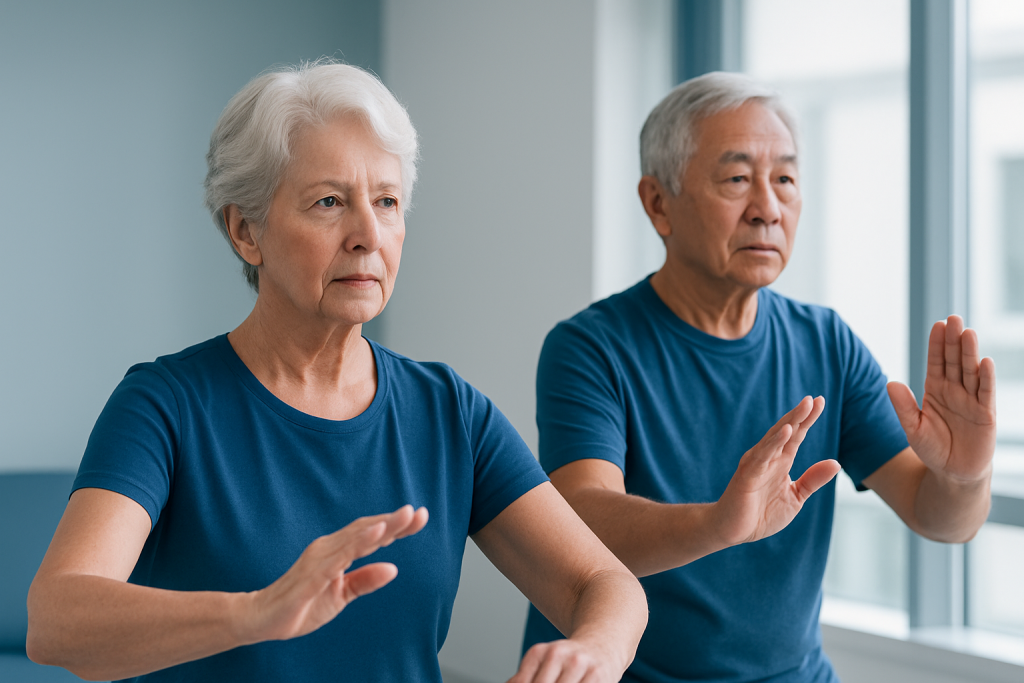
Tai chi may offer several physical benefits that are especially relevant in later life. Slow transfers of weight from one leg to the other can support balance training, while repeated semi-squat positions may help build leg endurance and postural control. Gentle turning and reaching movements can also encourage flexibility and coordination needed for dressing, standing up, and walking.
Then there is confidence. After a fall, or even after a few unsteady moments, many people quietly start doing less. Over time that costs them strength and mobility. Tai chi may help some people feel more secure in movement, which may support independence in daily life.
Research also points to possible benefits for general well-being: better attention to breathing, less stress, and better sleep in some people. Not everyone notices all of this, but it is part of why tai chi is talked about as a whole-person exercise rather than just a fitness routine.
- May improve balance and reduce fear of falling
- May support flexibility, posture, and joint-friendly movement
- May strengthen the legs and improve walking confidence
- May help with relaxation, focus, and mood
- Can often be adapted for different abilities
Who may benefit most and when extra caution is needed

Many seniors can benefit from tai chi, including those who want a low-impact way to stay active, improve balance, or return to movement after becoming less active. It may be particularly appealing to people who find high-intensity exercise uncomfortable or difficult to maintain. Some rehabilitation and wellness programs also include tai chi-inspired balance work for selected patients.
That said, tai chi is not automatically right for everyone as it comes. Older adults with severe joint pain, recent fractures, uncontrolled heart symptoms, advanced dizziness, major vision problems, or significant balance impairment may need an individualized plan. People with neurological disorders, severe arthritis, or recent surgery should ask a doctor or physiotherapist what types of movement are appropriate before beginning.
For example, those living with Parkinson’s disease or recovering from stroke may be able to use tai chi-based movement as part of a broader rehabilitation approach, but the exercises often need professional guidance. In some cases, a clinician may suggest balance assessment, supervised exercise, or a tailored physical therapy and rehabilitation plan first.
What a safe tai chi routine looks like
A safe tai chi routine for seniors usually starts simply. Sessions may begin with gentle warm-up movements for the neck, shoulders, hips, and ankles, followed by basic posture practice and short movement sequences. Good instruction emphasizes upright alignment, relaxed breathing, soft knees, and controlled weight shifts rather than deep bends or fast turns.
For beginners, shorter sessions are often the most realistic. Even 10 to 20 minutes a few times a week can be a reasonable starting point, especially if fatigue, stiffness, or low confidence is an issue. As comfort improves, practice time can gradually increase. Consistency matters more than intensity.
Safety is also about the environment. A stable chair nearby, supportive shoes if needed, good lighting, and a clutter-free floor can reduce risk. Movements should never be forced. Mild muscle use is expected, but sharp pain, chest discomfort, marked shortness of breath, or sudden dizziness are signs to stop and seek medical advice.
- Start with beginner-level or chair-supported tai chi if needed
- Practice in a clear, non-slip area
- Move slowly and avoid locking the knees
- Use a wall, rail, or chair for support when learning balance shifts
- Drink water and rest if tired
How tai chi compares with other exercise for seniors
Tai chi can be valuable, but it is best understood as one part of a balanced activity plan. It is especially helpful for movement control, posture, and body awareness, yet it may not fully replace other important forms of exercise. Older adults also benefit from activities that support heart health, muscle strength, and bone health.
Walking helps aerobic fitness and endurance. Strength training helps preserve muscle mass needed for climbing stairs, rising from a chair, and carrying daily items. Balance drills and flexibility work have their own roles as well. Tai chi overlaps with some of these areas, but it does not always provide the same level of cardiovascular or resistance challenge.
This is why many clinicians suggest pairing tai chi with other suitable exercise. Depending on a person’s health status, that may include supervised fall-prevention training, home mobility exercises, or structured rehabilitation. If pain or mobility limits exercise choices, an evaluation in orthopedic rehabilitation or geriatric rehabilitation may help create a safe plan.
How to start tai chi for seniors step by step
Starting tai chi does not require previous athletic experience. A practical first step is to choose a beginner-friendly class, video, or therapist-led program designed for older adults. Programs labeled for seniors usually use slower pacing, clear cues, and a stronger focus on balance safety than general classes.
Before you start, ask yourself what you want out of it. One person may want to feel steadier when walking outdoors, while another may hope to improve stiffness in the morning or regain confidence after illness. Clear goals can make it easier to track progress and stay motivated over time.
People with chronic conditions should consider speaking with a clinician before beginning, especially if they have fallen recently, use a walking aid, or have chest, breathing, or neurological symptoms. In some cases, an assessment may point to additional therapies such as neurological rehabilitation. Near the end of a care journey, multidisciplinary specialists at Acibadem International and its JCI-accredited hospitals may also evaluate balance, mobility, and exercise needs for international patients.
- Choose a beginner-level class or guided session
- Wear comfortable clothing and supportive footwear if advised
- Begin with short sessions and increase gradually
- Track how balance, confidence, and fatigue change over time
- Ask for seated or modified options if standing is difficult
When to seek medical care
Tai chi is gentle, but some symptoms point to a problem exercise cannot fix on its own. A senior should seek medical care promptly for chest pain, fainting, severe shortness of breath, sudden weakness, new confusion, or a fall with injury. These symptoms need professional evaluation rather than self-management.
A doctor should also be consulted before starting tai chi if there has been a recent fracture, surgery, repeated falls, significant dizziness, uncontrolled blood pressure, or worsening joint swelling and pain. Persistent numbness, major balance loss, or sudden changes in walking ability also deserve attention. In these situations, a clinician can help determine whether tai chi is appropriate, whether movements need to be modified, or whether another treatment is needed first.
If practice keeps causing pain, more swelling, or more wobbliness, stop and get checked. Tai chi should support health, not strain it. Individual guidance is especially important for frail adults or those managing several chronic conditions at once.
Frequently asked questions
Is tai chi safe for most seniors?
Tai chi is generally considered safe for many older adults because it is low impact and can be modified. Safety depends on the person’s health, balance, and medical history, so those with recent falls, surgery, or significant symptoms should ask a clinician before starting.
Can tai chi help prevent falls in older adults?
Tai chi may help some older adults improve balance, coordination, and confidence, which can support fall prevention. It should be seen as one helpful strategy rather than a guarantee, and some people may also need strength training, home safety changes, or medical assessment.
How often should seniors practice tai chi?
A realistic starting point is short sessions several times a week, with gradual progression based on comfort and stamina. Regular practice is usually more helpful than occasional long sessions, especially for balance and movement confidence.
Can tai chi be done while sitting?
Yes. Chair-based tai chi or seated movement routines can be useful for older adults with limited standing tolerance or reduced balance. A trained instructor or therapist can suggest safe modifications that still encourage posture, breathing, and coordination.
Does tai chi replace walking or strength training?
Usually not. Tai chi is helpful for balance, coordination, and gentle movement control, but many seniors also benefit from walking for endurance and strength exercises for muscle and bone health. A well-rounded plan often includes more than one type of activity.
What should a senior do if tai chi causes pain or dizziness?
They should stop the session and rest. If symptoms are significant, keep recurring, or include chest discomfort, fainting, or severe shortness of breath, medical advice should be sought promptly to rule out an underlying problem.
This article is for general information only and is not a substitute for professional medical advice. Please consult a qualified doctor about your individual situation.
Joint and spine care in Turkey — expert assessment & treatment
7 JCI-accredited hospitals · board-certified surgeons · reply within 24h
Add us as a Preferred Source to see more of our trusted health content across Google Search, AI Overviews and Discover.

Medically reviewed by the Acıbadem International Medical Board — August 24, 2026
See our medical review board →
References (1)
- Exercise and Physical Fitness (MedlinePlus) — medlineplus.gov
Physical Medicine & Rehabilitation Specialists at Acibadem

Fzt. Busenur Sezer
Physical Medicine & Rehabilitation
Büşra Zeybek
Physical Medicine & Rehabilitation
Fzt. Çağlar Dal
Physical Medicine & Rehabilitation
Fzt. Canberk Altan
Physical Medicine & Rehabilitation
Fzt. Ceren Kandemir Gençsoylu
Physical Medicine & RehabilitationMore from the Health Library

A Trapped Nerve in the Back Often Improves Without Surgery
Bodyweight Exercises That Work and How to Progress Them

Correcting Anterior Pelvic Tilt With Exercise and Posture Care

How to Train the Biceps Safely and Recognise Warning Signs

Thoracic Extension and Why Mid-Back Mobility Matters