Taking Out a Blackhead: A Complete Medical Overview

A blackhead is an open clogged pore, not dirt trapped in the skin. Forceful squeezing can cause irritation, infection, dark marks, and scarring.
Key Takeaways
- A blackhead is an open clogged pore, not dirt trapped in the skin.
- Forceful squeezing can cause irritation, infection, dark marks, and scarring.
- Gentle skin care and ingredients such as salicylic acid or retinoids often help prevent new blackheads.
- Persistent, widespread, or inflamed acne should be assessed by a qualified doctor or dermatologist.
- Professional extraction is safer for stubborn blackheads, especially in sensitive areas.
Taking out a blackhead can be done safely in some cases, but squeezing or picking can injure the skin and make acne worse. A careful approach that softens the pore, avoids force, and uses proven skin care is usually safer than trying to extract deeply embedded blackheads at home.
Overview: What taking out a blackhead really means
Taking out a blackhead means removing a plug of oil, dead skin cells, and debris from a pore that stays open at the skin surface. The dark color is not usually dirt. It forms when the material inside the pore is exposed to air and oxidizes, creating what doctors call an open comedone.
Many people try to remove blackheads at home because they are common on the nose, chin, forehead, chest, and back. In some situations, gentle removal can work. However, aggressive squeezing with fingernails or tools can damage the pore wall, push material deeper into the skin, and lead to redness, swelling, infection, or scarring.
For that reason, the safest medical view is that blackheads should be managed with a combination of prevention and selective removal rather than repeated picking. If blackheads are frequent or part of ongoing acne, treatment of the underlying skin process is usually more effective than focusing on one pore at a time.
How to remove a blackhead more safely at home
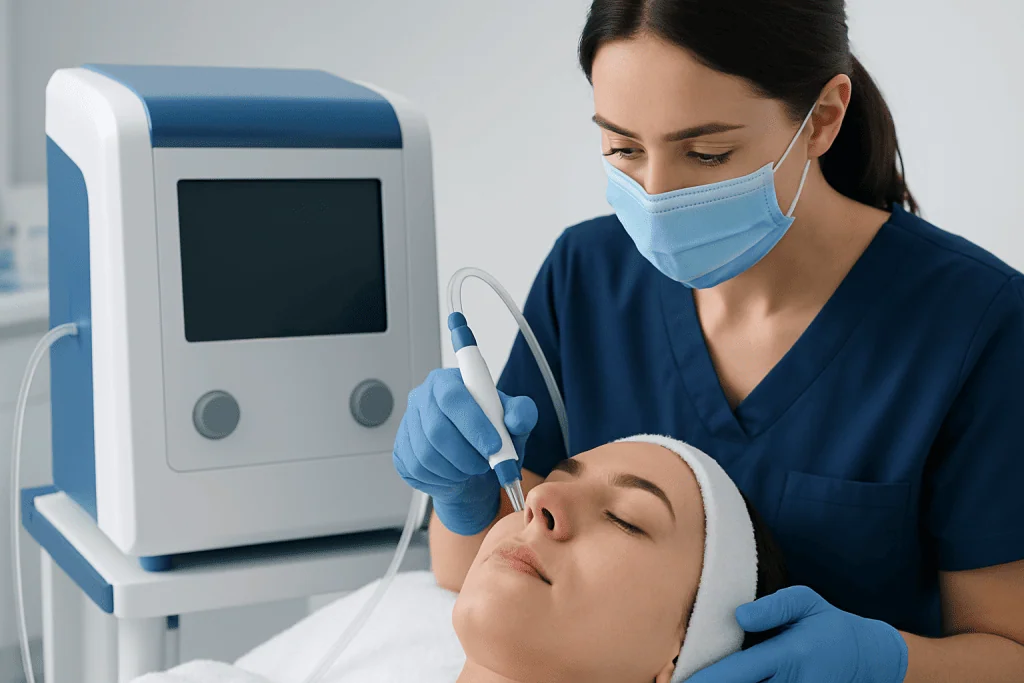
If a person chooses to remove a blackhead at home, the goal is to minimize trauma to the skin. The skin should first be cleansed gently with a mild cleanser. Warm water or a short warm compress may soften surface debris, but very hot water or harsh scrubbing can irritate the skin and increase inflammation.
It is best not to use fingernails, pins, or improvised tools. If a clean comedone extractor is used, it should be applied with light, even pressure only after the skin has been softened. The blackhead should come out easily; if it does not, forcing it is more likely to injure the skin than to help. Any bleeding, significant pain, or swelling is a sign to stop.
Afterward, the area should be rinsed and treated gently. A non-comedogenic moisturizer can help protect the skin barrier. Products containing salicylic acid may help keep pores clearer over time, but strong acids, repeated squeezing, and alcohol-based toners can worsen irritation. For people with recurring blackheads, professional dermatology care may be the safer long-term option.
- Wash hands before touching the skin.
- Use gentle cleansing, not scrubbing.
- Do not force a blackhead that does not release easily.
- Avoid extracting inflamed pimples, cysts, or areas with broken skin.
Why blackheads form
Blackheads develop when pores become blocked with sebum, which is the skin’s natural oil, along with dead skin cells. If the top of the clogged pore stays open, air exposure darkens the material. This is different from a whitehead, where the pore opening stays closed.
Several factors can make blackheads more likely. Oily skin, hormonal changes, and skin-care or cosmetic products that block pores may all contribute. Sweat alone does not cause blackheads, but not cleansing after heavy sweating may allow oil and debris to build up. Friction from helmets, masks, or tight clothing can also play a role in some people.
Blackheads are often part of a broader acne pattern. Some people also have sensitive or combination skin that reacts to over-cleansing, which can disturb the skin barrier and make breakouts harder to control. When blackheads are widespread or occur along with inflammatory bumps, a doctor may evaluate for related acne vulgaris and recommend a treatment plan tailored to the skin type.
Common mistakes and possible risks
The most common mistake is squeezing too hard or too often. Although it may seem practical in the moment, repeated pressure can tear the tissue around the pore. This can turn a simple blackhead into a swollen pimple or leave post-inflammatory marks that last longer than the original blemish.
Another common problem is using pore strips, abrasive scrubs, or strong combinations of products too frequently. These methods may remove some surface material temporarily, but they can also irritate the skin, increase dryness, and trigger rebound oiliness in some people. Blackheads may then return quickly because the underlying process has not been addressed.
There is also a risk of infection if unclean hands or tools are used. Sensitive areas, especially around the nose, can become raw and painful when manipulated aggressively. People with eczema, rosacea, darker skin prone to hyperpigmentation, or a history of keloid scarring should be especially cautious, because even minor skin injury can leave more visible after-effects.
Medical diagnosis and when professional extraction may help
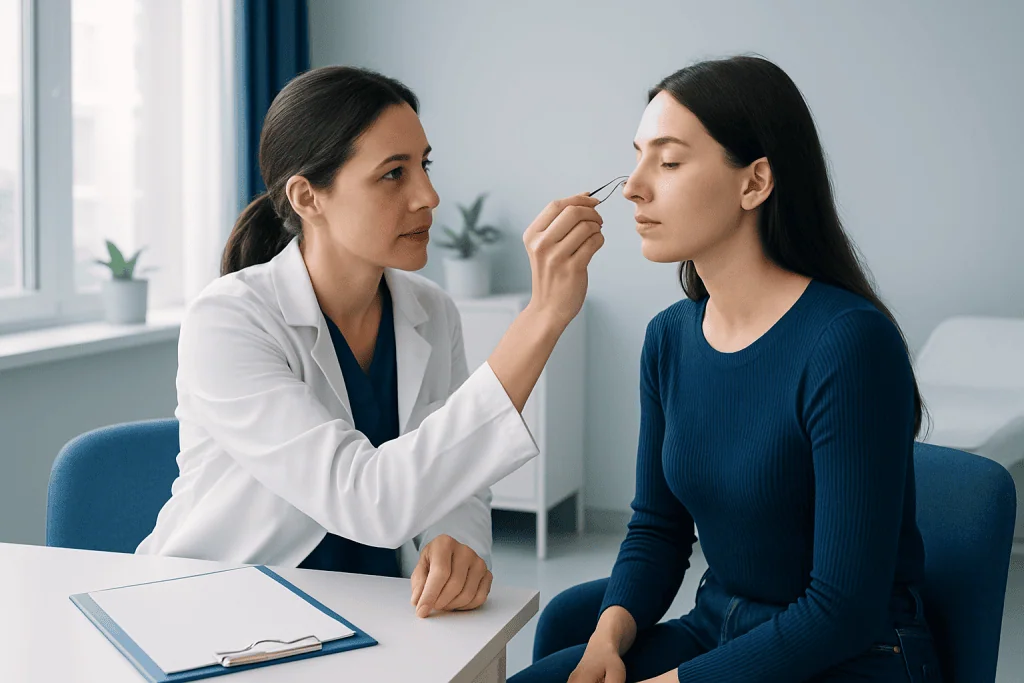
Blackheads are usually diagnosed by a doctor through a skin examination. In most cases, no tests are needed. The doctor looks at the type of lesions present, where they appear, whether there is inflammation, and whether there are signs of another skin condition that can mimic acne.
Professional extraction may help when blackheads are numerous, deeply seated, or located in areas where self-removal is difficult. Dermatologists and trained skin professionals use sterile technique and controlled pressure to reduce the chance of skin damage. This may be paired with topical treatment to prevent rapid recurrence.
If breakouts are persistent, a doctor may discuss options such as prescription creams, chemical peels, or other acne-focused care. Depending on the overall pattern of skin concerns, some patients may also benefit from skin rejuvenation treatments as part of broader care for texture changes or post-acne marks, but active blackheads still need direct acne management.
Treatment options that address blackheads over time
Because blackheads tend to recur, treatment usually focuses on preventing pores from clogging again. Over-the-counter salicylic acid can help loosen dead skin cells inside the pore. Topical retinoids, available in prescription form and in some lower-strength nonprescription options, can normalize shedding of skin cells and are often considered one of the most effective medical approaches for comedonal acne.
Benzoyl peroxide may be useful when blackheads occur alongside inflamed pimples, although it is often more effective for inflammatory acne than for blackheads alone. Gentle cleansing twice daily, avoiding pore-clogging products, and using sunscreen that is labeled non-comedogenic can support treatment without over-irritating the skin.
For more persistent cases, dermatologists may recommend prescription retinoids, combination acne therapy, or in-office procedures such as comedone extraction or selected peels. If blackheads are part of severe or scarring adult acne, timely treatment may reduce longer-term skin changes. In some settings, broader acne treatment can help control both blackheads and inflamed lesions together.
Prevention and skin-care habits that support clearer pores
Preventing blackheads usually works better than repeatedly removing them. A simple routine is often enough: wash with a mild cleanser, use non-comedogenic moisturizer if needed, and apply any acne treatment consistently rather than in bursts. Products should be introduced one at a time so the skin can be monitored for dryness or irritation.
Makeup, sunscreen, and hair products should ideally be labeled oil-free or non-comedogenic if blackheads are a frequent concern. It also helps to remove makeup before sleep and cleanse after exercise. Heavy exfoliation is not necessary; in fact, harsh scrubs often do more harm than good.
Lifestyle factors can support overall skin health, although they do not replace treatment. Stress management, regular sleep, and avoiding unnecessary touching of the face may help reduce flare-ups for some people. If blackheads continue despite good skin care, a dermatologist can advise whether stronger topical medication or procedural care is appropriate.
When to seek medical care
Medical advice is important if blackheads are painful, widespread, repeatedly infected, or causing dark spots or scars. Care is also worth seeking when over-the-counter products have been used consistently for several weeks without improvement, or when breakouts are affecting confidence and quality of life.
A doctor should also assess lesions that do not behave like ordinary blackheads, such as bumps that are very tender, rapidly enlarging, or associated with significant redness. These may represent inflamed acne, cysts, or another skin condition that should not be squeezed at home.
For international patients who need evaluation, Acibadem International’s multidisciplinary specialists and JCI-accredited hospitals diagnose and treat skin conditions with individualized care plans. A consultation can help determine whether simple skin-care changes, prescription treatment, or a procedure is the most suitable next step.
Frequently asked questions
Is taking out a blackhead bad for the skin?
Not always, but it can be harmful if done forcefully or with unclean hands or tools. Gentle removal of a superficial blackhead may be tolerated, while aggressive squeezing can lead to redness, infection, dark marks, or scarring.
What is the safest way to remove a blackhead?
The safest approach is to cleanse the skin, soften the area with warm water or a warm compress, and avoid force. If a blackhead does not come out easily, it is usually better to stop and consider professional extraction rather than continue squeezing.
Why does a blackhead look black?
A blackhead is not usually black because it is dirty. The dark color forms when material inside an open clogged pore is exposed to air and oxidizes.
Can blackheads turn into pimples if they are squeezed?
Yes. Pressure can irritate the pore wall and push material deeper into the skin, which may trigger inflammation. A simple blackhead can then become a swollen pimple or leave a lingering mark.
Do pore strips remove blackheads permanently?
No. Pore strips may remove some surface debris temporarily, but they do not stop pores from becoming clogged again. They can also irritate sensitive skin if used too often.
When should someone see a dermatologist for blackheads?
A dermatologist should be considered when blackheads are persistent, widespread, painful, or causing scarring or discoloration. Medical advice is also useful when home care has not helped or when the bumps may not be simple blackheads.
This article is for general information only and is not a substitute for professional medical advice. Please consult a qualified doctor about your individual situation.
Explore treatments in Turkey — costs, top hospitals & a free quote
JCI-accredited · board-certified surgeons · reply within 24h
Add us as a Preferred Source to see more of our trusted health content across Google Search, AI Overviews and Discover.

More from the Health Library

Clitoral Atrophy: A Complete Medical Overview

Varicocele — Explained by Medical Evidence, Not Myths

Knee Rheumatoid — Explained by Medical Evidence, Not Myths

Olmesartan — Explained by Medical Evidence, Not Myths
Ear Candling: An Evidence-Based Guide for Patients