Knee Rheumatoid — Explained by Medical Evidence, Not Myths

Knee rheumatoid is not ordinary wear-and-tear arthritis; it is inflammation caused by an autoimmune disease. Common signs include knee pain, swelling, morning stiffness, warmth, and reduced movement.
Key Takeaways
- Knee rheumatoid is not ordinary wear-and-tear arthritis; it is inflammation caused by an autoimmune disease.
- Common signs include knee pain, swelling, morning stiffness, warmth, and reduced movement.
- Early diagnosis and treatment can reduce symptoms, protect the joint, and help maintain daily function.
- Treatment often combines medicines, physical therapy, exercise, and sometimes surgery for advanced damage.
- Persistent knee swelling, prolonged stiffness, or symptoms in several joints should be assessed by a doctor.
Knee rheumatoid refers to rheumatoid arthritis affecting one or both knees. It is an autoimmune condition that causes joint lining inflammation, leading to pain, swelling, stiffness, and gradual joint damage if not treated early.
What knee rheumatoid means
Knee rheumatoid usually means rheumatoid arthritis involving the knee joint. Rheumatoid arthritis is a long-term autoimmune disease in which the body’s immune system mistakenly attacks the lining of joints. When this process affects the knee, it can cause pain, swelling, warmth, stiffness, and difficulty with walking, climbing stairs, or standing up from a chair.
This is different from the more common “wear-and-tear” arthritis, known as osteoarthritis. In knee rheumatoid, inflammation begins in the synovium, the soft tissue lining inside the joint. Over time, untreated inflammation may damage cartilage, bone, tendons, and supporting structures around the knee.
The knee may be affected on one side or both, and symptoms can come and go or gradually become more persistent. Because rheumatoid arthritis often affects several joints and may also cause fatigue or general malaise, knee symptoms are sometimes only one part of a broader condition. A clinician may also discuss related inflammatory joint diseases when evaluating symptoms, including rheumatoid arthritis.
Symptoms and how they may feel in daily life
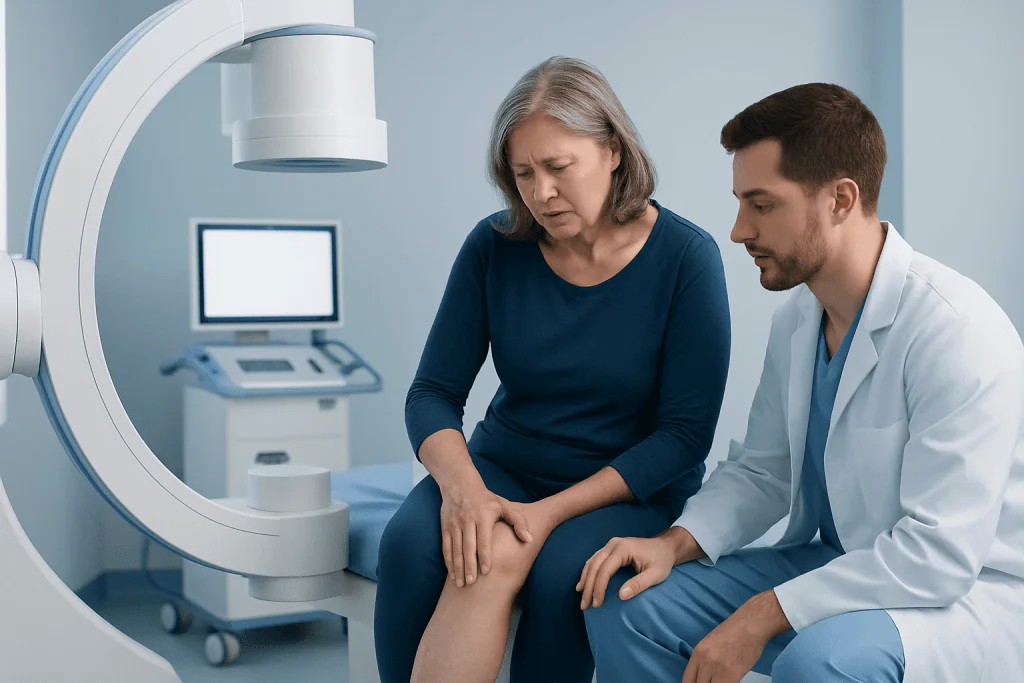
The most common knee rheumatoid symptoms are pain, swelling, and stiffness. Many people notice that the knee feels especially stiff in the morning or after sitting still for a while. This stiffness often lasts longer than the brief “startup pain” more typical of osteoarthritis.
The knee may also look puffy, feel warm to the touch, or seem harder to fully bend or straighten. Some people describe a sense of pressure in the joint, while others notice that the knee feels weak or unstable because pain and inflammation change how they move. If fluid builds up in the knee, the swelling can become quite noticeable.
Rheumatoid arthritis can affect more than the knee. Symptoms may occur in the hands, wrists, feet, ankles, or other joints, often in a fairly symmetrical pattern. General symptoms such as tiredness, low energy, poor appetite, or a mild feverish feeling may also occur during active inflammation.
- Persistent knee pain and tenderness
- Visible or internal swelling
- Morning stiffness lasting 30 minutes or longer
- Warmth around the knee
- Reduced range of motion
- Difficulty walking, kneeling, or using stairs
Why it happens and who may be at risk

Knee rheumatoid develops because of an abnormal immune response. The exact reason this happens is not fully understood, but experts believe it results from a combination of genetic tendency and environmental triggers. The immune system becomes overactive and targets the joint lining, leading to chronic inflammation.
Several factors may increase the likelihood of developing rheumatoid arthritis. These include a family history of the disease, smoking, certain hormonal influences, and some environmental exposures. The condition can begin at different ages, although it often appears in adulthood. Women are affected more often than men, but anyone can develop it.
Having rheumatoid arthritis does not always mean the knees will be involved first. In some people, small joints in the hands or feet are affected earlier, and the knees become involved later. In others, knee swelling is one of the more noticeable symptoms from the start. Excess body weight does not cause rheumatoid arthritis, but it can put extra stress on already inflamed knees and make symptoms harder to manage.
How doctors diagnose knee rheumatoid
Diagnosis begins with a medical history and physical examination. A doctor will ask when symptoms started, whether stiffness is worse in the morning, whether other joints are involved, and whether there are systemic symptoms such as fatigue. During the exam, the knee is checked for swelling, warmth, tenderness, fluid, range of motion, and alignment.
Blood tests can support the diagnosis. These may include markers of inflammation, such as erythrocyte sedimentation rate or C-reactive protein, as well as antibodies commonly associated with rheumatoid arthritis, such as rheumatoid factor and anti-CCP. These tests are useful, but no single blood test alone confirms or excludes the condition.
Imaging also helps. X-rays can show joint space narrowing or bone changes, especially in more established disease. Ultrasound or MRI may detect synovitis, joint fluid, and early inflammatory changes before damage is obvious on X-ray. If symptoms are unclear, doctors may consider other causes of a swollen or painful knee, such as knee arthritis or gout, infection, ligament injury, or a meniscus problem.
When fluid collects in the knee, a doctor may remove a sample with a needle to analyze it. This can help rule out infection or crystal arthritis. Accurate diagnosis matters because early treatment of inflammatory arthritis can improve long-term joint health.
Treatment options and long-term control
Treatment aims to reduce inflammation, relieve pain, protect the knee joint, and preserve mobility. Because knee rheumatoid is part of a systemic autoimmune disease, treatment usually addresses the whole condition rather than only the knee. Rheumatology care is often central, especially when disease-modifying medicines are needed to slow joint damage.
Medicines may include anti-inflammatory drugs for symptom relief, corticosteroids in selected situations, and disease-modifying antirheumatic drugs or biologic therapies for longer-term control. The right plan depends on symptom severity, overall health, other joints involved, and how active the disease is. These treatments require individualized medical guidance and follow-up.
Rehabilitation is also important. Targeted exercise and physical therapy and rehabilitation can help maintain strength, balance, and flexibility while reducing strain on the knee. A clinician may also suggest activity modification, supportive footwear, or a brace in some cases.
If the knee has advanced damage, persistent pain, or severe functional loss despite medical treatment, surgery may be considered. Depending on the problem, options can include procedures to manage inflamed tissue or, in advanced joint destruction, knee replacement. Treatment decisions are usually made by a multidisciplinary team, sometimes involving rheumatology, orthopedics, rehabilitation, and imaging specialists.
Self-care, movement, and everyday habits that help
Self-care does not replace medical treatment, but it can make an important difference in comfort and function. Gentle, regular movement often helps more than complete rest. During flare-ups, short periods of rest may be useful, but prolonged inactivity can worsen stiffness and muscle weakness.
Low-impact activities such as walking on even ground, cycling, water exercise, and stretching are often easier on an inflamed knee. Strengthening the thigh and hip muscles can improve support around the joint. A physical therapist can adapt exercises to the person’s symptoms and fitness level, especially if both knees or multiple joints are affected.
Weight management can reduce mechanical stress on painful knees, even though excess weight is not the root cause of rheumatoid arthritis. Heat may ease stiffness for some people, while cold packs may help with short-term swelling or soreness after activity. Supportive shoes, pacing of activities, and avoiding repetitive high-impact loading may also help.
- Stay as active as symptoms allow with low-impact exercise
- Use rest strategically during flares, but avoid long inactivity
- Follow prescribed medicines exactly as advised
- Attend regular follow-up appointments to monitor disease control
- Stop smoking, as it is linked to worse rheumatoid arthritis outcomes
Common myths about knee rheumatoid
One common myth is that knee rheumatoid is simply an inevitable part of aging. In fact, rheumatoid arthritis is an autoimmune disease, not just age-related joint wear. Although it can develop in older adults, it may also begin much earlier in life.
Another myth is that knee pain from rheumatoid arthritis should be managed only with painkillers. Pain relief matters, but the core issue is inflammation that can damage the joint over time. That is why treatment often includes disease-modifying therapies and specialist follow-up, not just symptom relief.
People sometimes assume exercise will always make an inflamed knee worse. In reality, well-chosen low-impact activity is often beneficial and may reduce stiffness and improve function. The goal is not to push through severe pain, but to find a safe balance between rest and movement.
It is also a myth that surgery is the only solution once the knee is involved. Many people improve with early diagnosis, medication, rehabilitation, and ongoing monitoring. Surgery may help some patients with advanced joint damage, but it is only one part of the treatment spectrum.
When to seek medical care
Medical assessment is important if knee pain and swelling last more than a few days, keep returning, or are accompanied by morning stiffness that regularly lasts 30 minutes or longer. A person should also seek care if more than one joint is affected, if the knee feels increasingly limited, or if everyday activities become difficult.
Urgent medical attention is needed if the knee becomes suddenly very swollen, red, hot, and extremely painful, especially with fever or inability to bear weight, because infection and other urgent conditions must be ruled out. New symptoms such as chest pain, shortness of breath, or marked weakness also require prompt evaluation.
Early diagnosis can help reduce the risk of long-term joint damage and disability. For patients seeking coordinated care, Acibadem International’s multidisciplinary specialists in JCI-accredited hospitals diagnose and treat inflammatory joint diseases and advanced knee problems, including evaluation with MRI when imaging is needed.
Frequently asked questions
Is knee rheumatoid the same as osteoarthritis?
No. Knee rheumatoid refers to rheumatoid arthritis affecting the knee, which is driven by autoimmune inflammation. Osteoarthritis is mainly related to joint wear, cartilage breakdown, and mechanical stress, although symptoms can overlap.
Can rheumatoid arthritis affect only the knee?
It can begin with symptoms that seem limited to one knee, but rheumatoid arthritis often affects multiple joints over time. Doctors usually look for signs in other joints and may use blood tests and imaging to clarify the diagnosis.
What does rheumatoid knee pain usually feel like?
People often describe aching, tenderness, pressure from swelling, warmth, and stiffness, especially in the morning or after rest. The knee may feel difficult to bend, straighten, or trust during walking.
Can exercise help knee rheumatoid?
Yes, in many cases appropriate exercise is helpful. Low-impact movement and strengthening can reduce stiffness and support the joint, but the exercise plan should match the person’s symptoms and medical advice.
Is knee swelling in rheumatoid arthritis dangerous?
Swelling is a sign of inflammation and should not be ignored, especially if it keeps recurring. It is not always an emergency, but prompt evaluation matters because persistent inflammation can damage the joint over time.
Will surgery be needed for knee rheumatoid?
Not always. Many people manage well with medicines, rehabilitation, and regular monitoring, especially when treatment starts early. Surgery is usually considered when there is severe damage, ongoing pain, or major loss of function despite other treatment.
This article is for general information only and is not a substitute for professional medical advice. Please consult a qualified doctor about your individual situation.
Joint and spine care in Turkey — expert assessment & treatment
JCI-accredited · board-certified surgeons · reply within 24h
Add us as a Preferred Source to see more of our trusted health content across Google Search, AI Overviews and Discover.

More from the Health Library

Lost Appetite and Tired: An Evidence-Based Guide for Patients

Divalproex: An Evidence-Based Guide for Patients

Would You Date Someone with Herpes Poll: An Evidence-Based Guide for Patients

Mouth Roof Yellow: A Complete Medical Overview

Deep Cleaning for Gum Recession: What Patients Need to Know

Active Recovery: What Patients Need to Know
Orthopedic Surgery & Traumatology Specialists at Acibadem

Dr. Alper Gölpınar
Orthopedic Surgery & Traumatology
Prof. Dr. Alper Kaya
Orthopedic Surgery & Traumatology
Fzt. Alperen Mustafa Oğuz
Physical Medicine & Rehabilitation
Assoc. Prof. Dr. Altuğ Yücekul
Orthopedic Surgery & Traumatology