Tef Repair: Procedure, Recovery and Results

TEF repair separates the trachea and esophagus and closes the abnormal passage between them. Most congenital TEFs are diagnosed soon after birth and need prompt specialist care.
Key Takeaways
- TEF repair separates the trachea and esophagus and closes the abnormal passage between them.
- Most congenital TEFs are diagnosed soon after birth and need prompt specialist care.
- A leak at the esophageal repair site is among the most common early complications after congenital TEF repair.
- Recovery depends on the type of fistula, associated health conditions, surgical approach and feeding progress.
- Long-term follow-up is important for swallowing, reflux, breathing symptoms and esophageal narrowing.
TEF repair is surgery to close a tracheoesophageal fistula, an abnormal connection between the windpipe and food pipe that can allow saliva or food to enter the lungs. In newborns, it is commonly performed with repair of esophageal atresia, while acquired fistulas in older children and adults require an individualized surgical plan.
Overview: What TEF Repair Does
TEF repair is an operation used to treat a tracheoesophageal fistula (TEF), an abnormal channel between the trachea (windpipe) and esophagus (food pipe). The connection can let saliva, milk, food, or stomach contents pass into the airway. This may lead to coughing or choking with feeds, breathing problems, repeated chest infections, or aspiration.
Most TEFs occur as a congenital condition, meaning they develop before birth. They are often linked with esophageal atresia, in which the esophagus does not form as a continuous tube to the stomach. In this situation, the operation closes the fistula and, when possible, joins the two ends of the esophagus. Less commonly, a fistula may develop later in life because of injury, infection, cancer, prolonged intubation, or prior surgery.
The goals of TEF repair are to protect the airway, restore the normal separation between breathing and swallowing pathways, and support safe nutrition. Care is usually coordinated by pediatric surgeons or thoracic surgeons, anesthesiologists, neonatologists or respiratory specialists, gastroenterologists, speech and feeding professionals, and nurses.
Who May Need TEF Repair and How It Is Planned

In newborns, clinicians may suspect a congenital TEF when there is excessive drooling, difficulty handling secretions, coughing or bluish color during feeding, abdominal swelling, or inability to pass a tube into the stomach. Prenatal imaging may occasionally suggest esophageal atresia, but confirmation commonly occurs after birth. A chest and abdominal X-ray helps establish the anatomy, while echocardiography may be used to check for associated heart differences.
Not every patient has the same anatomy. Some babies have a fistula with a gap between the upper and lower esophagus, while others have a fistula without atresia. A so-called H-type fistula may be harder to identify and can present later with coughing during feeding, recurrent pneumonia, or poor growth. Bronchoscopy and contrast imaging may help locate the fistula and guide the safest approach.
Candidacy and timing depend on breathing stability, birth weight, the gap between esophageal segments, heart or kidney conditions, and other congenital differences. In acquired TEF, the team first assesses the fistula’s size, cause, position, airway status, nutritional needs, and whether infection or inflammation must be controlled before a definitive operation.
Families are also counseled about feeding plans, possible intensive care needs, and follow-up. The term TEF repair CPT code or TEF repair CPT may appear in administrative or insurance discussions, but coding is selected by the treating institution based on the exact anatomy, approach, and services provided; it does not describe an individual patient’s expected outcome.
TEF Repair Procedure: How the Operation Works
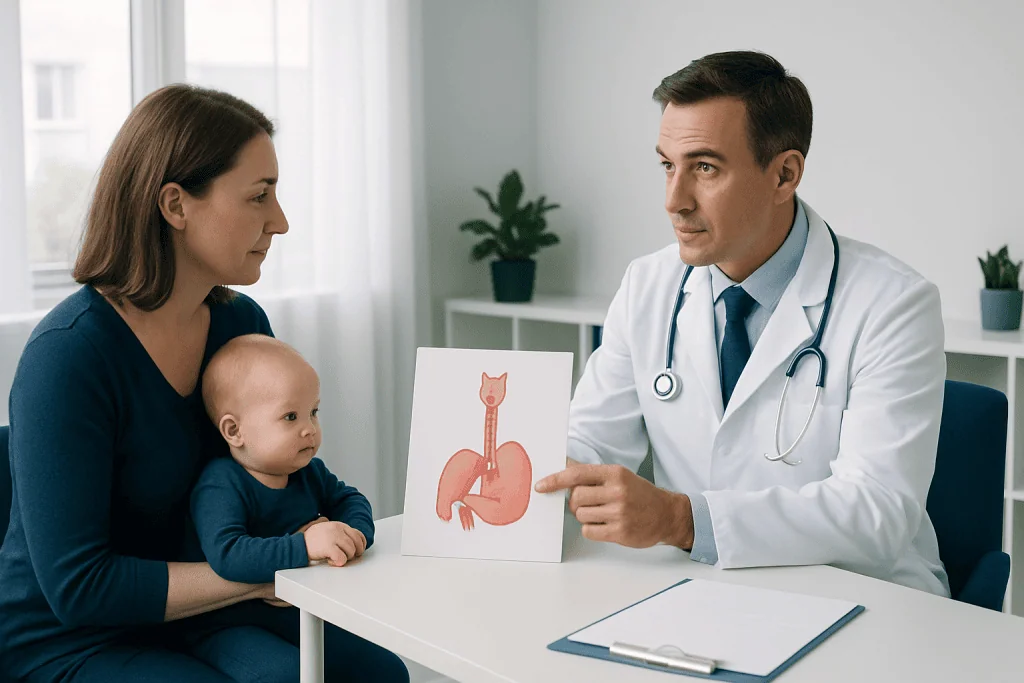
The TEF repair procedure is performed under general anesthesia, so the patient is asleep and does not feel pain during surgery. TEF repair anesthesia requires careful airway planning because the fistula can affect ventilation. In newborns, the anesthesia and surgical teams work closely to limit air passing through the fistula and into the stomach while maintaining stable breathing.
For many congenital cases, the surgeon reaches the chest through an incision between the ribs on the right side. In selected centers and patients, a minimally invasive thoracoscopic technique using small incisions and a camera may be considered. The best approach depends on the anatomy, the child’s condition, surgical expertise, and safety considerations.
The main TEF repair steps generally include identifying the trachea, esophagus, and fistula; carefully dividing the fistula; closing the opening in the trachea; and joining the esophageal ends when there is enough length to do so safely. If the gap is long, the operation may be staged. The child may need temporary nutritional support while the esophagus is allowed to grow or while another reconstructive strategy is planned.
For acquired fistulas, surgery may involve closure of the airway and esophageal defects separately, sometimes with healthy tissue placed between the repairs to reduce the chance of recurrence. Endoscopic measures, stents, or other treatments can be appropriate in selected cases, especially when surgery must be delayed or the cause needs additional management.
Benefits, Risks and Expected Surgical Results
The central benefit of tracheoesophageal fistula surgery is removal of the abnormal route between the airway and esophagus. This can reduce aspiration, support feeding, and help prevent recurrent respiratory complications. When esophageal continuity is restored, the child can usually progress toward feeding by mouth with individualized support.
All major surgery has potential risks. Early concerns after congenital repair can include an anastomotic leak, meaning a leak where the esophageal ends were joined; narrowing of the repair site (stricture); recurrent fistula; infection; bleeding; and breathing complications. Gastroesophageal reflux, swallowing difficulty, and tracheomalacia, a softness of the airway that can cause noisy breathing or cough, may occur during longer-term follow-up.
What is the most common complication after TEF repair? In babies who have esophageal atresia repaired at the same time, an esophageal anastomotic leak is commonly reported among the most frequent early surgical complications. Esophageal stricture is also a common later issue. The individual likelihood and significance of these complications vary with anatomy, associated conditions, tissue healing, and the type of repair.
What is the success rate of tracheoesophageal fistula surgery? Most infants with congenital TEF and esophageal atresia survive with modern specialist care, but no single success rate applies to every patient. Outcomes are influenced by prematurity, low birth weight, heart abnormalities, lung status, the length of the esophageal gap, and whether complications occur. The surgical team can provide the most relevant outlook after reviewing the patient’s anatomy and overall health.
Recovery Timeline After Esophageal Atresia Surgery
After surgery, newborns usually recover in a neonatal or pediatric intensive care setting. They may initially need breathing support, pain control, intravenous fluids, and nutrition through a vein or feeding tube. A tube placed across the esophageal repair may be used in some cases, but practices differ by surgical team and repair type.
Before feeding by mouth begins, clinicians may assess healing with an imaging study, particularly if there is concern about a leak. Feeding often starts gradually, with close observation for coughing, breathing changes, vomiting, discomfort, or difficulty swallowing. Feeding therapists and dietitians can help families establish safe, comfortable feeding routines.
How long does it take to recover from esophageal atresia surgery? Initial hospital recovery often takes weeks rather than days, especially when the baby needs respiratory support, has associated medical conditions, or requires staged reconstruction. The esophagus, feeding skills, reflux symptoms, and respiratory health may continue to need monitoring for months or longer. Many children make meaningful feeding progress over time, although some need treatment for narrowing or reflux.
How many days bed rest after fistula surgery? Strict bed rest is generally not described in the same way for newborn TEF repair as it may be for some adult operations. Activity and positioning are guided by the intensive care and surgical teams, with the priority being stable breathing, comfort, wound healing, and safe handling. In older children or adults with an acquired fistula, the recommended level of activity depends on the surgical approach and overall condition; the care team should provide personalized instructions.
Follow-Up, Home Care and Long-Term Health
After discharge, caregivers should follow the surgical team’s instructions for feeding, medicines, wound care, positioning, and follow-up appointments. It is important not to advance feeds, change a feeding tube plan, or stop prescribed treatment without medical guidance. Families may be advised to keep track of vomiting, coughing with meals, trouble swallowing, poor weight gain, fever, or recurrent chest symptoms.
Long-term care commonly includes monitoring for gastroesophageal reflux, esophageal stricture, swallowing difficulties, airway symptoms, and nutrition. If narrowing develops, a specialist may recommend endoscopic dilation to gently widen the esophagus. Children who have persistent feeding challenges may benefit from coordinated gastroenterology, respiratory, nutrition, and feeding support.
Some associated conditions require their own evaluation and follow-up. For example, congenital TEF can occur alongside heart, kidney, spine, limb, or digestive differences. Ongoing care is therefore tailored to the whole child rather than focused only on the original surgical repair.
At Acibadem International, multidisciplinary specialists in JCI-accredited hospitals assess and treat tracheoesophageal fistula and related feeding or airway concerns for international patients, with care plans coordinated across the relevant specialties.
When to Seek Medical Care
Newborns with excessive saliva, repeated coughing or choking during feeds, breathing difficulty, blue or gray color around the lips, or inability to feed should receive urgent medical assessment. A suspected TEF or esophageal atresia requires specialist evaluation in a hospital setting.
After TEF repair, caregivers should contact the surgical team promptly for fever, worsening breathing, persistent vomiting, increasing discomfort, redness or drainage from the incision, poor feeding, signs of dehydration, or a marked change in alertness. Emergency care is needed for severe trouble breathing, blue coloration, unresponsiveness, or signs of significant aspiration.
For older children or adults, recurrent pneumonia, coughing after swallowing, unexplained choking with liquids, or persistent difficulty swallowing should be evaluated by a qualified clinician. Early assessment can help identify a fistula, narrowing, reflux, or another condition affecting the airway or esophagus.
Frequently asked questions
What is TEF repair?
TEF repair is surgery that closes an abnormal passage between the trachea and esophagus. In many newborns, it is performed together with repair of esophageal atresia, where the esophagus is interrupted rather than connected normally to the stomach.
What is the most common complication after TEF repair?
An anastomotic leak, or leakage from the site where the esophagus was joined, is among the most common early complications after repair of congenital TEF with esophageal atresia. Esophageal stricture, or narrowing, is also common during follow-up and may require dilation.
What is the success rate of tracheoesophageal fistula surgery?
Most babies with congenital TEF now survive with specialized surgical and neonatal care. However, outcomes vary substantially according to prematurity, birth weight, associated heart or other congenital conditions, the anatomy of the esophagus, and postoperative complications.
How many days bed rest after fistula surgery?
For newborns, recovery is managed in the hospital and does not usually follow a standard bed-rest schedule. The care team guides positioning, handling, breathing support, and activity according to healing and medical stability. Older children and adults should follow their surgeon’s individualized activity instructions.
How long does it take to recover from esophageal atresia surgery?
The first stage of recovery often requires several weeks in hospital, although the exact length varies. Feeding, swallowing, reflux, and respiratory symptoms may need follow-up for months or longer, particularly if the child develops a stricture or has other health conditions.
Can a tracheoesophageal fistula return after repair?
A recurrent fistula is possible but is not expected in every patient. Coughing with feeds, repeated chest infections, or new aspiration symptoms after recovery should be discussed with the treating team, who may recommend imaging or endoscopic assessment.
References
- American Pediatric Surgical Association
- National Institute of Diabetes and Digestive and Kidney Diseases
- MedlinePlus
- National Organization for Rare Disorders
- European Reference Network for Rare Inherited and Congenital Anomalies
This article is for general information only and is not a substitute for professional medical advice. Please consult a qualified doctor about your individual situation.
Persistent digestive symptoms? Get evaluated in Turkey
JCI-accredited · board-certified surgeons · reply within 24h
Add us as a Preferred Source to see more of our trusted health content across Google Search, AI Overviews and Discover.