Temporal Lobe Function: Memory, Language, and Seizure-Related Symptoms

The temporal lobes help process memory, language, sound, and emotion. Problems in the temporal lobe can cause seizures, memory difficulties, speech changes, or unusual smells and sensations.
Key Takeaways
- The temporal lobes help process memory, language, sound, and emotion.
- Problems in the temporal lobe can cause seizures, memory difficulties, speech changes, or unusual smells and sensations.
- Diagnosis may involve a neurological exam, brain imaging, and EEG testing.
- Treatment depends on the cause and may include medicines, surgery, or supportive therapies.
- Prompt medical evaluation is important for new seizures, sudden confusion, or persistent neurological symptoms.
Temporal lobe function is essential for memory, language, hearing, and emotional processing. When this part of the brain is affected by injury, inflammation, tumors, or seizures, it can cause a wide range of symptoms, from memory problems to unusual sensations and episodes of impaired awareness.
Overview of temporal lobe function
The temporal lobes are located on the sides of the brain, roughly near the temples and ears. Although both temporal lobes share many responsibilities, each side may contribute slightly differently to brain function. Together, they play an important role in understanding sound, forming and retrieving memories, processing language, and linking experiences with emotions.
Temporal lobe function is closely connected with nearby structures, especially the hippocampus and amygdala. The hippocampus helps create new memories, while the amygdala contributes to emotional meaning and reactions. Because of these close connections, a problem in the temporal lobe can affect more than one ability at the same time, such as memory, mood, and awareness.
The temporal lobe also helps the brain recognize what is heard and seen. It supports understanding spoken words, identifying familiar voices, and attaching meaning to sounds. On the dominant side of the brain, which is usually the left side in right-handed people, the temporal lobe is especially important for language comprehension.
Symptoms related to the temporal lobe can be subtle or dramatic. Some people notice mild word-finding trouble or forgetfulness, while others experience seizures, episodes of staring, or unusual sensations. Because these symptoms may come and go, they are sometimes overlooked until a medical evaluation is performed.
What the temporal lobe controls
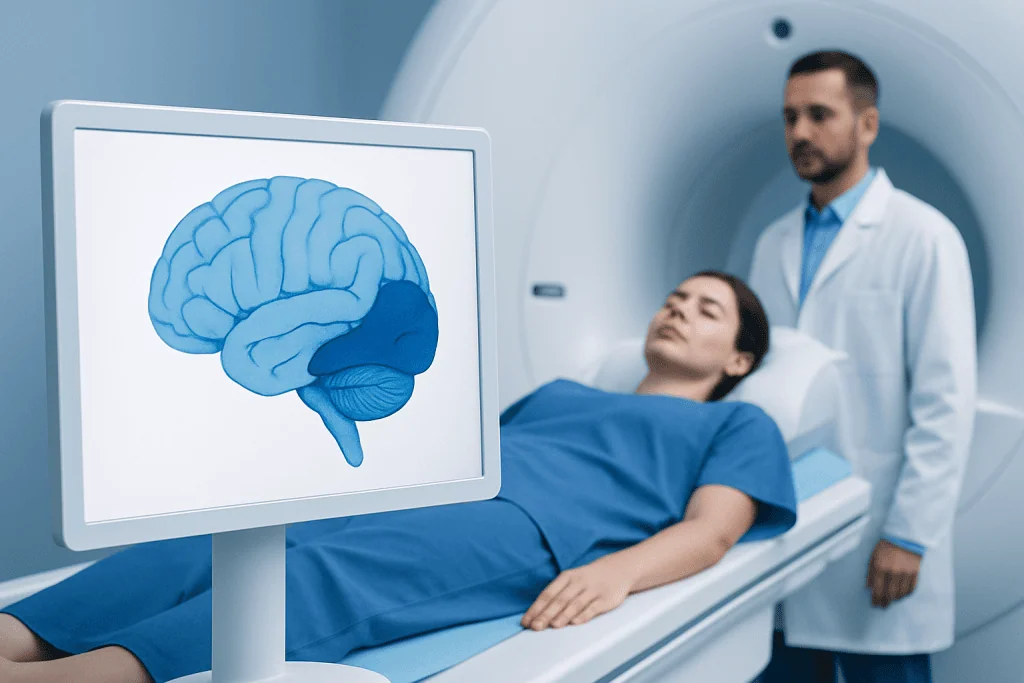
Temporal lobe function includes several everyday abilities that many people take for granted. These include understanding speech, recognizing sounds, storing new information, and connecting memories with feelings. This is why temporal lobe disorders can affect communication, learning, and day-to-day independence.
The temporal lobe contributes to:
- Memory formation and recall
- Language comprehension
- Hearing and sound interpretation
- Recognition of faces, objects, and voices
- Emotional processing and behavioral responses
- Parts of smell and sensory experience
The right and left temporal lobes may produce somewhat different symptoms when affected. Problems in the left temporal lobe may be more likely to involve language understanding and word retrieval. Problems in the right temporal lobe may be more noticeable through difficulties with visual recognition, music perception, emotional tone, or social cues.
Because the temporal lobes are part of a broader network, a single symptom does not always point to one exact location. For example, memory problems can also occur with sleep disorders, depression, medication effects, or other neurological conditions. A careful assessment helps determine whether the temporal lobe is involved and why.
Symptoms of temporal lobe problems

Symptoms linked to the temporal lobe vary depending on the exact area involved and the underlying cause. Some changes develop gradually, such as increasing forgetfulness or trouble understanding language. Others happen suddenly, especially when seizures occur.
Common temporal lobe symptoms may include memory loss, trouble learning new information, difficulty understanding spoken words, or episodes of confusion. Some people notice emotional changes, such as anxiety, fear, irritability, or a sense of unfamiliarity in familiar places. Others describe unusual sensory experiences, including strange smells, odd tastes, ringing sounds, or a rising sensation in the stomach.
Temporal lobe seizures can look different from the convulsions many people associate with epilepsy. A person may stare, stop responding, make repetitive movements such as lip smacking, or seem briefly confused. Before the event, there may be an aura, such as a sudden feeling of fear, déjà vu, or an unusual smell. These features are often seen in temporal lobe epilepsy.
Depending on the cause, additional symptoms can occur. Headache, weakness, balance problems, personality changes, or hearing changes may suggest a broader neurological problem. If symptoms are new, recurrent, or worsening, medical evaluation is important to identify the cause and guide treatment.
Causes and risk factors
Temporal lobe dysfunction is not a diagnosis by itself. Instead, it is a pattern of symptoms or findings caused by another condition affecting this area of the brain. The cause may be temporary and treatable, or it may require long-term neurological care.
Possible causes include head injury, stroke, brain infection, inflammation, tumors, and neurodegenerative disease. Structural changes such as scarring in the hippocampus can trigger seizures. In some people, symptoms arise from epilepsy, while in others they may relate to a mass, swelling, or reduced blood flow.
Risk factors depend on the underlying condition but may include a history of febrile seizures in childhood, significant head trauma, central nervous system infection, family history of seizure disorders, or known brain abnormalities. Older age can increase the risk of stroke and some degenerative conditions, which may also affect temporal lobe function.
Not every episode of memory trouble or unusual sensation means there is a serious brain disorder. Fatigue, poor sleep, stress, migraines, medications, alcohol, and metabolic disturbances can sometimes mimic temporal lobe symptoms. This is one reason why thorough evaluation is valuable before any conclusion is reached.
How doctors diagnose temporal lobe conditions
Diagnosis begins with a detailed medical history and neurological examination. The doctor will ask about the timing of symptoms, whether episodes involve loss of awareness, and whether there are triggers such as sleep deprivation or illness. Family members or witnesses can be very helpful in describing events that the patient may not fully remember.
Brain imaging is often used to look for structural causes. Magnetic resonance imaging can show scarring, inflammation, tumors, or other changes affecting the temporal lobe. In some situations, doctors may use brain MRI to examine this region in greater detail, especially when seizures or persistent neurological symptoms are present.
An electroencephalogram, or EEG, records the brain’s electrical activity and can help detect seizure patterns. Longer recordings or video EEG monitoring may be recommended if events are intermittent. Neuropsychological testing may also be used to assess memory, language, attention, and emotional function in a structured way.
Blood tests may help rule out infections, metabolic problems, autoimmune conditions, or medication-related causes. When a tumor or another lesion is suspected, the care team may involve specialists in neurosurgery or related fields. The main goal is to identify the exact cause, because treatment choices depend on the diagnosis.
Treatment options
Treatment for temporal lobe problems depends on what is causing them. If seizures are the main issue, anti-seizure medicines are usually the first step. If the cause is infection, inflammation, stroke, or a tumor, treatment will focus on that underlying problem. Supportive care such as speech therapy, cognitive rehabilitation, or psychological support may also be useful.
For seizure disorders, doctors may recommend lifestyle measures in addition to medication, such as regular sleep, avoiding excess alcohol, and taking medicines consistently. When seizures continue despite medication, further testing may be needed to determine whether other options are appropriate. In selected cases, advanced care for epilepsy treatment may include surgery or device-based therapies.
If a mass or structural lesion is affecting the temporal lobe, treatment may involve surgery, close monitoring, or other targeted therapies depending on the diagnosis. For example, care may overlap with evaluation for brain tumor when imaging reveals an abnormal growth. The treatment plan is individualized to balance symptom control, brain function, and overall health.
People with memory, language, or emotional effects may benefit from rehabilitation and follow-up with more than one specialist. Near the end of the care journey, some patients require coordination between neurologists, neuroradiologists, neurosurgeons, and rehabilitation experts. Acibadem International’s multidisciplinary specialists and JCI-accredited hospitals diagnose and treat temporal lobe disorders for international patients when this level of care is needed.
Self-care, safety, and when to seek medical help
Self-care cannot replace medical treatment, but it can support brain health and symptom management. Keeping regular sleep habits, taking prescribed medicines as directed, avoiding known seizure triggers, staying hydrated, and limiting alcohol may help reduce symptom burden in some people. Memory aids such as notes, alarms, and routines can also improve daily functioning.
Safety is especially important if there have been episodes of impaired awareness or seizures. A person should speak with a doctor about driving, swimming alone, climbing heights, and operating machinery. Family members may be encouraged to learn basic seizure first aid, including staying calm, protecting the person from injury, and seeking emergency help when needed.
Medical attention is important for any new seizure, a first episode of loss of awareness, sudden confusion, severe headache, weakness, or speech difficulty. Urgent care is also needed if a seizure lasts several minutes, if repeated seizures happen without full recovery, or if injury occurs during an episode. New or progressive memory and language changes should also be assessed promptly, especially in older adults.
When symptoms are mild but persistent, a planned neurological evaluation is still worthwhile. Early diagnosis often makes treatment more effective and can help reduce uncertainty. The most reassuring step is not guessing, but having symptoms reviewed by a qualified doctor who can decide whether testing is needed.
Frequently asked questions
What is the main function of the temporal lobe?
The temporal lobe helps with memory, language comprehension, hearing, and emotional processing. It also helps the brain recognize sounds, voices, and some visual information. Because it has several roles, symptoms can vary widely when it is affected.
Can temporal lobe problems cause memory loss?
Yes. The temporal lobe, especially the hippocampus within it, is important for forming new memories. Problems in this area may lead to forgetfulness, difficulty learning new information, or trouble recalling recent events.
What does a temporal lobe seizure feel like?
Some people experience an aura before a seizure, such as déjà vu, sudden fear, a strange smell, or a rising sensation in the stomach. During the seizure, they may stare, stop responding, or make repetitive movements. Afterward, confusion or tiredness may occur.
Are temporal lobe symptoms always caused by epilepsy?
No. Although seizures are a well-known cause, temporal lobe symptoms can also result from stroke, infection, inflammation, head injury, tumors, or degenerative conditions. Sleep problems, medications, and metabolic issues can sometimes cause similar symptoms as well.
How do doctors test for temporal lobe disorders?
Doctors usually begin with a medical history and neurological examination. They may then order tests such as MRI, EEG, blood tests, or neuropsychological assessment. The exact combination depends on the symptoms and the suspected cause.
Can temporal lobe disorders be treated?
Many temporal lobe conditions can be treated or managed effectively, but the best approach depends on the diagnosis. Options may include anti-seizure medication, treatment of infection or inflammation, surgery for selected structural problems, and rehabilitation therapies. A specialist can explain which options are most appropriate.
References
- National Institute of Neurological Disorders and Stroke
- National Institute on Deafness and Other Communication Disorders
- Epilepsy Foundation
- American Association of Neurological Surgeons
- Mayo Clinic
This article is for general information only and is not a substitute for professional medical advice. Please consult a qualified doctor about your individual situation.
Explore treatments in Turkey — costs, top hospitals & a free quote
JCI-accredited · board-certified surgeons · reply within 24h
Add us as a Preferred Source to see more of our trusted health content across Google Search, AI Overviews and Discover.