Thinest Hair: What Patients Need to Know

Thinest hair can describe either naturally fine strands or hair that has become thinner over time. Common reasons include inherited hair loss, hormonal changes, stress, illness, poor nutrition, and scalp conditions.
Key Takeaways
- Thinest hair can describe either naturally fine strands or hair that has become thinner over time.
- Common reasons include inherited hair loss, hormonal changes, stress, illness, poor nutrition, and scalp conditions.
- A doctor may use the pattern of thinning, medical history, scalp exam, and blood tests to find the cause.
- Treatment depends on the diagnosis and may include lifestyle changes, scalp care, medications, or selected procedures.
- Medical advice is important if thinning is sudden, patchy, associated with scalp symptoms, or accompanied by other health changes.
Thinest hair usually refers to hair that looks less dense, feels finer, or shows more scalp than before. In many cases it is linked to genetics, aging, stress, hormones, nutrition, or scalp disease, and a medical assessment can help identify whether the change is temporary or part of a treatable hair-loss condition.
What “thinest hair” usually means
Thinest hair is not a formal medical term, but patients often use it to describe hair that seems unusually fine, sparse, or less full than it used to be. In practice, this may mean one of two things: the individual naturally has very fine hair strands, or the person is experiencing hair thinning, where the number of hairs or the diameter of the hair shaft has decreased over time.
These two situations are not exactly the same. Fine hair is often a normal inherited trait, while thinning hair may suggest a change in the hair-growth cycle or a medical condition affecting the scalp, hormones, or general health. Because the causes are different, the best approach starts with identifying whether the concern is lifelong hair texture, progressive hair loss, or both.
Hair changes can happen gradually and may be easy to miss at first. Many people notice a wider part line, less volume in a ponytail, more visible scalp under bright light, or increased shedding in the shower or on a hairbrush. A calm, structured evaluation can usually clarify whether the change is within a normal range or needs treatment.
How hair becomes thinner over time
Hair grows in cycles. Each follicle moves through a growing phase, a brief transition phase, and a resting phase before the hair sheds and a new one begins to grow. When this cycle is disrupted, more hairs may enter the shedding phase at once, or new hairs may grow back finer and shorter than before.
Another important process is miniaturization. In some forms of inherited hair loss, follicles gradually produce thinner, less pigmented hairs over time. This does not always cause complete baldness, but it can make the scalp more visible and reduce overall volume. Many patients describe this as their hair feeling weaker, flatter, or “not like it used to be.”
External factors can also affect hair appearance without changing the number of follicles. Heat styling, chemical treatments, tight hairstyles, and harsh grooming can damage the hair shaft, leading to breakage that makes the hair look thinner. For this reason, doctors often assess both scalp health and hair-care habits when evaluating a complaint of thinest hair.
Common causes and risk factors

The most common cause of gradually thinning hair is inherited pattern hair loss, which can affect both women and men. In women, it often appears as a wider central part or diffuse thinning over the crown. In men, it may start with recession at the temples or thinning at the crown. This type of loss is often linked to genetic sensitivity of hair follicles to hormones and is commonly discussed as hair loss.
Temporary shedding can occur after physical or emotional stress. Illness, fever, surgery, significant weight loss, childbirth, and major life stress can shift more follicles into a resting phase, leading to increased shedding a few months later. This can be upsetting, but in many cases the hair gradually recovers once the trigger improves.
Hormonal and nutritional factors are also important. Thyroid disorders, iron deficiency, low protein intake, vitamin or mineral deficiencies, menopause, and some endocrine conditions may contribute to thinning. Certain medicines can play a role as well. In some people, scalp disease is the main issue. Conditions such as inflammation, fungal infection, or dandruff-related irritation may affect hair quality and shedding. When scalp symptoms are prominent, doctors may also consider seborrheic dermatitis and other dermatologic causes.
- Family history of hair thinning
- Older age
- Recent illness, childbirth, surgery, or major stress
- Restrictive dieting or nutritional deficiency
- Hormonal changes or thyroid disease
- Frequent bleaching, heat styling, or tight hairstyles
Symptoms that may point to a medical cause
Not all thin-looking hair is a sign of disease, but certain patterns make a medical cause more likely. Progressive thinning over months, a noticeable reduction in hair volume, increased shedding, a widening part, or visible scalp can all be reasons to seek an evaluation. Some people also notice that the hair itself feels finer, softer, or more fragile than before.
Doctors pay close attention to the pattern of loss. Diffuse shedding may suggest a stress-related shift in the growth cycle, while a patterned distribution may point to hereditary hair loss. Patchy areas, broken hairs, scarring, or loss of eyebrows or body hair may suggest other conditions that need prompt attention.
Associated symptoms can provide useful clues. Itching, burning, flaking, pain, redness, or pustules may indicate a scalp disorder rather than simple cosmetic thinning. If hair changes occur alongside fatigue, menstrual changes, weight change, acne, excess facial hair, or cold intolerance, a clinician may consider hormone or metabolic causes in addition to scalp-related factors.
How doctors diagnose thinning hair
Diagnosis begins with a detailed history. A doctor usually asks when the thinning started, whether shedding is increased, what hair products or styling practices are used, whether there has been recent illness or stress, and whether relatives have similar hair changes. A timeline is helpful because some causes appear suddenly, while others develop gradually over years.
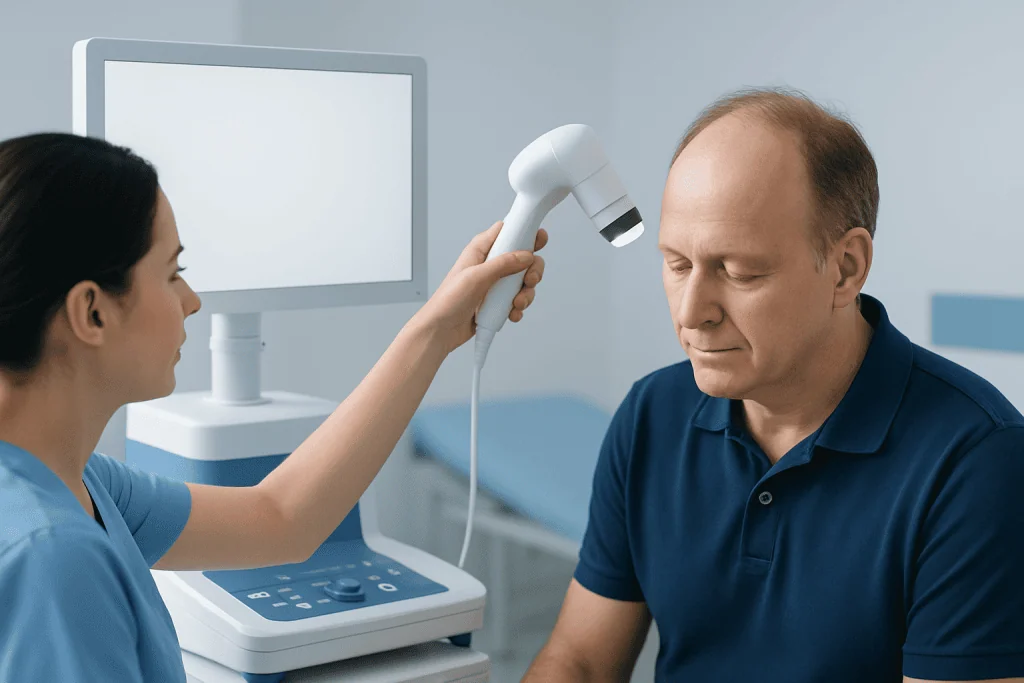
A scalp and hair examination is then performed. The doctor may assess the pattern of thinning, look for inflammation or scale, gently test for active shedding, and inspect the hair shaft for breakage. In some cases, dermoscopy or close visual examination of the scalp helps distinguish among common causes of hair loss.
Blood tests may be recommended when the history suggests an internal cause. These can include tests for iron status, thyroid function, and selected nutritional or hormonal issues. If the diagnosis remains unclear, referral to a dermatologist may be advised. Some patients may benefit from specialized evaluation and, in selected cases, discussion of options such as hair transplant procedures if medical treatment alone is not sufficient.
Treatment options and practical hair care
Treatment depends on the cause. When shedding is triggered by stress, illness, or childbirth, management often focuses on time, reassurance, and correcting contributing factors such as low iron or inadequate nutrition. If hereditary pattern thinning is diagnosed, a doctor may discuss evidence-based medical therapies designed to slow loss and support regrowth. Treatment usually works best when started early and continued consistently under professional guidance.
Scalp health matters as much as the hair itself. If there is dandruff, inflammation, or itching, treating the scalp condition may reduce shedding and improve the appearance of fullness. Some people benefit from medical therapies that support hair growth, while others may be candidates for procedural approaches. Depending on the diagnosis, a clinician may consider options associated with platelet-rich plasma (PRP) or other specialist-led care.
Daily habits can also make a noticeable difference. Gentle cleansing, avoiding excessive heat, limiting harsh chemical processing, and reducing traction from tight styles can help protect fragile hair shafts. Volumizing cuts and lighter styling products may improve the look of fullness, but they should not replace medical assessment when thinning is progressive.
- Use gentle shampoos and avoid aggressive scrubbing
- Limit bleaching, repeated coloring, and high-heat tools
- Avoid tight braids, buns, extensions, or ponytails
- Support adequate protein, iron, and overall nutrition
- Follow the treatment plan consistently and allow time for results
Prevention, self-care, and realistic expectations
Not every type of hair thinning can be prevented, especially when genetics are the main factor. Still, healthy routines can reduce avoidable damage and support the best possible hair growth. A balanced diet, stress management, regular sleep, and treatment of underlying medical conditions all contribute to healthier hair over time.
It is also important to set realistic expectations. Hair grows slowly, and improvement usually takes months rather than weeks. Many treatments aim to slow further thinning and preserve density, rather than produce dramatic regrowth. Before-and-after comparisons are best judged in consistent lighting and with photographs taken over time, rather than from day-to-day impressions.
For patients who remain concerned about cosmetic impact, specialist care can help clarify the full range of options. Near the end of evaluation and treatment planning, some may wish to discuss advanced restorative approaches such as selected regenerative therapies where appropriate. Acibadem International’s multidisciplinary specialists and JCI-accredited hospitals diagnose and treat hair and scalp conditions for international patients.
When to seek medical care
Medical advice is appropriate if thinest hair develops suddenly, becomes noticeably worse over a short time, or is associated with scalp redness, pain, itching, scaling, or patchy bald areas. A prompt assessment is also important if thinning follows a new medication, major illness, or unexplained weight change.
Patients should also seek care when hair changes occur with fatigue, menstrual irregularity, signs of hormone imbalance, or symptoms that suggest thyroid or nutritional problems. Children, adolescents, and anyone with scarring, broken hairs, or eyebrow loss should be assessed by a qualified clinician.
Early diagnosis can make treatment more effective and can help rule out reversible causes. A dermatologist or primary care doctor can usually guide the first steps and arrange further testing or referral if needed.
Frequently asked questions
Is thinest hair the same as hair loss?
Not always. Some people naturally have very fine hair strands, while others have hair that has become thinner because of shedding, follicle miniaturization, or breakage. A doctor can help determine whether the issue is natural hair texture, true hair loss, or both.
Can thinning hair grow back?
It depends on the cause. Hair often regrows after temporary shedding caused by stress, illness, or childbirth once the trigger resolves. In inherited pattern hair loss, treatment may help slow progression and improve density, but results vary and usually require ongoing care.
Does washing hair too often cause it to thin?
Regular washing does not usually cause hair thinning. Shedding seen during washing often reflects hairs that were already in the resting phase and ready to fall out. Harsh products or aggressive scrubbing can irritate the scalp or increase breakage, so gentle care is best.
What vitamin deficiency causes thin-looking hair?
Low iron and some nutritional deficiencies can contribute to increased shedding or reduced hair quality. However, not all thinning is caused by vitamins, and taking supplements without testing is not always helpful. A clinician may recommend blood tests if the history suggests a deficiency.
When should someone worry about sudden hair thinning?
Sudden or rapid thinning deserves medical attention, especially if it is patchy or associated with scalp pain, redness, flaking, or other body symptoms. Quick assessment can help identify treatable causes and rule out inflammatory or hormonal conditions.
Can stress really make hair thinner?
Yes. Significant physical or emotional stress can push more hairs into a resting phase, leading to increased shedding several weeks or months later. This type of shedding is often temporary, but recovery may take time and should still be assessed if severe or prolonged.
References
- American Academy of Dermatology
- National Institute of Arthritis and Musculoskeletal and Skin Diseases
- National Health Service
- Mayo Clinic
- Cleveland Clinic
This article is for general information only and is not a substitute for professional medical advice. Please consult a qualified doctor about your individual situation.
Hair transplant in Turkey — costs, graft counts & a free assessment
JCI-accredited · board-certified surgeons · reply within 24h
Add us as a Preferred Source to see more of our trusted health content across Google Search, AI Overviews and Discover.
Check your numbers in seconds
BMI, calories, due date, blood pressure and 30+ more clinical calculators — free, instant, doctor-reviewed ranges.