Thymus Tumor Treatment: How It Works, Results and What to Expect

A thymus mass requires expert assessment because it may be benign, a thymoma, thymic carcinoma, or another condition. Complete surgical removal offers the best chance of long-term control for many localized thymomas.
Key Takeaways
- A thymus mass requires expert assessment because it may be benign, a thymoma, thymic carcinoma, or another condition.
- Complete surgical removal offers the best chance of long-term control for many localized thymomas.
- Radiation therapy and drug treatments can help manage tumors that are invasive, recurrent, or not suitable for immediate surgery.
- Treatment planning commonly involves thoracic surgery, medical oncology, radiation oncology, radiology, pathology, and neurology when myasthenia gravis is present.
- Recovery and outlook vary widely, so individualized staging and follow-up are essential.
Thymus tumor treatment is tailored to the tumor type, its size and spread, whether it can be fully removed, and the person’s general health. Surgery is often the main treatment for a removable thymoma, while radiation therapy, chemotherapy, and other systemic treatments may be used before or after surgery or for more advanced disease.
Overview: How Thymus Tumor Treatment Works
Thymus tumor treatment aims to remove or control an abnormal growth in the thymus, a small organ in the upper chest behind the breastbone. The appropriate plan depends on whether the tumor is a thymoma, thymic carcinoma, or a different type of mass; whether it has grown into nearby structures or spread; and whether surgery can safely remove it completely.
For many people with a localized and removable thymoma, surgery to remove the thymus and tumor, called thymectomy, is the central treatment. Some people also need radiation therapy, chemotherapy, or other medicines. These treatments may be used before surgery to shrink a locally advanced tumor, after surgery when recurrence risk is higher, or as the main approach when an operation is not appropriate.
Care is usually planned by a multidisciplinary team. Imaging specialists, pathologists, thoracic surgeons, medical oncologists, radiation oncologists, and other clinicians review the findings together. This is important because thymic tumors are uncommon and can behave differently from more familiar chest cancers.
Who May Be a Candidate for Surgery or Other Treatment?
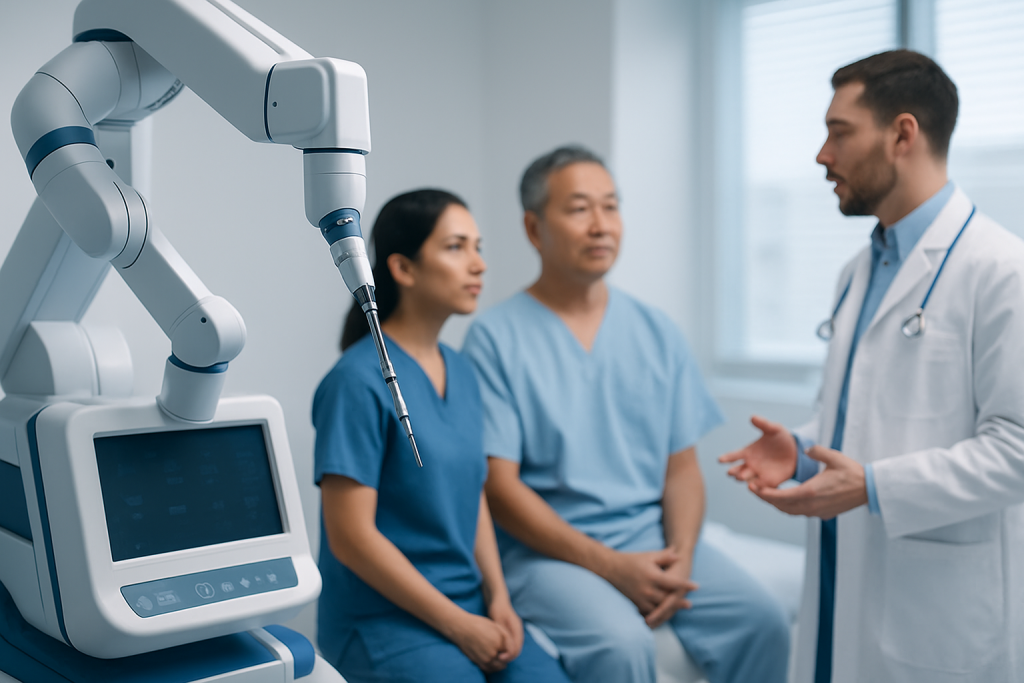
A person may be considered for surgery when scans suggest that the tumor can be removed fully without unacceptable risk. The team evaluates the relationship of the growth to the lungs, heart, major blood vessels, nerves, and the lining around the lungs. A person’s heart and lung function, other medical conditions, and ability to recover from surgery also matter.
Before treatment, clinicians commonly use chest computed tomography (CT) and may use magnetic resonance imaging (MRI) or positron emission tomography (PET) in selected situations. A biopsy may be recommended when the diagnosis is uncertain or when drug treatment is being considered first. In some cases of a clearly resectable thymoma, a team may proceed directly to surgery rather than biopsy, as the operation provides both diagnosis and treatment.
Thymomas can be associated with autoimmune conditions, especially myasthenia gravis, which may cause drooping eyelids, double vision, muscle weakness, or difficulty swallowing. If present, this condition should be carefully stabilized with neurology input before an operation. Treatment planning may also include evaluation for anemia or other immune-related conditions.
Thymus Tumor Treatment Step by Step

The first step is confirming the likely diagnosis and stage. The care team reviews symptoms, imaging, laboratory results, and any biopsy findings. They then discuss whether the goal is complete removal, reduction of tumor size before surgery, control of disease that cannot be removed, or symptom relief. Patients should be offered a clear explanation of the expected benefits, alternatives, and possible risks of each recommendation.
When surgery is advised, the surgeon removes the thymus gland, the tumor, and sometimes nearby fatty tissue or involved surrounding tissue. The operation may be performed through an incision in the breastbone, known as sternotomy, or through selected minimally invasive approaches using small chest incisions. The method depends on tumor size, location, invasion of nearby structures, and the surgeon’s assessment of safe complete removal.
If a tumor is locally advanced, chemotherapy with or without radiation therapy may be used first. The response is reassessed with imaging, and surgery may become possible afterward. Radiation therapy may be recommended after surgery when margins are close or positive, when the tumor had invaded nearby tissue, or in other higher-risk situations. Drug therapy for recurrent or metastatic disease can include chemotherapy and, for selected people, targeted or other systemic treatments guided by tumor features and prior therapy.
- Resectable localized tumor: surgery is often the first treatment.
- Locally advanced tumor: treatment may begin with chemotherapy, sometimes combined with radiation, followed by reassessment for surgery.
- Unresectable or metastatic tumor: systemic treatment and/or radiation can help control disease and symptoms.
- Recurrent tumor: options may include repeat surgery, radiation, systemic treatment, or a combination depending on the site and extent of recurrence.
Benefits, Risks and Recovery Timeline
The main potential benefit of surgery is complete removal of a localized tumor, which can provide durable disease control and may be curative. Radiation and systemic treatments can reduce recurrence risk in selected cases, shrink tumors, slow disease progression, and relieve symptoms. The likely benefit depends strongly on tumor type, stage, completeness of removal, and response to treatment.
Risks of thymectomy include bleeding, infection, blood clots, pneumonia, pain, abnormal heart rhythm, and injury to nearby structures. If the tumor involves major vessels, nerves, lung tissue, or the sac around the heart, surgery may be more complex. Radiation can cause temporary tiredness, skin irritation, swallowing discomfort, or inflammation in nearby chest tissues. Chemotherapy may cause fatigue, nausea, low blood counts, infection risk, or other effects that vary with the medicines used.
After surgery, patients usually spend time in a monitored hospital setting while pain control, breathing, mobility, and drainage tubes are managed. The exact hospital stay and recovery period differ by surgical approach and complexity. Light walking is encouraged when safe, while heavy lifting and strenuous activity are usually limited until the surgical team confirms healing. Many people return gradually to usual daily activities over several weeks, but recovery can take longer after an extensive operation or additional treatment.
Follow-up typically includes regular clinical reviews and chest imaging, because thymic tumors can recur years after initial treatment. The follow-up schedule is individualized and may continue long term. New symptoms should be discussed promptly rather than waiting for the next planned scan.
How Fast Does Thymus Cancer Grow?
Growth rate varies substantially by tumor type. Many thymomas grow slowly and may remain localized for some time, although they can still invade nearby tissues or recur. Thymic carcinoma generally behaves more aggressively than thymoma and is more likely to spread to lymph nodes or distant organs.
Imaging cannot always predict behavior with certainty. Comparing current and previous scans can show whether a mass is changing, but pathology and staging provide more reliable information about the tumor. A specialist team can explain what the findings mean for an individual situation and whether treatment should begin promptly.
Even a slow-growing thymic tumor should not be ignored. Timely evaluation helps determine whether observation, surgery, or another treatment is most appropriate and can prevent unnecessary delays in care.
What Is the Success Rate of Thymoma Surgery?
There is no single success rate that applies to every thymoma operation. Outcomes are generally most favorable when a thymoma is diagnosed at an early stage and can be completely removed. Tumors that have grown into nearby organs, cannot be removed fully, or have spread are more likely to need combined treatment and may have a higher chance of recurrence.
Success can mean different things: complete removal at surgery, no visible disease after treatment, control of the tumor over time, or improvement in related conditions such as myasthenia gravis. Surgical pathology, including the tumor subtype and whether the edges of removed tissue are free of tumor, helps the team estimate recurrence risk and decide whether further treatment is advisable.
Because thymomas may recur late, long-term surveillance is an important part of successful care. Patients can ask their clinicians about the goal of treatment, the likelihood of complete removal in their specific case, and the recommended plan for ongoing imaging.
How Serious Is Thymus Cancer, and Can a Thymus Mass Be Benign?
Thymus cancer can be serious, particularly when it is invasive, has spread, or is a thymic carcinoma. However, seriousness is not determined by the word cancer alone. Many thymomas are detected while still localized and can be treated effectively, especially when complete surgical removal is possible.
Yes, a mass in the thymus can be benign or noncancerous. Possibilities include thymic cysts, enlargement of normal thymic tissue, benign tumors, and changes related to inflammation or immune conditions. Imaging features can sometimes suggest a benign cause, but further evaluation may be needed to distinguish it from a thymoma, thymic carcinoma, lymphoma, thyroid-related mass, or another chest condition.
It is important not to assume that a thymic mass is either harmless or cancerous without appropriate assessment. Review by clinicians experienced in chest tumors helps ensure that imaging, biopsy decisions, and treatment recommendations are suited to the individual findings.
When to Seek Medical Care
Medical assessment is advisable when a chest scan identifies a thymus mass, even if there are no symptoms. Thymic tumors are sometimes found incidentally during imaging done for another reason. A clinician can arrange appropriate imaging review and referral to a thoracic or oncology specialist when needed.
People should seek prompt medical care for persistent chest pain or pressure, shortness of breath, an ongoing cough, unexplained swelling of the face or neck, difficulty swallowing, or new muscle weakness. Urgent assessment is important for severe breathing difficulty, rapidly worsening weakness, or trouble swallowing that affects breathing or hydration.
Acibadem International’s multidisciplinary specialists at JCI-accredited hospitals assess and treat thymic tumors for international patients, coordinating surgical, medical, radiation, imaging, and supportive care when appropriate. A second opinion may also be helpful when surgery is complex, the diagnosis is uncertain, or a recurrent tumor is being considered for further treatment.
Frequently asked questions
What is the main treatment for a thymus tumor?
Surgery is commonly the main treatment for a thymoma that can be removed safely and completely. Depending on the tumor type and stage, treatment may also include radiation therapy, chemotherapy, or other systemic medicines. The best plan is based on imaging, pathology, surgical feasibility, and overall health.
Does every thymus mass need surgery?
No. Some thymus masses are benign cysts, enlarged thymic tissue, or other findings that may be monitored or managed differently. However, every newly identified thymic mass should be assessed by an appropriately qualified clinician to establish the cause and determine whether treatment is needed.
Is thymectomy a major operation?
Thymectomy can be a major chest operation, especially when the tumor is large or involves nearby tissues. In selected cases, it may be performed using minimally invasive techniques. The surgical approach, hospital stay, and recovery needs depend on the tumor and the individual patient.
Can thymoma come back after surgery?
Yes, thymoma can recur even after apparently complete removal, sometimes years later. The risk varies with tumor stage, subtype, and whether it was fully removed. Regular long-term follow-up imaging is therefore often recommended.
Can chemotherapy cure thymus cancer?
Chemotherapy can shrink or control some thymic tumors and may make surgery possible for selected locally advanced tumors. For disease that has spread or cannot be removed, it is often used to control cancer and symptoms rather than as a stand-alone cure. The response depends on the tumor type and extent of disease.
What symptoms can a thymus tumor cause?
Some thymus tumors cause no symptoms and are found incidentally on imaging. Others may cause cough, chest discomfort, breathlessness, or symptoms from pressure on nearby structures. Thymoma may also be linked with myasthenia gravis, which can cause fluctuating muscle weakness, drooping eyelids, double vision, or swallowing difficulty.
References
- National Cancer Institute
- American Cancer Society
- European Society for Medical Oncology
- National Comprehensive Cancer Network
- International Thymic Malignancy Interest Group
This article is for general information only and is not a substitute for professional medical advice. Please consult a qualified doctor about your individual situation.
Oncology care in Turkey — second opinion and treatment plan
JCI-accredited · board-certified surgeons · reply within 24h
Add us as a Preferred Source to see more of our trusted health content across Google Search, AI Overviews and Discover.