Thyroid Eye Disease Treatment: How It Works, Results and What to Expect

Thyroid eye disease is an autoimmune condition that can affect the tissues around the eyes, often in people with Graves' disease. Treatment depends on whether the disease is active and inflamed or inactive and stable, as well as whether vision is at risk.
Key Takeaways
- Thyroid eye disease is an autoimmune condition that can affect the tissues around the eyes, often in people with Graves' disease.
- Treatment depends on whether the disease is active and inflamed or inactive and stable, as well as whether vision is at risk.
- Lubricating eye drops, smoking cessation and careful thyroid management can support eye comfort and disease control.
- Medicines may reduce active inflammation; surgery is usually considered after the condition has stabilized unless urgent vision-threatening problems occur.
- New or worsening changes in vision, color vision, eye movement or severe pain require prompt medical assessment.
Thyroid eye disease treatment is tailored to the stage and severity of the condition. It may include controlling thyroid disease, protecting the eye surface, reducing orbital inflammation with medicines, and using surgery when changes in eye position, eyelids or vision persist.
Overview: How thyroid eye disease treatment works
Thyroid eye disease treatment aims to protect vision, relieve symptoms such as dryness and double vision, reduce active inflammation and address lasting changes to the eyelids, eye position or eye muscles. The right plan depends on the individual’s symptoms, examination findings and whether the condition is in an active inflammatory phase or a later, more stable phase.
Thyroid eye disease, also called Graves’ eye disease or thyroid-associated orbitopathy, is an autoimmune condition. The immune system causes inflammation and swelling in the muscles, fat and connective tissue behind the eyes. This can make the eyes feel dry or gritty, look prominent, become misaligned, or, less commonly, place pressure on the optic nerve.
Care is commonly coordinated between an endocrinologist and an ophthalmologist with experience in orbital disease. The team may also involve an oculoplastic-orbital surgeon, strabismus specialist, radiation specialist or other clinicians when needed. Treating thyroid hormone levels is important for overall health, but it does not always stop or reverse eye disease on its own.
How serious is thyroid eye disease?
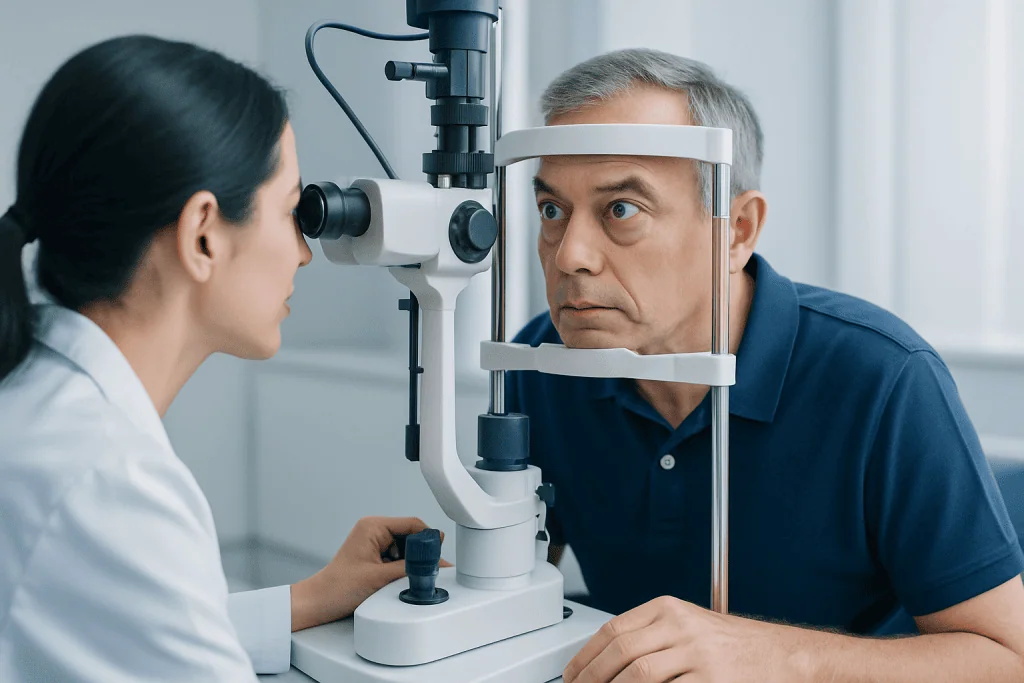
Thyroid eye disease ranges from mild to sight-threatening. Many people have mild symptoms, including watering, irritation, sensitivity to light, eyelid swelling or a feeling of pressure behind the eyes. These symptoms can still affect daily comfort, sleep, work and confidence, but they can often be managed with eye-surface care and regular review.
Moderate disease can cause more visible eye prominence, eyelid retraction, persistent swelling, double vision or difficulty fully closing the eyes. Severe disease is less common but needs urgent specialist care because swelling can compress the optic nerve or exposure of the cornea can threaten vision.
Vision changes should never be assumed to be a routine part of thyroid disease. Reduced sharpness of vision, colors appearing less vivid, a new visual-field shadow, rapidly increasing swelling, inability to close the eyelids or severe eye pain should be assessed urgently. Early assessment helps clinicians identify people who need prompt treatment to preserve sight.
Candidacy and assessment before treatment
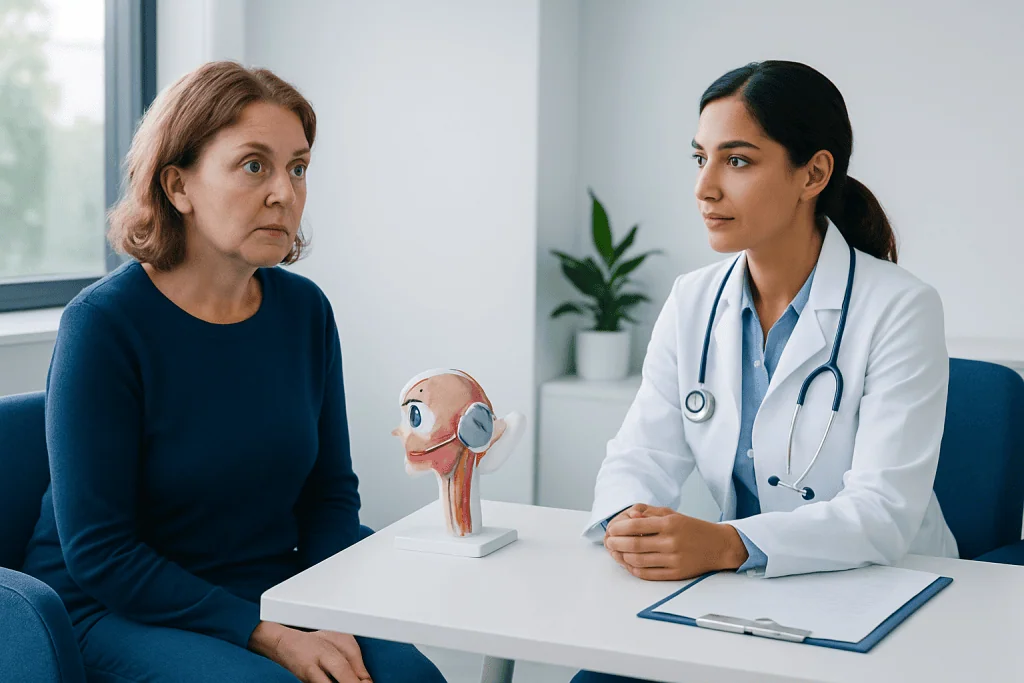
Anyone with suspected thyroid eye disease should have a structured eye and thyroid assessment. Clinicians ask about eye irritation, visual changes, double vision, smoking, previous thyroid treatment and other health conditions. They examine visual acuity, color vision, eye movements, eyelid closure, corneal health, eye pressure and the degree of eye prominence.
Blood tests can check thyroid hormone levels and thyroid-related antibodies. Imaging, usually CT or MRI of the orbits, may be recommended when the diagnosis is uncertain, when optic nerve compression is suspected or when surgery is being planned. These tests help distinguish thyroid eye disease from other causes of eye bulging or double vision.
Candidacy for particular treatments depends on disease activity and severity. Anti-inflammatory medicines are generally most useful while inflammation is active. Rehabilitative procedures, such as eye muscle, eyelid or orbital decompression surgery, are often planned after the condition has been stable for a period, unless there is an urgent threat to vision.
People who smoke or use nicotine products are strongly encouraged to stop, as smoking is associated with more severe thyroid eye disease and can reduce response to treatment. Clinicians can offer practical support for quitting and discuss ways to keep thyroid levels stable throughout eye care.
Treatment options and the step-by-step care pathway
Initial treatment often focuses on comfort and protection. Preservative-free lubricating drops or gels can relieve dryness, while ointment at night may help when the eyelids do not close fully. Sunglasses, head elevation during sleep and, in selected people, temporary prisms for double vision may also be useful. Selenium supplementation may be considered for some people with mild active disease in areas where dietary selenium intake is low, but it should only be used after medical advice.
For moderate-to-severe active disease, specialists may use medicines that reduce inflammation or modify the immune response. These can include corticosteroids given by mouth or intravenously and other immunomodulatory treatments for selected patients. Treatment choice is individualized because potential benefits must be balanced against medical history, disease activity, diabetes risk, blood pressure, liver health and other safety considerations.
In some cases, orbital radiotherapy may be considered, particularly when eye muscle inflammation and movement problems are prominent. It is not appropriate for everyone and is usually considered within a specialist multidisciplinary plan. Ongoing monitoring is important because both the disease and treatment can affect eye health and general health.
When structural changes remain after inflammation has settled, surgery may improve function and appearance. The usual order, if more than one procedure is needed, is orbital decompression surgery to create more space around the eye, eye muscle surgery to improve alignment and reduce double vision, and eyelid surgery to improve closure or lid position. These procedures are planned carefully because changing the orbit can alter eye alignment and eyelid position. Specialist thyroid eye disease treatment can help determine whether medical treatment, surgery or observation is most appropriate.
Benefits, risks and recovery timeline
The expected benefits of treatment vary. Supportive care can reduce irritation and protect the cornea. Medical therapy may reduce redness, swelling, pain and progression during active disease. Surgery can help relieve pressure on the optic nerve, improve eye prominence, address persistent double vision or improve eyelid closure. No treatment can promise that every symptom or visible change will resolve completely.
Medicines used for active thyroid eye disease can have side effects, which differ by drug. Corticosteroids, for example, may affect mood, sleep, blood sugar, blood pressure, bone health and infection risk. Immunomodulatory medicines may require blood tests or screening before and during treatment. The treating team explains expected benefits, alternatives and monitoring needs before a treatment begins.
Surgical risks depend on the procedure and can include bleeding, infection, scarring, uneven appearance, dry eye symptoms, changes in eye movement, persistent or new double vision, and the need for further surgery. Serious complications are uncommon but are discussed in advance, particularly when surgery is performed to protect vision.
Recovery is gradual and differs by treatment. Eye-surface symptoms may improve over days to weeks with supportive measures, while medical therapy is reviewed over weeks or months. After orbital, muscle or eyelid surgery, bruising and swelling often improve during the first few weeks, but final healing and adjustment can take several months. Follow-up appointments are essential to monitor vision, healing and eye alignment.
How long does it take for thyroid eye disease to go away?
Thyroid eye disease does not follow exactly the same timeline for every person. The active inflammatory phase commonly lasts months and may continue for one to several years before becoming more stable. During this period, symptoms may fluctuate, and treatment is focused on controlling inflammation, protecting vision and maintaining comfort.
Once the disease becomes inactive, inflammation generally settles, but some changes may remain. These may include eye prominence, eyelid retraction, tearing, dry eye or double vision. If these changes affect vision, eye protection or quality of life, reconstructive surgery may be discussed after stability is established.
Regular follow-up helps the clinical team recognize changes early and adapt care. Keeping thyroid hormone levels in the recommended range and avoiding smoking can support the overall treatment plan, although neither approach guarantees a particular duration or outcome.
Do eyes go back to normal after thyroid? Can you reverse thyroid eye disease?
Restoring normal thyroid hormone levels is essential, but the eye condition may not return to normal automatically. Thyroid eye disease is driven by immune activity in the tissues around the eye, and this activity can continue or leave structural changes even when blood thyroid tests are well controlled.
In mild cases, redness, swelling and irritation may improve substantially as the active phase settles. In more significant disease, medical treatment can reduce inflammation and prevent further damage, while surgery may correct selected lasting changes. Results are individual, and complete reversal of every eye change is not always possible.
The most useful goal is to preserve vision, protect the cornea, reduce symptoms and improve eye function and appearance where possible. People with Graves’ disease may also benefit from learning about Graves’ disease and the importance of coordinated thyroid and eye follow-up.
When to seek medical care
Medical review is recommended for persistent eye dryness, redness, swelling, a new staring appearance, bulging eyes, eyelid changes or double vision, particularly in a person with known thyroid disease. An eye examination can identify whether symptoms are related to thyroid eye disease or another eye condition that needs different care.
Urgent assessment is needed for reduced vision, reduced color perception, a dark or missing area in the visual field, marked difficulty moving the eye, severe or rapidly worsening swelling, a painful red eye, or inability to close the eyelids. These signs may indicate corneal exposure or pressure on the optic nerve and should not wait for a routine appointment.
People considering treatment can ask whether their disease is active, what the main goal of care is, which options are suitable and how outcomes will be monitored. Acibadem International’s multidisciplinary specialists and JCI-accredited hospitals assess and treat thyroid eye disease for international patients, with care coordinated across endocrinology and ophthalmology when appropriate.
Frequently asked questions
What is the first-line treatment for thyroid eye disease?
First-line care often includes protecting the surface of the eyes with lubricating drops or ointment, controlling thyroid hormone levels and avoiding smoking. The next steps depend on whether the disease is mild, active and inflamed, or causing vision-threatening complications. A specialist eye assessment guides the plan.
Can thyroid eye disease be treated without surgery?
Yes. Many people are treated without surgery, particularly during the active phase. Supportive eye care and medicines that reduce inflammation or modify immune activity may be used when appropriate. Surgery is more often considered for urgent vision problems or lasting structural changes after the disease stabilizes.
Does treating Graves' disease cure thyroid eye disease?
Treating Graves' disease and keeping thyroid hormone levels stable are important, but they do not always cure the eye condition. Thyroid eye disease has its own autoimmune activity in the tissues around the eyes. Ongoing monitoring by an endocrinologist and ophthalmologist is often helpful.
Can thyroid eye disease cause blindness?
Severe vision loss from thyroid eye disease is uncommon, but it can occur if swelling compresses the optic nerve or if the cornea is severely exposed and damaged. New loss of vision, reduced color vision or a visual-field change requires urgent medical assessment. Prompt treatment can protect sight in many cases.
Will double vision from thyroid eye disease improve?
Double vision may improve as active inflammation settles, especially if it is caused by swelling around the eye muscles. Persistent double vision can sometimes be helped with prism lenses, temporary occlusion or eye muscle surgery once measurements are stable. The best option depends on the pattern and severity of misalignment.
Why is smoking important in thyroid eye disease?
Smoking is linked with a higher risk of developing more severe thyroid eye disease and may reduce treatment response. Stopping smoking and avoiding nicotine exposure are important parts of care. A healthcare professional can recommend cessation support that suits the individual.
References
- American Thyroid Association
- European Group on Graves' Orbitopathy
- American Academy of Ophthalmology
- National Eye Institute
- Mayo Clinic
This article is for general information only and is not a substitute for professional medical advice. Please consult a qualified doctor about your individual situation.
Explore treatments in Turkey — costs, top hospitals & a free quote
JCI-accredited · board-certified surgeons · reply within 24h
Add us as a Preferred Source to see more of our trusted health content across Google Search, AI Overviews and Discover.
Check your numbers in seconds
BMI, calories, due date, blood pressure and 30+ more clinical calculators — free, instant, doctor-reviewed ranges.

More from the Health Library



Related Specialists
Dr. Muhammet Beyazal
Ophthalmology
Dr. Akın Banaz
Ophthalmology
Dr. İnci Candan
Dermatology
Dr. Aytan Seydalıyeva
Infectious Diseases & Clinical Microbiology