Tooth Filling: A Complete Medical Overview

A tooth filling treats cavities and minor tooth damage by sealing and rebuilding the affected area. Different materials are available, including composite resin, amalgam, ceramic, glass ionomer, and gold.
Key Takeaways
- A tooth filling treats cavities and minor tooth damage by sealing and rebuilding the affected area.
- Different materials are available, including composite resin, amalgam, ceramic, glass ionomer, and gold.
- Early treatment can help prevent deeper decay, infection, or the need for more complex procedures.
- Mild sensitivity after a filling is common, but persistent pain should be checked by a dentist.
- Good oral hygiene and regular dental visits help fillings last longer and lower the risk of new cavities.
A tooth filling is a common dental treatment used to repair a cavity, small fracture, or worn area of a tooth. It helps restore the tooth’s shape and function while reducing the risk of further decay or sensitivity.
Overview: What a Tooth Filling Does
A tooth filling is a treatment that repairs a tooth damaged by decay, minor cracks, or wear. The dentist removes the unhealthy or weakened part of the tooth and places a filling material in the space. This restores the tooth’s shape, supports normal chewing, and helps stop bacteria from entering the area again.
Many people think of a filling only as a treatment for cavities, but it may also be used for small chips, worn biting surfaces, or damage caused by tooth grinding. In all of these situations, the goal is to preserve as much natural tooth structure as possible while improving comfort and function.
A filling is usually done in a dental office and often takes a single visit. It is one of the most common dental procedures, and when performed early, it may help avoid more extensive treatment later, such as root canal treatment or a dental crown.
When a Filling May Be Needed

A dentist may recommend a tooth filling when there is decay, a visible hole, or an area of enamel and dentin that has become soft or damaged. Sometimes the need is found during a routine dental exam before symptoms become noticeable. Early treatment can be especially helpful because small cavities are often easier to repair than larger ones.
Common signs that may suggest a problem include tooth sensitivity to cold, heat, or sweets, pain when biting, food catching between teeth, or a rough or broken edge. However, some cavities cause no pain at all, which is why regular dental checkups remain important.
Fillings can also be used after old fillings become loose, cracked, or worn down over time. In these cases, replacing the filling may protect the tooth from further breakdown. If decay has progressed too deeply, the dentist may assess for related problems such as cavities affecting a larger portion of the tooth or inflammation within the pulp.
Types of Tooth Fillings
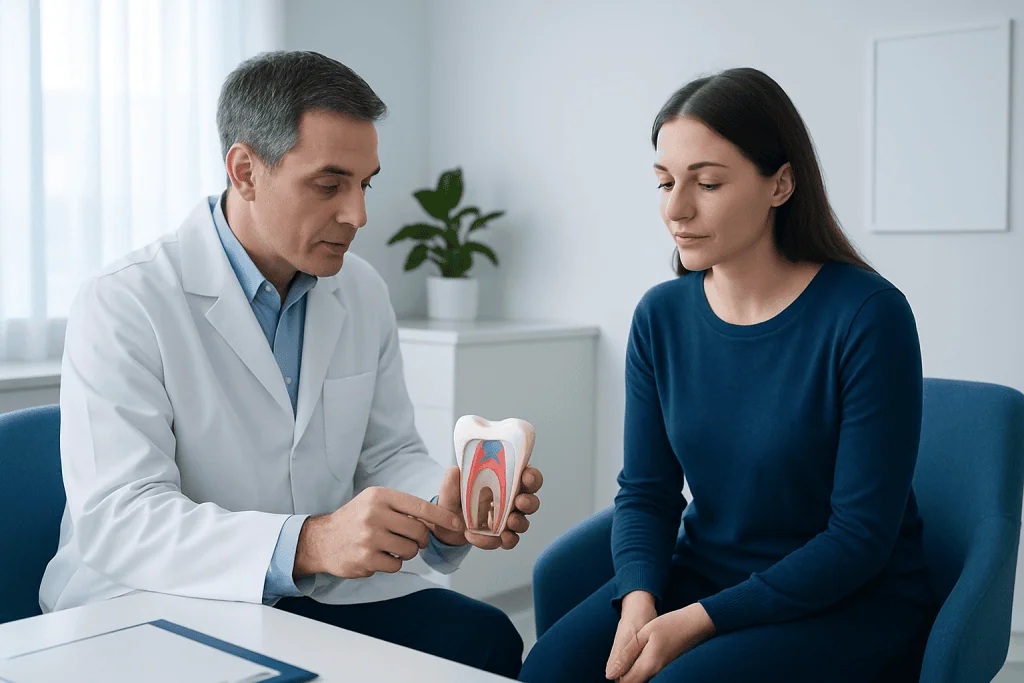
There is no single best filling material for every person or every tooth. The right choice depends on the size and location of the damaged area, the forces placed on the tooth, cosmetic preferences, and the dentist’s clinical judgment. Each material has benefits and limits.
Composite resin fillings are tooth-colored and often chosen for visible teeth because they blend with the natural smile. Amalgam fillings are silver-colored and have been widely used for many years, especially in back teeth where chewing forces are stronger. Ceramic fillings are durable and aesthetic, while glass ionomer materials may be used in selected situations, including some areas near the gumline or in children’s teeth.
- Composite resin: Tooth-colored, bonds to the tooth, commonly used for small to moderate cavities.
- Amalgam: Strong and long-lasting, often used in molars.
- Ceramic: Aesthetic and stain-resistant, usually made in a laboratory or with digital technology.
- Glass ionomer: Releases fluoride and may be useful in certain low-load areas.
- Gold: Durable but less commonly used today and more visible.
In some cases, the dentist may recommend a restoration that covers more of the tooth, such as an inlay, onlay, or dental crown, rather than a standard direct filling. This can be more appropriate when a large part of the tooth has already been lost or weakened.
How the Tooth Filling Procedure Is Done
The process usually begins with an examination and imaging if needed. A dentist may use visual inspection, dental instruments, and X-rays to understand the extent of the damage and decide whether a filling is the right treatment. The dentist also checks whether the decay is shallow, moderate, or close to the tooth’s nerve.
During the procedure, the area is typically numbed with local anesthetic so the patient remains comfortable. The decayed or damaged tooth structure is carefully removed, and the space is cleaned. If a composite filling is used, the dentist may place the material in layers and harden each layer with a special light before shaping and polishing the tooth.
At the end of the appointment, the dentist checks the bite to make sure the restored tooth meets the opposing teeth correctly. If the bite feels too high, small adjustments can be made. Most people are able to return to usual activities soon after the visit, although temporary numbness may last a few hours.
When decay is deeper or the tooth is severely broken, a filling may not be enough on its own. In these situations, the dentist might discuss alternatives such as dental implants if a tooth cannot be preserved, though saving the natural tooth is generally preferred whenever possible.
Benefits, Risks, and Possible Side Effects
The main benefit of a tooth filling is that it restores the damaged tooth while helping prevent the problem from getting worse. A properly placed filling can reduce sensitivity, improve chewing, close spaces where food collects, and support the natural structure of the tooth. Treating decay early may also lower the chance of infection and more invasive procedures later.
Like any dental treatment, fillings can have limitations. Some people notice mild sensitivity to pressure, cold, or heat for a few days or weeks after the procedure. This usually improves as the tooth settles. Fillings can also wear down, chip, leak around the edges, or become loose over time, especially if the tooth is exposed to heavy chewing forces or grinding.
In some cases, a filling may uncover a deeper problem that was already developing, such as nerve irritation or advanced decay beneath the surface. If pain becomes stronger instead of improving, the tooth may need further evaluation. A dentist may then look for complications such as a cracked tooth, an infection, or the need for toothache assessment when symptoms continue.
Recovery, Aftercare, and Daily Self-Care
After a tooth filling, mild numbness, tenderness at the injection site, or slight sensitivity can be normal. It is often helpful to avoid very hot or very cold foods for a short time if the tooth feels reactive. If the mouth is still numb, waiting to chew on that side can help prevent accidental biting of the cheek or tongue.
Good oral hygiene plays a major role in protecting both the filling and the rest of the teeth. Brushing twice daily with fluoride toothpaste, cleaning between teeth with floss or interdental tools, and limiting frequent sugary snacks can reduce the risk of new decay around the restoration. A filling repairs a specific area, but it does not make the tooth immune to future cavities.
Regular dental follow-up is important because fillings are not permanent. At routine visits, the dentist checks for wear, staining, edge leakage, recurrent decay, and bite changes. If a patient clenches or grinds the teeth at night, a dentist may suggest a protective mouthguard to reduce stress on the restoration.
When to Seek Medical Care
A person should arrange a dental visit if they have ongoing tooth sensitivity, visible damage, a dark spot on a tooth, pain with chewing, or food repeatedly catching in one area. These symptoms do not always mean a filling is needed, but they do deserve professional assessment. Early care often makes treatment simpler and more conservative.
Prompt evaluation is especially important if pain is severe, keeps a person awake, or is accompanied by swelling, fever, a bad taste in the mouth, or discharge from the gum. These signs may suggest a deeper infection rather than a simple surface cavity. Urgent dental care can help protect the tooth and surrounding tissues.
If a recently placed filling feels too high, the tooth remains very sensitive, or pain lasts beyond the expected recovery period, the dentist should be contacted. Near the end of the care journey, some people may also benefit from specialist evaluation. Acibadem International’s multidisciplinary dental specialists at JCI-accredited hospitals diagnose and treat dental conditions for international patients when advanced assessment or coordinated care is needed.
Frequently asked questions
How long does a tooth filling last?
A tooth filling can last for years, but its lifespan depends on the material used, the size of the filling, oral hygiene, and chewing habits. Fillings in back teeth may wear faster because they handle stronger biting forces. Regular dental checkups help monitor when a filling may need repair or replacement.
Is getting a tooth filling painful?
A filling procedure is usually not painful because the dentist commonly numbs the area with local anesthetic. Some pressure or vibration may be felt during treatment, but sharp pain should be uncommon. Mild soreness or sensitivity after the procedure can occur for a short time.
Can a tooth filling treat every cavity?
Not every cavity can be managed with a simple filling. If decay is very deep or the tooth is badly weakened, a crown or root canal treatment may be more appropriate. The dentist chooses the treatment based on how much healthy tooth structure remains.
Why is my tooth sensitive after a filling?
Temporary sensitivity after a filling can happen because the tooth has been cleaned and restored, and the nerve may need time to settle. This sensitivity often improves within days to a few weeks. If it gets worse, affects biting, or does not improve, the tooth should be rechecked.
Can a filling fall out or fail?
Yes, a filling can crack, loosen, or fall out over time. Biting on hard foods, tooth grinding, recurrent decay, or natural wear may contribute. If this happens, a dentist should evaluate the tooth soon to prevent further damage.
How can someone help prevent needing another tooth filling?
Preventive care includes brushing twice a day with fluoride toothpaste, cleaning between the teeth, limiting sugary foods and drinks, and attending routine dental visits. Drinking water regularly and discussing fluoride or sealants with a dentist may also help in some people. Prevention focuses on reducing new decay and protecting restored teeth.
This article is for general information only and is not a substitute for professional medical advice. Please consult a qualified doctor about your individual situation.
Joint and spine care in Turkey — expert assessment & treatment
JCI-accredited · board-certified surgeons · reply within 24h
Add us as a Preferred Source to see more of our trusted health content across Google Search, AI Overviews and Discover.

More from the Health Library

Bengay: A Complete Medical Overview

Turmeric Curcumin: An Evidence-Based Guide for Patients

Blackheads: A Complete Medical Overview

Urine in Pee Male — Explained by Medical Evidence, Not Myths

Recovery Position — Explained by Medical Evidence, Not Myths