

Toothache: Common Causes and When to See a Dentist

Toothache is a symptom, not a diagnosis; cavities, gum disease, cracks, infections and jaw problems can all cause dental pain. Pain that lasts more than one to two days, worsens, or is linked with swelling, fever or difficulty swallowing should be assessed promptly by a dentist.
Key Takeaways
- Toothache is a symptom, not a diagnosis; cavities, gum disease, cracks, infections and jaw problems can all cause dental pain.
- Pain that lasts more than one to two days, worsens, or is linked with swelling, fever or difficulty swallowing should be assessed promptly by a dentist.
- Home care may temporarily ease discomfort, but it does not treat the underlying cause of most toothaches.
- Regular dental checkups, good brushing and flossing habits, and limiting sugary foods and drinks can reduce the risk of tooth pain.
- Early treatment is usually simpler and more comfortable than waiting until pain becomes severe.
A toothache can range from mild sensitivity to persistent pain that affects eating, sleeping or daily life. Understanding common causes and warning signs helps patients seek dental care at the right time and avoid complications.
Overview
A toothache is pain or discomfort in or around a tooth. It may feel sharp, throbbing, dull, constant or triggered only by biting, chewing, cold drinks or sweet foods. Some people can identify one painful tooth, while others feel pain spreading to the jaw, ear, temple or surrounding teeth.
Toothache is common, but it should not be ignored. Pain is the body’s way of signaling that a tooth, gum tissue or nearby structure may need attention. In many cases, the cause is treatable, especially when care is sought early. A dentist can examine the mouth, take dental X-rays when needed and recommend treatment based on the underlying problem.
Not every toothache is an emergency, and mild sensitivity may improve with good oral care. However, persistent or worsening pain often means that a cavity, crack, gum problem or infection is present. Timely dental evaluation helps relieve discomfort and protect the tooth whenever possible.
Common Symptoms of Toothache

Toothache symptoms vary depending on the cause. Some pain appears suddenly, such as after biting something hard, while other pain develops gradually as tooth decay or gum disease progresses. The character of the pain can provide useful clues, but a dental examination is needed for an accurate diagnosis.
Common toothache symptoms include:
- Sharp pain when biting or chewing
- Throbbing or pulsing pain that may be constant
- Sensitivity to hot, cold, sweet or acidic foods and drinks
- Pain that lingers after temperature exposure
- Swelling of the gum or face near the painful tooth
- Bad taste in the mouth, pus, or unpleasant breath
- Headache, jaw soreness or ear-like pain related to dental problems
Some symptoms suggest the dental pulp, the soft tissue inside the tooth, may be irritated or infected. For example, pain that wakes a person from sleep, pain that lasts after cold or heat is removed, or swelling around a tooth may need prompt dental care. Pain can also be referred, meaning the source may be one tooth while the discomfort is felt elsewhere.
Common Causes of Toothache
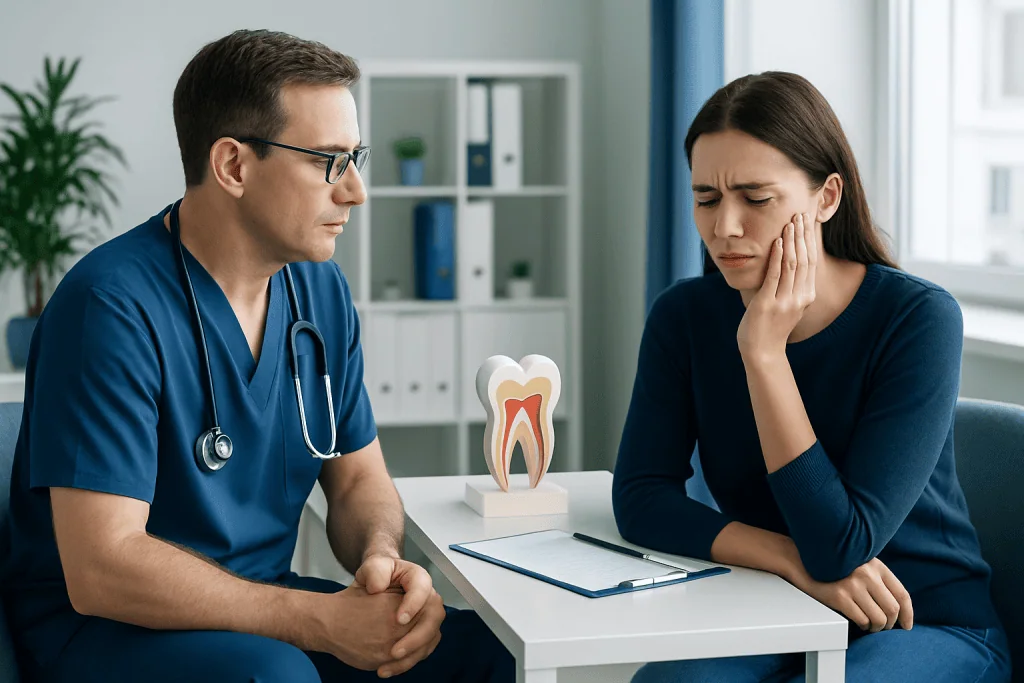
The most frequent cause of toothache is tooth decay. When bacteria in dental plaque feed on sugars, they produce acids that weaken tooth enamel and can create cavities. If decay reaches deeper layers of the tooth, it can irritate the nerve and cause sensitivity, pain or infection.
Gum disease is another common cause. Inflamed gums may bleed, feel tender or pull away from the teeth, creating pockets where bacteria can collect. Advanced gum disease can affect the supporting bone and cause loose teeth, gum abscesses or chewing discomfort.
Other causes of tooth pain include cracked or fractured teeth, damaged fillings or crowns, teeth grinding, jaw joint disorders, impacted wisdom teeth and dental abscesses. A sinus infection can sometimes create pressure that feels like upper tooth pain. In children and teenagers, erupting teeth may cause temporary soreness, while adults may experience pain from wisdom teeth that do not have enough space to emerge properly.
Because many conditions can feel similar, self-diagnosis is unreliable. A tooth may look normal but still have a crack, deep decay or nerve inflammation. This is why persistent pain should be assessed by a dental professional rather than treated only with pain relievers.
Risk Factors
Several factors increase the likelihood of developing toothache. Oral hygiene habits play an important role. Infrequent brushing, not cleaning between the teeth, or missed dental checkups can allow plaque and tartar to build up, raising the risk of cavities and gum disease.
Diet also matters. Frequent intake of sugary snacks, sweetened drinks or acidic beverages can weaken enamel and feed cavity-causing bacteria. Dry mouth, which may occur because of certain medications, dehydration, mouth breathing or medical conditions, can also increase risk because saliva helps neutralize acids and protect teeth.
Other risk factors include smoking or tobacco use, a history of many fillings, orthodontic crowding that makes cleaning difficult, teeth grinding or clenching, and previous dental trauma. Medical conditions that affect immunity or healing, as well as poorly controlled diabetes, may contribute to gum problems and dental infections. Patients with these risk factors benefit from personalized prevention advice from a dentist.
Diagnosis: How Dentists Find the Cause
A dentist begins by asking about the pain: when it started, what triggers it, how long it lasts, and whether there is swelling, fever, bad taste or difficulty chewing. Details about recent dental work, injuries, teeth grinding, medical conditions and medications may also be helpful.
The clinical examination may include checking the teeth and gums, looking for cavities or cracks, tapping on teeth, testing the bite and evaluating gum pockets. The dentist may use cold or heat testing to assess the nerve response of a tooth. Dental X-rays can show decay between teeth, bone changes, abscesses, impacted teeth or problems under existing fillings and crowns.
Sometimes the source of pain is not obvious at first, especially with small cracks, referred pain or early infection. In these cases, the dentist may monitor symptoms, use additional imaging or refer the patient to a specialist such as an endodontist, periodontist or oral and maxillofacial surgeon. Accurate diagnosis is important because treatment for a cavity, gum abscess, cracked tooth or jaw-related pain can be very different.
Treatment Options
Treatment depends on the cause, severity and condition of the tooth. For early tooth decay, a dentist may remove the damaged area and place a filling. If a larger part of the tooth is weakened, a crown may be recommended to restore strength and function. Replacing damaged fillings or adjusting a high bite can also relieve pain in selected cases.
If the dental pulp is inflamed or infected, root canal treatment may be needed. During this procedure, the infected or damaged tissue inside the tooth is removed, the canals are cleaned and sealed, and the tooth is restored. Root canal treatment is often used to save a tooth that might otherwise need extraction. If a tooth cannot be restored, removal may be necessary, followed by discussion of replacement options such as an implant, bridge or denture when appropriate.
For gum-related pain, treatment may include professional cleaning, deep cleaning below the gumline, drainage of an abscess, periodontal therapy or improved home care techniques. Antibiotics are not a stand-alone treatment for most toothaches and should only be used when prescribed by a qualified clinician. Pain relievers may help temporarily, but they do not repair decay, remove infection or close cracks.
Patients should avoid placing aspirin or other medications directly on the gum or tooth, as this can irritate or burn oral tissues. The safest approach is to follow the dentist’s instructions and use medicines only as directed on the label or by a healthcare professional.
Prevention and Self-Care
Many toothaches can be prevented with consistent oral hygiene and regular dental visits. Brushing twice daily with fluoride toothpaste, cleaning between the teeth once daily, and replacing a worn toothbrush help reduce plaque. Professional dental checkups allow early cavities, gum inflammation and bite problems to be identified before they become painful.
Dietary habits are also important. Limiting frequent sugary snacks and drinks, drinking water after meals, and choosing balanced foods support oral health. People with dry mouth should discuss possible causes with a dentist or doctor, as special rinses, saliva substitutes or medication review may be helpful. For patients who grind their teeth, a custom night guard may protect teeth from cracks and wear.
While waiting for a dental appointment, gentle self-care may reduce discomfort. The patient can rinse with warm salt water, keep the area clean, avoid very hot, cold or sweet triggers, and chew on the opposite side. Over-the-counter pain relief may be appropriate for some people, but those with medical conditions, pregnancy, kidney or liver disease, stomach ulcers, allergies or blood-thinning medication should ask a healthcare professional before using it.
When to See a Dentist
A dentist should be contacted if tooth pain lasts longer than one to two days, keeps returning, worsens, or interferes with eating or sleeping. Prompt care is also recommended for pain with swelling, a pimple-like bump on the gum, bad taste, pus, fever, pain after an injury, or difficulty opening the mouth. These signs may indicate infection or a dental problem that needs timely treatment.
Urgent medical or dental attention is needed if swelling spreads to the face or neck, breathing or swallowing becomes difficult, or the person feels very unwell. These situations are uncommon but should be addressed without delay. For most patients, early dental treatment prevents symptoms from becoming more complex and improves comfort quickly.
People traveling or living abroad should not postpone care when symptoms are significant. Acibadem International’s multidisciplinary dental and medical specialists, within JCI-accredited hospitals, diagnose and treat toothache-related conditions for international patients when coordinated care is needed. Patients should choose a qualified dentist or healthcare facility that can provide appropriate examination, imaging and follow-up.
Frequently asked questions
Can a toothache go away on its own?
Mild sensitivity from temporary irritation may improve, but a true toothache often has an underlying cause such as decay, a crack, gum disease or infection. Pain that disappears can still return if the problem remains. A dental checkup is the best way to confirm whether treatment is needed.
What is the fastest way to relieve tooth pain at home?
Gentle rinsing with warm salt water, keeping the area clean, avoiding temperature triggers and using appropriate over-the-counter pain relief may help temporarily. These steps do not treat the cause of the pain. A dentist should evaluate persistent, severe or recurring toothache.
How can a person tell if a toothache is an infection?
Possible signs of infection include swelling, throbbing pain, pus, a bad taste, fever, a tender gum bump or pain that worsens when biting. However, some dental infections may have mild symptoms at first. A dentist can confirm the diagnosis with an examination and imaging when needed.
Is tooth sensitivity the same as toothache?
Tooth sensitivity is usually discomfort triggered by cold, heat, sweet foods or brushing, and it may be related to enamel wear or gum recession. Toothache is often more persistent or localized and may indicate decay, nerve irritation or infection. If sensitivity is new, worsening or affects one tooth strongly, dental evaluation is recommended.
Should antibiotics be taken for toothache?
Antibiotics are not needed for every toothache and should not be taken without a prescription. Many dental problems require procedures such as a filling, drainage, root canal treatment or extraction to remove the source of infection. A dentist or doctor will decide whether antibiotics are appropriate.
When is toothache considered an emergency?
Toothache is urgent if it is severe, associated with facial or gum swelling, fever, injury, pus, difficulty opening the mouth, or trouble swallowing or breathing. Pain that prevents sleep or normal eating should also be assessed promptly. Early care can reduce discomfort and help prevent complications.
References
- World Health Organization
- American Dental Association
- Centers for Disease Control and Prevention
- National Institute of Dental and Craniofacial Research
- European Federation of Periodontology
This article is for general information only and is not a substitute for professional medical advice. Please consult a qualified doctor about your individual situation.
Explore treatments in Turkey — costs, top hospitals & a free quote
JCI-accredited · board-certified surgeons · reply within 24h
Add us as a Preferred Source to see more of our trusted health content across Google Search, AI Overviews and Discover.

Dental & Oral Health
Full-scope dental care from implants and aesthetics to oral and maxillofacial surgery.
158 specialists in this unitRelated Treatments
More from the Health Library



Related Specialists

Assoc. Prof. Dr. Ferit Bayram
Oral & Dental Health
Dt. Alara Naz Kenir
Oral & Dental Health
Dt. Gonca Katmer
Oral & Dental HealthDt. Doğa Baysal
Oral & Dental Health