Tortuous Colon: What Patients Need to Know

A tortuous colon means the large intestine is longer or more looped than usual. Some people have no symptoms, while others experience constipation, bloating, or cramping.
Key Takeaways
- A tortuous colon means the large intestine is longer or more looped than usual.
- Some people have no symptoms, while others experience constipation, bloating, or cramping.
- It is not the same as colon cancer, but symptoms should still be assessed by a doctor.
- Diagnosis may involve history, examination, and tests such as colonoscopy or imaging.
- Treatment focuses on symptom relief, bowel habit support, and addressing complications if they occur.
Tortuous colon is a colon with extra length and loops, which can make the bowel more winding than usual. It is often harmless, but in some people it is linked with constipation, bloating, abdominal discomfort, or a more technically challenging colonoscopy.
Overview: what a tortuous colon means
Tortuous colon refers to a large intestine that has more length, curves, or loops than usual. It may also be called a redundant colon. In many people, this is simply a variation in anatomy rather than a disease on its own, and it may be discovered incidentally during imaging or a colonoscopy.
The colon normally helps absorb water and move stool toward the rectum. When the colon is longer and more winding, stool may move through it more slowly in some individuals. This can contribute to symptoms such as constipation, bloating, a sense of incomplete emptying, or abdominal discomfort, although not everyone with a tortuous colon develops problems.
One of the most practical reasons this finding matters is that it can make some tests or procedures more challenging. For example, a colonoscopy may take longer or require special techniques if the bowel has sharp bends or extra loops. Even so, a tortuous colon can usually be evaluated and managed successfully by an experienced medical team.
Symptoms and how it may affect daily life

Many people with a tortuous colon have no symptoms at all. When symptoms do occur, they are often related to slower movement of stool through the bowel. The most common complaint is constipation, which may include infrequent bowel movements, hard stools, or straining.
Other symptoms can include bloating, abdominal fullness, gas, mild cramping, and discomfort that improves after a bowel movement. Some people notice that symptoms become worse with low fluid intake, low-fiber diets, limited physical activity, or changes in routine such as travel.
Common symptoms may include:
- Constipation or difficult bowel movements
- Bloating and excess gas
- Abdominal pressure or cramping
- A feeling of incomplete emptying
- Occasional nausea related to severe constipation
These symptoms are not specific to tortuous colon and can overlap with other digestive conditions, including irritable bowel syndrome. For that reason, a healthcare professional looks at the full clinical picture rather than relying on one symptom alone.
Causes and risk factors
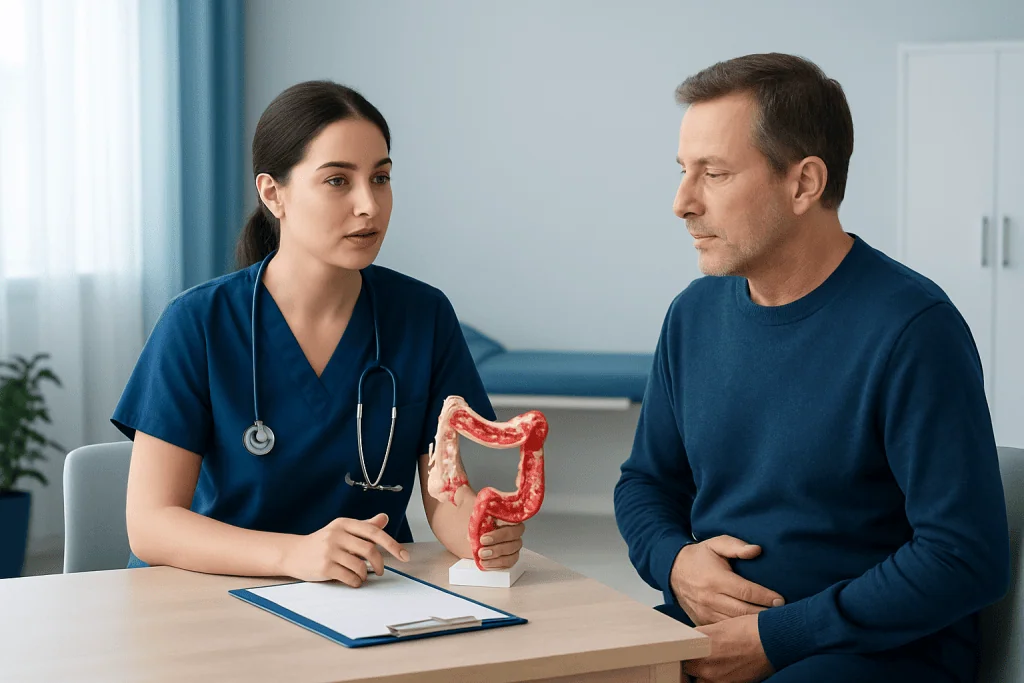
A tortuous colon is often thought to reflect natural differences in body structure. Some people may be born with a longer colon or a tendency to form extra loops. In others, the exact cause is not clear, and it may only come to attention later in life when digestive symptoms are evaluated.
Chronic constipation may be associated with a tortuous colon, although the relationship can work in more than one direction. A long, winding colon may slow transit, and ongoing constipation may also make bowel function feel more difficult over time. Age-related changes, reduced physical activity, and diet patterns can add to symptoms.
Doctors also consider other conditions that can cause similar complaints, such as pelvic floor dysfunction, medication side effects, or structural problems elsewhere in the digestive tract. In some cases, evaluation may include testing for related concerns such as colon cancer or inflammatory bowel conditions if warning signs are present.
How doctors diagnose tortuous colon
Diagnosis begins with a medical history and physical examination. A doctor will ask about bowel habits, stool consistency, abdominal pain, diet, fluid intake, medications, previous abdominal surgery, and any family history of bowel disease. They also look for red flags such as bleeding, unexplained weight loss, anemia, or a sudden change in bowel pattern.
A tortuous colon may be identified during a colonoscopy when the endoscopist notices extra loops or difficult turns. Colonoscopy remains an important test because it can assess the colon lining directly and help rule out other causes of symptoms, including polyps, inflammation, or tumors.
Imaging may also be helpful. Depending on the situation, a doctor may recommend abdominal X-rays, CT-based evaluation, or other forms of diagnostic imaging to better understand bowel anatomy. If constipation is persistent or severe, additional testing may be used to evaluate how stool moves through the colon and whether there is an associated functional bowel disorder.
Treatment options and symptom relief
Treatment for tortuous colon usually focuses on relieving symptoms and improving bowel movement regularity. Many people benefit from practical measures such as increasing fluid intake, adjusting fiber gradually, staying physically active, and setting aside regular time for bowel movements. The best approach depends on the person’s symptoms, age, overall health, and whether constipation is the main issue.
Doctors may also recommend medications to support bowel movements when lifestyle measures alone are not enough. These can include stool-softening or laxative strategies selected according to the individual’s situation. Because bowel symptoms can have different causes, self-treating for long periods without medical advice is not ideal, especially if symptoms are new or worsening.
If severe constipation leads to repeated impaction, significant pain, or concern for blockage, more urgent medical assessment is needed. In rare cases, a tortuous colon may contribute to volvulus, a twisting of the bowel that can obstruct the intestine and reduce blood flow. This is uncommon but important because it needs prompt treatment, sometimes using gastroenterology care and occasionally surgery.
For people who need colonoscopy and are known to have a tortuous colon, careful bowel preparation and an experienced endoscopy team can improve the procedure’s success and comfort. Management is usually individualized rather than one-size-fits-all.
Self-care, diet, and prevention of symptom flare-ups
There is no guaranteed way to prevent a tortuous colon because it is often an anatomical variation. However, many people can reduce symptom flare-ups by supporting healthy bowel habits. Steady routines are often more helpful than sudden changes.
Helpful self-care steps may include:
- Drinking enough fluids throughout the day
- Adding fiber gradually through foods such as fruits, vegetables, legumes, and whole grains if tolerated
- Staying physically active to encourage normal bowel movement
- Responding to the urge to have a bowel movement rather than delaying it
- Reviewing medications with a doctor if constipation is a side effect
Fiber is not right for every person in the same way. Some people with marked bloating may need a slower increase or a more tailored plan. If symptoms persist despite self-care, medical advice is important so that the cause can be clarified and treatment adjusted safely.
When to seek medical care
A person should seek medical care if constipation is persistent, abdominal pain keeps returning, or bloating and bowel changes are affecting quality of life. Medical review is also sensible when symptoms begin for the first time in midlife or later, or when over-the-counter measures are no longer helping.
Urgent assessment is needed for warning signs such as severe or sudden abdominal pain, repeated vomiting, inability to pass stool or gas, rectal bleeding, black stools, fever, faintness, or unexplained weight loss. These symptoms do not necessarily mean a tortuous colon is dangerous, but they can signal a bowel obstruction or another condition that should not be ignored.
For international patients who need evaluation, Acibadem International’s multidisciplinary specialists and JCI-accredited hospitals diagnose and treat digestive conditions using endoscopy, imaging, and individualized care planning. The main goal is to identify the cause of symptoms accurately and guide safe, appropriate treatment.
Frequently asked questions
Is a tortuous colon serious?
A tortuous colon is often not serious by itself and may simply be a normal anatomical variation. It becomes more important when it causes constipation, discomfort, or makes procedures such as colonoscopy more difficult.
Is tortuous colon the same as redundant colon?
These terms are often used in a similar way. Both generally describe a colon that is longer than usual and has extra loops or bends.
Can a tortuous colon cause constipation?
Yes, it can be associated with constipation in some people because stool may move more slowly through a longer, more winding colon. However, constipation can also have many other causes, so medical evaluation may still be needed.
Can a tortuous colon be seen on colonoscopy?
Yes. A tortuous colon is often recognized during colonoscopy when the doctor encounters extra loops or sharper turns in the bowel. Imaging tests may also help show the shape and course of the colon.
Does tortuous colon increase the risk of colon cancer?
A tortuous colon itself is not considered colon cancer and does not automatically mean cancer is present. Still, symptoms such as bleeding, weight loss, or a major change in bowel habits should be evaluated to rule out other conditions.
What foods are best for tortuous colon?
Many people do well with a balanced diet that supports regular bowel movements, including adequate fluids and gradual increases in fiber if tolerated. Because some people develop bloating with certain foods, diet changes are often best individualized with medical guidance.
This article is for general information only and is not a substitute for professional medical advice. Please consult a qualified doctor about your individual situation.
Persistent digestive symptoms? Get evaluated in Turkey
JCI-accredited · board-certified surgeons · reply within 24h
Add us as a Preferred Source to see more of our trusted health content across Google Search, AI Overviews and Discover.

More from the Health Library

Azithromycin: An Evidence-Based Guide for Patients

Head Massage: A Complete Medical Overview

Liquid Collagen — Explained by Medical Evidence, Not Myths

White Mucus — Explained by Medical Evidence, Not Myths

Borborygmi: What Patients Need to Know